
Meta Buys ARI to Build the Android of Humanoid AI
Meta acquired Assured Robot Intelligence, a one-year-old startup building foundation models for humanoid robots whose founders describe their goal as physical AGI.
 5 min read
Meta announced on May 1 that it has bought Assured Robot Intelligence, a startup whose co-founders describe their mission as "physical AGI." The deal brings two of the most-cited researchers in robot learning - Lerrel Pinto and Xiaolong Wang - into Meta Superintelligence Labs, with a year's worth of work on whole-body humanoid control models and a novel tactile sensor called e-Flesh.
Financial terms were not disclosed.
TL;DR
- Meta picked up Assured Robot Intelligence (ARI) on May 1, 2026; deal terms undisclosed
- ARI founders Lerrel Pinto and Xiaolong Wang join Meta Superintelligence Labs
- Key technology: whole-body humanoid control models and e-Flesh tactile sensor
- Meta's strategy: be the "Android of humanoid robots" - provide the AI stack, let manufacturers build hardware
- Google DeepMind and Amazon (Fauna Robotics, bought March 2026) are running the same playbook
A One-Year-Old Startup With a Physical AGI Mission
ARI was founded roughly a year ago. That it closed an acquisition so quickly says as much about the state of the humanoid robotics market as it does about ARI's technology.
Two Researchers, One Clear Goal
Lerrel Pinto came to ARI after co-founding Fauna Robotics, which Amazon acquired in March 2026. Before that, he ran the robot learning lab at NYU. Xiaolong Wang spent years as a researcher at NVIDIA and an associate professor at UC San Diego, where his work on AI model optimization earned the MLSys 2024 Best Paper Award.
Wang's announcement on X left little ambiguity about what the company was actually building:
"When we started ARI one year ago, our mission was clear: achieve physical AGI. Through deep customer engagements and real-world deployments, it became clear that Meta was the right partner to make that mission a reality."
That framing matters. ARI wasn't describing itself as building better robot arms or warehouse automation tools. Pinto and Wang were working on the intelligence layer - foundation models that let humanoids understand, predict, and adapt to human behavior in complex environments.
e-Flesh and the Control Problem
The part of ARI's work that gets less attention is e-Flesh, a tactile sensor system built around magnets and magnetometers. Robot dexterity is one of the hardest unsolved problems in physical AI - most systems can't reliably manipulate objects the way humans do because they lack fine-grained touch feedback. ARI was working on that gap directly.
Whether e-Flesh is production-ready or still early-stage isn't clear from public disclosures. Its inclusion in Meta's announcement suggests it's a real differentiator, not just a proof of concept.
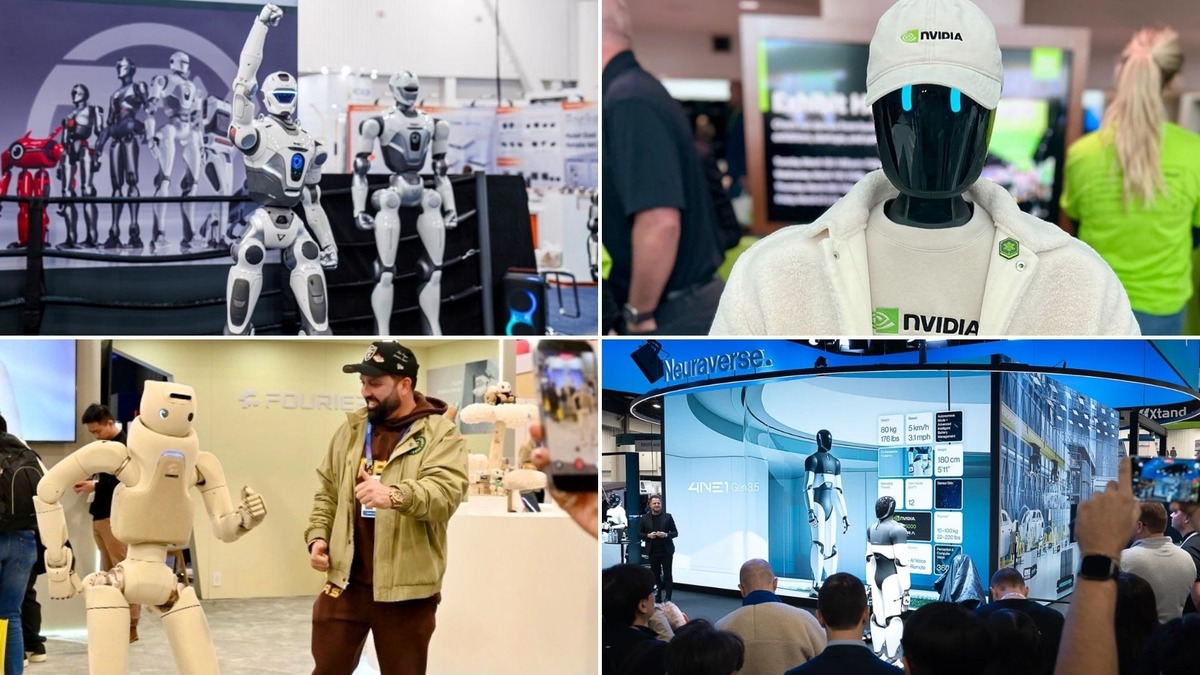 Nine humanoid robots appeared at CES 2026 in January, from a range of manufacturers and approaches.
Source: interestingengineering.com
Nine humanoid robots appeared at CES 2026 in January, from a range of manufacturers and approaches.
Source: interestingengineering.com
The Android Playbook
Meta's stated strategy is explicit. The company wants to be to humanoid robots what Google's Android was to smartphones: provide the intelligence layer - sensors, software, AI models - while hardware manufacturers build the physical machines.
Intelligence Layer, Not Hardware
Marc Whitten, the former Cruise CEO Meta hired to run Meta Robotics Studio, oversees roughly 100 engineers developing humanoid AI and hardware. Meta has said it's building in-house humanoid hardware with the platform, which means the "Android" framing comes with an asterisk: Meta also wants to build the reference device.
CTO Andrew Bosworth has positioned humanoid robotics as strategically comparable to AR/VR - an area where Meta has spent tens of billions without finding a mass consumer market. Whether robotics follows that same arc is worth asking out loud.
The Platform Tension
The Android analogy is strategically attractive because it worked before. It also carries a familiar tension. Android commoditized smartphones in ways that eventually squeezed hardware partners' margins. If Meta succeeds as the intelligence layer, the manufacturers it's helping build could find themselves in the same position as Samsung in 2018: dependent on a platform controlled by someone else's competitive interests.
Google DeepMind has been executing the same play. Its Gemini Robotics-ER 1.6 launched inside Boston Dynamics' Spot in April, targeting industrial inspection use cases. The Hugging Face LeRobot open-source framework is another stack available to any manufacturer willing to build on it. The difference is that LeRobot doesn't come with Meta's distribution or Meta's interest in locking the ecosystem.
The Race Is Already Stratifying
The humanoid market has consolidated into three recognizable tiers faster than most analysts expected. Vertically integrated manufacturers - Tesla with Optimus, 1X with its EVE platform - own their hardware and software from silicon to software. Platform providers like Meta and Google DeepMind supply the AI to manufacturers. Component suppliers provide sensors, actuators, and subsystems to whoever's building.
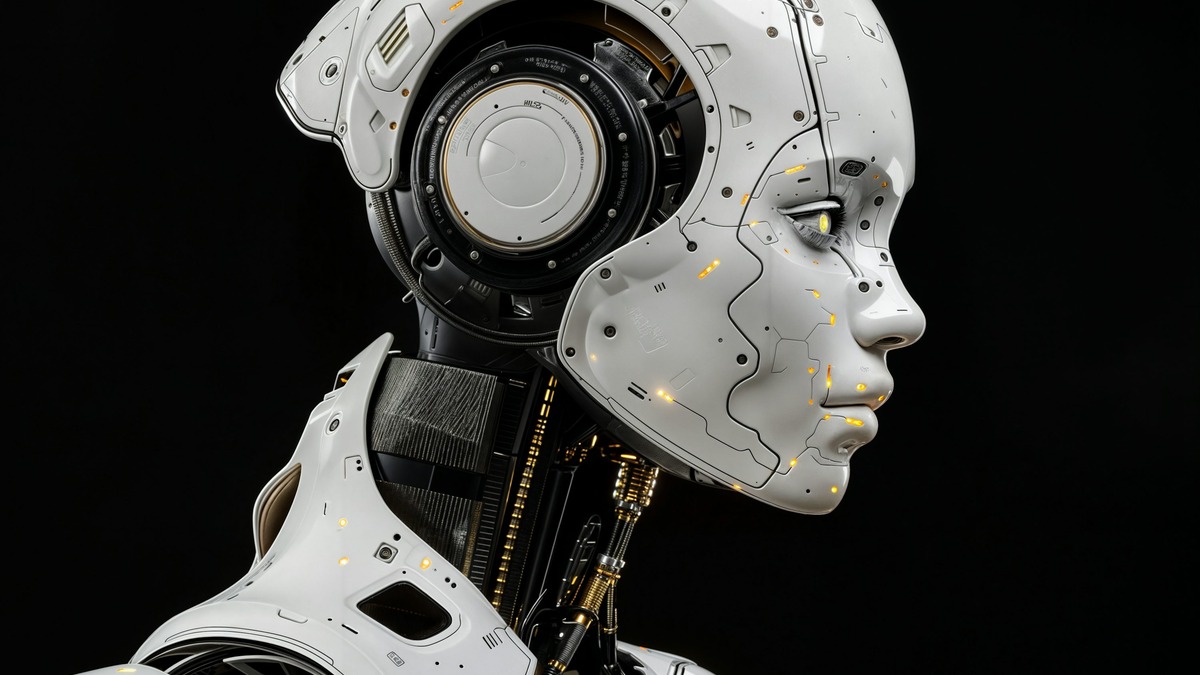 The humanoid field now includes dozens of models, but most depend on a handful of underlying AI platforms.
Source: unsplash.com
The humanoid field now includes dozens of models, but most depend on a handful of underlying AI platforms.
Source: unsplash.com
Amazon's Fauna Robotics acquisition in March tells the same story from a different angle. Amazon wanted its own robotics intelligence for warehouse automation. Pinto built a company, Amazon bought it, and Pinto then built another - which Meta just bought two months later. The cycle is compressing.
Morgan Stanley projects the humanoid market reaching $38 billion by 2035. That number requires a lot of assumptions, but the direction isn't seriously disputed.
OpenAI's position in physical AI remains notably unclear. Its former robotics chief, Caitlin Kalinowski, resigned in March over the Pentagon AI contract, warning that autonomous weapons "deserved more deliberation than they got." OpenAI hasn't announced a coherent path back into embodied AI since.
What the Acquisition Doesn't Settle
The "physical AGI" framing is doing real work in Meta's announcement. It positions ARI as a research bet, not a product acquisition - consistent with how Meta has structured Reality Labs and FAIR.
But ARI is one year old. The gap between "foundation models for robot control" and a production system that handles the full range of messy real-world environments isn't small. Meta's acquisition buys talent and time. It doesn't buy solved problems.
The deeper question is whether Meta's Android strategy requires Meta's existing platform leverage to work. Android succeeded partly because Google controlled search and mobile advertising, giving OEMs a reason to ship Android over building their own OS. Meta's equivalent leverage in robotics isn't obvious. Platform dominance in physical AI might require a different kind of data moat - one built from millions of real-world robot deployments, not from text and images scraped from the internet.
Sources:

