
Federal Clock Runs Out on State AI Laws March 11
The Trump administration's 90-day AI executive order deadline hits this week. Commerce, FTC, and $42B in broadband funding are all on the line.
 7 min read
"No State or political subdivision of a State may enforce any law, rule, regulation, standard, or other provision having the force of law regulating artificial intelligence models, artificial intelligence systems, or automated decision systems..."
- Proposed language in Trump's December 2025 Executive Order, "Ensuring a National Policy Framework for Artificial Intelligence"
On December 11, 2025, President Trump signed an executive order positioning the federal government as the sole referee of AI regulation in the United States. The clock that started that day runs out on March 11 - six days from now. Three federal agencies face binding deadlines. Which state AI laws they target will become the federal government's litigation roadmap for the next two years.
TL;DR
- March 11 is the 90-day deadline for three simultaneous federal actions from Trump's December AI executive order
- The Commerce Department must publish a list of "burdensome" state AI laws targeted for legal challenge or funding cuts
- The FTC must issue a policy statement that could classify state bias-mitigation laws as per se deceptive under federal law
- $42 billion in BEAD broadband infrastructure funding can be withheld from states that enforce conflicting AI regulations
- Laws in California, Colorado, Texas, and Illinois are specifically at risk - but legal scholars say the administration's preemption theory is shaky
Three Agencies, One Deadline
The December executive order set a 90-day clock on three coordinated federal actions. What Commerce, FTC, and the DOJ publish before March 11 will define where the federal-state AI fight actually goes.
Commerce Department's Hit List
The Secretary of Commerce must publish an evaluation identifying state AI laws that are "overly burdensome or in conflict with federal policy." The order specifically instructs the Secretary to flag laws that:
- Require AI models to alter "truthful outputs"
- Compel disclosures that could violate the First Amendment or other constitutional protections
- Create compliance burdens for AI developers operating across state lines
Once published, that list becomes the referral document for the DOJ's AI Litigation Task Force - the unit that has been operational since January 10 and is charged with suing states in federal court. The evaluation also determines which states risk losing access to federal broadband funding.
The FTC's Preemption Statement
The Federal Trade Commission faces a parallel deadline. By March 11, it must issue a policy statement describing how Section 5 of the FTC Act - the agency's core prohibition on "unfair or deceptive acts or practices" - applies to AI. Specifically, the FTC must explain when state laws requiring AI developers to alter model outputs are preempted by federal deception law.
The administration's theory: if an AI model reflects statistical patterns in training data, forcing developers to adjust outputs to reduce bias makes those outputs less "truthful," which constitutes deception under federal law. That interpretation, if formalized, would preempt Colorado's AI Act, California's training data transparency requirements, and potentially any state law requiring algorithmic fairness adjustments.
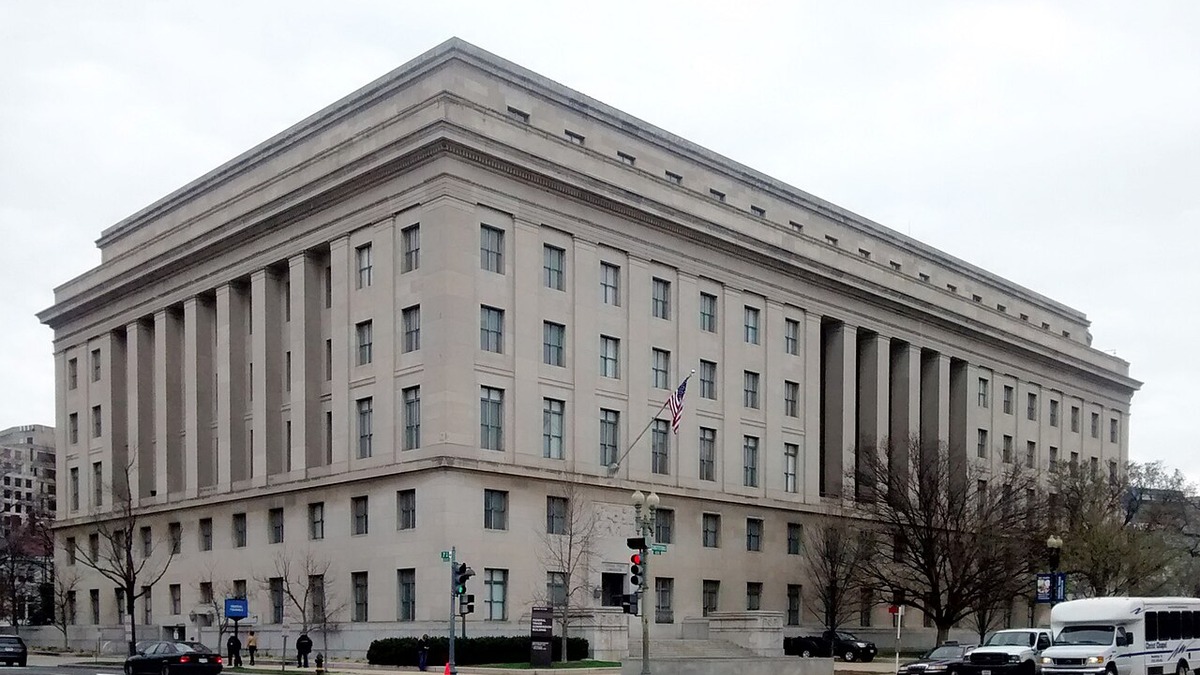 The FTC building in Washington D.C. The agency faces a March 11 deadline to issue a policy statement that could preempt state AI bias laws.
$42 Billion in Leverage
Beyond litigation, the order gives federal agencies a financial cudgel that courts can't block: $42 billion in BEAD broadband infrastructure funding, appropriated under the Broadband Equity, Access and Deployment program, can be conditioned on states avoiding AI regulations deemed onerous under federal policy. The Commerce Department must also issue a Policy Notice by March 11 specifying which state AI regulations make states ineligible for that funding.
For states that have heavily invested in AI regulation - California and Colorado especially - losing access to BEAD money would force an explicit political choice between their AI governance frameworks and critical infrastructure investment.
Impact Assessment
| Stakeholder | Immediate Impact | Timeline |
|---|---|---|
| California | TFAIA, AB 2013 training data disclosure face challenge or funding cut | March 11 list triggers DOJ referral |
| Colorado | SB24-205 (algorithmic discrimination law) explicitly cited in EO | June 30 effective date, lawsuits likely before |
| Texas | RAIGA restricted AI purposes law under review | March 11 evaluation determines priority |
| Illinois | HB 3773 AI employment discrimination protections at risk | Federal vs. state employment law conflict |
| AI companies | Short-term compliance relief, long-term uncertainty from litigation | 2-3 year court battle before resolution |
| Startups | Mixed: reduces compliance burden in targeted states, but creates legal uncertainty everywhere | Immediate |
| State legislatures | 78 chatbot safety bills in 27 states face a chilling effect | Ongoing through 2026 midterm cycle |
What the Administration Gets Right - and Wrong
The executive order's core complaint has merit: a genuine patchwork of 50 state AI regimes, each with different definitions of "high-risk AI," different disclosure requirements, and different enforcement mechanisms, would impose real compliance costs on AI developers - especially startups without the legal teams to track every state variant.
Still, the administration's legal theory for preemption is contested on several fronts.
The FTC Authority Problem
Andy Jung of TechFreedom points out that Section 5 of the FTC Act was never designed to preempt state consumer protection law. Every state has its own consumer protection framework, and the FTC has historically coordinated with state attorneys general rather than superseding them. A policy statement is not a binding rule - it's an interpretive document. To actually preempt state law, the FTC would need to complete a formal rulemaking under the Administrative Procedure Act, requiring advance notice, public comment periods, regulatory analysis, and hearings. That process takes years, not months.
The Factual Problem
The order cites Colorado's AI Act as an example of a law requiring AI models to embed ideological bias - but the Colorado AI Act has not yet taken effect (its effective date is June 30, 2026) and it targets algorithmic discrimination in training data, not ideological output adjustment. Challenging a law that isn't yet in force, based on a characterization the law's authors dispute, will face immediate standing and ripeness problems in court.
The Commerce Funding Mechanism
The BEAD funding lever is more immediately powerful than litigation - states can't easily wait out an administrative process when infrastructure money is on the line. But conditioning federal grants on ideological compliance with federal AI policy will also face legal challenge under the unconstitutional conditions doctrine, which limits the federal government's ability to use funding to coerce state policy choices.
The March 11 list will tell you which states the administration thinks it can beat in court - and which ones it thinks it can pressure with money instead.
What Happens Next
March 11 - Commerce publishes its evaluation; FTC issues its policy statement. Watch for which specific laws appear on the Commerce list. Laws that are explicitly named become immediate targets for DOJ challenge and potential BEAD conditioning. Laws that aren't named get breathing room, at least for now.
April - June - Within 90 days of the Commerce evaluation, the FCC must start proceedings on a federal AI reporting standard designed to supersede inconsistent state disclosure requirements. This is the third lever in the EO's preemption strategy - and it targets transparency laws that the FTC theory might not reach.
Colorado's June 30 deadline - The state's AI Act takes effect two weeks after the Florida legislative session ends. If the DOJ files a preemptive lawsuit before June 30, Colorado faces the choice of enforcing the law under federal injunction risk or delaying implementation. Similar dynamics will play out in California.
The midterms - As we have reported previously, both sides of the AI regulation debate are pouring over $125 million into the 2026 midterms. The composition of the next Congress will determine whether a federal AI preemption statute - the only mechanism that would definitively resolve the federal-state conflict - becomes possible. Without legislation, whatever Commerce and FTC publish on March 11 is just the opening move in a multi-year court fight.
The administration is betting that the threat of litigation and lost funding will push states to self-censor on AI regulation before any court renders a verdict. Whether that bet pays off depends on how many state attorneys general decide to call the bluff.
Sources:
- Executive Order: "Ensuring a National Policy Framework for Artificial Intelligence" - The White House
- President Trump Signs Executive Order Challenging State AI Laws - Paul Hastings
- The FTC's AI Preemption Authority is Limited - TechPolicy.Press
- 90 Days to Clarity: The Federal Timeline That Will Reshape AI Governance - Techne Insights
- New State AI Laws are Effective January 1, 2026, But a New Executive Order Signals Disruption - King & Spalding
- March 2026: Beware The Ides of March - The Algorithmic Update
- Chatbot Bill Surge: 78 Proposals in 27 States - Transparency Coalition
