
500 March on AI Labs in London's Biggest Protest
Up to 500 protesters marched through London's King's Cross tech hub in the largest anti-AI demonstration globally, demanding a pause on frontier AI development and democratic oversight.
 7 min read
Up to 500 people marched through London's King's Cross on Saturday in what organizers are calling the largest anti-AI protest in history. The "March Against the Machines" started outside OpenAI's UK office on Pentonville Road, wound past the headquarters of Google DeepMind and Meta, and ended in a Bloomsbury church hall where participants held a People's Assembly to draft demands for the UK government.
Five hundred people isn't a lot. But three years ago, this movement had five.
TL;DR
- Up to 500 people marched through London's King's Cross tech hub on February 28 in the "March Against the Machines"
- Organized by Pause AI, Pull the Plug, and three other groups - described as the largest anti-AI protest globally
- Demands include a global pause on frontier AI development and binding Citizens' Assemblies on AI policy
- 84% of British people fear the government will prioritize tech partnerships over public interest in AI regulation
- Concurrent protest held in Berlin outside the Federal Ministry for Economic Affairs
Who Marched, and What They Want
The demonstration was organized by five groups: Pause AI, Pull the Plug, Mad Youth Organise, Blaksox, and Assemble. Each brings a different constituency and a different ask, but the common thread is that AI development is moving too fast for democratic institutions to keep up.
| Organization | Core Demand | Constituency |
|---|---|---|
| Pause AI | Global moratorium on frontier AI training until safety protocols exist | AI safety researchers, tech workers |
| Pull the Plug | Binding Citizens' Assemblies with government implementation | Democracy activists, civil society |
| Stop Dirty Data Centres | Halt data centre construction in local communities | Environmental and community groups |
| Mad Youth Organise | Youth representation in AI governance decisions | Student activists |
| Global Action Plan UK | Stronger climate protections against data centre expansion | Environmental campaigners |
The march followed a specific route designed to make a point. Starting at OpenAI's office at noon, the group set off at 12:30, stopping at the offices of DeepMind, Meta, and Google - all clustered in the King's Cross redevelopment area that has become London's de facto AI district.
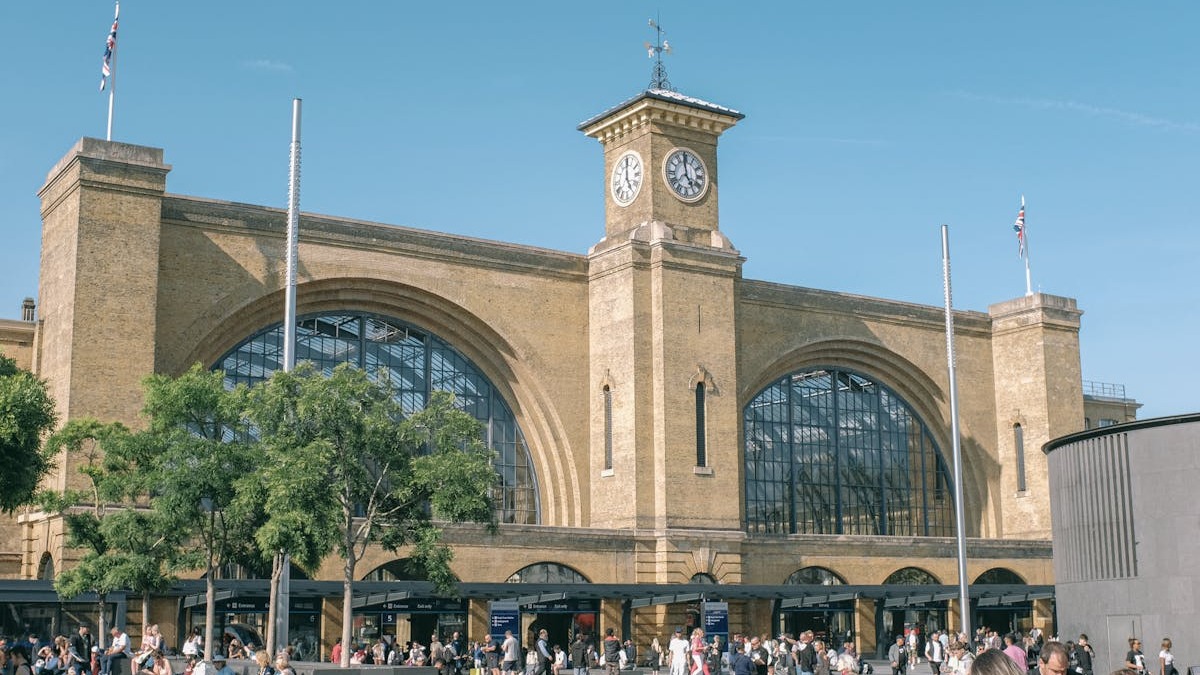 King's Cross - London's de facto AI district and the starting point of Saturday's march past the offices of OpenAI, Google DeepMind, and Meta.
"People like us are the ones who get hurt when AI systems make mistakes, or when there's job displacement." - Pull the Plug spokesperson
From Five to Five Hundred
Pause AI was founded in Utrecht in May 2023 by software entrepreneur Joep Meindertsma. Its first protest drew five people outside Microsoft's Brussels lobbying office. Joseph Miller, a former software engineer now pursuing a PhD in mechanistic interpretability at Oxford, leads the UK chapter.
The movement has grown steadily since. In November 2023, they protested outside the AI Safety Summit at Bletchley Park. In February 2024, they gathered outside OpenAI's San Francisco headquarters after the company dropped its prohibition on military use. By May 2024, protests were held across thirteen countries before the AI Seoul Summit. In 2025, they organized their biggest action yet outside Google DeepMind's London office after the company released Gemini 2.5 Pro without publishing the promised safety testing report.
Saturday's march represents another step change.
"We believe that AI is going to become extremely powerful on its current trajectory. Every part of society needs to be prepared for this change before it happens." - Joseph Miller, Pause AI UK Director
The Numbers Behind the Anger
The protesters' concerns aren't fringe. A poll cited by organizers found that 84% of British people fear the government will focus on its partnerships with large technology companies over the public interest when regulating AI. That tracks with a broader pattern of anxiety about AI safety and alignment that has moved from academic circles into mainstream politics over the past two years.
Three issues dominated the signs and speeches on Saturday.
Jobs
Block CEO Jack Dorsey cut 4,000 jobs last week, explicitly blaming AI. He told investors that "most companies" would reach the same conclusion within a year. Whether Dorsey is right - and there are good reasons to be skeptical of the framing - the announcement landed hard with a public already nervous about displacement.
Energy and Water
Ofgem has disclosed that roughly 140 data centres are seeking grid connections in the UK, requiring 50 gigawatts of capacity at peak time. For context, Britain's peak demand on a recent winter's day was 45 GW. Thames Water estimates a single hyperscale data centre can consume up to 19 million litres of water per day. The UN Special Rapporteur on water has called for a moratorium on data centre expansion due to cooling demands.
 Data centres seeking UK grid connections require 50 GW at peak - more than the country's entire winter electricity demand.
MPs on the Environmental Audit Committee have launched an inquiry into the environmental sustainability of data centres - a sign that the energy argument is gaining political traction.
Democratic Control
Pull the Plug's central demand - binding Citizens' Assemblies on AI - reflects a growing frustration with the gap between proprietary AI development and public accountability. The group argues that ordinary people should have a real say in how AI is used in their lives, and that voluntary commitments from AI companies aren't sufficient.
Counter-Argument
Five hundred marchers in a city of nine million isn't a political earthquake. The AI industry spent more money on GPU clusters last week than the entire anti-AI movement has spent in its three-year existence. OpenAI's latest funding round was $110 billion. The global AI market is projected to exceed $500 billion in annual revenue by 2027. Measured against these numbers, Saturday's march is a rounding error.
Industry executives have a standard response: they agree that AI safety matters, they support "thoughtful regulation," and they point to voluntary commitments made at summits in Bletchley Park and Seoul. Google DeepMind CEO Demis Hassabis has even expressed conditional support for an AI pause - if "international collaboration" exists. The caveat, of course, makes the condition impossible to satisfy while sounding reasonable.
There's also a legitimate argument that pausing frontier AI development unilaterally would hand a strategic advantage to countries with fewer safety constraints. China's 15th Five-Year Plan, which opens for debate at the National People's Congress this week, puts $70 billion in semiconductor subsidies at the center of its tech strategy. Pausing Western AI while Beijing accelerates is a hard sell in any government ministry.
The Broader Pattern
The London march didn't happen in isolation. A concurrent protest took place in Berlin outside the Federal Ministry for Economic Affairs and Energy. In East London, the Havering Day of Action targeted a proposed data centre development. Global Action Plan UK coordinated two days of action across the country on February 27-28.
This is starting to look less like a series of isolated demonstrations and more like the early infrastructure of a political movement. Pause AI now has chapters across multiple countries. Pull the Plug has a clear institutional demand - Citizens' Assemblies - that could translate into legislation. And the data centre issue provides a measurable, local hook for communities that might not otherwise care about frontier model training.
What the Market Is Missing
The market tends to notice protest movements only after they produce regulation. By that point, the cost of compliance is priced in and the opportunity to shape the rules is gone. The anti-AI movement is still small, still fragmented, and still struggling to articulate a unified policy platform. But the underlying grievances - job displacement, energy consumption, democratic deficit - are not going away. They're getting worse as the industry scales.
The 84% figure should worry executives more than the 500 headcount. You do not need a majority in the streets. You need a majority that answers "yes" when a pollster asks whether the government should regulate AI more aggressively. That majority already exists in Britain. What it lacks is a political vehicle. Saturday's march may be the first serious attempt to build one.
Sources:
- I checked out one of the biggest anti-AI protests ever - MIT Technology Review
- Largest ever AI protest march hits London - Pull The Plug
- Pressing pause on AI: London activists to march in largest AI safety protest yet - South West Londoner
- Protesters march in London against our AI overlords - Our Fair Future
- Hyperscale data centre protests - The Ecologist
- PauseAI - Wikipedia
