
Legal AI Startup Legora Raises $550M, Hits $5.55B
Swedish legal AI platform Legora closes a $550M Series D led by Accel, tripling its valuation to $5.55B in five months on the back of rapid US expansion.
 5 min read
Swedish legal AI startup Legora has raised $550 million in a Series D round led by Accel, pushing its post-money valuation to $5.55 billion - triple what it was worth five months ago when it closed a $150 million Series C at a $1.8 billion valuation.
The round brings total investment in Legora to over $800 million since its founding in 2023. Legal AI is now firmly a multi-billion-dollar category, and this raise is the largest single round the sector has seen outside of Harvey.
TL;DR
- $550M Series D led by Accel at $5.55B post-money valuation
- Tripled from $1.8B in five months - Series C was October 2025
- 800+ law firm customers including White & Case, Cleary Gottlieb, Linklaters
- New US offices in Houston and Chicago; targeting 300+ US employees by end of 2026
- Legal tech raised $5.99B in 2025, up 22% year-over-year
Valuation History
Legora's financing timeline reads like a compressed version of the AI investment cycle.
| Round | Amount | Valuation | Date |
|---|---|---|---|
| Series B | $80M | $675M | May 2025 |
| Series C | $150M | $1.8B | October 2025 |
| Series D | $550M | $5.55B | March 2026 |
The company was founded as Judilica, renamed Leya, then rebranded as Legora during 2024. It went through Y Combinator's Winter 2024 batch and started attracting serious capital after securing enterprise clients in the UK and Europe. The team grew from 40 employees a year ago to roughly 400 today.
Existing investors Benchmark, Bessemer Venture Partners, General Catalyst, ICONIQ Capital, Redpoint Ventures, and Y Combinator all re-upped. New investors in the Series D include Alkeon Capital, Bain Capital, Firstmark Capital, Menlo Ventures, Salesforce Ventures, Sands Capital, and Starwood Capital.
Who Benefits
Legora CEO Max Junestrand is the primary winner here, both financially and strategically. The capital gives him a two-year runway to chase US market share aggressively before any consolidation wave hits legal tech.
"Over the past year, the pace of adoption in the US has exceeded our expectations, as leading firms and in-house teams move decisively from experimentation to embedding AI across their organisations," Junestrand said in the announcement.
The company's US footprint has expanded fast. It opened a New York office in March 2025, and the Series D money will fund new offices in Houston and Chicago, with a stated goal of 300-plus US employees by year-end. Legora currently operates in 50-plus markets and counts White & Case, Cleary Gottlieb, Goodwin, Bird & Bird, Linklaters, Deloitte, and Dentons among its clients.
 Legora co-founders Max Junestrand (CEO) and Sigge Labor (CTO) at the company's Stockholm offices in 2025.
Source: sifted.eu
Legora co-founders Max Junestrand (CEO) and Sigge Labor (CTO) at the company's Stockholm offices in 2025.
Source: sifted.eu
For Accel partner Arun Mathew, the bet is that legal AI is transitioning from document-search tooling to full workflow automation - and Legora is best positioned to own that shift at scale.
"As in other service industries, work is quickly shifting to end-to-end workflows run by agents, and more of that work is happening on Legora," Mathew said.
European AI also wins here. This raise follows Nscale's $2B Series C, Europe's largest startup round ever. Stockholm is now a credible frontier AI hub, not just a place where IKEA and Spotify were built.
Who Pays
The obvious loser is Thomson Reuters, which owns Westlaw, and RELX Group, which owns LexisNexis. Both are still dominant in legal research, but both are charging law firms for software sold around a paradigm - keyword search plus billable-hour billing structures - that Legora and its peers are methodically making obsolete.
Law firm associates whose billable work consists of document review, contract analysis, and first-draft memos are the other category absorbing the cost. The OECD data showing AI capturing 61% of global venture capital included legal services as one of the highest-exposure sectors. Legora is precisely the product those projections were describing.
Harvey is the subtler complication. The San Francisco-based competitor raised at an $8 billion valuation in October 2025 and claims $100 million in ARR. It's better capitalized and has a head start in the US enterprise market. Legora is entering Harvey's home territory with a product that has been stronger in structured document processing and multi-market deployments - but Harvey isn't standing still.
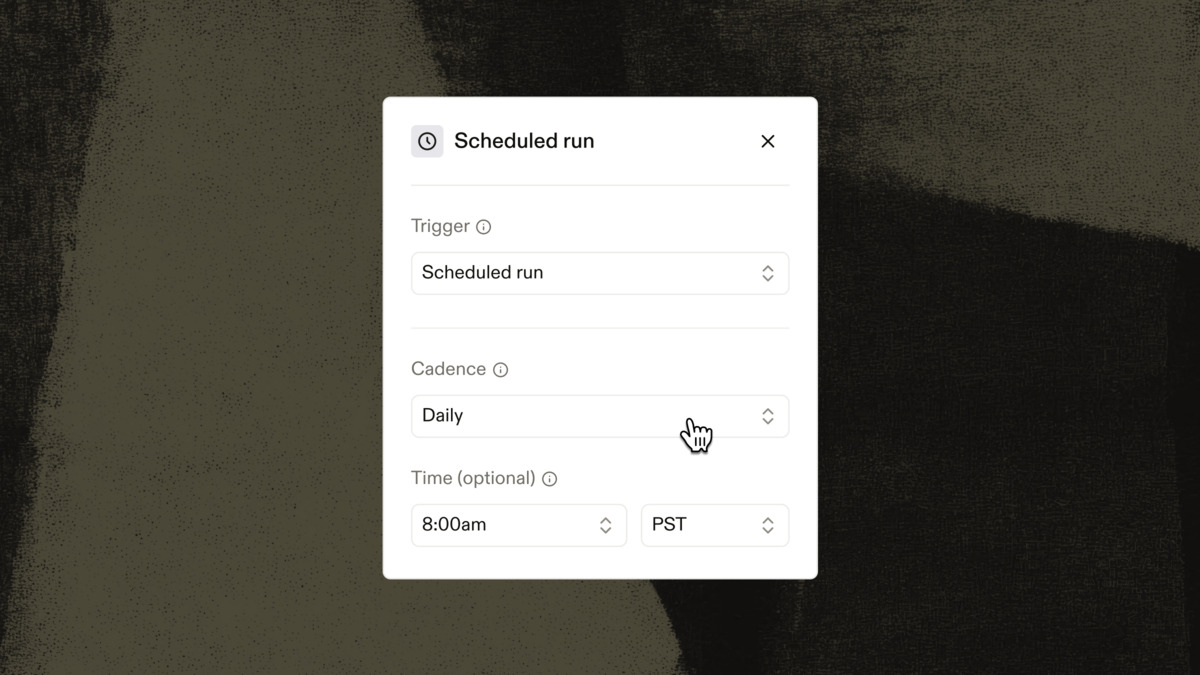 Harvey's Agent Builder interface, which lets law firms build custom AI workflows. Harvey and Legora are now competing directly for the same Am Law 100 clients.
Source: harvey.ai
Harvey's Agent Builder interface, which lets law firms build custom AI workflows. Harvey and Legora are now competing directly for the same Am Law 100 clients.
Source: harvey.ai
Legora doesn't disclose revenue, which means comparisons with Harvey are imprecise. What's clear is that the legal AI market can currently support at least two well-capitalized players at multi-billion-dollar valuations - but the consolidation question comes back into view after 2027 when differentiation between platforms will have to come from something other than fundraising pace.
The record February VC numbers driven by three AI giants show investors are still hungry to write large checks into legal AI. The bet is simpler than most: law generates enormous paper trails, law firms charge extraordinary hourly rates, and AI can compress the labor required for most of the routine work. Legora's $5.55 billion valuation is a claim that it's the company that wins that compression.
Europe has its second billion-dollar AI infrastructure bet in a month. Whether Legora can execute in a US market where Harvey has the brand recognition will determine if this valuation holds or becomes an artifact of a frothy 2026.
Sources: TechCrunch | Sifted | Tech.eu | Tech Funding News | Legal IT Insider | Artificial Lawyer (2025 market data)

