
Kleiner Perkins Goes All-In on AI With $3.5B Raise
Kleiner Perkins closes a $3.5B dual fund - its largest raise in the current era - betting on Anthropic, Harvey, and a 2026 IPO window.
 6 min read
Kleiner Perkins has closed $3.5 billion across two simultaneous funds, making it the firm's largest raise in the Mamoon Hamid era and its clearest signal yet that the AI boom has years of capital formation left to run.
TL;DR
- $1B early-stage fund (KP22) for seed and Series A companies, plus $2.5B growth vehicle for late-stage AI
- 75% larger than the firm's previous $2B dual raise less than two years ago
- Portfolio includes Anthropic, Harvey, Together AI, OpenEvidence, and Safe Superintelligence
- Both Anthropic and SpaceX flagged as expected 2026 IPO candidates
The announcement, made March 24, comes as rival mega-funds are also racing to lock up LP capital.
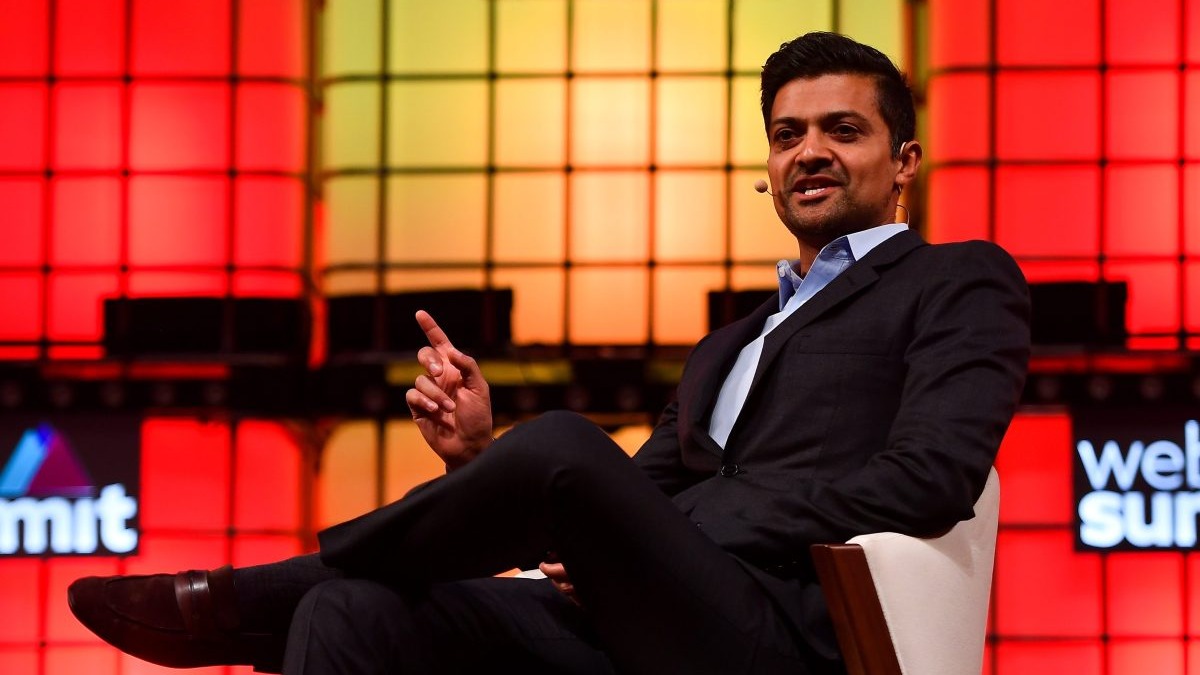 Mamoon Hamid has led Kleiner Perkins' turnaround since joining in 2017, returning more than $13 billion to LPs across the current era.
Source: techcrunch.com
Mamoon Hamid has led Kleiner Perkins' turnaround since joining in 2017, returning more than $13 billion to LPs across the current era.
Source: techcrunch.com
But the KP numbers tell a specific story: the early-stage fund doubled to $1B (from $825M in 2024), and the growth vehicle jumped from $1.2B to $2.5B. LPs who backed the firm through a rough mid-2010s patch are being rewarded - KP has returned more than $13 billion to investors since 2018, with early Figma investors - including KP alongside Greylock and Index Ventures - earning more than $1.4 billion combined from that exit.
The Deal
The two funds are distinct mandates, not a blended pool. KP22 - the firm's 22nd flagship vehicle since its 1972 founding - targets companies at seed and Series A, where KP has historically earned its strongest returns. The $2.5B growth vehicle chases high-inflection late-stage companies, mainly in AI, where Kleiner competes directly with Thrive Capital, General Catalyst, and a flood of crossover funds.
Managing partner Mamoon Hamid was direct in the announcement: "Proud to announce KP22, $1 billion to back early-stage companies and $2.5 billion in growth funds. $3.5 billion in total." Co-lead partner Ilya Fushman added: "Thrilled to announce... $3.5 billion in total."
The firm operates with five investing partners - Hamid, Fushman, Josh Coyne, Leigh Marie Braswell, and Ted Schlein - after two recent departures. Ev Randle left for Benchmark; Annie Case moved to an advisory role. Five partners managing $3.5B is not a small ticket per partner.
How It Compares
| Fund | Year | Total Size | Early-Stage | Growth |
|---|---|---|---|---|
| KP20 + KP Select II | 2022 | ~$1.9B | ~$700M | ~$1.2B |
| KP21 + KP Select III | 2024 | ~$2.0B | $825M | $1.2B |
| KP22 + Growth 2026 | 2026 | $3.5B | $1.0B | $2.5B |
| Thrive X (rival) | 2025-26 | $10B+ | - | Growth-focused |
| General Catalyst (rival) | 2025-26 | ~$10B (target) | - | Multi-stage |
KP isn't chasing the biggest number. Thrive X's $10B-plus and General Catalyst's reported $10B target dwarf it. The firm is betting that a lean partnership with high conviction beats a sprawling multi-stage platform.
Who Benefits
Limited partners are the immediate winners. The Figma IPO returned multiples that have not been widely disclosed but that multiple sources describe as extraordinary - and the next liquidity wave may be larger. Anthropic, valued at roughly $330 billion in its most recent primary round, is named across reports as an expected 2026 IPO candidate. SpaceX is cited alongside it. Both are KP portfolio companies. An Anthropic IPO at anything near its private valuation would be among the largest venture-backed exits in history.
Portfolio founders also benefit from the growth fund's deeper pockets. KP can now write larger checks into Harvey (legal AI, $8B valuation), OpenEvidence (medical AI, $12B valuation), Together AI, and Safe Superintelligence without competing for allocation against its own early-stage deployment pressure.
The firm's AI-era returns are being noticed. A longtime LP who considered leaving around 2015 due to poor returns was quoted in Fortune as now believing Hamid "is gonna be in the pantheon." That kind of testimonial moves institutional capital.
Who Pays
LP capital is patient money, but it's not free. Pension funds, endowments, and sovereign wealth funds allocating to this fund are implicitly betting that 2026 and 2027 represent a real liquidity window - not another stretch of locked-up capital with deferred distributions. If the Anthropic and SpaceX IPOs slip to 2027 or beyond, or price below private valuations, the growth fund's NAV will sting.
Rival firms at the seed and Series A stage are in a harder position. KP22 at $1B means more capital chasing the same deals at early stages, with a brand that can still command allocation in competitive rounds. Smaller emerging managers working the same deal flow don't have a Figma or an Anthropic to point to.
There's also a less visible cost: concentration risk. KP's portfolio in the AI era is heavily weighted toward a handful of large bets. If Anthropic delays its IPO or faces regulatory headwinds - the firm is in the middle of a contentious dispute with the Pentagon over military AI use - the growth fund's marks take a hit that the early-stage fund can't absorb.
The Context
This raise is not happening in isolation. The AI venture market has compressed dramatically around a small number of firms. As OECD data showed earlier this year, AI companies now capture more than 61% of all global venture capital. The February 2026 record showed three AI companies alone absorbing 83% of US VC flow in a single month.
"The AI super-cycle is one of the most important company-building moments in our lifetimes, and we are still in the early innings."
- Kleiner Perkins, on the fund announcement
That framing - "early innings" - is doing real work in LP conversations. It justifies a 75% fund increase over two years by arguing the addressable market is still expanding. Whether that holds depends on whether frontier AI models actually convert to enterprise revenue at the scale that current valuations require.
KP's total AUM now passes $21 billion. The firm has returned more than $6 billion to LPs across all funds in the Hamid-Fushman era, and counting. Historical portfolio highlights - Google, Amazon, Genentech, Figma, Slack, Spotify - appear in the firm's pitches to new LPs as proof that early bets compound across decades.
 AI venture capital has concentrated dramatically. Kleiner Perkins is positioning its new growth fund to capture returns from late-stage companies approaching liquidity events.
Source: unsplash.com
AI venture capital has concentrated dramatically. Kleiner Perkins is positioning its new growth fund to capture returns from late-stage companies approaching liquidity events.
Source: unsplash.com
The Anthropic position is the card KP is playing most visibly. The firm's previous $6B secondary share sale at a $350B valuation gave early KP investors partial liquidity while keeping the position on the books at a price that makes the growth fund's deployment story coherent.
What Happens Next
Three things will determine whether KP's growth fund produces the returns LPs are pricing in.
First, the IPO window. Both Anthropic and SpaceX need public markets to cooperate in 2026. A broader tech selloff or AI valuation reset would push both listings and compress growth fund marks considerably.
Second, deal flow at Series A. KP22's early-stage deployment will be watched closely. If the firm keeps winning competitive seed and Series A rounds against better-resourced platforms, it confirms the lean-partnership model. If it loses deal flow to Thrive's larger check sizes, the early-stage strategy needs revisiting.
Third, AI enterprise monetization. The firms in KP's portfolio are all high-valuation bets on AI becoming a genuine revenue layer for enterprises, not a cost center. Harvey's $8B valuation and OpenEvidence's $12B valuation both require very large contract sizes to justify. The next twelve months of enterprise AI deal-making will either confirm or challenge those marks.
The fund is raised. The bets are placed. The math now depends on things outside Menlo Park's control.
Sources: TechCrunch: Kleiner Perkins Goes All-In on AI - Crunchbase: Kleiner Perkins Raises AI-Focused Funds - Fortune: Inside KP's Turnaround - Benzinga: KP to Raise $3.5B for AI Startups

