
Jersey Mike's Filed for $12B IPO with 22 AI Mentions
Jersey Mike's S-1 mentions AI 22 times but describes no product, tool, or strategy - a sign of where the hype cycle now stands.
 5 min read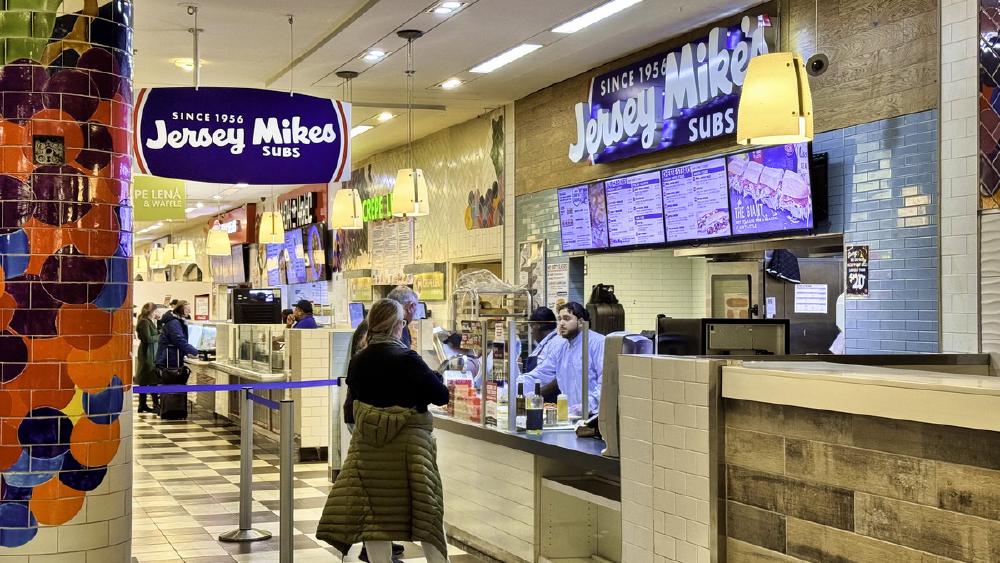
Jersey Mike's filed for its initial public offering on July 2, targeting a $12 billion valuation as Blackstone seeks an exit from the 3,256-store submarine sandwich chain. The filing hit the SEC's public register on schedule. Then people actually read it.
The company's S-1 mentions "artificial intelligence" and the abbreviation AI a total of 22 times. For comparison, lightning gets zero mentions - despite a storm striking a Texas franchise location in 2021. Software appears 52 times. Data appears 112 times. Jersey Mike's provides no explanation of what the company actually does with AI, beyond a boilerplate risk warning that the technology might one day pose a regulatory challenge.
Danny DeVito, the chain's celebrity spokesman, appears once.
TL;DR
- Jersey Mike's filed for NYSE IPO targeting $12B valuation; Blackstone is the seller
- The S-1 mentions AI 22 times with no specific product, tool, or strategy described anywhere in the filing
- FY2025 revenue ~$724M, adjusted EBITDA ~$328M at a 47% margin - the underlying business is strong
- The filing extends a broad pattern of non-AI companies adding AI language to attract institutional capital
- VCs now routinely ask portfolio companies to articulate an AI strategy before funding advances
What the Filing Actually Says
The S-1's AI references divide into two categories: risk language and aspiration.
The risk language is standard. Jersey Mike's warns that AI-related regulations could affect operations, that the technology could disrupt hiring, and that cybersecurity threats involving AI are a concern. These sentences appear in virtually every S-1 filed this year across every industry.
The aspirational language is short. The company states it's "beginning to use AI Technologies in our business" - then offers no further information. No vendor name, no deployment timeline, no business unit, no expected cost reduction.
| Topic | Times Mentioned | What the Filing Documents |
|---|---|---|
| Data | 112 | POS analytics, customer behavior |
| Software | 52 | Ordering platform, operations management |
| Artificial Intelligence | 22 | Boilerplate risk language only |
| Cybersecurity | ~15 | Standard risk disclosure |
| Lightning | 0 | Zero - one franchise struck in Texas, 2021 |
Jersey Mike's manages data aggressively and runs sophisticated software across thousands of locations. Its AI disclosure says nothing because there's nothing to say yet. That's the table in one sentence.
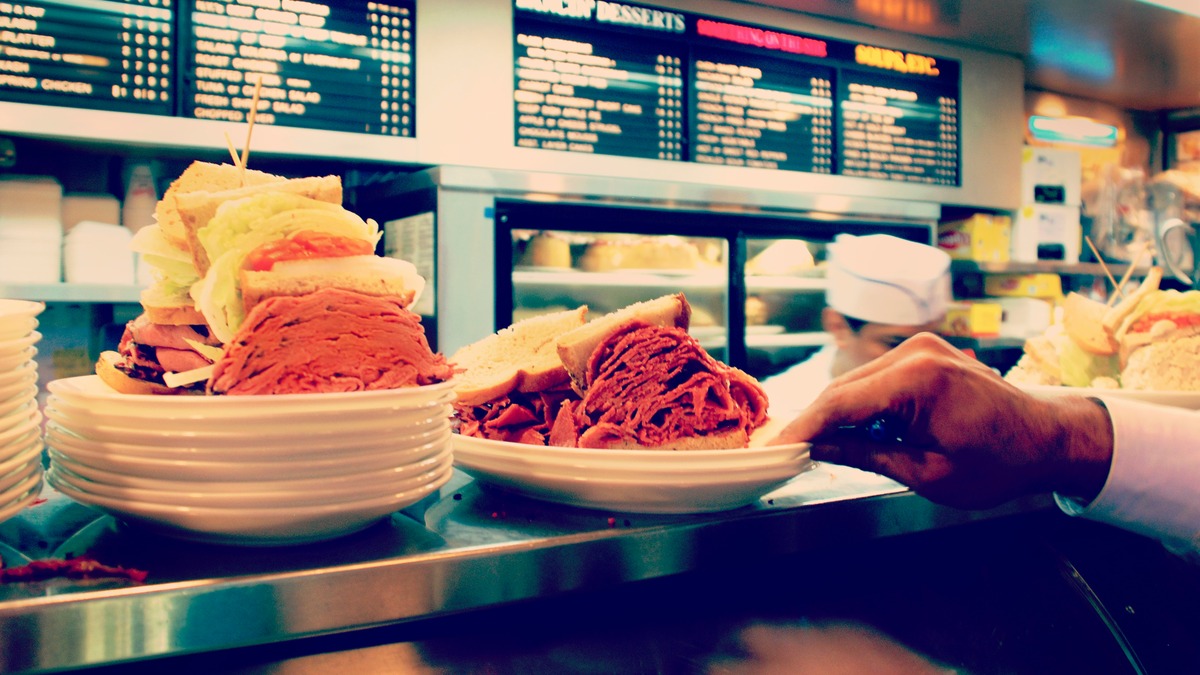 Jersey Mike's operates over 3,256 locations with average unit volume near $1.4 million - roughly three times Subway's US figure.
Source: unsplash.com
Jersey Mike's operates over 3,256 locations with average unit volume near $1.4 million - roughly three times Subway's US figure.
Source: unsplash.com
The Pattern Behind the Pattern
Jersey Mike's isn't doing this alone. The behavior has spread across the 2026 IPO wave.
Venture capital investors now routinely ask portfolio companies to articulate an AI strategy before funding rounds advance. Institutional allocators have started using AI mentions in S-1 language as a screening signal. That pressure flows downstream: if VCs want to hear about AI, companies mention AI. If companies mention AI, S-1 drafters include AI disclosures. If S-1 drafters include AI disclosures, risk attorneys add AI risk language.
"The risk of AI disaster for a sandwich shop is comparable to being struck by lightning," TechCrunch's Julie Bort observed, noting that the filing mentioned the 2021 weather event zero times despite it actually happening.
The comparison to the dot-com era keeps surfacing, and it isn't wrong. In 1998 and 1999, adding ".com" to a company name or announcing an internet strategy was enough to move a stock. The mechanism - investor signal over business substance - is identical to what's happening now with AI disclosures. Baidu discovered that gap has a price when it lost $11 billion after failing to close the distance between AI marketing and measurable deployment.
Jersey Mike's isn't Baidu. Its business doesn't depend on AI claims. But the S-1 language reveals something: at this point in the cycle, companies feel compelled to mention AI even when they have nothing specific to say about it.
 Stock market speculation has always followed the same arc: a credible signal spreads, imitation follows, and eventually the market asks for evidence.
Source: wikimedia.org
Stock market speculation has always followed the same arc: a credible signal spreads, imitation follows, and eventually the market asks for evidence.
Source: wikimedia.org
Counter-Argument
Franchise chains at scale have genuine use cases for AI, and the instinct to list the technology isn't automatically hollow.
At 3,000-plus locations, improvements in supply-chain optimization, dynamic pricing, and staffing predictions compound across thousands of units. Starbucks deployed an AI-powered inventory tool to do exactly this kind of work. The tool misidentified ingredient levels at scale and was eventually retired - but the intent was legitimate and the business problem was real.
Jersey Mike's $328 million in FY2025 adjusted EBITDA and a 47% margin give it the financial headroom to invest. The company could plausibly run AI-driven scheduling, demand forecasting, or regional pricing across its franchise network. These applications exist and restaurant chains are already using them.
The problem isn't that Jersey Mike's couldn't deploy AI. The problem is that the S-1 describes none of this. What's in the document reads like a hedge: language that signals awareness without committing to anything a shareholder could track.
What the Market Is Missing
Blackstone bought Jersey Mike's in 2024 at an $8 billion valuation. The $12 billion IPO target implies 50% growth in under two years, on FY2025 revenue of $724 million. The business has real momentum built on strong unit economics, not AI claims.
Blackstone's AI infrastructure bets are in compute and data centers. The 22 AI mentions in the Jersey Mike's S-1 didn't change the unit volume, the franchise royalty structure, or the competitive position against Subway.
The open question is whether the language affects the multiple. If institutional allocators actually discount the absence of AI substance in what's structurally a franchising company with strong cash flows, the boilerplate costs Jersey Mike's nothing. If the AI mentions add points to the valuation on top of what the financial profile already justifies, that's the more concerning outcome - because it means the signal is still working even when it's empty.
What the filing confirms is that by mid-2026, AI risk language has become the financial equivalent of a smoke detector. Every commercial building has one, few buildings have burned, and nobody reads the specifications unless something goes wrong. That's fine for buildings. For IPO S-1 filings, the question is who's checking whether the detector is connected to anything.
Sources:
- Jersey Mike's IPO illustrates how bad the AI hype has become - TechCrunch
- Jersey Mike's Files $12 Billion NYSE IPO as Blackstone Seeks Exit - Eastern Herald
- Blackstone serves up a potentially massive Jersey Mike's IPO - Restaurant Business
- Jersey Mike's IPO Shows AI Hype Has Officially Jumped the Shark - TechBuzz

