
Japan Forms $6B AI Alliance to Rival US and China
SoftBank, Sony, Honda, and NEC have formed Japan AI Foundation Model Development, backed by a $6.3 billion government commitment to build a trillion-parameter physical AI model on Japanese soil.
 6 min read
Four of Japan's largest technology and industrial corporations launched a joint venture on April 12 to build a domestically-owned AI foundation model - one designed not for chatbots, but for machines. The company, named Japan AI Foundation Model Development, has the full weight of the Japanese state behind it: approximately ¥1 trillion, or $6.3 billion, allocated over five years by NEDO, Japan's New Energy and Industrial Technology Development Organisation.
TL;DR
- SoftBank, Sony, NEC, and Honda founded Japan AI Foundation Model Development on April 12, 2026
- Government backing:
¥1 trillion ($6.3 billion) from NEDO over five years - Goal: a trillion-parameter physical AI model to control robots and autonomous machines
- Training and deployment stay on Japanese soil - no US cloud providers
- Japan holds 70% of the global industrial robotics market; the labour shortage is the existential driver
The Alliance
Who is in it and why
SoftBank and NEC lead the AI model development. Honda takes first deployment rights in autonomous vehicles. Sony handles robotics and gaming hardware applications. Preferred Networks, the Tokyo-based AI startup that has built a strong reputation in industrial robot software, also participates.
Industrial money backs the venture too. Nippon Steel, Kobe Steel, MUFG Bank, Sumitomo Mitsui Banking Corporation, and Mizuho Bank have all taken minority stakes - a sign that Japan's established industrial and financial base views this as a continuity bet, not a speculative one.
The venture targets a trillion-parameter model architecture specifically designed for physical AI: systems that perceive and act in the real world, controlling robotic arms and autonomous systems rather than creating text. Applications are expected to arrive by 2030.
The data sovereignty clause
A central design constraint distinguishes this from Japan's previous AI strategy: training occurs in Japan, on Japanese data, using Japanese infrastructure. There is no dependency on US cloud platforms like Amazon Web Services or Google Cloud.
This is a deliberate break. Japan has spent years sending data and money to American AI providers and receiving AI products in return - a "digital deficit" that government economists have raised as a structural concern. The Japan AI Foundation Model Development venture is the industrial establishment's answer to that critique.
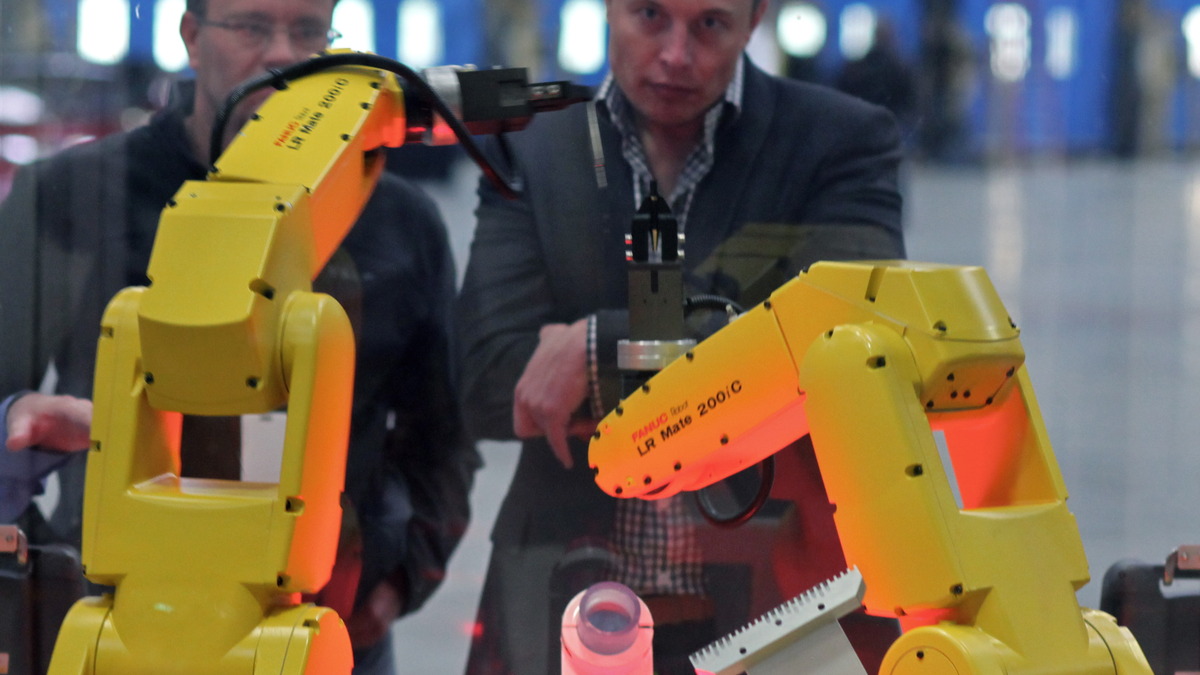 Industrial robots from Japanese manufacturers like FANUC are already dominant globally. The new alliance wants to add AI brains to Japan's existing hardware advantage.
Source: commons.wikimedia.org
Industrial robots from Japanese manufacturers like FANUC are already dominant globally. The new alliance wants to add AI brains to Japan's existing hardware advantage.
Source: commons.wikimedia.org
The Workforce Crisis Behind the Bet
A number that concentrates minds
Japan will be short 11 million workers by 2040. The country's working-age population peaked at 87.3 million in 1995 and has fallen by more than 13 million since. Last year, working-age citizens made up just 59.6% of the total population - a figure that will keep shrinking.
For manufacturers and logistics operators, this isn't a future scenario. It's a present operating constraint. Around half of Japanese firms reported a lack of qualified full-time employees in 2024 surveys. Construction sites have average worker ages above 50.
Hogil Doh of Global Brain, an early-stage AI investor with deep ties to Japan's industrial sector, frames the problem plainly:
"Physical AI is being bought as a continuity tool: How do you keep factories, warehouses, infrastructure running with fewer people?"
Where Japan already leads
Japan isn't entering robotics from behind. Its manufacturers hold roughly 70% of the global industrial robotics market. Five of the ten largest robot manufacturers in the world are Japanese, including FANUC, Yaskawa Electric, and Kawasaki Robotics. Those companies have been selling industrial arms for decades.
What they have not had is AI that can adapt. Traditional industrial robots follow fixed programs. A robot arm that can pick up an unknown object, correct for a misaligned part, or adjust to a changed factory layout requires a foundation model with real-world reasoning. That is the gap Japan AI Foundation Model Development aims to close.
Sho Yamanaka of Salesforce Ventures, who has tracked Japan's automation sector closely, noted the shift in framing:
"The driver has shifted from simple efficiency to industrial survival."
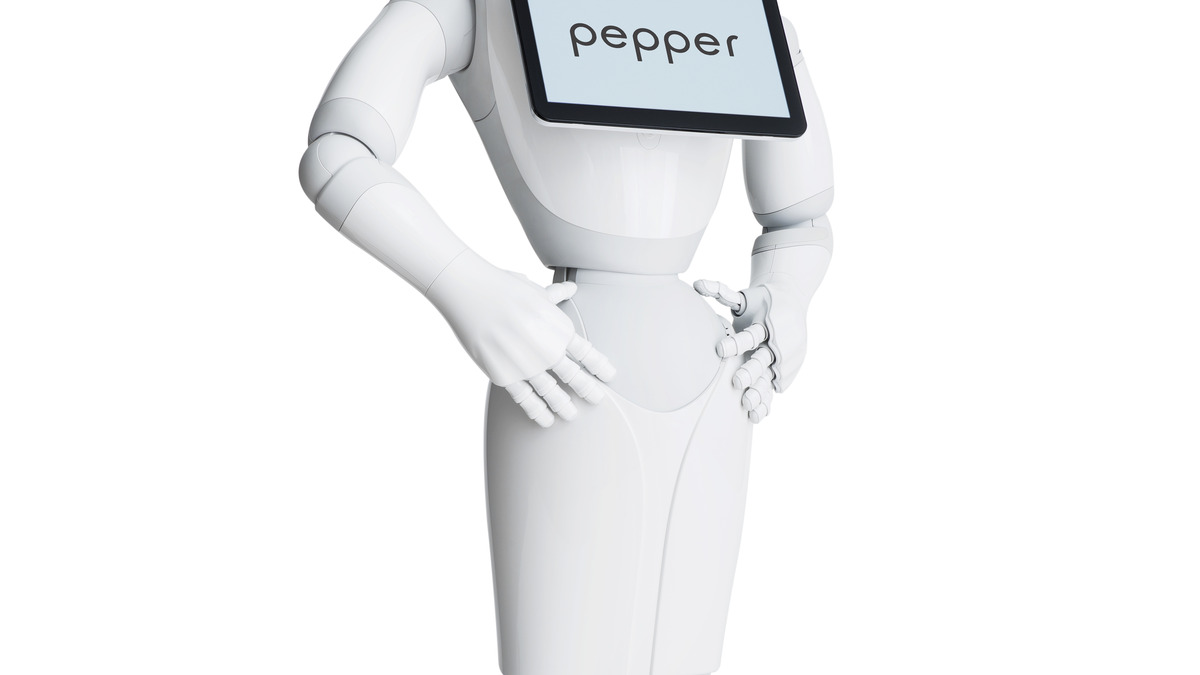 SoftBank's Pepper humanoid robot, first deployed commercially in 2015, illustrates the company's long-standing bet on robotics. The Japan AI Foundation Model alliance shifts that focus from consumer-facing hardware to industrial physical AI.
Source: commons.wikimedia.org
SoftBank's Pepper humanoid robot, first deployed commercially in 2015, illustrates the company's long-standing bet on robotics. The Japan AI Foundation Model alliance shifts that focus from consumer-facing hardware to industrial physical AI.
Source: commons.wikimedia.org
The SoftBank Paradox
Investing in both directions
SoftBank CEO Masayoshi Son led the $40 billion OpenAI funding round in 2025 - the largest single investment in AI history at the time. Son also chairs the Japan AI Foundation Model venture. Both positions are deliberate.
For workloads that require data confidentiality, physical control, or domestic regulatory compliance, a US-built general model is a poor fit. A hospital managing patient records, a defense contractor building autonomous systems, or an automaker training models on proprietary manufacturing data can't route that work through a third-party American cloud. The Japan AI Foundation Model venture addresses that constraint directly.
Anthropic's own push into physical hardware through its growing enterprise infrastructure partnerships shows a similar pattern: the industry is bifurcating between frontier general models and domain-specific systems with hardened deployment constraints.
The government's market target
Japan's Ministry of Economy, Trade and Industry stated in March that it aims to capture 30% of the global physical AI market by 2040. That's a specific number attached to a specific sector - not a broad AI supremacy goal, but a bet that physical AI will be large enough to matter and that Japan's robotics heritage gives it a structural advantage.
The $6.3 billion NEDO commitment reinforces the seriousness of the target. For comparison, Eclipse Ventures raised $1.3 billion in January to back physical AI startups across the US - roughly a fifth of what Japan is committing as a government floor.
What the Alliance Does Not Guarantee
The software gap
Japan's hardware position is strong. Its software position is not. The US and China have moved faster on full-stack system integration - the software layer that makes a robot arm useful across contexts rather than just in the specific factory it was configured for. NEC and SoftBank have AI research capabilities, but neither has shipped a competitive frontier foundation model.
Building a trillion-parameter model from scratch, with 100 engineers as the stated staffing target, is ambitious by any measure. For context, OpenAI has roughly 3,000 employees companywide; the alliance's target headcount for model development is a fraction of that. A domestically-built frontier model requires more than funding - it requires a concentration of top research talent that Japan has historically struggled to retain against US salaries and opportunities.
The 2030 timeline
Physical AI applications by 2030 gives the venture four years. That's not long given the development cycles involved. Microsoft has already committed $10 billion to Japanese AI infrastructure through 2029, and US companies aren't standing still.
The venture's success may depend less on building a model that beats GPT or Gemini and more on building one that's specifically good at the industrial tasks Japanese manufacturers need - perception in cluttered factory environments, manipulation under uncertainty, coordination across robot fleets. Those are narrower problems, and Japan's hardware expertise gives it real data advantages there.
Whether Japan AI Foundation Model Development builds a globally competitive frontier model or a highly effective industrial specialist, the structure of the bet is clear. Japan is done waiting for Silicon Valley to solve Japanese problems.
Sources:
- Japan Bets Big on Physical AI With SoftBank, Honda, Sony and NEC - TechWire Asia
- Japanese tech giants launch joint venture targeting physical AI - SiliconANGLE
- Japan Launches National AI Push as SoftBank, Sony, Honda Form New Firm - Vision Times
- Japan is proving experimental physical AI is ready for the real world - TechCrunch
- SoftBank, NEC, Sony, Honda Form New Company - Benzinga

