
Huawei Takes Atlas 950 Global to Challenge Nvidia
Huawei debuts its Atlas 950 SuperPoD at MWC Barcelona - 8,192 NPUs delivering 8 ExaFLOPS - marking its first overseas showcase of the AI supercomputer that directly targets Nvidia's cluster dominance.
 6 min read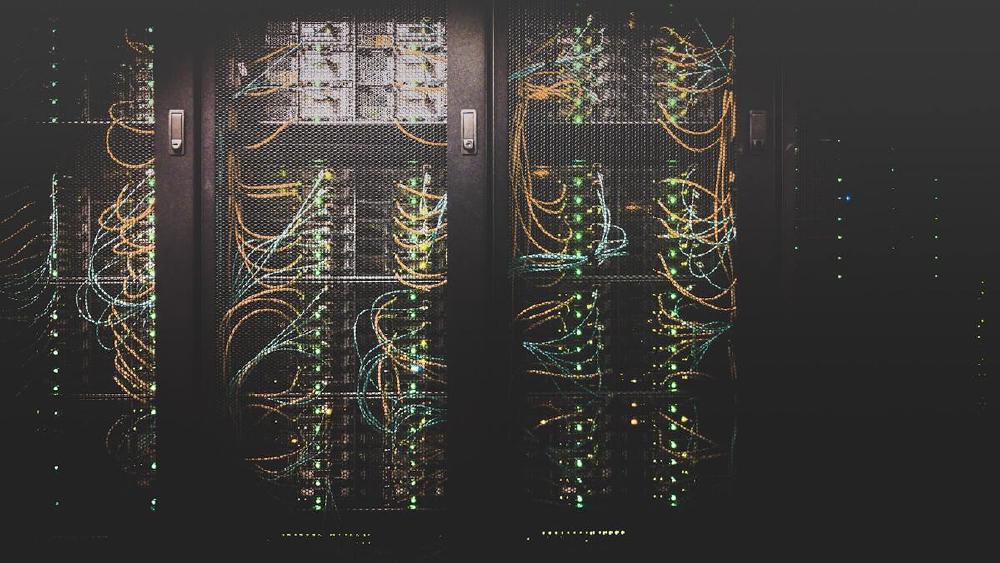
Huawei just brought its biggest AI weapon to Nvidia's backyard. At Mobile World Congress in Barcelona today, the Chinese tech giant unveiled the Atlas 950 SuperPoD to international audiences for the first time - an 8,192-NPU AI supercomputer that the company says delivers 6.7 times the computing power of Nvidia's competing platform.
The timing is deliberate. As Nvidia prepares its next-generation NVL144 for the second half of 2026, Huawei is making its case to the global market that raw chip performance isn't the only way to win the AI infrastructure race.
The Numbers
The centerpiece of this story is scale. Here is how Huawei's Atlas 950 SuperPoD stacks up against Nvidia's GB300 NVL72 - currently the gold standard for AI data center racks.
| Spec | Huawei Atlas 950 SuperPoD | Nvidia GB300 NVL72 |
|---|---|---|
| Processing Units | 8,192 Ascend 950DT NPUs | 72 Blackwell Ultra GPUs |
| FP8 Performance | 8 ExaFLOPS | ~0.55 ExaFLOPS |
| FP4 Performance | 16 ExaFLOPS | 1.1 ExaFLOPS |
| Interconnect Bandwidth | 16 PB/s | 130 TB/s |
| Memory | 1,152 TB unified | 288 GB per GPU (~20.7 TB total) |
| Interconnect Technology | UnifiedBus | NVLink |
| Physical Footprint | 128 compute + 32 comm cabinets | Single rack (42U) |
| Commercial Availability | Q4 2026 | Available now |
The comparison requires a caveat. These are fundamentally different products at different scales. Nvidia's NVL72 is a single rack. Huawei's SuperPoD is 160 cabinets. Huawei is comparing its entire cluster to a single Nvidia node - a framing that flatters the bigger system.
But that's exactly the point Huawei is making.
"We may not match Nvidia's performance on a per-chip basis, but we aim to surpass it at the cluster level through massive chip integration."
- Eric Xu, Huawei rotating chairman
 The Atlas 950 SuperPoD packs 8,192 Ascend 950DT NPUs into 160 cabinets - Huawei's answer to Nvidia's single-rack NVL72 approach.
The Architecture
UnifiedBus: Huawei's NVLink Killer
The key technology is UnifiedBus, Huawei's proprietary interconnect designed to solve the scaling problem that plagues traditional GPU clusters. In most multi-chip AI systems, adding more processors eventually hits diminishing returns - the chips spend more time communicating than computing.
UnifiedBus treats the entire 8,192-NPU array as a single logical computer with unified memory addressing. Huawei claims this eliminates the latency and synchronization bottlenecks that force developers to work around hardware limitations when training trillion-parameter models.
The Ascend 950DT
The SuperPoD runs on Huawei's Ascend 950DT chips - the latest in its Ascend AI processor line, which already powers China's GLM-5 frontier model and is central to DeepSeek's push to lock American chipmakers out of V4. The 950DT is manufactured by SMIC on its N+3 process node - a 5nm-class technology achieved without access to ASML's extreme ultraviolet (EUV) lithography equipment.
The Ascend 950 series is also the first Chinese chip family to feature integrated in-house High Bandwidth Memory (HBM), reducing Huawei's dependence on foreign memory suppliers.
The Software Play
Hardware means nothing without software, and Huawei knows it. With the SuperPoD, the company announced it has fully open-sourced its CANN heterogeneous compute architecture, including operator libraries, acceleration tools, and programming frameworks.
The ecosystem now supports Triton, PyTorch, vLLM, and verl - the same tools that Nvidia's developer community relies on. Huawei is also pushing openEuler as the operating system foundation, and says it has adapted over 150 mainstream AI models covering roughly 90% of common enterprise use cases.
This isn't a minor detail. Nvidia's real moat has never been the GPU silicon alone - it's CUDA, the software ecosystem that makes switching costs enormous. Huawei's open-source strategy is a direct attempt to lower that barrier.
The Counter-Argument
Per-Chip Performance Still Matters
Eric Xu's admission that Huawei can't match Nvidia chip-for-chip is more significant than the headline numbers suggest. The Ascend 950DT, while improved, is still manufactured on SMIC's N+3 process at estimated yields of 30-40% - far below the 80%+ that TSMC achieves for Nvidia. Lower yields mean higher effective costs per chip, even if the sticker price is lower.
Export Controls Are Real
The US Commerce Department has declared that using Huawei Ascend chips anywhere in the world violates US export controls. For multinational companies operating in both US and Chinese markets, rolling out Atlas 950 infrastructure creates legal and compliance risks that no spec sheet can resolve.
Customer Trust Is Earned Slowly
Nvidia ships today. The GB300 NVL72 is available now, with a massive installed base and proven reliability. The Atlas 950 SuperPoD is scheduled for Q4 2026 - eight months away. In AI infrastructure, where every quarter of delayed training translates to competitive disadvantage, "available later" is a hard sell.
 MWC Barcelona - Huawei chose the world's largest mobile industry event to make its global AI infrastructure pitch, not a domestic trade show.
Who This Is Actually For
The Atlas 950 is not competing for the same customers as Nvidia's NVL72 - at least not yet. Its real addressable market is the growing number of countries and companies that either can't access Nvidia hardware due to export restrictions, or prefer not to depend on a single American vendor for their AI infrastructure.
That list is longer than Silicon Valley wants to admit. Chinese AI labs - DeepSeek, Zhipu AI, Baidu, Alibaba - are the obvious buyers. But Huawei's decision to debut the SuperPoD at MWC Barcelona, not at a domestic trade show, signals ambitions beyond the Chinese market. The open-source software strategy, the PyTorch compatibility, the emphasis on "a new option for global computing" - this is a pitch to the Middle East, Southeast Asia, Africa, and parts of Europe that are building sovereign AI infrastructure.
What the Market Is Missing
The market is still pricing Nvidia's dominance as permanent. And on a per-chip basis, it probably is - for now. But Huawei isn't playing the per-chip game. It's playing the cluster game, the ecosystem game, and the geopolitics game simultaneously. The Atlas 950 SuperPoD may not convert a single Nvidia customer in San Francisco. But for the 80% of the world that's not San Francisco, it is becoming a credible alternative - and that's a market worth trillions.
Sources:
- TrendForce: Huawei to Show Atlas 950 SuperPoD Overseas for First Time
- Huawei: SuperPoD Portfolio Creates New Option for Global Computing at MWC Barcelona 2026
- TechPlugged: Huawei Debuts Atlas 950 SuperPoD and TaiShan 950 SuperPoD at MWC 2026
- TechWire Asia: Huawei Rolls Out AI Computing Platform for Global Enterprises at MWC
- Tom's Hardware: U.S. Issues Worldwide Crackdown on Using Huawei Ascend Chips
- FinancialContent: Silicon Sovereignty - How Huawei and SMIC Are Neutralizing US Export Controls in 2026
