
Huawei Eyes $12B as Nvidia Cedes China AI Market
Bernstein projects Nvidia's China AI chip share falls from 66% to 8% in 2026 while Huawei targets $12B in revenue, with ByteDance alone committing $5.6B in Ascend 950PR orders.
 6 min read
ByteDance is committing $5.6 billion to Huawei's Ascend 950PR processor this year - more than TikTok's parent has ever spent on a single chip supplier, for a chip that only entered mass production in March.
That single order captures what's happening across China's AI infrastructure market right now. Nvidia's H100 is banned. The H20 faces licensing hurdles that make procurement unpredictable. And Huawei - manufacturing on SMIC's 7nm process at prices running roughly 20% above last year - is the only realistic option for Chinese hyperscalers that need to keep training and inference workloads moving.
TL;DR
- $12 billion: Huawei's AI chip revenue target for 2026, up 60% from $7.5B in 2025
- $5.6 billion: ByteDance's committed order for Ascend 950PR - nearly half of Huawei's 750,000-unit annual production target
- 8%: Bernstein's projected Nvidia China AI chip market share for 2026, down from 66% in 2024
- 50%: Bernstein's projected Huawei share of China's AI chip market by end of 2026
- 20%: Price premium Huawei is already capturing as demand outpaces supply
The Market, By the Numbers
The shift in China's AI chip market over the past 18 months is structural, not cyclical. These are the figures that define where things stand.
| Metric | 2024 | End 2025 (est.) | 2026 (Bernstein proj.) |
|---|---|---|---|
| Nvidia China AI chip market share | 66% | ~40% | 8% |
| Huawei China AI chip market share | - | ~40% | 50% |
| Huawei AI chip revenue | - | $7.5B | $12B (target) |
| ByteDance Ascend 950PR spend | ~$0 | - | $5.6B |
| Ascend 950PR production (units) | 0 | 0 | 750,000 (target) |
The Bernstein projections assume the current export control regime holds. That's not guaranteed - the Trump administration has reportedly explored partial H20 exceptions - but the structural momentum favors Huawei regardless of short-term policy tweaks.
What the Numbers Say
ByteDance Bet Sets the Floor
At roughly $16,000 per Ascend 950PR chip, ByteDance's $5.6 billion order implies around 350,000 units - nearly half of Huawei's entire 2026 production run going to one buyer. ByteDance's AI compute needs are enormous: the company runs TikTok's recommendation engine, a growing suite of internal AI tools, and the Doubao large language model. Until early 2025, most of that ran on Nvidia hardware.
The order is significant not just for its size, but for what it signals about chip quality. ByteDance's engineers don't buy hardware that doesn't perform. If $5.6 billion is going to Huawei, Ascend 950PR is passing internal benchmarks at a level that justifies rearchitecting infrastructure around it.
Alibaba and Tencent have placed large orders as well. Neither company has disclosed a dollar figure, but analysts have estimated total Chinese hyperscaler demand for Ascend chips at $12-15 billion across 2026 - a range consistent with Huawei's $12 billion internal target.
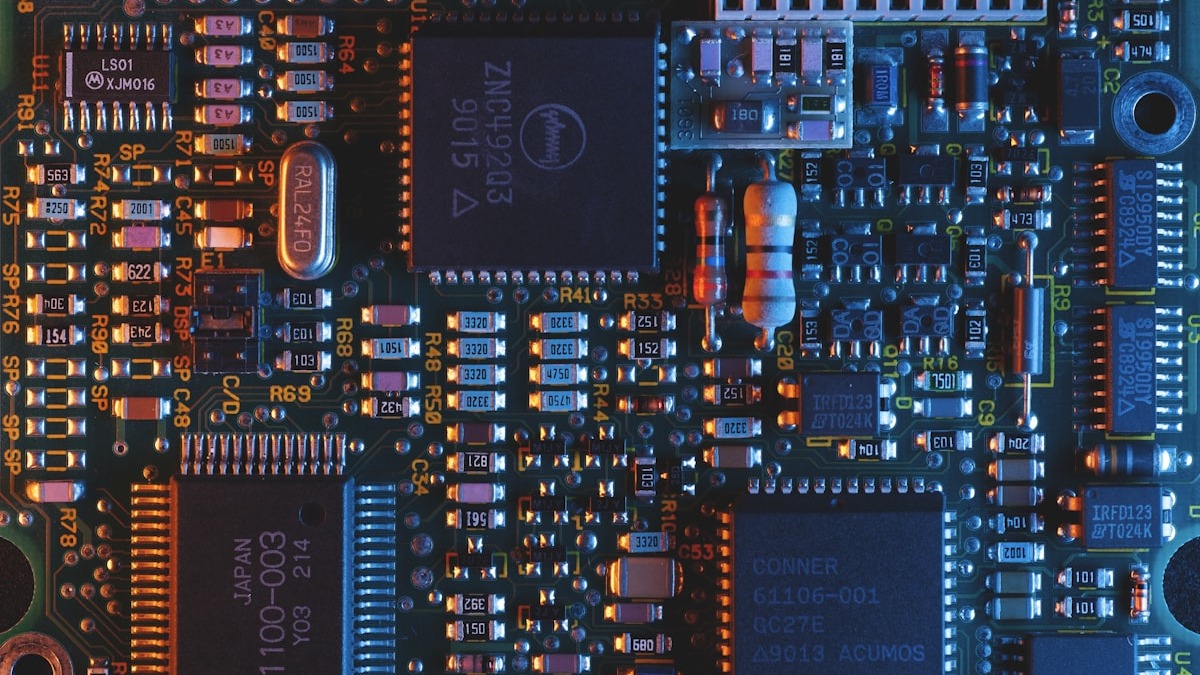 The Ascend 950PR runs on a 7nm SMIC process and supports 128GB of HBM with around 1.6 TB/s bandwidth.
Source: unsplash.com
The Ascend 950PR runs on a 7nm SMIC process and supports 128GB of HBM with around 1.6 TB/s bandwidth.
Source: unsplash.com
DeepSeek Turned the Flywheel
The acceleration in Ascend orders traces directly to DeepSeek V4, which was optimized to run on Huawei's hardware from the start. When DeepSeek V4 launched, Alibaba Cloud and Tencent Cloud deployed it on the same day - on Ascend infrastructure. That verified the platform publicly in a way no benchmark paper could.
DeepSeek V4's Mixture-of-Experts architecture with up to 1 trillion parameters is computationally intensive enough that it demands the best available hardware. The fact that Chinese labs built it to run on Ascend rather than CUDA tells you where they expect the supply of training compute to come from. Software follows hardware, and hardware follows software. Once major models target Ascend natively, every new lab that wants to use those models needs Ascend too. The flywheel is already spinning.
Nvidia Handed Them the Market
Nvidia's path to irrelevance in China is entirely policy-driven. The export controls that banned the A100 and H100 in October 2022 were tightened in 2023 to also catch the A800 and H800. The H20 - designed specifically to comply - now faces its own licensing uncertainty. Jensen Huang addressed the result plainly at the Citadel Securities Future of Global Markets event last October:
"We went from 95% market share to 0%. I can't imagine any policymaker thinking that's a good idea - that whatever policy we implemented caused America to lose one of the largest markets in the world to 0%."
China's AI chip market is projected to reach $67 billion by 2030. Nvidia's path back to a meaningful share of that market depends on either policy reversal or a chip design that sidesteps export restrictions entirely. Neither looks imminent.
 Chinese hyperscalers are locking in Ascend capacity for 2026 training workloads.
Source: unsplash.com
Chinese hyperscalers are locking in Ascend capacity for 2026 training workloads.
Source: unsplash.com
What the Numbers Don't Say
The $12 billion figure is Huawei's own internal target, surfaced by the Financial Times citing people familiar with the matter. Huawei isn't publicly listed and doesn't file earnings reports. Reuters noted it couldn't independently verify the FT's reporting. The number is plausible given what's confirmed about ByteDance's order alone, but treat it as directionally accurate rather than audited.
The Bernstein market share projections (8% Nvidia, 50% Huawei) come from the firm's semiconductor research team and were cited widely after publication, but they're projections under specific assumptions. The most important assumption is that H20 licensing stays restricted. If the Trump administration eases those rules - which has been reported as under discussion - Nvidia could recover meaningful ground faster than Bernstein's base case suggests.
On manufacturing: Huawei's Ascend 950PR runs on SMIC's 7nm process. That's several generations behind TSMC's most advanced nodes, which Nvidia uses for Blackwell. The performance gap on individual chips is real. Huawei's answer is to compensate at the cluster level - the Atlas 950 SuperPoD pairs 8,192 Ascend NPUs in a configuration that claims to match or exceed Nvidia's GB300 NVL72 rack on aggregate throughput. Whether that holds in production AI training workloads at scale is a different question.
The "CUDA-compatible" claim for Ascend 950PR is also worth treating skeptically. Huawei has invested in toolchains that can compile some CUDA code to Ascend hardware, but full compatibility at the library level hasn't been independently verified. Chinese developers switching from Nvidia will still face migration work.
This shift also didn't happen without government support. China's two successive $70 billion semiconductor subsidy packages have funded production capacity, research, and preferential procurement policies that make Ascend the default choice for state-linked enterprises even when Nvidia chips are theoretically available.
So What?
The market outcome is already clear for 2026: any company building AI infrastructure in China is buying Huawei, not Nvidia. That's not a prediction - it's what the order books show.
The longer consequence is what happens to the AI software stack. A Chinese ecosystem running predominantly on Ascend and CANN (Huawei's compute framework) will diverge from one built on CUDA and PyTorch. Chinese labs will optimize models for Ascend. Huawei will add features its customers need. The two ecosystems will drift apart in ways that compound over years.
For investors, the clearest read is that Nvidia's data center revenue - which passed $41 billion in its most recent financial year, with China historically contributing 20-25% - has permanently lost one of its largest demand pools. That's now Huawei's revenue, and Huawei isn't giving it back.
Sources:
- Huawei Expects AI Chip Revenue to Hit $12B in 2026 - CXO Digital Pulse
- Huawei Eyes $12B as DeepSeek V4 Drives Orders Away From Nvidia - The Deep Dive
- ByteDance Plans to Purchase $5.6B Worth of Huawei Ascend AI Chips - TechNode
- Nvidia China Market Share to Decrease from 66% to 8% - Tom's Hardware
- Nvidia CEO: We Went from 95% Market Share to Zero in China - Blockonomi
- Huawei Targets AI Chip Revenue Up 60% in 2026, Challenging Nvidia - HeyGoTrade

