
Brett Adcock's Hark Raises $700M for AI Interface
Brett Adcock's AI lab Hark has closed a $700M Series A at a $6B valuation before shipping a single product, with chip companies AMD, Intel, Qualcomm, and NVIDIA all backing the bet.
 6 min read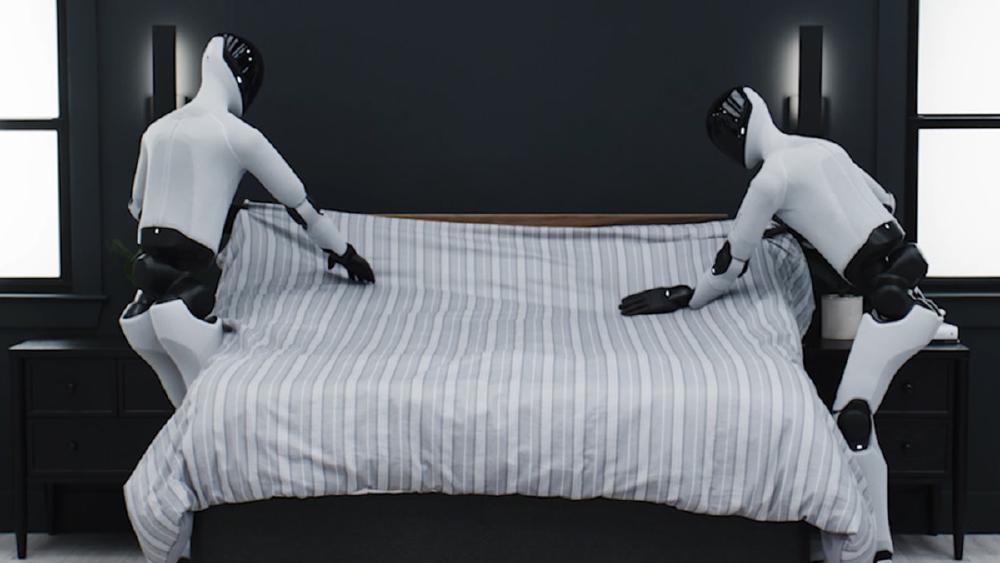
Brett Adcock has found a second company to fund before his first one has finished deploying. His AI lab Hark closed a $700 million Series A on Wednesday, valuing it at $6 billion post-money. No product has shipped. The company employs 70 people. Four chip companies are among the investors, each hedging against a consumer AI market that does not yet exist.
TL;DR
- $700M Series A led by Parkway Venture Capital, $6B post-money valuation
- Investors include NVIDIA, AMD Ventures, Intel Capital, and Qualcomm Ventures - the chip rivalry set aside for one bet
- Adcock also runs Figure AI, now valued at $39B - he describes Hark as the AI brains to Figure's AI bodies
- First products: multimodal models this summer, then custom hardware devices
- Total raised: $800M including Adcock's own $100M seed
The broader round includes Align Ventures, ARK Invest, Brookfield, Greycroft, Prime Movers Lab, Salesforce Ventures, and Tamarack Global with the four chip manufacturers. It's an unusual investor mix - NVIDIA funded a company whose own data center runs on NVIDIA B200 GPUs, while AMD, Intel, and Qualcomm invested in a company that doesn't yet use their hardware in production. The chip companies aren't paying for a product. They're paying for an option on who builds the next personal computing platform.
What Hark Actually Wants to Build
Adcock describes the vision bluntly. "Today's AI models aren't nearly intelligent enough, they feel quite dumb, and the devices we use to access them are fundamentally pre-AI," he wrote in an internal memo that has circulated publicly. The pitch isn't incremental improvement on existing AI assistants. Hark wants to be the system that "anticipates, adapts, and genuinely cares about the people using them" - a persistent AI layer with memory, vision, and speech that runs across whatever hardware Hark eventually ships.
The company hired Abidur Chowdhury, the former Apple designer credited with leading the iPhone Air design team, as director of design. Chowdhury frames the positioning explicitly against the big labs: "Anthropic is prioritizing coding tools and OpenAI is moving in the same direction," he said in a March interview. "I haven't seen anything that feels like something that will really help like the normal person."
That's a deliberate bet on a gap. With OpenAI, Anthropic, Google, and Meta all focused on developers, enterprise, and coding assistance, Hark is targeting the consumer segment that the frontier labs have largely deprioritized since the Siri-era hype faded.
 Brett Adcock, founder of Hark and Figure AI, has committed $100M of his own capital to the new venture.
Source: commons.wikimedia.org
Brett Adcock, founder of Hark and Figure AI, has committed $100M of his own capital to the new venture.
Source: commons.wikimedia.org
The Financial Context
The $700 million Series A is large by any measure, but what makes it striking is the denominator. The company has 70 employees, one data center equipped with B200 GPUs, and no shipped product. That works out to $10 million per employee at close, and a $6 billion valuation against zero revenue.
This isn't unusual by late-stage frontier AI lab standards - but Hark isn't a frontier lab. The comparison that matters is what similar pre-product consumer AI bets have cost and returned.
| Bet | Total Raised | Outcome |
|---|---|---|
| OpenAI + io.ai (Altman/Ive) | ~$6.5B committed | Hardware in development |
| Hark (Adcock) | $800M total | Pre-launch |
| Inflection AI | $1.5B total | Microsoft acqui-hire for ~$650M, team pivoted to enterprise |
| Humane AI Pin | $230M total | Shut down, sold to HP for $116M |
| Rabbit R1 | ~$30M total | Sales stalled, product pivoted |
The table shows two failure cases (Humane, Rabbit), one soft exit (Inflection), and one very large bet with OpenAI's backing (io.ai). Hark sits in the second tier of magnitude, funded ahead of any product signal, in a category with a poor track record.
Who Benefits
Adcock gets $700 million to hire talent and buy compute, and he retains his position at the top of two companies simultaneously. Figure AI is valued at $39B. Hark closes at $6B on day one. His portfolio of bets now spans AI bodies (Figure's humanoid robots), AI brains (Hark's models and interface), and electric aircraft (Archer). The scope of what he's running in parallel is unusual even by Silicon Valley standards.
AMD, Intel, and Qualcomm benefit from influence, not from current revenue. If Hark ships hardware and selects non-NVIDIA silicon, the resulting orders could be sizable. Investing early gives those companies visibility into Hark's architecture decisions before any contracts are written. NVIDIA, meanwhile, is already the supplier - its investment is a defensive play to stay in the room.
Parkway and the other financial investors benefit from the optionality. A $6 billion valuation is aggressive for a pre-product company, but if Hark ships and the consumer AI market develops, the upside is significant. Personal computing has produced some of the largest returns in venture history.
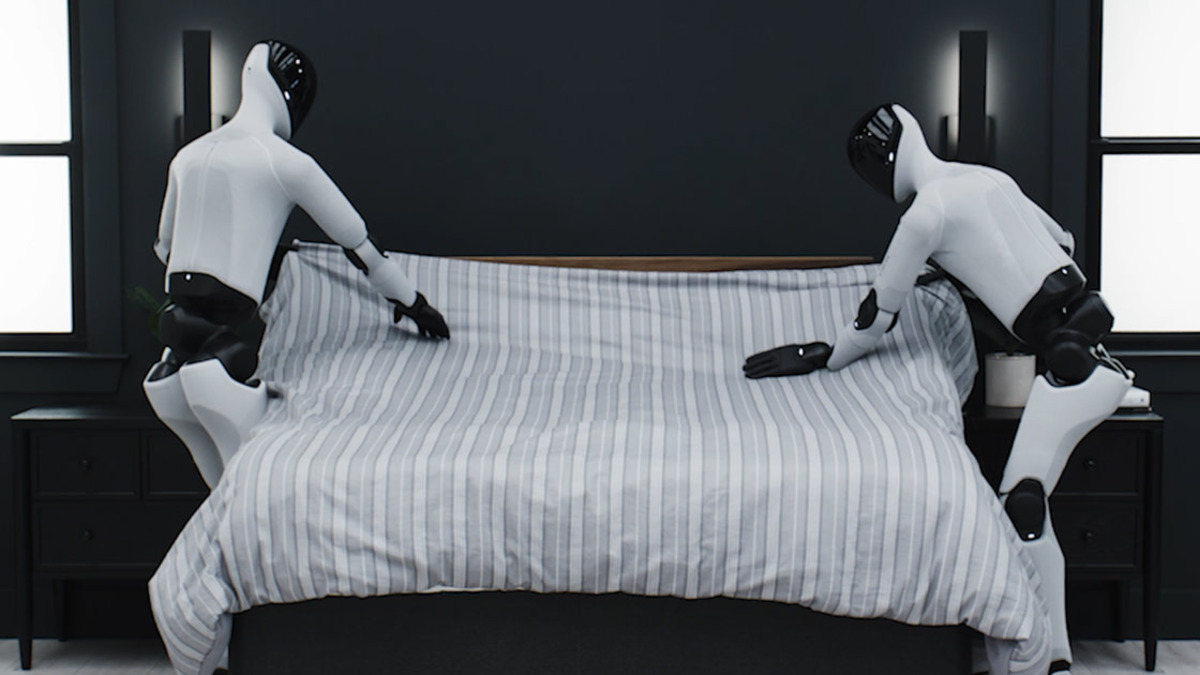 Figure AI's humanoid robots in the home - Adcock frames Hark's models as the intelligence layer for physical AI systems like these.
Source: figure.ai
Figure AI's humanoid robots in the home - Adcock frames Hark's models as the intelligence layer for physical AI systems like these.
Source: figure.ai
Who Pays
The investors' LPs are the actual risk-bearers. ARK Invest's public ETF holders, the pension and endowment capital behind Greycroft and Prime Movers Lab, and the corporate shareholders at AMD, Intel, and Qualcomm are all exposed to a pre-product company burning through $700 million in a category with multiple visible failures.
The competitive pressure lands on OpenAI and Anthropic in the consumer segment. Both labs have moved sharply toward coding tools and enterprise this year. If Hark ships a compelling consumer product, the labs will need to respond, and their current product priorities leave them exposed. Anthropic is spending $1.25 billion per month on compute and targeting developers. Consumer AI is not where that money goes.
Future hardware buyers will pay the unit economics of a company that spent $800 million before shipping. Premium pricing is a given.
The personal AI hardware category has two completed data points: Humane, which sold to HP for $116 million after raising $230 million, and Rabbit, which pivoted after sales stalled on roughly $30 million raised. Adcock has $800 million, a team that includes the designer behind the iPhone Air, and cleaner consumer positioning than either company managed. Those are better inputs. They don't guarantee a different output.
Sources:
- Hark raises $700M Series A - TechCrunch
- Figure AI Founder Brett Adcock Launches Hark - Quasa
- Figure CEO Brett Adcock Unveils Hark, a Secretive AI Hardware Firm - RoboHorizon
- Meet the former Apple designer building a new AI interface at Hark - TechCrunch
- Hark Unveils Vision for Integrated AI Models and Hardware - The AI Insider

