
Grok 4.5 Ships - Token Efficiency Is the Real Edge
Grok 4.5 goes public with real benchmarks: behind Fable 5 on coding evals, but a 4.2x token efficiency gap that changes the cost math for high-volume pipelines.
 6 min read
SpaceXAI released Grok 4.5 publicly on July 8-9, ending a two-week private beta that ran at SpaceX and Tesla. The model is now the default in Grok Build, available across all Cursor plans, and accessible via the SpaceXAI API. Elon Musk's June announcement promised performance "close to, perhaps exceeding Opus" - the public release brings actual third-party numbers, and they paint a different picture than the marketing suggested.
Key Specs
| Spec | Value |
|---|---|
| Parameters | 1.5T (V9 foundation) |
| Architecture | Mixture-of-experts |
| Context window | 500K tokens |
| Pricing (standard) | $2 input / $6 output per 1M tokens |
| Pricing (fast tier) | $4 input / $18 output per 1M tokens |
| Input cache reads | $0.50 per 1M tokens |
| Training data | Cursor IDE interactions + STEM + research papers |
| Platforms | Grok Build, Cursor (all plans), SpaceXAI API |
| EU availability | Not yet - expected mid-July |
Architecture: The V9 Foundation
Three Times the Scale
Grok 4.5 runs on xAI's V9 foundation at 1.5 trillion parameters - roughly three times the count of the V8-small architecture that powered earlier Grok 4 variants. The model uses mixture-of-experts routing, meaning not all 1.5T parameters activate per token. That design keeps inference at roughly 80 tokens per second on standard tier, fast enough for interactive coding sessions. Training ran across tens of thousands of NVIDIA GB300 GPUs.
The Cursor Data Pipeline
SpaceXAI completed its $60 billion acquisition of Cursor in June 2026, and Grok 4.5 is the first model built on that combined infrastructure. The training incorporated "trillions of tokens of Cursor data which capture a wide range of user interactions with codebases and software tools," per the Cursor engineering blog - debugging traces, multi-file diffs, user correction patterns, plus a broader mix of STEM tasks and research papers.
That's qualitatively different from training on static code repositories. The model saw how real engineers iterate, backtrack, and correct, not just what finished code looks like.
One caveat worth flagging: the Cursor team disclosed that "an earlier snapshot of the Cursor codebase was accidentally included in training." This contamination specifically affects the CursorBench evaluation results - internal IDE-measured numbers may be inflated. The contaminated data has been removed for future model versions, but it means the in-Cursor benchmark claims don't have clean provenance for this launch.
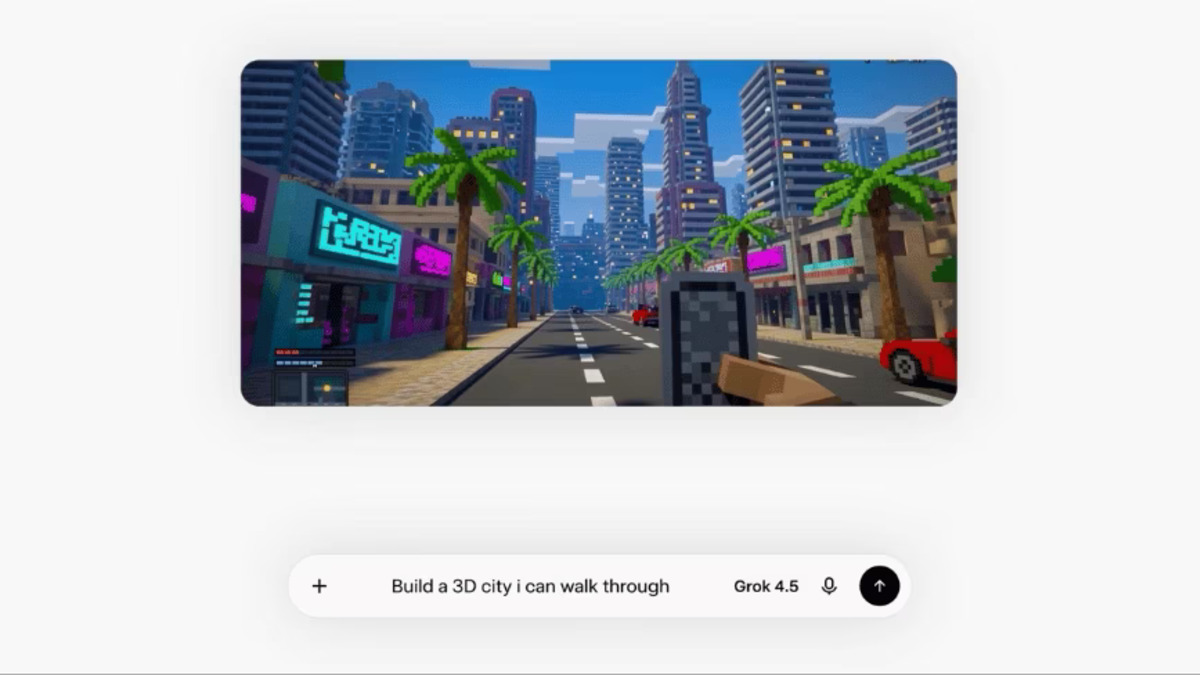 SpaceXAI's public announcement of Grok 4.5, describing the model's capabilities across coding, legal, and knowledge work domains.
Source: thenextweb.com
SpaceXAI's public announcement of Grok 4.5, describing the model's capabilities across coding, legal, and knowledge work domains.
Source: thenextweb.com
Benchmark Reality Check
The published coding benchmarks place Grok 4.5 in a competitive second tier - ahead of Claude Opus 4.8 on two evaluations, but clearly behind Claude Fable 5 on all four:
| Benchmark | Grok 4.5 | Claude Opus 4.8 | Claude Fable 5 |
|---|---|---|---|
| DeepSWE 1.0 | 62.0% | 55.75% | 66.1% |
| DeepSWE 1.1 | 53.0% | 59.0% | 70.0% |
| Terminal-Bench 2.1 | 83.3% | 78.9% | 84.3% |
| SWE-Bench Pro | 64.7% | 69.2% | 80.4% |
The "Opus-class" framing holds against Opus 4.8 on two of four benchmarks. Against Fable 5 - released July 1, eight days before this launch - Grok 4.5 trails on everything. The SWE-Bench Pro gap is 15.7 points, and on DeepSWE 1.1 the gap reaches 17 points. These aren't noise-level differences.
For coding benchmark comparisons across the full field of models, Grok 4.5 shifts some rankings but doesn't displace Fable 5 from the top coding slots.
"Grok 4.5 is roughly comparable to Opus 4.7, but much faster." - Elon Musk, X, July 8, 2026
That framing fits the public data better than the earlier "close to, perhaps exceeding Opus" claim. Opus 4.7 is one version behind the current Opus 4.8.
Token Efficiency: Where the Cost Math Changes
The number developers running production pipelines should focus on isn't raw accuracy scores. It's output tokens per completed task.
On SWE-Bench Pro, Grok 4.5 resolves tasks using an average of 15,954 output tokens. Claude Opus 4.8 in max mode uses 67,020 - a 4.2x gap. For the same task volume, Grok 4.5 generates far less output to reach a resolution, even if the resolution quality trails on harder evaluations.
The token efficiency gap compounds quickly at scale - fewer tokens, lower per-token rate, same task throughput.
At $6 per million output tokens (Grok 4.5) versus $25 per million (Opus 4.8), the cost difference per task compounds fast. A pipeline running 10,000 agent tasks daily that currently uses Opus 4.8 at max depth would create roughly 670 million output tokens. Grok 4.5 would consume closer to 160 million for comparable task volume - a reduction well above 75% in output spend, before accounting for the lower base rate.
This doesn't make Grok 4.5 the better model on hard SWE tasks. It means there's a specific class of workloads - high-volume, multi-turn coding agents where output brevity is a real cost pressure - where Grok 4.5 is the cheaper option without a proportional accuracy penalty against Opus 4.8.
Beyond Code: Legal and Knowledge Work Claims
Grok 4.5 is positioned as "the first [Cursor model] we've built for more than software engineering," covering data analysis, finance, legal work, and general office tasks. SpaceXAI claims it ranks #1 on Harvey's Legal Agent Benchmark for legal work applications.
That claim isn't independently confirmed today. Harvey's public Legal Agent Benchmark, updated July 8, 2026, shows Claude Fable 5 at the top with 11.25%, followed by Claude Opus 4.8 at 9.58%. Grok 4.5 doesn't appear in the published results yet - either it wasn't submitted before the most recent run, or the claim refers to a separate internal evaluation. SpaceXAI hasn't specified.
The broader training mix (STEM papers, legal documents, research content) is real, and the 500K context window makes long-document processing usable. But the legal benchmark claim should be treated as unverified until it appears on the public leaderboard.
Pricing and Availability
| Tier | Input per 1M | Output per 1M | When to use |
|---|---|---|---|
| Standard | $2 | $6 | Batch jobs, async agents |
| Fast | $4 | $18 | Interactive, low-latency |
| Input cache reads | $0.50 | - | Repeated context |
Grok 4.5 is live as the default in Grok Build, available across all Cursor plan tiers (desktop, web, iOS, CLI, SDK), and accessible via the SpaceXAI API using the model ID grok-4.5. EU availability is expected mid-July but no confirmed date has been set.
Cursor doubled usage allowances for the first week of availability. The fast tier at $4/$18 carries a 3x output cost premium over standard; xAI hasn't published independent latency data for the fast tier under production concurrency.
What To Watch
Fable 5 gap on SWE-Bench Pro: A 15.7-point deficit on the hardest public coding benchmark is material. If xAI's promised monthly release cadence holds, a Grok 4.6 could narrow it, but the gap is large enough that a single release cycle likely won't close it completely.
CursorBench contamination audit: The removed training data affects in-IDE benchmarks specifically. Future versions will have cleaner provenance on those numbers, which will make the in-Cursor comparison more reliable for developers assessing whether to switch their agents to Grok 4.5.
Harvey Legal Benchmark inclusion: If Grok 4.5 appears on the public Harvey benchmark and scores above Fable 5's current 11.25%, the legal/knowledge work angle becomes truly differentiated. If it doesn't, the claim stays vendor-only.
EU rollout timing: No confirmed date past "mid-July." Enterprise teams in European markets who need to run compliance evaluations before production deployment will want a firmer date before committing.
The Grok 4.5 private beta analysis flagged that the only benchmarks available at launch were internal. The public data now gives developers a clearer picture: competitive at scale-cost, behind Fable 5 on capability, and in need of independent verification on the legal claims.
Sources:

