
Great American AI Act Would Preempt State AI Laws
A bipartisan Congressional bill would freeze state AI laws for three years and require frontier developers to publish catastrophic risk plans, submit to federal audits, and face $1M daily fines.
 7 min read
Two days after President Trump signed a voluntary AI review order, Congress dropped something heavier. A 269-page bipartisan discussion draft called the Great American Artificial Intelligence Act landed on June 4, 2026, proposing a federal takeover of how frontier AI is regulated in the United States.
The core of the bill isn't its safety requirements. It's the clause that would silence state legislatures for three years.
TL;DR
- Bipartisan bill from Reps. Jay Obernolte (R-CA) and Lori Trahan (D-MA) proposes 3-year preemption of state AI development laws
- Frontier AI developers earning over $500M/year must publish catastrophic risk frameworks, hire NIST-licensed auditors, and report incidents within 15 days
- Penalties: $1M per day for non-compliance with the safety provisions
- Colorado's AI Act takes effect June 30 - 25 days from now. The federal bill would override it
- $100M per year authorized for a new federal AI standards center, CAISI, through 2029
- AI safety groups call the preemption a "generational mistake"
The Three-Year Freeze
The bill would bar states from enacting or enforcing laws that regulate the development of frontier AI models for three years from the date of enactment. States would still be allowed to regulate how AI is deployed and used - but anything touching model training, safety testing, or developer accountability during development is off the table federally.
What States Would Lose
The preemption isn't abstract. California's AB 2013, which requires AI developers to disclose training data, would be overridden. Parts of California's SB 942, which mandates watermarking for AI-produced content during model development, would also go. New York's RAISE Act, which set safety requirements for frontier models, sits directly in the bill's crosshairs.
Rep. Erin Houchin (R-IN), one of six sponsors, framed the logic bluntly:
"America should lead the world in artificial intelligence, not regulate ourselves into falling behind China through a patchwork of fifty different state laws."
It's a familiar argument. It's also one that AI safety advocates have been fighting since the first wave of state AI laws emerged in early 2026.
The Race Against Colorado
The timing is hard to ignore. Colorado's landmark AI Act - which requires developers and deployers to protect residents from algorithmic discrimination across healthcare, employment, housing, education, financial services, and insurance - takes effect on June 30. That's 25 days away.
The federal bill, if passed, would override key provisions of the Colorado law by classifying them as development-phase regulation. It wouldn't just stop future state legislation. It would effectively suspend laws already on the books.
This is the scenario AI safety advocates have been warning about since Connecticut's SB5 cleared the state senate. The momentum at the state level has been real. The federal preemption, if enacted, would erase most of it overnight.
What Frontier Developers Would Have to Do
The bill isn't only a deregulation story. It comes with genuine obligations for large frontier AI developers - defined as companies with over $500 million in annual revenue.
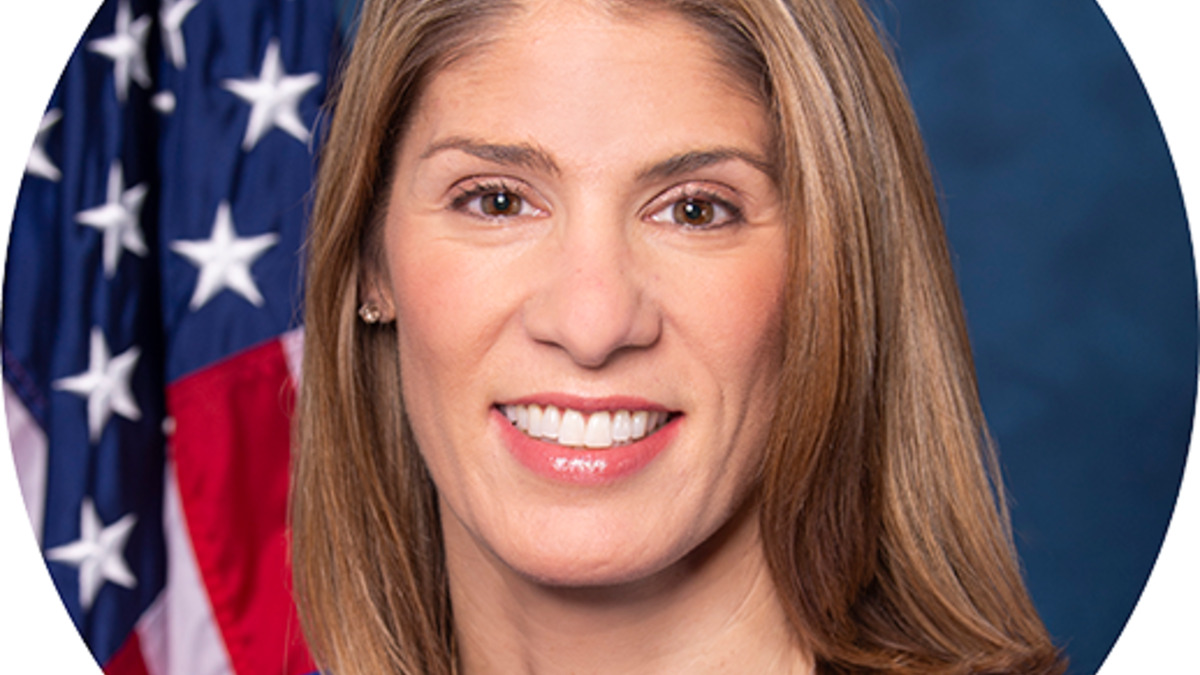 Rep. Lori Trahan (D-MA) co-authored the bill with Rep. Jay Obernolte (R-CA). The six-sponsor coalition includes members from both parties across four states.
Source: trahan.house.gov
Rep. Lori Trahan (D-MA) co-authored the bill with Rep. Jay Obernolte (R-CA). The six-sponsor coalition includes members from both parties across four states.
Source: trahan.house.gov
Catastrophic Risk Plans
Covered developers would be required to publish Frontier AI Frameworks - written plans describing how they assess and plan to address catastrophic risks from their models. These aren't internal documents. They go public, and they go to the government.
Those plans must be verified by Independent Verification Organizations (IVOs) licensed by the National Institute of Standards and Technology. Companies can't self-certify. They can't use any auditor they choose. NIST controls the pool.
Failing to maintain a compliant Frontier AI Framework, or misrepresenting its contents, would trigger fines of $1 million per day.
Incident Reporting and Model Weight Security
The bill also creates mandatory incident reporting. Critical safety incidents must be reported to federal and state regulators within 15 days. For imminent risks - situations where a model poses an immediate threat - the window drops to 24 hours.
Separately, the Government Accountability Office would assess how well covered developers are protecting model weights from theft or unauthorized access. Model weight security, long treated as a trade secret issue, would get federal scrutiny for the first time.
The bill also formally codifies the Center for AI Standards and Innovation (CAISI) within the Commerce Department, authorizing $100 million annually for fiscal years 2027 through 2029.
The Opposition Isn't Fringe
The bill has bipartisan sponsors and industry support. NetChoice, the tech trade group, expressed cautious backing while raising concerns about "aggressive auditing" and "data-sharing requirements" that might expose proprietary information.
But the critics aren't coming from the fringes.
AI Safety Groups Call It a "Generational Mistake"
Brad Carson, president of Americans for Responsible Innovation, was direct: the preemption would be a "generational mistake," converting what he called "the current floor on state AI legislation" into "a federal ceiling." His point is precise. States have been moving faster than Congress on AI accountability. If federal law locks them out for three years, that floor disappears - and there's no guarantee the federal ceiling will be as high.
Brendan Steinhauser of the Alliance for Secure AI said the bill "falls short" because it "does not justify preempting states' ability to pass their own AI safeguards." That's a careful way of saying the safety requirements the bill includes don't compensate for the safety laws it would kill.
 Colorado's AI Act, which takes effect June 30, would be among the first casualties of the federal preemption provision if the bill passes.
Source: commons.wikimedia.org
Colorado's AI Act, which takes effect June 30, would be among the first casualties of the federal preemption provision if the bill passes.
Source: commons.wikimedia.org
Labor Unions Call It an Industry Giveaway
Labor unions went further, rejecting the bill as "a giveaway to the AI industry." Their concern isn't mainly about model safety - it's about the workforce provisions, which they see as inadequate. The bill includes grants for AI literacy curricula, scholarships for AI students, and a Labor Department AI Workforce Research Hub to study employment impacts.
Research hubs studying job displacement don't protect the jobs being displaced. That asymmetry - aggressive liability protections for developers, slow-roll responses to labor impacts - is exactly what unions have been arguing against in every state where AI legislation has moved.
The Federal Backstory
The GAIA Act doesn't arrive in a vacuum. The White House already called on Congress in March to block state AI laws, releasing a legislative blueprint proposing federal preemption as a goal. The June 2 executive order from Trump created a voluntary benchmarking process for frontier AI models. This bill is, in many ways, the legislative body of that executive direction.
What's new in the bill is the specificity - and the accountability structure. The voluntary frameworks Trump's EO proposed become mandatory here. The 30-day voluntary model review window in the EO becomes a permanent audit requirement with teeth.
Whether those teeth are sharp enough to offset three years of frozen state action is the question the bill's opponents are demanding sponsors answer before the discussion draft becomes something with a vote.
The Florida lawsuit against OpenAI landed just this week, making the stakes concrete. If the GAIA Act had been in place, much of the state-level legal activity behind that case would have faced a harder road.
The sponsors are calling this a discussion draft, which means they're asking for input before finalizing the text. Given how much the preemption provision has already galvanized opposition from safety researchers, civil society groups, and state attorneys general, the conversation is going to be noisy. The draft stage is the only moment when the three-year freeze can be pulled back. Once it's enacted, the clock runs.
Sources:
- Roll Call - Bipartisan AI draft proposes three-year preemption of state laws
- FedScoop - Bipartisan Great American AI Act draft proposes new federal AI governance framework
- Broadband Breakfast - AI Preemption Battle Lands in Congress With Substantive Discussion Draft
- White House - Promoting Advanced AI Innovation and Security (June 2, 2026)
- BuildFastWithAI - AI News Today June 5, 2026

