
Google Opens Veo 3.1 Video AI to All Personal Accounts
Google now gives every Gmail user 10 free Veo 3.1 video generations per month via Google Vids, cutting into Runway and Kling at the $0 price point.
 7 min read
Any Gmail account can now create AI video clips at no cost. Google rolled out 10 free monthly generations via Google Vids on April 2, 2026, opening Veo 3.1 to personal accounts that previously had zero access. The product had been restricted to paying Workspace subscribers and AI Pro/Ultra members since late 2025. Now the entry tier is free, potentially for the estimated 3 billion active Google accounts globally.
This is less a technology story than a market-position story. Veo 3.1 didn't get dramatically smarter overnight. What changed is distribution.
Tiers at a Glance
| Tier | Monthly Generations | Music | AI Avatars | Price |
|---|---|---|---|---|
| Free (any Google account) | 10 | No | No | $0 |
| Google AI Pro | 50 | Lyria 3 (30-sec clips) | Yes | ~$22/month |
| Google AI Ultra | 1,000 | Lyria 3 Pro (up to 3 min) | Yes | ~$275/month |
What Veo 3.1 Actually Is
Veo 3.1 isn't a new model architecture. It runs on the same veo-3.0-generate-001 foundation as Veo 3. The differences come from refined training data and post-processing adjustments.
The Meaningful Upgrades from Veo 3
The biggest addition is native audio. Veo 3 created silent video; Veo 3.1 produces synchronized dialogue, ambient sound, and effects with the image track at 48kHz stereo. This closes a capability gap that had made Google's video AI feel half-finished compared to competitors that shipped audio from the start.
Three other additions change what's practically possible:
- Portrait video (9:16): Veo 3.1 supports vertical orientation, which Veo 3 never did. Mobile-native creators who dominate short-form platforms couldn't use the old model for their primary format.
- 4K resolution: Clips up to 8 seconds can now reach 4K via the full model. The Lite API tier caps at 1080p.
- Video extension: Clips can be extended up to 20 times in 7-second increments, building toward sequences approaching 150 seconds.
Frame consistency improved as well - Google claims 40-60% better coherence on 8-second clips compared to Veo 3, and motion physics accuracy improved by around 35% for weight, momentum, and collision dynamics. Both figures are Google's own evaluations.
Performance Trade-offs Worth Knowing
These upgrades carry costs. Veo 3.1 runs 8-12% slower than Veo 3 without audio, and 25-30% slower when audio is enabled. File sizes expand roughly 3.2x with audio included. API costs run 15-40% higher than Veo 3 depending on audio usage.
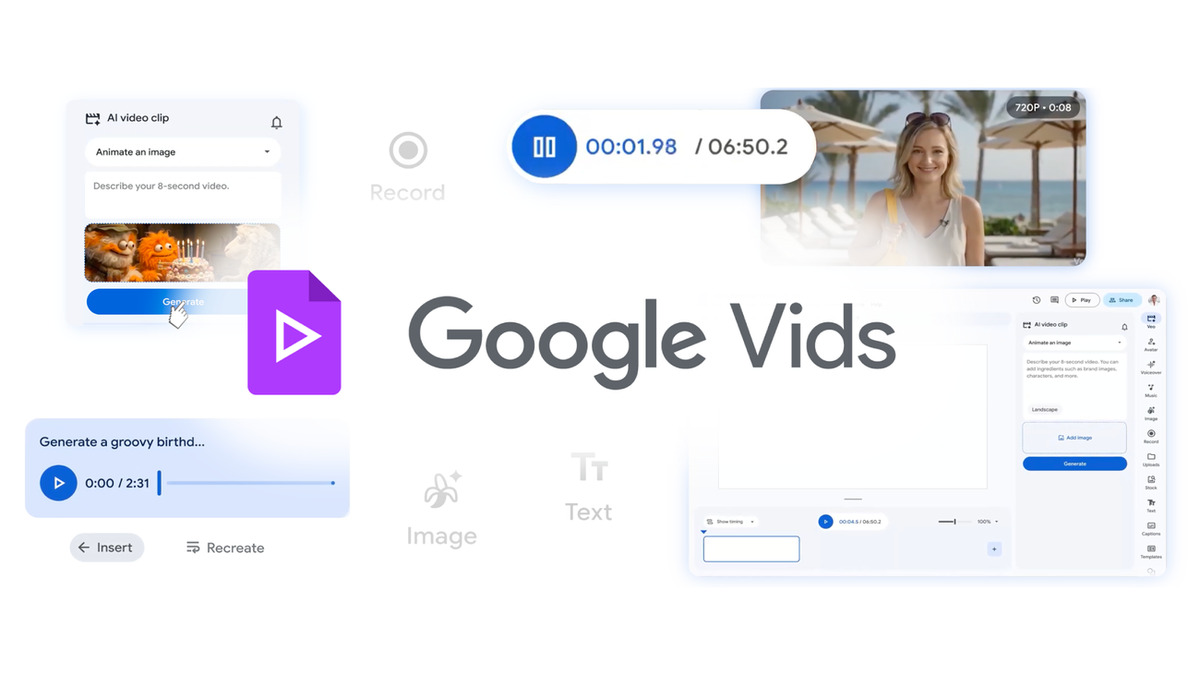 Google Vids runs in the browser at vids.new and integrates with Google Drive and Photos. The AI generation panel sits with slide and text editing tools.
Source: blog.google
Google Vids runs in the browser at vids.new and integrates with Google Drive and Photos. The AI generation panel sits with slide and text editing tools.
Source: blog.google
The Free Tier in Practice
For the 10-generation free tier, Google sets output at 720p, up to 8 seconds per clip. That's roughly 80 seconds of footage per month. Audio generation is included - which matters because audio capability was previously behind the Pro paywall.
Access lives at vids.new. Creation requires a desktop browser; playback works on mobile. All outputs embed Google's SynthID watermarking. Google confirmed the free tier extends to Workspace accounts under Business Starter, Enterprise Starter, Nonprofit, and Education plans through May 31, 2026, as a promotional add-on.
Google's announcement also covered a new feature for these tiers: the ability to control a video's first and last frames, which makes it easier to match produced clips to existing footage.
"Anyone with a Google account can now generate high-quality video clips using Veo 3.1 - a model that until recently was reserved for paying subscribers." - David Nachum, Group Product Manager, Google Vids
What Paid Tiers Add
AI Pro ($22/month in most markets) adds 50 monthly generations and access to Lyria 3, Google's music generation model. Lyria 3 builds 30-second clips from text prompts covering genre, vocal style, and mood. Images work as input, too - you can describe a scene visually and get matching background music.
AI Ultra ($275/month) goes to 1,000 generations per month and adds Lyria 3 Pro, which outputs tracks up to three minutes long with structural prompting for verses, choruses, and bridges. The Ultra tier also unlocks AI avatars - photorealistic virtual presenters built on Veo 3.1 that maintain consistent voice and identity across scenes, costume changes, and prop interactions.
The Developer Side: Veo 3.1 Lite
Three days before the consumer rollout, Google launched Veo 3.1 Lite as a developer API tier. The positioning is explicit: cut generation costs by more than half compared to the Fast tier.
| API Tier | Cost per Second | Max Resolution |
|---|---|---|
| Veo 3.1 Lite | $0.05/sec (720p), $0.08/sec (1080p) | 1080p |
| Veo 3.1 Fast | $0.15/sec | 1080p |
| Veo 3.1 Standard | $0.40/sec (720p/1080p), $0.60/sec (4K) | 4K |
A 4-second 720p clip through Lite costs $0.20. Google is targeting Kling's $0.07/second API rate and positioning Lite as the natural replacement for whatever remained of Sora's developer program after OpenAI shut it down.
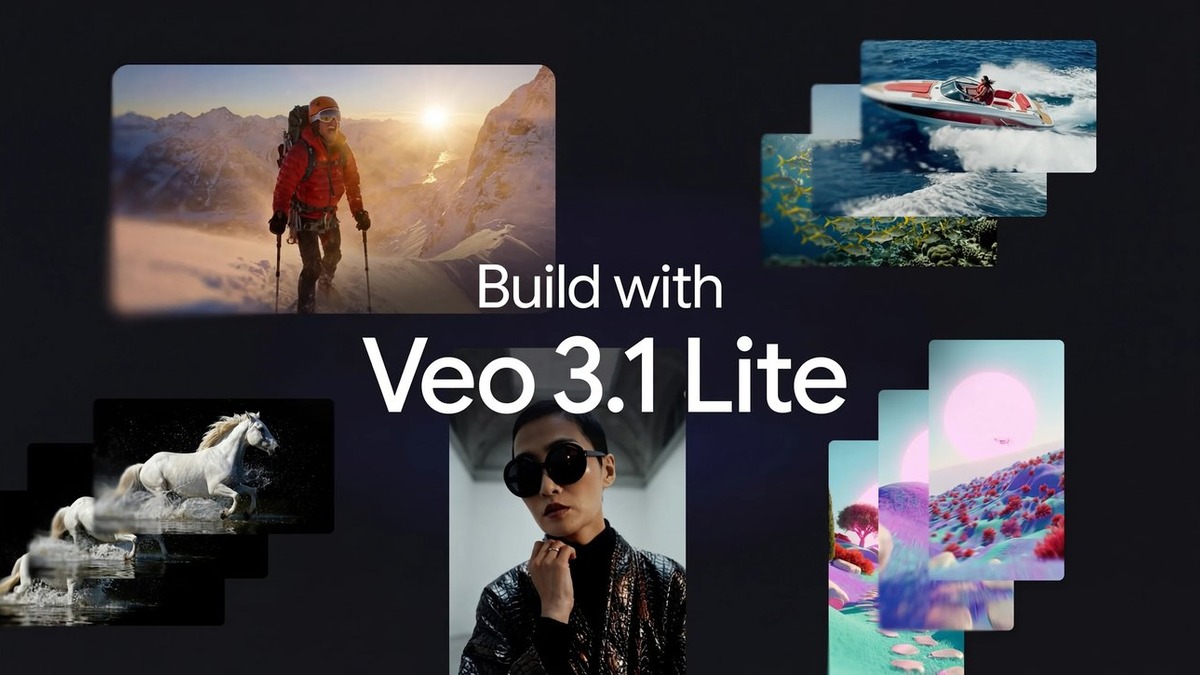 Veo 3.1 Lite launched March 31, 2026 as a cost-optimized API tier, cutting per-second pricing by over 60% compared to the Veo 3.1 Standard model.
Source: blog.google
Veo 3.1 Lite launched March 31, 2026 as a cost-optimized API tier, cutting per-second pricing by over 60% compared to the Veo 3.1 Standard model.
Source: blog.google
What It Does Not Tell You
Ten Generations Per Month Is a Funnel
For anyone who's used video AI for real work, 10 clips per month is enough to assess the product - not enough to produce anything with it. Runway's free tier, despite including watermarks, offers more creative latitude for casual creators. Kling's free limits are comparable. Google's floor is a conversion funnel toward Pro, not a meaningful standalone product.
The Competitive Timing Is Not Coincidental
OpenAI pulled Sora from the market earlier this year, citing infrastructure costs reported at $15 million per day and a collapsed distribution deal. That created a visible gap in the consumer AI video market. Google announcing free Veo 3.1 access one month after Sora's disappearance is a deliberate capture play, not a routine product update.
Chinese competitors - Kling from Kuaishou and Tencent's Hunyuan - remain the most aggressive on consumer pricing and have longer track records in production workflows. Google hasn't yet published independent comparative quality evaluations against either.
The Speed Question Is Still Open
Google hasn't released inference latency benchmarks for Veo 3.1 Standard that would help developers compare generation times against Kling or Runway. The Lite tier's $0.05/second is compelling on paper, but if generation times run clearly slower than alternatives, the true cost calculation shifts. Artificial Analysis clocked Google's hosted Gemma 4 31B at only 35.9 tokens/second - well below the 101.9 median for comparable models - which suggests Google doesn't consistently lead on inference throughput.
Google's April moves follow a pattern visible across the product line. The Gemma 4 open-weight model release from the same week puts capable open-source models under Apache 2.0 with free access, then builds toward paid cloud tiers. Veo 3.1 free follows the same logic at the consumer layer. And ProducerAI joining Google Labs in late 2025 seeded the music generation capability that shipped as Lyria 3 Pro this month.
For a look at what Veo looked like before the 3.1 refinement, NotebookLM's cinematic video overviews shipped with Veo 3 in March - audio support and frame consistency were both notably different.
Three billion personal Google accounts now have access to AI video generation that cost enterprise prices six months ago. Whether that translates to any competitive damage to Runway or Kling depends on whether 10 free clips per month is enough to build a habit - and whether Google's quality holds up once independent evaluators run real comparisons.
Sources:
- Google Blog - Google Vids updates with Lyria 3 and Veo 3.1
- Chrome Unboxed - Veo 3.1 free for all Google users
- Gemini API documentation - Video generation
- Google DeepMind - Veo
- Google DeepMind - Lyria
- Google Blog - Lyria 3 Pro announcement
- Google Blog - Veo 3.1 Lite announcement
- Decrypt - Veo 3.1 Lite cuts API costs in half
- fal.ai - Veo 3.1 vs Veo 3.0 upgrade comparison
- Workspace Updates - Veo 3.1 avatars in Google Vids
- Visla - Veo 3.1 vs Veo 3 comparison guide

