
Google Pays SpaceX $920M Monthly for Compute Bridge
Google will pay SpaceX $920 million per month for 110,000 NVIDIA GPUs at Colossus 1, citing unexpected demand for its Gemini Enterprise agent platform.
 5 min read
Google disclosed Thursday that it'll pay SpaceX $920 million per month for GPU compute at the Colossus 1 data center in Memphis, Tennessee, in a deal running through mid-2029 that could be worth roughly $30 billion in total. Bloomberg reported the deal one week before SpaceX's expected Nasdaq debut.
TL;DR
- Google will pay SpaceX $920M/month for roughly 110,000 NVIDIA GPUs at Colossus 1 in Memphis
- Contract runs October 2026 through June 2029, totalling approximately $30 billion
- Google calls it a "bridge" for unexpected demand surge on its Gemini Enterprise platform
- Combined with Anthropic's $1.25B/month deal, SpaceX now earns roughly $26 billion annually from compute leasing
- SpaceX amended its IPO S-1 Thursday to include this deal; its Nasdaq debut is expected next week
The Deal Structure
The contract gives Google access to roughly 110,000 NVIDIA GPUs, plus CPUs, memory, and related components. A ramp-up period runs through September 2026 at a reduced rate, with full payments of $920 million per month beginning in October.
What the Fine Print Says
Two exit clauses define the real terms. If SpaceX fails to deliver the committed GPU count by September 30, Google can terminate right away after a one-month grace period - or accept whatever hardware is available at a proportionally reduced rate. After December 31, 2026, both parties hold a 90-day cancellation window.
Those terms match Google's public framing. A spokesperson described the arrangement as "a short-term, timely agreement to ensure we have bridge capacity to meet surging customer demand for our agent platform, Gemini Enterprise, which has been even higher than we expected."
"This is a short-term, timely agreement to ensure we have bridge capacity to meet surging customer demand for our agent platform, Gemini Enterprise, which has been even higher than we expected."
The 90-day exit option makes the "bridge" claim credible. This isn't a long-term infrastructure commitment - it's capacity rental while Google's own build-out catches up.
Why Google Had to Look Outside
Gemini Enterprise is Google's agentic AI platform for business customers. Launched formally at Google Cloud Next '26, the product combines a model-serving layer with an agent development kit, a registry, and governance tooling. Google's own description of the SpaceX deal is the clearest signal of how fast that product has grown: demand came in "higher than we expected," from a company that runs one of the world's largest AI infrastructure operations.
 Gemini Enterprise Agent Platform, Google's agentic AI offering for enterprise customers, is the product whose demand surge triggered the SpaceX deal.
Source: cloud.google.com
Gemini Enterprise Agent Platform, Google's agentic AI offering for enterprise customers, is the product whose demand surge triggered the SpaceX deal.
Source: cloud.google.com
That detail is worth sitting with. Google built the TPU clusters that train its own models. It sells compute through Google Cloud to third parties. Its infrastructure footprint dwarfs most of its competitors. And it still couldn't provision enough high-density GPU capacity quickly enough to meet a single product's demand.
The Physical Limit
The constraint isn't money. High-density GPU clusters require dense power delivery, specialized cooling, and physical rack space - none of which can be bought into existence on short notice. Permitting timelines and construction lead times don't bend because an enterprise product surprised its owner. The fastest path to 110,000 GPUs in mid-2026 was renting a data center that already had them.
That dynamic has produced a broader market where Anthropic's $15 billion annual Colossus deal coexists with Google's. Both companies made the same calculation independently within two weeks of each other.
The Colossus Irony
Colossus 1 was built to train Grok, the AI assistant that competes directly with Google's Gemini. xAI began constructing the facility in a former Electrolux factory in Memphis's Boxtown district in 2024. When SpaceX and xAI merged in February 2026, the data center became part of the combined entity.
Google is now paying that entity $920 million a month to run workloads for the product Grok was built to beat. Anthropic - which also competes with Grok - is paying $1.25 billion a month for a larger slice of the same facility.
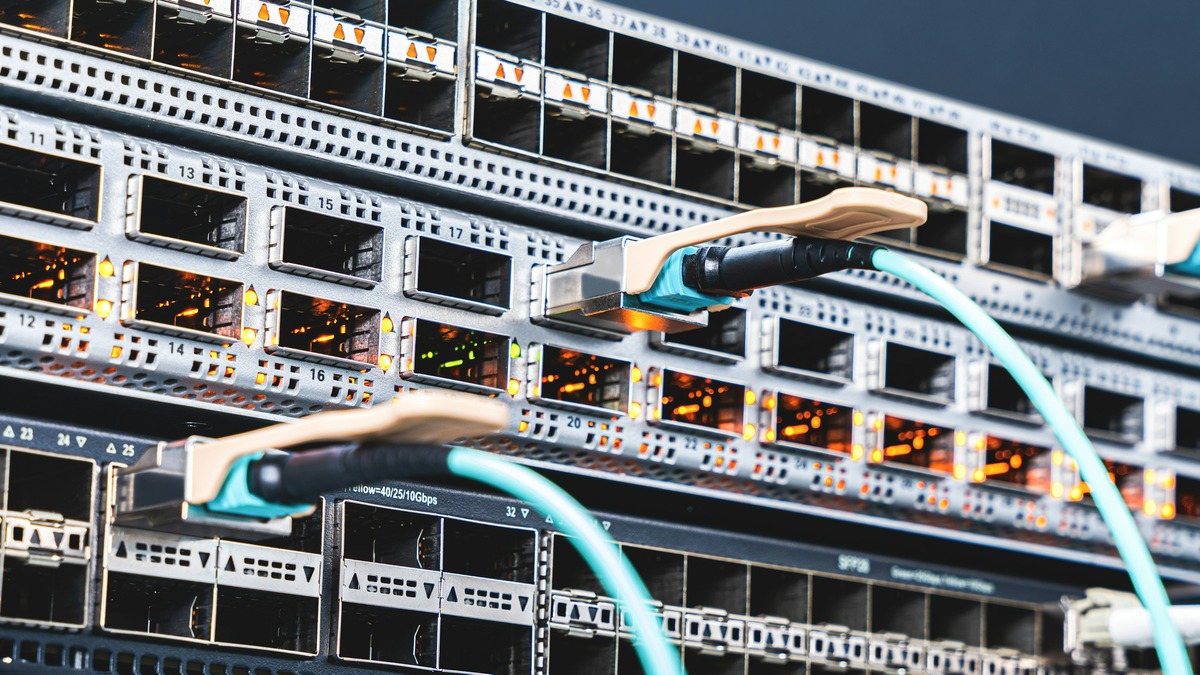 Colossus 1 hosts over 220,000 NVIDIA GPUs including H100, H200, and GB200 accelerators. Google's allocation represents roughly half the capacity that Anthropic secured in its separate deal.
Source: unsplash.com
Colossus 1 hosts over 220,000 NVIDIA GPUs including H100, H200, and GB200 accelerators. Google's allocation represents roughly half the capacity that Anthropic secured in its separate deal.
Source: unsplash.com
The Revenue Picture
At contracted rates, the two deals together generate roughly $2.17 billion per month for SpaceX:
| Tenant | Monthly Payment | GPU Allocation | Contract End |
|---|---|---|---|
| Anthropic | $1.25B | ~220,000 | May 2029 |
| $920M | ~110,000 | June 2029 | |
| Combined | $2.17B | ~330,000 | - |
Annualized, that's around $26 billion from compute leasing alone - before Starlink revenue, launch services, or anything else in the SpaceX portfolio.
The IPO Connection
SpaceX filed its S-1 in April targeting a $1.75 trillion valuation and up to $75 billion raised. The Anthropic deal was already in that filing. SpaceX amended the S-1 on Thursday to add the Google contract, one week before the company's expected Nasdaq listing.
The sequence matters. Investors assessing SpaceX's compute business now see two of the three largest frontier AI labs as paying tenants with contracts running to mid-2029. That's a different revenue story than a single customer deal, and it arrived in the amended prospectus at the best possible moment.
What the Exit Clauses Tell You
Both contracts allow either party to walk away after December 31, 2026, with 90 days' notice. That clause cuts both ways. For Google, it's confirmation that the arrangement is truly temporary. For SpaceX, it's a risk: the compute revenue story that'll feature prominently in IPO roadshows could change materially within 18 months of the listing.
The practical outcome of this deal is that a data center built to compete with Gemini is now training workloads for Gemini. The compute crunch in 2026 has turned competitive infrastructure into a neutral resource - at least temporarily, and at a rate of $920 million a month.
Sources:
- Google will pay SpaceX $920M per month for compute - TechCrunch
- Google to pay SpaceX $920M/month for AI compute - The Next Web
- Google Buying Computing From SpaceX in $920-Million-a-Month Deal - Bloomberg
- Colossus (supercomputer) - Wikipedia
- Introducing Gemini Enterprise Agent Platform - Google Cloud Blog
- SpaceX Gears Up for IPO with Google Cloud Deal - DevDiscourse

