
Google Search Gains AI Agents, Hits 1 Billion Users
Google's AI Mode reached 1 billion monthly users at I/O 2026, as the company announced information agents, agentic booking, and generative UI set to transform Search this summer.
 7 min read
One billion monthly users, the biggest search box redesign in 25 years, and AI agents that'll monitor the web around the clock on your behalf. That's what Google shipped at I/O 2026 this week - and it isn't finished.
TL;DR
- Google's AI Mode crossed 1 billion monthly users, doubling quarterly and surpassing ChatGPT's 900 million weekly users
- Gemini 3.5 Flash is now the default engine in AI Mode: 4x faster than frontier models at "Pro-level" reasoning
- Information agents will monitor the web 24/7 on users' behalf - summer 2026 launch for paid subscribers
- Google will call businesses on your behalf to check availability and book appointments in select categories
- Generative UI builds custom mini-apps, trackers, and dashboards on the fly in response to queries
Google launched AI Mode just over a year ago. The milestone it announced at I/O 2026 - one billion monthly active users - represents a faster adoption curve than any AI product the company has previously shipped. AI Overviews, the AI-produced summaries that appear above traditional search results, now reaches 2.5 billion users a month. These numbers put Google well ahead of the other major AI interfaces by scale alone, though weekly versus monthly comparisons make direct benchmarking imprecise.
The Search Interface That Actually Changes
| Platform | Scale | Agents | Generative UI | Free Tier |
|---|---|---|---|---|
| Google AI Mode | 1B monthly | Summer 2026 | Yes (summer 2026) | Yes |
| Google AI Overviews | 2.5B monthly | No | No | Yes |
| ChatGPT Search | ~900M weekly | Limited | No | Yes (capped) |
| Perplexity | Undisclosed | No | No | Freemium |
The redesigned search box - described by Google as the most significant interface change in over 25 years - launches globally this week. It's larger, responds to more open-ended queries, and uses AI to dynamically expand or reframe what users type. The box itself doesn't make Search agentic. That comes later.
Liz Reid, VP of Search, framed the company's ambition simply: "to help you ask anything on your mind - from quick facts to the deep, complex or hyper-specific questions." The new box is the entry point. What sits behind it's harder to describe with a single word.
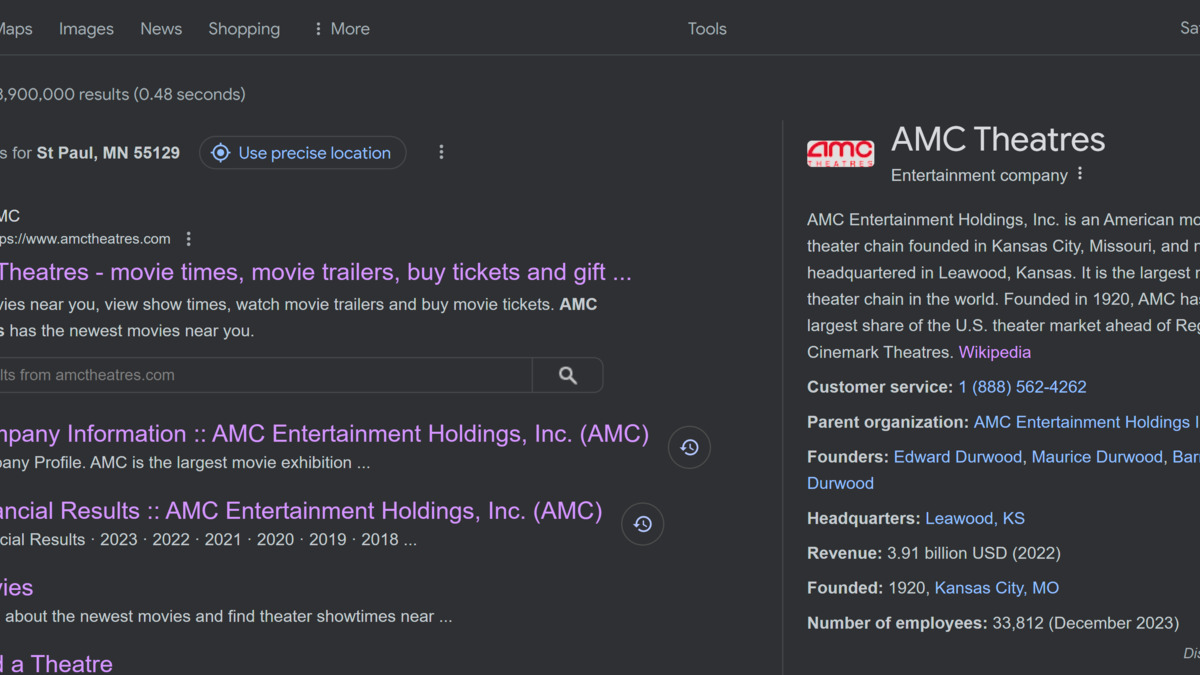 The traditional search results page is giving way to an AI-produced response layer. Traditional links still appear, but they share the screen with synthesized answers and interactive elements.
Source: wikimedia.org
The traditional search results page is giving way to an AI-produced response layer. Traditional links still appear, but they share the screen with synthesized answers and interactive elements.
Source: wikimedia.org
Information Agents - The Web Works While You Sleep
The most structurally significant feature isn't anything launching today.
Information agents - AI systems that monitor the web continuously and surface updates when user-specified conditions are met - debut for Google AI Pro and Ultra subscribers in summer 2026. The use case Reid described at the keynote: "You could send an alert to track market movements in a particular sector with very specific parameters, and the agent will map out a monitoring plan for you." The agent checks finance data, news, social posts, and blogs, then synthesizes an update and delivers it with source links.
How They Differ From Alerts
Google Alerts already exists. The distinction Reid is drawing is that information agents don't simply scan for keyword matches - they reason about relevance. A user could ask the agent to track "any development suggesting Apple is building its own AI chip fab" and the agent would decide whether a given news item actually signals that, not just whether it contains the words.
Whether this works as advertised at scale is untested outside Google's demos. The failure mode - agents flagging noise, missing truly relevant signals, or drifting from the original intent over time - isn't addressed in any public documentation.
Who Gets Them First
Agents launch for AI Pro and Ultra subscribers. Google hasn't disclosed the pricing for these tiers relative to competitors, but the sequencing is clear: the most powerful Search features will be paywalled first, then rolled out to free users later.
 Liz Reid, VP of Search, announced the agentic features at I/O 2026. The information agents and booking features represent the most significant expansion of Search's scope in the product's history.
Source: blog.google
Liz Reid, VP of Search, announced the agentic features at I/O 2026. The information agents and booking features represent the most significant expansion of Search's scope in the product's history.
Source: blog.google
Google Will Call Businesses on Your Behalf
Agentic booking is the feature that'll produce the most anxiety for local businesses.
Also launching summer 2026, in categories that currently include home repair, beauty, and pet care: users can ask Google to call businesses, check availability against their stated preferences, and complete a booking. The example from the keynote involved finding a private karaoke room for six people on a Friday that serves food late - the kind of query that today requires several phone calls or going through multiple booking platforms.
Google isn't clear about what happens when a business is called, whether the business knows it's speaking to an AI, or what liability the company assumes if a booking goes wrong. These aren't edge cases - they're the core of what makes agentic booking either trustworthy or a mess.
Gemini 3.5 Flash - The Model Running All of This
Google's choice to power AI Mode with Gemini 3.5 Flash rather than a larger model is a deliberate product decision. The model runs 4x faster than frontier-class alternatives while maintaining, according to Google, "Pro-level" reasoning. It supports text, images, audio, and video inputs and was specifically designed for agentic tasks and coding.
Sundar Pichai's framing at I/O was direct: "We focus on delivering frontier models - highly capable, but also very efficient, fast, and at a lower price - because we want to bring it to as many people as possible."
The logic holds at 1 billion users. Running a slower, heavier model at that scale would either require enormous infrastructure investment or force Google to ration usage. Gemini 3.5 Flash solves the throughput problem. The trade-off is that users who need deeper reasoning for complex tasks may eventually hit the model's ceiling.
This release also builds on the broader I/O 2026 Gemini announcements, including Gemini Omni, which handles image-to-video conversion, and the WebMCP browser standard that lets any website expose structured tools to AI agents running in Chrome.
 Google's AI Mode response layer sits above traditional search results, showing synthesized answers with citations. The new information agents will extend this into proactive, always-on monitoring.
Source: blog.google
Google's AI Mode response layer sits above traditional search results, showing synthesized answers with citations. The new information agents will extend this into proactive, always-on monitoring.
Source: blog.google
What It Does Not Tell You
The Publisher Question
Google didn't address at I/O how information agents interact with publisher content. The company is already under pressure over AI Overviews reducing clicks to news sites - a trend we covered when Google began AI-rewriting headlines without publisher consent. Agents that read and synthesize content continuously, without triggering a pageview, extend that tension far. There is no opt-out mechanism announced for publishers who do not want their content fed to always-on agents.
The Privacy Architecture
Personal Intelligence - Search's integration with Gmail, Calendar, and Google Photos - rolls out to 200 countries across 98 languages without a subscription requirement. Google emphasizes that users control what data the system can access. The company hasn't published details about data retention for agent queries, whether agent monitoring data is used to train models, or how long personalization profiles persist.
The Agentic Safety Gap
When Google's agent calls a business on a user's behalf, who's responsible for the outcome? If the agent books an appointment at the wrong time, provides incorrect information to a business, or triggers a transaction the user didn't intend, there's no stated policy. The comparison to other agentic systems is instructive - this is a known gap in AI agent deployments across the industry, not a problem unique to Google.
The product Google described at I/O 2026 isn't a new search engine. It's Search picking up ambitions that used to belong to virtual assistants, appointment scheduling apps, and financial monitoring services - all at a billion-user scale that no competitor currently matches. Whether the agentic features work as demonstrated in controlled keynote conditions, and whether the safety and publisher questions get answered before widespread rollout, will determine whether this week's announcements hold up as the inflection point Google is positioning them to be.
Sources:

