
Google Absorbs Its Robotics Moonshot Intrinsic - Physical AI Just Got a Corporate Home
Alphabet folds robotics software company Intrinsic into Google after five years as an independent moonshot, giving it access to Gemini models, DeepMind research, and Google Cloud - plus a Foxconn joint venture building AI-driven factories.
 7 min read
Intrinsic, the robotics software company that Alphabet spun out of its X moonshot lab in 2021, is no longer an independent bet. As of February 25, Intrinsic is a distinct group inside Google, reporting to chief product officer Hiroshi Lockheimer and tapping directly into Gemini models, Google Cloud infrastructure, and DeepMind's research pipeline. CEO Wendy Tan White stays in charge. The team structure stays the same. But the organizational walls just came down.
TL;DR
| Detail | Value |
|---|---|
| What happened | Intrinsic absorbed into Google from Alphabet "Other Bets" |
| CEO | Wendy Tan White (unchanged), reports to Hiroshi Lockheimer |
| Key product | Flowstate - web-based robotics development platform |
| AI integration | Gemini models + Google Cloud + DeepMind collaboration |
| Major partnership | Joint venture with Foxconn for AI-driven factory automation |
| Financial terms | Not disclosed |
What Google Is Claiming
| Claim | Details |
|---|---|
| Democratized robotics | Flowstate lets developers without robotics expertise build industrial robot applications |
| Physical AI at scale | Gemini + DeepMind + Cloud will "unlock the promise of physical AI for a much broader set of manufacturing businesses" |
| Factory of the future | Foxconn JV will deliver general-purpose intelligent robots for electronics manufacturing |
| Hardware agnostic | Platform works across robot brands, sensors, and AI models |
| Ecosystem play | ROS compatibility maintained via Open Robotics acquisition |
"Combined with Google's incredible AI and infrastructure, we're going to unlock the promise of physical AI for a much broader set of manufacturing businesses and developers." - Wendy Tan White, CEO of Intrinsic
The pitch is straightforward: Intrinsic has the robotics platform, Google has the AI models and cloud scale, and together they can bring physical AI from lab demos to production lines. Lockheimer added: "We're excited to welcome the Intrinsic team to Google, so we can bring breakthrough AI to more businesses and industries, at scale."
The Five-Year Journey
Intrinsic's path from moonshot to Google division has not been a straight line.
From X to Independence (2021)
Intrinsic graduated from Alphabet's X research lab after five years of incubation, joining Waymo and Wing as alumni from the moonshot factory. The thesis: industrial robotics is stuck in the 1980s, with robots that are expensive to program, brittle in production, and locked to specific tasks.
Acquisitions and Growing Pains (2022-2023)
The team went on a buying spree. In April 2022, Intrinsic acquired Vicarious - a robotics AI startup that had raised roughly $250 million from investors including Jeff Bezos. Later that year, it bought the for-profit arm of Open Robotics, the nonprofit behind ROS (Robot Operating System), the most widely used open-source robotics framework in the world.
Then came the correction. In January 2023, Intrinsic laid off 20% of its workforce. The acquisitions needed integrating. The platform needed shipping.
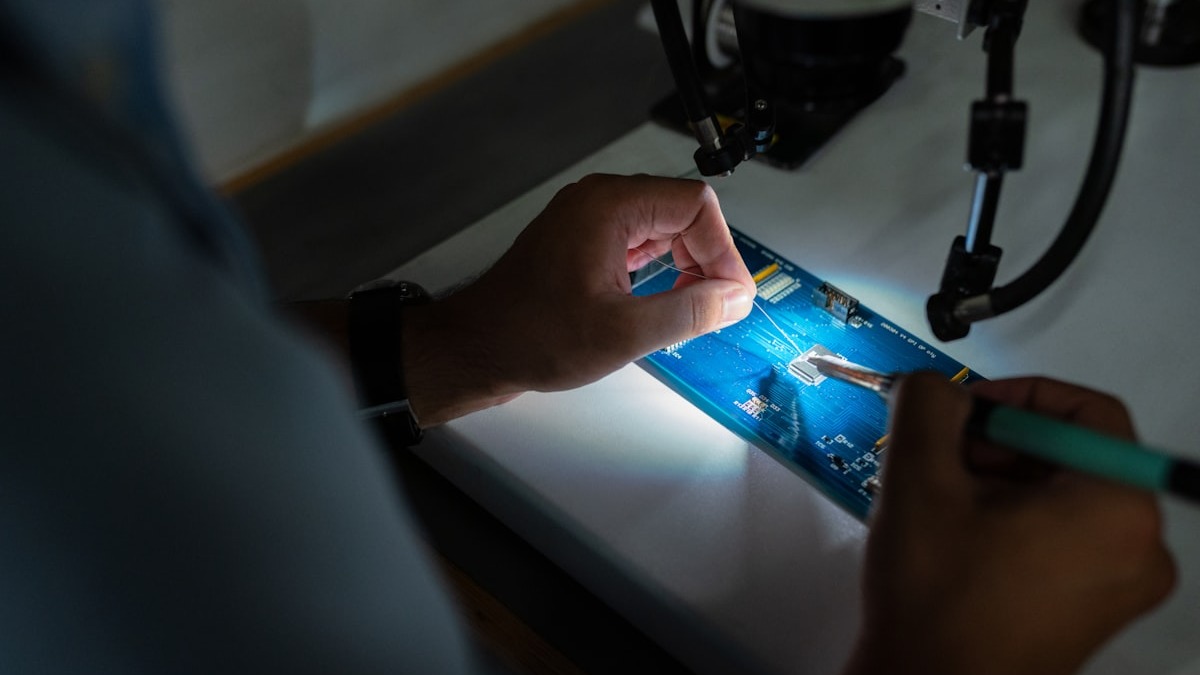 Modern electronics manufacturing still relies heavily on manual labor for complex assembly tasks - exactly the gap Intrinsic's Flowstate platform aims to fill.
Flowstate and the Vision Model (2023-2025)
By mid-2023, Intrinsic launched Flowstate, its web-based development environment. The idea: give developers a graphical interface to build robotic workflows using drag-and-drop "skills" - pre-built capabilities for grasping, motion planning, force sensing, and visual inspection. Behavior trees handle the logic. A built-in simulator lets you test before rolling out to real hardware.
In late 2025, Intrinsic released its Intrinsic Vision Model (IVM), a foundation model for robotic perception. Then came the Foxconn joint venture in October 2025 - a deal to build AI-driven intelligent manufacturing for electronics assembly, combining Intrinsic's platform with Foxconn's factory expertise.
The Google Absorption (2026)
And now, the moonshot comes home. Intrinsic joins Google proper, gaining access to Gemini models and DeepMind's robotics research while keeping its existing partnerships intact.
What They Measured - And What They Didn't
What's Real
Flowstate exists and works. It is hardware-agnostic, supports Python and C++ SDKs with the graphical UI, and integrates with ROS. The Foxconn joint venture is shipping actual pilot deployments for electronics assembly. The Intrinsic Vision Model handles real-world perception tasks like part identification and pose estimation.
The Google integration gives Intrinsic something it couldn't build alone: a world-class foundation model in Gemini, a mature cloud platform for deployment, and DeepMind's growing robotics research team - the same group that partnered with Boston Dynamics in January to bring Gemini Robotics foundation models to the Atlas humanoid.
What's Missing
No financial terms were disclosed. We don't know Intrinsic's revenue, customer count, or how many robots are running Flowstate in production. Alphabet's "Other Bets" segment has historically been a money pit - the category reported $1.6 billion in operating losses for Q3 2025 alone.
The "democratized robotics" claim is also worth inspecting. Flowstate lowers the barrier from "you need a robotics PhD" to "you need a software engineer who can learn behavior trees," but that's not the same as making robotics accessible to the average manufacturer. Small and mid-size factories - where the automation gap is widest - still face hardware costs, integration complexity, and a shortage of people who can debug a robot cell at 2 AM when the line goes down.
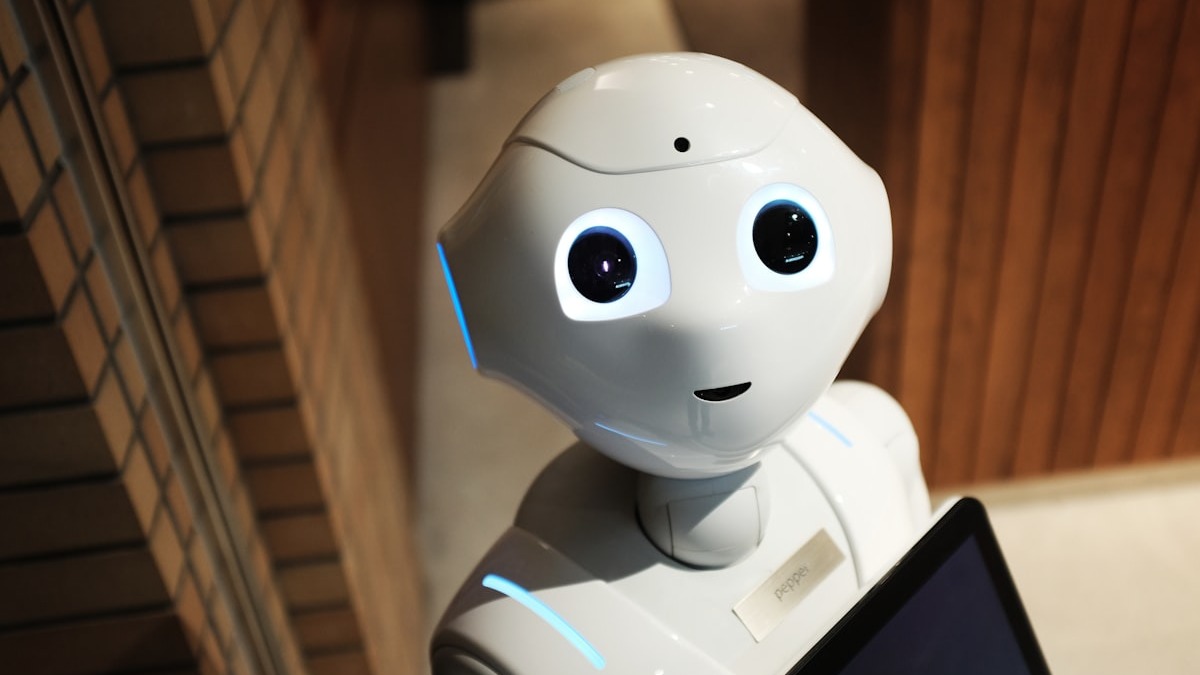 Google DeepMind's partnership with Boston Dynamics on Gemini Robotics foundation models runs in parallel with the Intrinsic integration - two prongs of Google's physical AI strategy.
The Competitive Landscape
Google isn't alone here. NVIDIA's robotics push - including Isaac Sim, Omniverse, and the Alpamayo model that hit 100K downloads - targets the same developer audience. Amazon is deploying hundreds of thousands of robots across its warehouses. Fanuc, ABB, and the traditional robotics giants are adding AI layers to their existing platforms. And startups like Covariant (now absorbed by Amazon) and Physical Intelligence are racing on foundation models for manipulation.
The difference is scope. Nobody else has Gemini, DeepMind, Cloud, and a robotics platform under one roof. Whether that translates to actual factory deployments faster than the competition is the open question.
Should You Care?
If you are building robotics applications, yes. Flowstate with Gemini integration could truly change the development workflow for industrial automation. The ROS compatibility means existing tooling is not thrown away. And the Foxconn partnership gives Intrinsic credibility that pure-software plays lack.
If you are watching the AI industry more broadly, this move signals something bigger: Google is consolidating its physical AI bets. Intrinsic inside Google, DeepMind partnering with Boston Dynamics, Gemini Robotics models being developed for any robot form factor. The company that has been criticized for having too many overlapping research efforts is starting to wire them together.
But keep your expectations calibrated. Industrial robotics moves on factory time, not Silicon Valley time. The Foxconn JV is focused on electronics assembly first. Broader manufacturing adoption - automotive, logistics, food processing - is years away. And the "physical AI" label is doing a lot of heavy lifting for what's still, in most deployments, a very specific set of manipulation and perception tasks.
The moonshot is over. Now comes the harder part: making it work at scale, on real factory floors, with real manufacturing tolerances. Google just bet that the best way to do that is to stop treating robotics as a side project.
Google's absorption of Intrinsic isn't a rescue and it isn't a pivot. It is an acknowledgment that physical AI needs the same infrastructure advantages that made Google dominant in search and cloud. Whether Intrinsic can deliver on that promise with Gemini and DeepMind behind it - or whether this becomes another chapter in Alphabet's long history of reorganizing its way to relevance in hardware - depends completely on what ships to factory floors in the next 18 months.
Sources:
- Intrinsic joins Google to accelerate the future of physical AI - Intrinsic Blog
- Alphabet-owned robotics software company Intrinsic joins Google - TechCrunch
- Google brings robotics software company Intrinsic in-house to accelerate physical AI - SiliconANGLE
- Alphabet's Intrinsic Joins Google To Accelerate Physical AI - Dataconomy
- Alphabet folds robotics firm Intrinsic into Google to power DeepMind - TechBriefly
- Boston Dynamics and Google DeepMind form new AI partnership - Boston Dynamics
