
Gemini CLI Dies June 18 - Google Goes Closed-Source
Google is shutting down free access to its open-source Gemini CLI on June 18, replacing it with the proprietary Antigravity CLI - after accepting 6,000+ community pull requests.
 6 min read
On May 19, at Google I/O 2026, the company posted a notice in its Gemini CLI GitHub repository. The message: a new tool called Antigravity CLI is "a single product built for today's multi-agent reality," and free users would be better served switching to it before June 18. That framing deserves scrutiny.
TL;DR
- Google is retiring free/individual access to its Apache 2.0 Gemini CLI on June 18, 2026
- Replacement is Antigravity CLI - announced at I/O 2026, rewritten in Go, and closed-source
- Enterprise and paid API users keep Gemini CLI; free devs and Pro/Ultra subscribers must switch
- Community contributed 6,000+ pull requests to Gemini CLI before Google locked it to enterprise
What They Showed
Antigravity CLI launched with Antigravity 2.0 at Google I/O 2026. The pitch is clear: a unified agent-first development platform that replaces the TypeScript-based Gemini CLI with a faster Go implementation. It supports asynchronous multi-agent workflows, integrates with the Antigravity 2.0 desktop app and SDK, and ships on a freemium model.
Google rebranded Gemini CLI's "extensions" as "Antigravity plugins" and says the core features transfer: agent skills, hooks, subagents, and the extension ecosystem. A Go rewrite is truly faster than a Node-based CLI for routine operations, so the performance claim is real.
 Google's transition announcement, published to the Gemini CLI GitHub discussions on May 19, 2026.
Source: storage.googleapis.com
Google's transition announcement, published to the Gemini CLI GitHub discussions on May 19, 2026.
Source: storage.googleapis.com
The transition timeline is tight. Free users and Gemini Code Assist individual subscribers lose Gemini CLI access on June 18. Gemini Code Assist for GitHub blocks new org installations on the same date, with requests stopping entirely in the weeks after. Enterprise and Standard/Enterprise Code Assist licenses are unaffected. Paid Gemini API key holders also keep access. The split is deliberate: individual and free users move to Antigravity; enterprise customers keep both.
What We Tried
The Antigravity CLI GitHub repository - github.com/google-antigravity/antigravity-cli - contains a changelog, a README, and an animated GIF demo. No source code.
That's the center of the open-source debate. Google maintains that the Apache 2.0 license for Gemini CLI remains intact. Anyone can still fork the repository. What the license doesn't cover is Google's cloud backend, API authentication, model access, or request routing. Without those components, the open-source code is a client that has nowhere to connect. Developers calling this effectively closed-source aren't being hyperbolic; they're reading the license correctly.
The quota model shifted too. Gemini CLI used daily token limits with five-hour refreshes. Antigravity moved to weekly limits with AI credit overages. Multiple developers in the GitHub announcement thread reported burning through their weekly allocation in two or three sessions. One wrote: "I tried using the Antigravity CLI for a few minutes, and it's so damn hard to use."
Data handling changed as well. Under prior Gemini subscription terms, paid tiers prohibited using interaction data for AI training. Antigravity defaults to collecting that data; users must opt out manually.
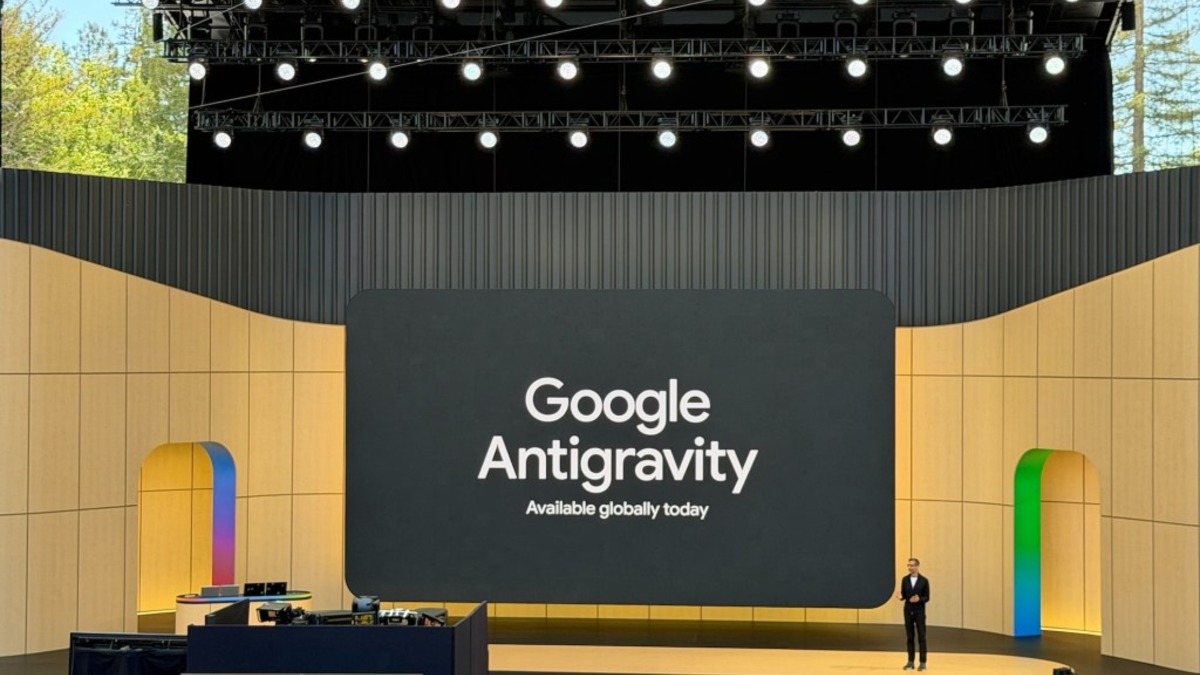 Antigravity 2.0 was unveiled at Google I/O 2026 as the successor to Gemini CLI.
Source: techcrunch.com
Antigravity 2.0 was unveiled at Google I/O 2026 as the successor to Gemini CLI.
Source: techcrunch.com
| Tier | Gemini CLI after June 18 | Antigravity CLI | Monthly cost |
|---|---|---|---|
| Free / Google AI Individual | Access ends | Free tier | $0 |
| Gemini AI Pro | Access ends | Included | $19 |
| Gemini AI Ultra | Access ends | Included | $40 |
| Code Assist GitHub (Individual) | No new installs, requests end | TBD | Varies |
| Enterprise / Standard | Continues | Continues | $19+/seat |
| Paid Gemini API key | Continues | Separate signup | Per use |
Google acknowledged there won't be "1:1 feature parity right out of the gate." Community-built extensions for open-source toolchain integrations - Dynatrace, Elastic, Figma, Shopify, Stripe - face disruption under the plugin migration path.
The Gap
The GitHub discussion thread where Google posted the transition notice collected 211 downvotes against 3 upvotes within days. The vote distribution says more than any individual comment.
Andrea Alberti, a 27-commit contributor to the project, asked directly whether developers had "essentially working for free on a codebase that will only be used in enterprises." Other contributors pushed back in the same thread. One wrote: "Basically, we're making the project closed source." Another: "A pretty discouraging message for contributors."
The dynamic they're describing has an established pattern. Developers spent a year submitting the 6,000+ pull requests that went into Gemini CLI. The refined product now ships as an enterprise exclusive, while free users get a proprietary replacement they didn't build and can't inspect.
Christine Hall at FOSS Force called it a bait-and-switch: release open-source software to attract volunteer labor, let the community build real product value (Gemini CLI reached 100,000+ GitHub stars), then restrict the functional product to enterprise customers. The Linux Foundation highlighted this exact dynamic at Open Source Summit North America 2026, introducing the Model Openness Tool at isitopen.ai to evaluate AI projects across 17 lifecycle components - not just whether code is published, but whether all the pieces needed to run it independently are actually available.
One Google employee suggested in HN comments that "there's a chance Antigravity will be open sourced." Developers responded with deep skepticism, citing killedbygoogle.com - which now tracks more than 300 discontinued Google products. That reference keeps surfacing in every Antigravity thread; at this point it's reflexive.
Migration conversations are running in public. Claude Code, Cursor, and Codex CLI are the most commonly cited alternatives. Our 2026 AI coding CLI tools guide covers all four options with current pricing and benchmark data if you need a direct comparison.
We've covered this pattern before from different angles. Antigravity's weekly quota lockouts for Pro subscribers started generating complaints in March. Google's ban of paying OpenClaw users drew significant backlash in February. Each incident attracted the same response from the developer community: a reminder that building on Google tooling carries a specific kind of product-longevity risk.
Verdict
The honest case for Antigravity CLI is real: a Go rewrite is faster, the agent-first architecture addresses real limitations in the original TypeScript implementation, and the free tier means individual developers aren't right away locked out completely. The objection isn't that the upgrade is bad. The objection is narrower: the upgrade is better for enterprise customers and worse for the community that built the open version.
Free and individual developers who rely on Gemini CLI have until June 18 to migrate. The Apache 2.0 code stays published. Whether a client library without a backend counts as open-source in any meaningful sense is the question Google hasn't answered.
Sources:
- Google Developers Blog - Transitioning Gemini CLI to Antigravity CLI
- GitHub Discussion #27274 - Official transition announcement and developer reactions
- The Register - Bye-bye, Gemini CLI; Google's gone and swapped you for a closed-source AI
- FOSS Force - Gemini CLI's Short Life and Google's Antigravity Bait-and-Switch
- The New Stack - Google pushes free users from open-source Gemini CLI to closed-source Antigravity CLI
- TechTimes - Google Accepted 6,000 Gemini CLI Contributions, Then Closed Tool for Enterprise Only
- Linux Foundation - Model Openness Tool

