
Google Bets $75M on A24 as Hollywood's AI Race Shifts
Google DeepMind's $75M investment in A24 aims to build AI tools shaped by filmmakers rather than imposed on them, as studios race to stake their AI positions across Hollywood.
 7 min read
When Google announced it was putting $75 million into A24, the studio behind "Everything Everywhere All at Once" and "Midsommar," the framing was unusually careful. This wasn't AI replacing filmmakers. It was AI shaped by them. The question worth checking is whether that framing represents a real structural difference from what Netflix and Amazon are already building - or the same competitive bet dressed in better language.
TL;DR
- Google DeepMind investing $75M in A24 in a non-exclusive, multi-year research partnership
- Google gets no access to A24's content library or data
- First project: AI-produced storyboards for pre-production planning
- Deal comes weeks after SAG-AFTRA ratified a four-year contract with new AI performer protections
- Netflix paid up to $600M to acquire Ben Affleck's InterPositive; Amazon MGM's AI Studio launched August 2025
What Google Is Actually Buying
This isn't a typical strategic investment. Google isn't acquiring IP, joining A24's board, or securing rights to its content library. The deal pairs DeepMind's research infrastructure with A24's production team to build tools "shaped by the creators who use them" - in practice, AI-created storyboards and reimagined production workflows.
The $75M matches what Thrive Capital invested in A24's last funding round, according to the Wall Street Journal. That parity suggests Google valued access to A24's creative process as much as a financial stake in the studio.
The $75M that isn't a standard investment
A24 partner Scott Belsky leads A24 Labs, the studio's technology division. He told the Wall Street Journal that the tools "won't look anything like the prompted generation type of AI that people feel uncomfortable with." The first announced project involves AI-created storyboards - rough visual planning sketches directors use before filming begins.
The scope is deliberately narrow. This isn't a script-writing AI, a synthetic actor generator, or a cost-cutting engine for post-production visual effects. It's a planning tool, positioned at the stage of filmmaking where no performer's likeness is involved and no union contract clause is triggered.
What DeepMind doesn't get
The deal is non-exclusive. A24 can work with other AI companies, and DeepMind can partner with other studios. Most significantly, Google gets no rights to A24's content library - a structural choice that distinguishes this from Disney's $1 billion investment in OpenAI, which includes content licensing for Marvel and Star Wars characters in Sora.
DeepMind's VP of Product Eli Collins put the company's reasoning directly: "We believe breakthroughs happen when you get technology into the hands of the best minds in the field."
The Artist-First Argument, Examined
A24 has built its reputation on projects major studios wouldn't green-light: Midsommar, Uncut Gems, The Whale. The studio's argument is that its creative credibility gives this partnership a different character than what a standard tech investment could produce. "We think there are better uses that preserve creative control and support risk-taking," Belsky said.
That argument has a real structure. Tools built inside an actual production environment - tested against real dailies, adjusted by working directors, refined on actual shoots - face constraints that purely generative models don't encounter. Whether the output ends up meaningfully different from what Adobe's generative suite or a general-purpose video model would produce is a question the partnership hasn't answered yet.
The Google DeepMind blog post accompanying the announcement states that "specific goals, technical outputs and creative milestones of this initiative will evolve over time." That's either flexibility or vagueness, depending on how much weight you give the artist-led framing.
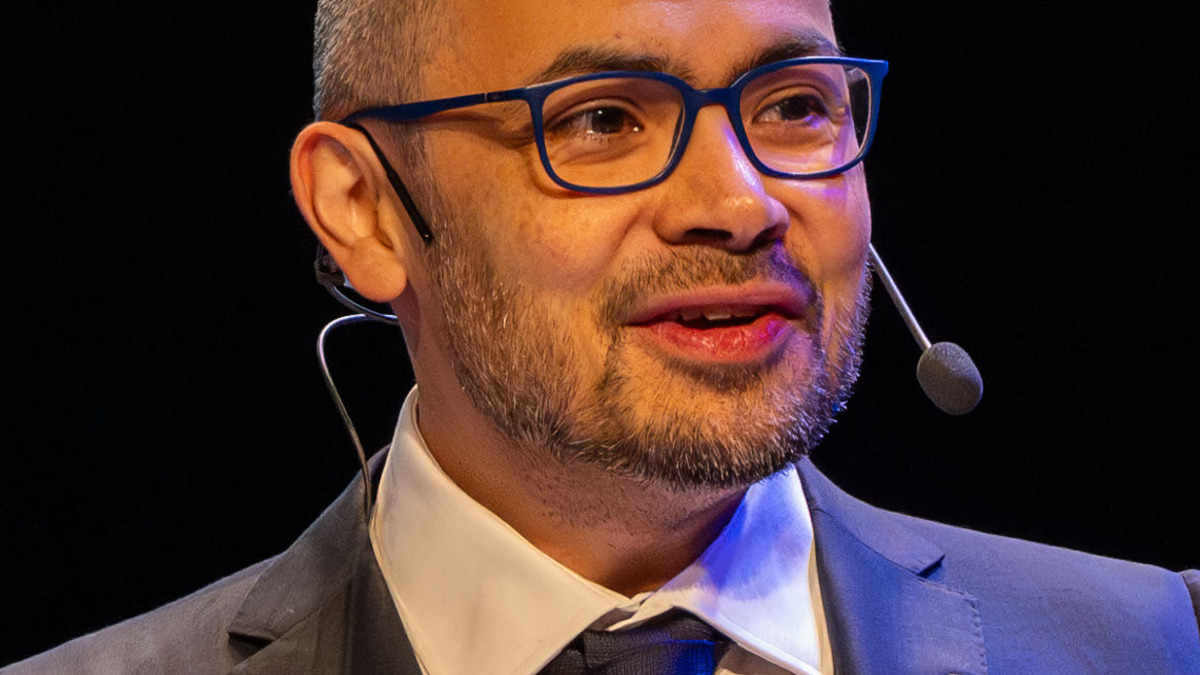 Demis Hassabis, who co-founded DeepMind in 2010 and won the 2024 Nobel Prize in Chemistry for AlphaFold, is now betting the research lab's capabilities on building AI tools inside Hollywood's most artistically credible independent studio.
Source: commons.wikimedia.org
Demis Hassabis, who co-founded DeepMind in 2010 and won the 2024 Nobel Prize in Chemistry for AlphaFold, is now betting the research lab's capabilities on building AI tools inside Hollywood's most artistically credible independent studio.
Source: commons.wikimedia.org
The Studio AI Arms Race
Hollywood's major players aren't waiting to figure out their AI position. Four significant moves have landed in the last eight months:
| Studio | AI Partner | Capital | Structure |
|---|---|---|---|
| Google DeepMind | A24 | $75M | Research partnership; no content rights |
| Netflix | InterPositive (Ben Affleck) | Up to $600M | Full acquisition; 16-person team absorbed |
| Disney | OpenAI | $1B | Investment + Marvel, Star Wars content licensing |
| Amazon MGM | AWS / Project Nara | Undisclosed | Internal AI Studio (Aug 2025); GenAI Creators' Fund (May 2026) |
Netflix's approach is the sharpest contrast. Ben Affleck founded InterPositive in 2022 to build AI models trained on a production's own dailies - not generative systems drawing on the public internet. The technology lets filmmakers remove stunt wires, relight shots, recover missed frames, and enhance backgrounds using a custom model that knows the specific visual language of their project. Netflix paid up to $600M to own that approach outright, bringing the 16-person team inside the company.
Google structured this as a research partnership for $75M and a multi-year arrangement that benefits both parties while binding neither. The gap between those two commitments says something about exclusivity.
Amazon's entry is different again. Its AI Studio, launched in August 2025 under Chief Digital Officer Albert Cheng, integrates AI into production workflows with House of David season two including roughly 350 AI-produced shots. In May 2026, Amazon and AWS expanded the program into Project Nara and a GenAI Creators' Fund, greenlighting three animated series for Prime Video.
Studios that have been less public about their AI use - the broader pattern of undisclosed AI in Hollywood production - now have a set of public frameworks to reference. Any approach that gets ratified by credible partners tends to become the benchmark others are measured against.
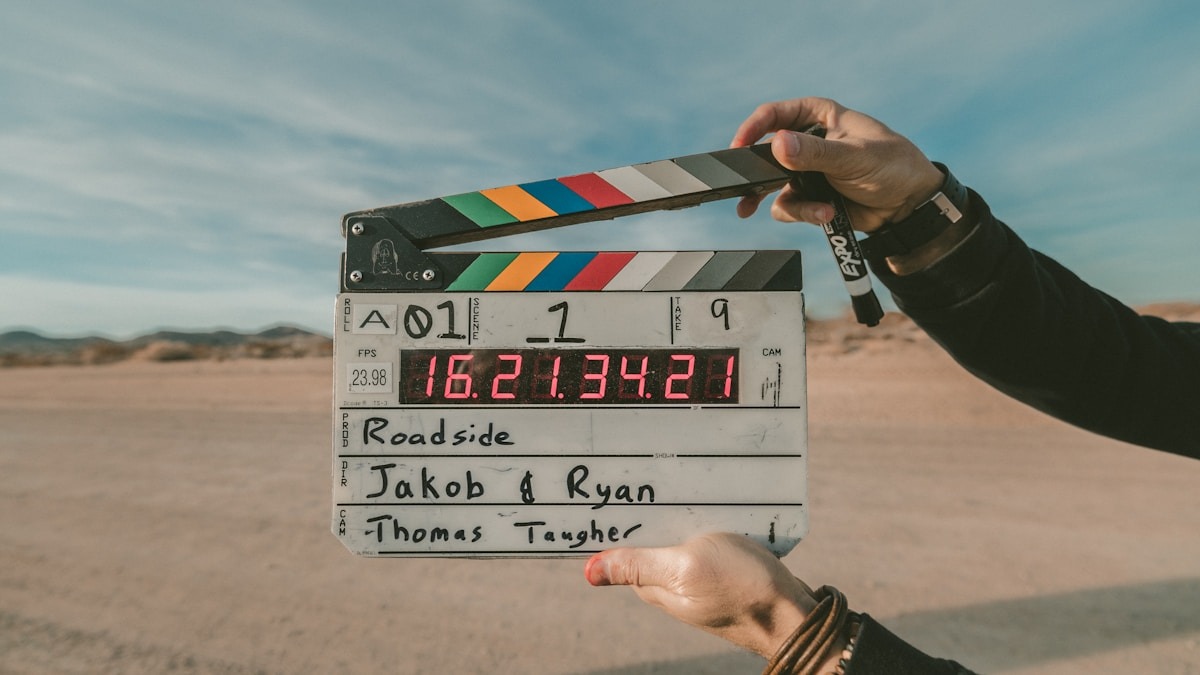 Pre-production planning, especially storyboarding, is the stated starting point for the Google DeepMind and A24 partnership - a stage that sits outside the AI restrictions in SAG-AFTRA's 2026 contract.
Source: unsplash.com
Pre-production planning, especially storyboarding, is the stated starting point for the Google DeepMind and A24 partnership - a stage that sits outside the AI restrictions in SAG-AFTRA's 2026 contract.
Source: unsplash.com
What the New Labor Contracts Allow
SAG-AFTRA ratified a four-year deal with major studios on June 4, 2026, with 91.4% of members voting in favor. The contract restricts use of synthetic performers to cases where they bring "significant additional value" compared to a live actor or their digital avatar. Studios need "an articulable business reason" to scan a performer at all. Digital replicas can't be used to get around strike participation.
Where the A24 deal fits
Storyboards don't involve performers. Pre-production visualization tools fall completely outside SAG-AFTRA's jurisdiction. The same applies to WGA's AI restrictions, which cover writing assistance rather than visualization.
The announced starting point - AI storyboards - fits neatly inside that regulatory gap. Whether it stays there depends on where the research goes once A24's production teams start working with DeepMind's tools in earnest. The ByteDance Seedance situation showed how quickly an AI video tool can move from "innovative production aid" to "cease-and-desist target" when it crosses into performer likeness and copyright territory. Starting at pre-production is the structurally safe position.
What This Deal Doesn't Settle
"By collaborating with filmmakers and industry leaders like A24 from the beginning, we can build new AI features to support artists in authentic, meaningful storytelling." - Demis Hassabis, Google DeepMind CEO
The announcement leaves one key question open: what happens to the research after it leaves A24's production environment?
Google's agreement is explicitly non-exclusive. Nothing in the public announcement prevents DeepMind from taking what it learns about real production workflows and folding it into Gemini, Veo, or any filmmaking tools it builds for the broader market. A research partnership doesn't keep its outputs inside one institution any more than a university grant stays within one lab.
A24 gets $75 million and early access to research-grade AI tools. DeepMind gets a prestigious creative partner that nobody in Hollywood dislikes. The deal is structured to be low-risk and high-signal for both parties. What the broader creative community actually gets from it depends on whether the research stays close to A24's specific creative risks - or gets abstracted into something that serves Google's product roadmap when the partnership reaches its natural end.
Sources:
- Google DeepMind and A24 partnership announcement - Google DeepMind blog
- Google DeepMind bets $75M on AI's future in Hollywood with A24 deal - TechCrunch
- Google Invests $75 Million in A24 to Develop AI-Powered Filmmaking Tools - Variety
- A24 and Google DeepMind to Form an AI Venture - Deadline
- Netflix buys Ben Affleck's AI filmmaking company InterPositive - TechCrunch
- The Walt Disney Company and OpenAI reach landmark agreement - The Walt Disney Company
- New AI Protections and a Merged Pension Plan: Inside SAG-AFTRA's Four-Year Deal With Studios - The Hollywood Reporter
- Amazon MGM Studios Launches GenAI Creators' Fund - Variety

