
General Intuition Raises $320M to Train AI on Gameplay
General Intuition raised $320 million at a $2.3 billion valuation on the bet that billions of hours of video game footage - with action labels - can train AI agents that operate in the real world.
 6 min read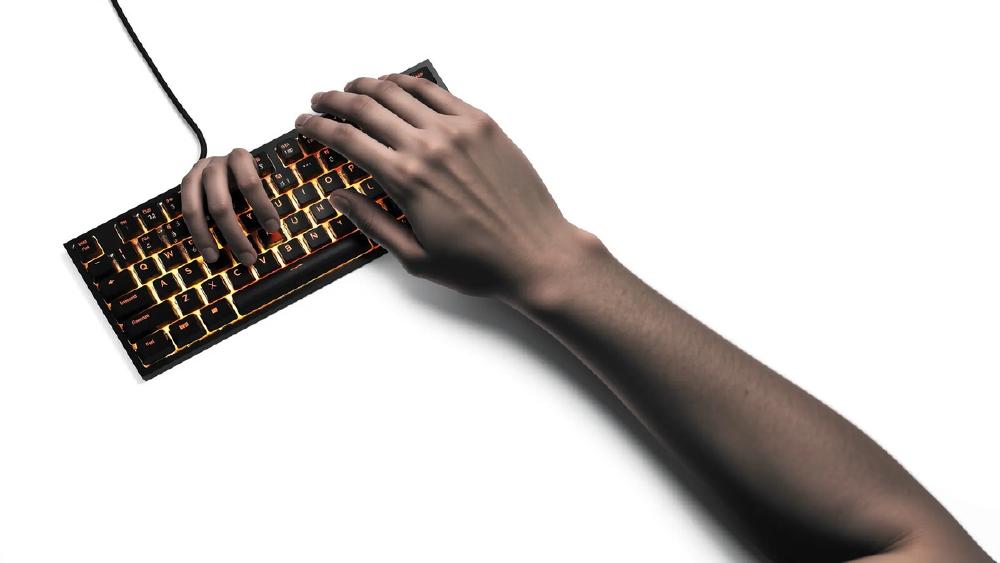
A quadruped robot walked through the company's office unaided. It had never been inside that building. The only real-world data used to fine-tune its AI was eight minutes of footage collected outdoors - on a street, somewhere else completely. The brain running the robot was the same one that had spent the previous 100 hours playing Fortnite.
That demo is the core pitch of General Intuition, a Dutch AI startup that announced a $320 million Series A on June 25, raising its total disclosed funding to $454 million and setting its post-money valuation at $2.3 billion.
TL;DR
- $320M Series A at $2.3B valuation; round closed January 2026, announced June 25
- Investors include Khosla Ventures (lead), General Catalyst, Jeff Bezos, and Eric Schmidt
- Trains action models on billions of first-person gameplay clips from Medal.TV
- Key edge: action labels (exact button presses), not just raw video
- Same model plays Fortnite and navigates a quadruped robot with 8 minutes of real-world fine-tuning
- Dutch incorporation keeps IP in the Netherlands amid rising US export controls
The Data Advantage That Actually Matters
Beyond Video Alone
The AI research community has produced a lot of video-trained models. Most of them share a common limitation: video shows what happened, not how a person caused it to happen.
Medal.TV, the gaming clip platform that CEO Pim de Witte co-founded before spinning out General Intuition, records both. Every clip uploaded by its millions of monthly active gamers carries not just the footage but exact button-press timing - which thumb moved, when, and in what sequence. That combination is what the company calls action-labeled data, and it distinguishes the dataset from anything a researcher could scrape from YouTube or Twitch.
"The human action data and reaction data you have in games is the key part to the emergence of intuition," Vinod Khosla said when asked why Khosla Ventures led the round. The firm has now invested across multiple tranches, treating the data position as a defensible moat.
DIAMOND - A Different Kind of World Model
General Intuition built a world model called DIAMOND that works differently from most approaches in this space. Rather than compressing visual frames into token sequences and predicting the next token, DIAMOND is a diffusion-based system that predicts future visual states as whole-image outputs. The company argues this preserves spatial detail that tokenization tends to lose - exactly the kind of detail a robot needs to navigate a physical environment.
DIAMOND isn't the product General Intuition sells. It's the training environment: a synthetic gym where the action model learns by acting inside DIAMOND-produced worlds, building up experience at far lower cost than physical robot deployments.
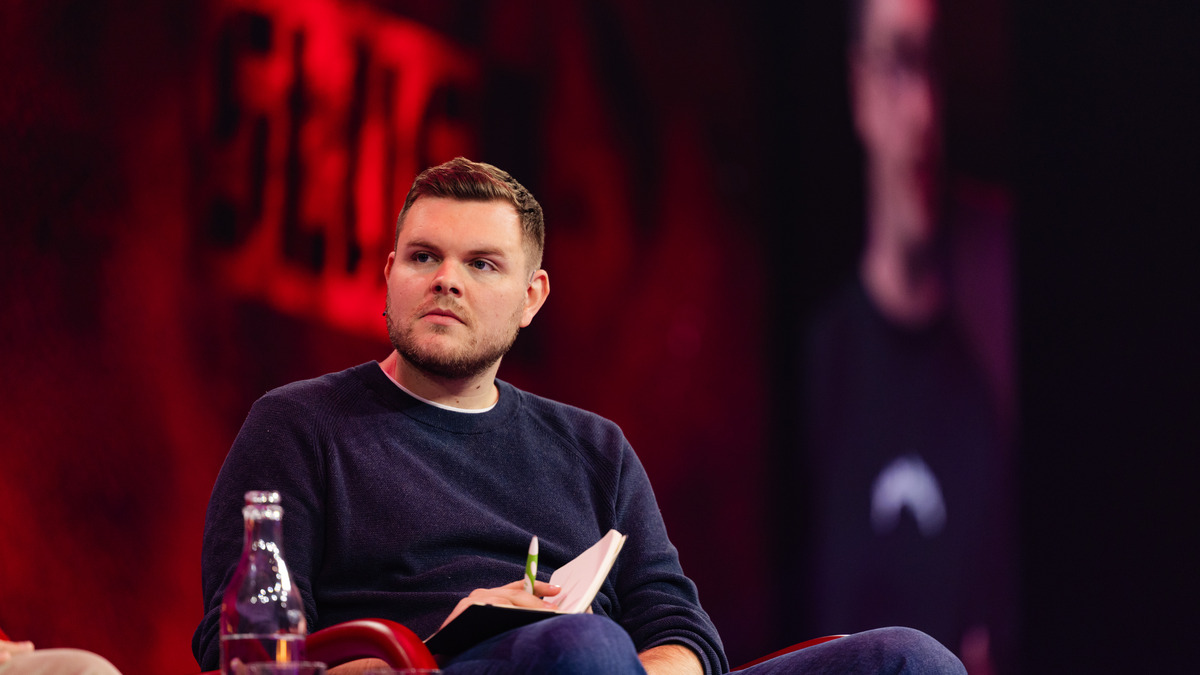 Pim de Witte, 31, co-founded Medal.TV before spinning out General Intuition as a separate frontier AI lab.
Source: techcrunch.com
Pim de Witte, 31, co-founded Medal.TV before spinning out General Intuition as a separate frontier AI lab.
Source: techcrunch.com
From Fortnite to the Factory Floor
Eight Minutes to a New Environment
The eight-minute fine-tuning claim is the number that'll get the most scrutiny, and for good reason. Taking a model trained completely in a simulated game environment and launching it on physical hardware in an unfamiliar space is a notoriously hard problem. Most robotics labs spend weeks collecting real-world data for each new setting.
General Intuition's argument is that spatial-temporal reasoning - understanding how actions cascade through physical space over time - can be learned in simulation at scale and then re-anchored to a new environment with very little data. The Fortnite-to-office-robot demo is the proof-of-concept. The street-vs-office gap is the honest test: the model had no footage of the indoor space it was navigating, yet performed well enough to be part of a public press demonstration.
Where the Transfer Could Break Down
Fortnite physics are deterministic and clean. Real floors are uneven, lighting changes, objects move without warning, and friction varies in ways no game engine models accurately. Scaling from a controlled demo to factory deployments or autonomous vehicles - two of the three application areas the company named - requires the model to handle edge cases that game data will never contain.
This is the same obstacle that has stalled every previous wave of simulation-to-real transfer research. What General Intuition has that prior approaches lacked is scale: not millions of game frames but billions, with action labels at each step. Whether scale alone closes the sim-to-real gap is the real question the company's product launch this summer will start to answer.
 Every button press logged by Medal.TV gamers becomes a training signal in General Intuition's action model pipeline.
Source: unsplash.com
Every button press logged by Medal.TV gamers becomes a training signal in General Intuition's action model pipeline.
Source: unsplash.com
The Money Behind the Thesis
Khosla Leads, Bezos and Schmidt Follow
The investor list is standout beyond the headline names. Eric Schmidt's Hillspire and Jeff Bezos participated alongside researchers from Google DeepMind and MIT. General Catalyst joined Khosla in co-leading. Khosla reportedly wrote two checks in three months before committing to the Series A lead.
The round closed in January 2026 but was announced five months later, in June, with the public demo. The company reported roughly $40 million in 2025 revenue from early-access arrangements, giving it a revenue multiple of around 57x on the new valuation - steep even by 2026 AI startup standards.
A Dutch Company by Design
De Witte's decision to domicile the company and its IP through a Dutch entity in Naarden is deliberate. The company operates across New York, Geneva, Paris, and London, but keeps its core data assets and intellectual property in the Netherlands.
"With export controls like these, it's important that we are a Dutch company," de Witte told investors and press. It's a direct acknowledgement that US regulatory risk is a live concern for AI labs building on proprietary datasets - a calculation that'll likely shape how more European AI founders structure future rounds.
The World Model Crowd Is Getting Crowded
General Intuition enters a field that has attracted serious capital in a short span. Odyssey raised $310 million from Amazon to build world models for interactive media. Yann LeCun's AMI Labs secured a $1 billion seed round built around JEPA, his alternative to token-prediction architectures. Decart and World Labs have each raised significant rounds on similar spatial-reasoning bets.
The differentiator General Intuition claims isn't the world model itself - it is the action-labeled data that sits behind it. Competitors building world models from internet video are working with observation data. General Intuition has interaction data: what was done, not just what was seen.
Robotics companies approaching the problem from the hardware side are watching these bets closely. Agility Robotics recently went public via SPAC at a $2.5 billion valuation, betting that humanoid platforms will be ready before robust embodied AI models exist. General Intuition is making the opposite wager: that the model will be ready before the hardware market reaches scale, and that gaming data is the training set that gets it there.
The company expects to launch its first commercial product in late summer or early autumn 2026. That timeline puts a direct test of the sim-to-real thesis on the calendar within months.
Sources:

