
Ford Rehires 350 Engineers After AI Quality Fails
Ford climbed from No. 15 to No. 1 in JD Power's 2026 quality study - not by deploying more AI, but by admitting it had over-relied on automation and bringing back 350 veteran engineers to fix what the machines got wrong.
 6 min read
Ford won the 2026 JD Power Initial Quality Study last week - its first mainstream brand crown in 16 years. The factory floor did not get there with more AI. It got there by quietly reversing three years of automation-first decisions and bringing 350 veteran engineers back through the door.
The story is less about a technology failing and more about what gets lost when companies outsource expertise to systems that have never actually earned it.
TL;DR
- Ford shed 5,300 salaried positions since 2020 partly on the assumption AI could handle quality control
- Automated systems failed because experienced engineers left before their knowledge could be captured in training data
- Ford rehired 350 veteran engineers to rebuild data pipelines, mentor junior staff, and fix the AI tools themselves
- The turnaround worked: Ford ranked No. 1 among mainstream brands in JD Power's 2026 IQS for the first time since 2010
The Automation Bet That Backfired
Ford spent the early 2020s trimming its white-collar workforce with a logic that was hard to argue against at the time. AI-driven quality systems could ingest design requirements, flag defect patterns, and catch failures before vehicles reached the production floor. The company shed 5,300 salaried positions since 2020. Across Detroit's three major automakers, more than 20,000 white-collar jobs were removed during the same period.
COO Kumar Galhotra later acknowledged the problems that followed, describing a period of "relying more and more on automated quality systems" that produced results below expectations.
The assumption was reasonable on paper. Feed a system enough data about what good looks like, and it will learn to enforce quality at scale. The problem was that the people who knew what good looked like were already gone.
When AI Amplifies Bad Inputs
VP of Vehicle Hardware Engineering Charles Poon put the problem in plain language:
"Mistakenly we thought that by just introducing artificial intelligence and ingesting the design requirements that we had, that that would produce a high-quality product."
What Ford discovered instead is a problem that appears repeatedly across AI deployments: garbage in, garbage out, only faster. The experienced quality engineers who were let go had spent years building an intuition for failure points - the kind of tacit knowledge that's almost impossible to write down and highly difficult to encode in training data. When they left before their expertise could be methodically captured, the AI tools trained on incomplete or low-signal data started boosting the gaps rather than filling them.
A 40-person dedicated software quality assurance unit was eventually created to address the technical debt. More than 100,000 automated tests were added. But those tools couldn't function well without the human expertise to design, validate, and interpret them.
Bringing Veterans Back
Rather than scrapping AI completely, Ford reversed the organizational error at its root. Over the last three years, it hired 350 veteran engineers - a mix of former Ford employees and specialists from supplier companies - and assigned them to three tasks.
The first was mentoring. Junior engineers who had joined after the wave of departures had technical skills but little practical context for where and how vehicles actually fail. The veterans were brought in to transfer that institutional memory.
The second task was rebuilding the data infrastructure underneath Ford's AI tools. Automated defect detection is only as accurate as the labels on the data it trained on, and many of those labels had been created without the scrutiny that experienced engineers would have applied.
The third task was to stay on as quality hunters - what Galhotra called "technical specialists" who "hunt for failure points before a part ever reaches the plant floor." Ford added 1,200 new inspections and 203 new inspectors for its 2026 Expedition alone at the Kentucky Truck Plant, alongside 72 new technology tests.
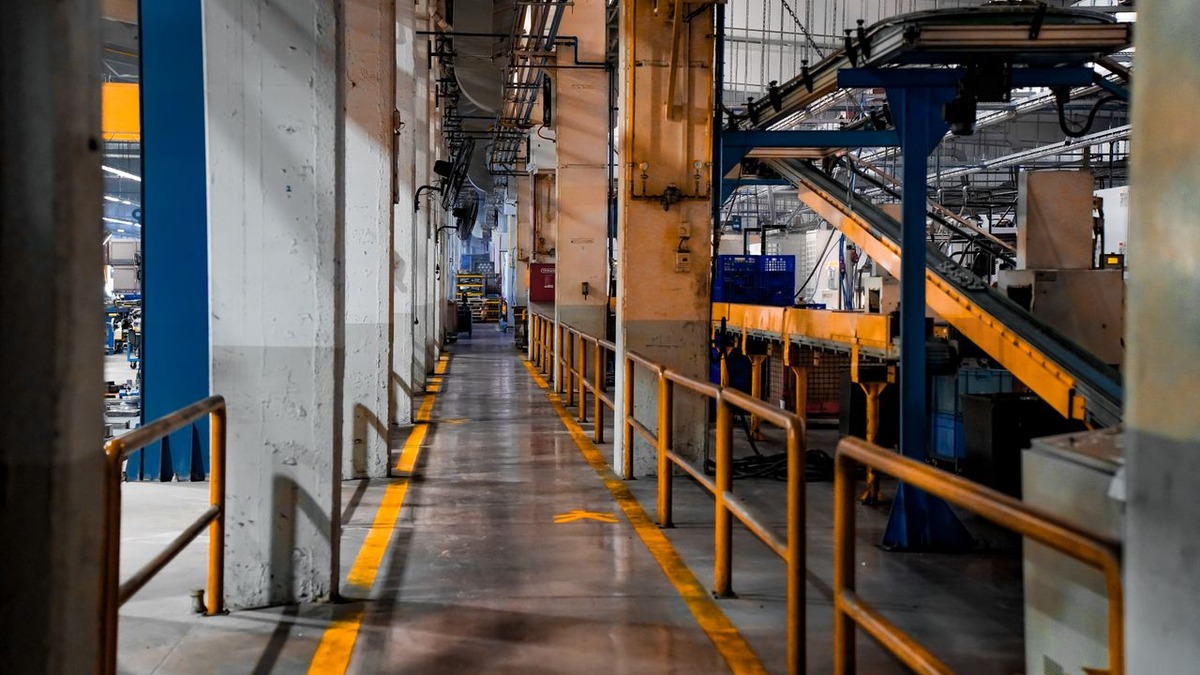 Modern automotive production lines rely on both AI-powered inspection systems and experienced human oversight.
Source: pexels.com
Modern automotive production lines rely on both AI-powered inspection systems and experienced human oversight.
Source: pexels.com
The JD Power Results
The numbers from the turnaround are striking. Ford moved from No. 15 among mainstream brands in the 2023 JD Power Initial Quality Study to No. 1 in 2026 - the largest year-over-year improvement among any mainstream brand, with 41 fewer reported problems per 100 vehicles compared to the prior year. Its final score of 152 problems per 100 vehicles beat Nissan (156) and Buick (162). Only premium brands Porsche and Genesis ranked higher across the entire study.
Seven of Ford's ten tested models placed in the top three of their respective segments. The F-150, Mustang, and F-Series Super Duty each took first place in their categories for the second year in a row.
CEO Jim Farley called it an "overnight success" that was actually four years in the making. "We've worked really hard for four years to be an overnight success story," he told reporters, noting that warranty and recall costs are both declining as a direct result of the quality improvements.
In 2026, Ford issued 51 recalls covering more than 11 million vehicles - a figure that sounds alarming but reflects a transitional period during which older quality failures were surfaced and addressed methodically. The program is now ahead of the problem rather than chasing it.
 Experienced quality engineers bring institutional knowledge that AI systems alone can't reproduce.
Source: pexels.com
Experienced quality engineers bring institutional knowledge that AI systems alone can't reproduce.
Source: pexels.com
What Ford Got Right - Eventually
Ford's experience isn't an argument against AI in manufacturing. The company didn't abandon automated inspection systems - it fixed them. The distinction matters.
The mistake was treating AI as a knowledge-generation tool rather than a knowledge-amplification tool. AI systems learn from examples. When the people who could produce good examples are gone, the systems learn from whatever is left. That produces automated mediocrity at scale, not automated excellence.
For workers and industries watching the same playbook unfold elsewhere, the Ford case is a useful data point. Predictions about AI white-collar job displacement have consistently underestimated the importance of tacit knowledge - the accumulated judgment that experienced practitioners carry but rarely write down. Andrej Karpathy's analysis of AI job exposure flagged engineering-adjacent quality roles as high-exposure exactly because they appear replaceable until something goes wrong.
The $500 million RAISE US nonprofit - backed by OpenAI, Anthropic, Amazon, and Microsoft - exists partly to address this dynamic by funding worker retraining at scale. Ford's actual outcome suggests the harder problem isn't retraining displaced workers but ensuring expertise is captured before the displacement happens.
The lesson from Detroit is uncomfortable for anyone who has presented AI as a straightforward cost-reduction mechanism. The technology works. But it works on the knowledge you put into it. Cutting the people who hold that knowledge before building systems that can encode it isn't a cost reduction - it is a debt that compounds until something forces you to pay it.
Sources:
- Ford Has Been Rehiring Quality Inspectors After AI Fell Short - Bloomberg
- Ford rehired 350 engineers to fix what its AI systems got wrong - The Next Web
- Ford CEO on JD Power win: This 'overnight success' was actually 4 years in the making - Yahoo Finance
- Ford Named Top Mainstream Brand for New Vehicle Quality in JD Power 2026 IQS - BusinessWire
- Ford rehired 350 engineers after AI falls short - TechCrunch

