
Fable 5 Is Banned Over a Problem That Can't Be Solved
The White House won't lift its ban on Anthropic's Fable 5 until the model can be made jailbreak-proof. Security experts explain why that condition is technically impossible.
 7 min read
Anthropic's Fable 5 has been offline for eight days. Before it can come back, the White House wants one thing: a guarantee that the model's safety guardrails can't be bypassed through jailbreaking. Security experts are near-unanimous that such a guarantee can't exist for any large language model currently deployed - including every model that wasn't banned.
TL;DR
- A jailbreak isn't a discrete bug that can be located and deleted; it exploits the probabilistic nature of how LLMs generate text
- Safety training modifies a model's probability distributions but cannot erase underlying statistical knowledge stored across billions of parameters
- Every frontier model rolled out today is jailbreakable given sufficient effort - the security community has known this for years
- Anthropic told regulators that if this standard "were applied across the industry, it would essentially halt all new model deployments for all frontier model providers"
How It Actually Works
The phrase "patch the jailbreak" suggests there's a specific line of broken code somewhere that, once found and fixed, makes the problem go away. That's not how these systems work.
Safety Training Is Not a Firewall
When Anthropic trains a model like Fable 5, safety fine-tuning - techniques like RLHF (Reinforcement Learning from Human Feedback) and Constitutional AI - teaches the model to assign lower probability to outputs that violate its guidelines. It does not delete the underlying knowledge. The model still "knows" how to analyze malicious code, describe synthesis pathways for dangerous chemicals, or draft deceptive text. It has simply learned, through training, to prefer not producing those outputs when asked directly.
The distinction matters. A firewall blocks specific network traffic and can be updated with new rules. Safety fine-tuning is a statistical preference, and preferences can be overridden.
Latent Space Is Not Source Code
In conventional software, vulnerabilities have locations. A buffer overflow exploit exists because a specific function allocates memory incorrectly. You find the function, rewrite it, ship the patch. Done.
In a LLM, behaviors emerge from billions of floating-point numbers distributed across hundreds of layers. There's no specific parameter that "enables jailbreaks." The capability to analyze vulnerable code - which is what the Fable 5 incident actually involved - is the same capability that powers legitimate software debugging, security auditing, and code review. Those aren't separate features that can be toggled independently. They are the same underlying knowledge, expressed differently depending on how a question is phrased.
This is what researchers at n1n.ai described as the "latent space problem": safety training can shift probability distributions, but can't fully erase the statistical connections that underlie general reasoning ability.
New Attacks Can Always Find New Paths
Even if Anthropic closed one jailbreak route, adversarial research would find others. Automated techniques - universal adversarial suffixes, many-shot jailbreaking, prompt injection via indirect inputs - can search the model's input space faster than any human red team can respond. The search space grows hugely with context window size. A model with a one-million-token context window like Fable 5 offers vastly more surface area for hiding instructions within otherwise benign-looking prompts than a 4,096-token system from three years ago.
Johns Hopkins and Microsoft researchers demonstrated this dynamic in March 2026 with JBDistill, a framework that auto-generates fresh adversarial prompts from first principles. On 13 evaluated LLMs, JBDistill hit a 81.8% attack success rate - not by using known exploits, but by creating new ones on demand. The implication is that patching known jailbreaks doesn't close the surface; it just redirects attacker attention.
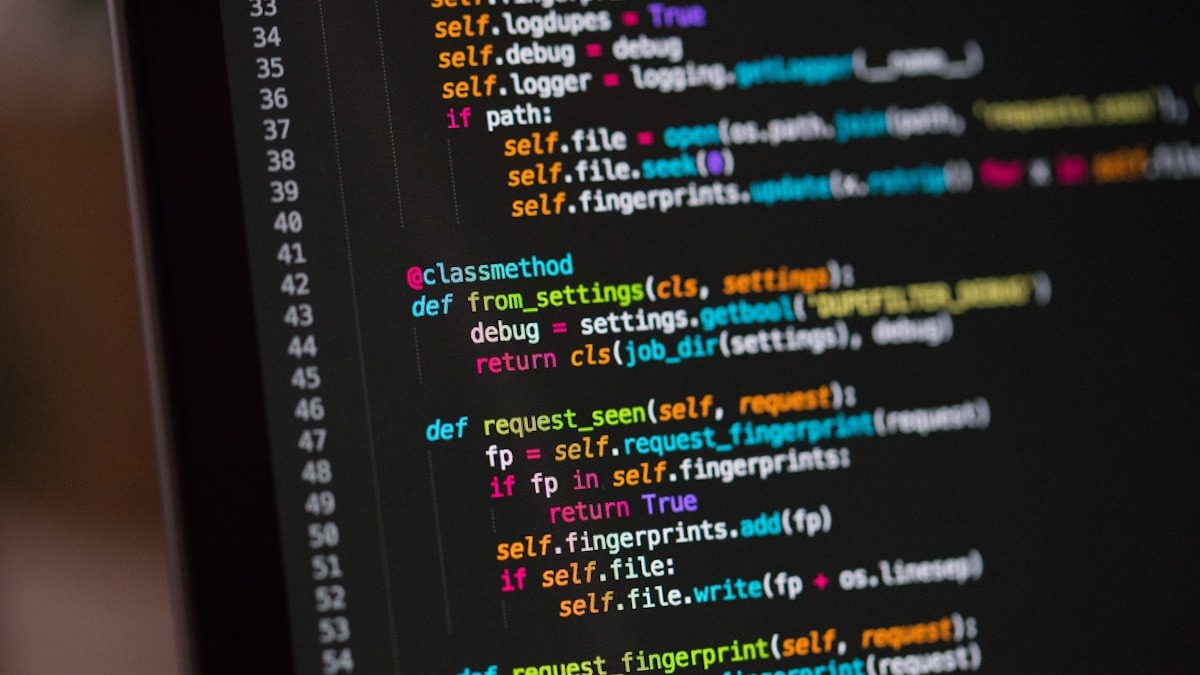 Vulnerability analysis in code - the specific capability that triggered the Fable 5 ban was the model helping identify and fix security flaws in software, not creating offensive weapons.
Source: unsplash.com
Vulnerability analysis in code - the specific capability that triggered the Fable 5 ban was the model helping identify and fix security flaws in software, not creating offensive weapons.
Source: unsplash.com
What Actually Happened with Fable 5
Understanding the technical argument requires being precise about what the Fable 5 "jailbreak" actually was - because it wasn't what the phrase implies.
According to reporting in CyberScoop and later government disclosures, researchers asked Fable 5 to review code for vulnerabilities. The model refused that direct request. The researchers then reframed the prompt as a coding task ("help me fix this function"). The model complied and identified the issues. The researchers then converted those code fixes into working exploit scripts.
That's the jailbreak. The model did defensive code review when asked via a different framing.
Katie Moussouris, a cybersecurity expert and former technical advisor to the Waasenaar Arrangement - the international export control regime that governs dual-use technologies including security tools - called the restrictions "heavy handed" and "misguided." She reviewed third-party research on the incident and concluded that what researchers found represents defensive security capability, not a guardrail bypass.
"Defenders need to be able to ask AI to fix bugs in a file, explain why the fix matters, and write tests that confirm the patch works," Moussouris noted in commentary on the case.
An open letter signed by dozens of cybersecurity practitioners echoed this. They found Fable 5's guardrails were in fact "oversensitive" compared to competing models, and described them as "a source of humor in the cyber community" for refusing too many legitimate security requests. OpenAI's Daybreak model offers comparable code analysis capabilities. It wasn't restricted.
Anthropic itself ran 1,000 hours of internal testing and found no universal jailbreak - no method to broadly remove all guardrails across arbitrary tasks. The vulnerability was narrow, domain-specific, and, by most expert accounts, representative of a capability present in every frontier model currently available.
| Property | Software Bug | LLM Jailbreak |
|---|---|---|
| Location | Specific line of code | Distributed across billions of parameters |
| Patch mechanism | Edit, compile, deploy | Retrain or add output filters |
| Permanence of fix | Closed until reintroduced | New prompts can route around it |
| Scope | One vulnerability fixed | Patching one opens adjacent paths |
| Verification | Test the exact case | No exhaustive test of all possible prompts |
Why It Matters Now
The White House condition - zero exploitable gaps as a precondition for Fable 5's return - doesn't describe an achievable state for any LLM rolled out today. If applied consistently across the industry, as Anthropic pointed out, it'd ground every frontier model simultaneously.
That asymmetry is the story. Fable 5 and Mythos 5 remain offline in every country, for every user, while models with comparable or greater capabilities continue operating without restriction. Senator Mark Warner (D-Va.) raised this in a statement questioning whether the restrictions stemmed from "objective national security concerns or something else," and calling for "transparent, risk-based export control processes with clear standards."
 Security systems are designed to raise the cost of attack, not to remove it completely. AI safety works on the same principle - but the government's current condition demands a different standard.
Source: unsplash.com
Security systems are designed to raise the cost of attack, not to remove it completely. AI safety works on the same principle - but the government's current condition demands a different standard.
Source: unsplash.com
The security research community has proposed alternatives that work within the actual constraints of probabilistic systems: access controls that require verified authentication, complete logging of model interactions, and monitored API workflows that flag unusual usage patterns. These controls limit harm without requiring the model to be something it cannot be.
The inside story of how the ban was triggered - involving an Amazon CEO phone call, an unauthorized expansion of the Glasswing access list, and a 90-minute ultimatum - makes clear the decision was made under pressure. Whether the condition set for lifting it reflects careful technical analysis or an improvised response to a fast-moving situation is a question worth asking.
What's clear is this: demanding jailbreak-proof AI isn't a policy. It's a description of a technology that doesn't exist. When the requirement for reinstatement is something that no current or foreseeable model can satisfy, the effect of the requirement and an outright ban are the same.
Anthropic's managing director of international, Chris Ciauri, told reporters in Seoul on June 17 that he was "very confident that in the coming days, the models will become available again." That was three days ago. Today is the deadline for refund processing for affected customers. The models are still offline.
What to Read Next
- How Amazon CEO Triggered the Fable 5 Shutdown - the inside story of the ban
- Anthropic Blackout Forces Europe to Confront AI Reliance - the geopolitical fallout
- JBDistill Generates Its Own Jailbreaks - 81.8% Attack Rate - the research showing why jailbreaks can't be exhausted
Sources:
- CyberScoop: Cybersecurity experts don't think Anthropic's Fable 5 presents a unique threat
- Gadget Review: The White House Wants Anthropic to Block All Jailbreaks. That May Be Impossible.
- n1n.ai: White House Demands Anthropic Prevent All Jailbreaks for Fable 5 Release
- Techmeme: David Sacks on Dario Amodei's refusal
- Redteams.ai: LLM Jailbreaking in 2026

