
Ban on Anthropic Models Fuels Asia's AI Race
Two weeks after the US banned Anthropic's Mythos 5 and Fable 5 globally, Tokyo's Sakana AI and China's 360 Security have moved to fill the vacuum with frontier-class alternatives.
 Updated
7 min read
Updated
7 min read
Two weeks after the Trump administration banned Anthropic from distributing its Mythos 5 and Fable 5 models outside the United States, two Asian companies have announced competitive alternatives explicitly timed to fill the gap. The export order took 200 institutions in 15 countries offline overnight. The replacements arrived before the month was out.
TL;DR
- US export controls on Anthropic Mythos 5 and Fable 5 cut off 200 institutions across 15 countries
- Sakana AI (Tokyo) launched Fugu and Fugu Ultra on June 22, claiming parity with Fable 5 and Mythos Preview
- China's 360 Security unveiled Tulongfeng and Yitianzhen at the ISC.AI 2026 conference on June 24
- 360 acknowledges a 20-30% capability gap to US models but argues a layered approach closes it in practice
- Allies including France and Canada have publicly warned they must build local AI capacity in response
The Competitors at a Glance
| Model | Company | Origin | Type | Claimed Parity Target |
|---|---|---|---|---|
| Fugu | Sakana AI | Tokyo, Japan | Multi-model orchestrator | Fable 5 |
| Fugu Ultra | Sakana AI | Tokyo, Japan | High-depth orchestrator | Mythos Preview |
| Tulongfeng | 360 Security | Beijing, China | Vulnerability detection | Mythos 5 (cybersecurity) |
| Yitianzhen | 360 Security | Beijing, China | Cyber defense / IR automation | Mythos 5 (cybersecurity) |
Neither company is a dark horse. Sakana AI is valued at roughly $2.6 billion and was co-founded by David Ha, former head of Google Brain Japan, and Llion Jones, one of the eight co-authors of the original "Attention Is All You Need" paper. 360 Security Technology is the largest cybersecurity company in China by market share, with founder Zhou Hongyi claiming the firm held enough internal threat data to close what he described as a 20-30% capability gap against US models through proprietary knowledge layering.
Sakana AI's Fugu: Orchestration as the Product
Fugu isn't a larger version of any single model. Sakana calls it a "model of models" - a language model trained specifically to coordinate a pool of existing frontier systems. When a user calls the Fugu API, the system decides whether to answer directly or route the task across specialist models, including recursive calls to other Fugu instances for harder sub-problems.
"Access to top models can disappear overnight. Collective intelligence is the practical hedge against this concentration of power," David Ha said at launch.
Fugu Ultra, the higher-end variant, targets complex multi-step tasks and coordinates a deeper pool of expert agents than the base model. Sakana published benchmark tables showing Fugu Ultra matching Anthropic's Fable 5 and Mythos Preview across engineering, science, and reasoning tasks.
The company was measured in its messaging about the timing. "We were confident in the product on its own merits; the timing simply happened to coincide with a moment that brought it more attention than we expected," a Sakana spokesperson said. That said, the model launched on June 22 - five days after the export ban took effect.
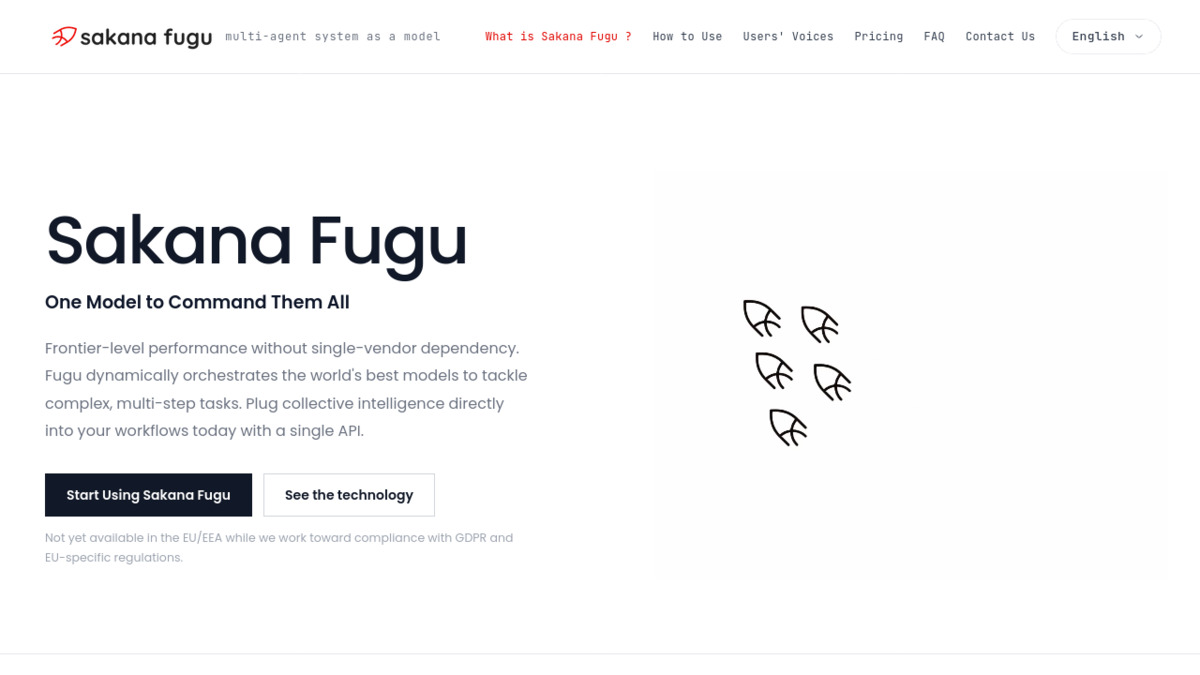 The Sakana Fugu product page, launched June 22, 2026 - five days after the US export ban cut off international access to Anthropic's frontier models.
Source: sakana.ai
The Sakana Fugu product page, launched June 22, 2026 - five days after the US export ban cut off international access to Anthropic's frontier models.
Source: sakana.ai
Fugu is also optimized for Japanese-language tasks and targets Japanese businesses and government agencies directly, a segment that Anthropic served through enterprise contracts before the ban. Chairman Ren Ito went further in his public framing, urging the US to "preserve access for America's closest allies" and arguing that AI "should be developed together."
China's 360 Doubles Down on Cybersecurity
Zhou Hongyi unveiled a pair of AI security tools on June 24 at the ISC.AI 2026 conference in Beijing: Tulongfeng, designed for automated software vulnerability discovery, and Yitianzhen, for cyber defense and incident response automation. He positioned Tulongfeng explicitly as a "Chinese Mythos," referencing the model by name.
The capability claims are specific. Tulongfeng reportedly found 3,432 software flaws since deployment, with 105 confirmed by the Chinese government. Zhou acknowledged the gap against US frontier models but argued that gap is operational rather than decisive. His answer: layer the AI on top of 360's proprietary vulnerability databases, threat intelligence, and automation pipelines - a combination he argues brings the effective output to a comparable standard for their specific use case.
Reuters said it couldn't independently verify the 3,432 figure. The 20-30% acknowledged gap is remarkable for a company marketing its product as a Mythos equivalent, and the "Chinese Mythos" framing reads as positioning more than technical parity.
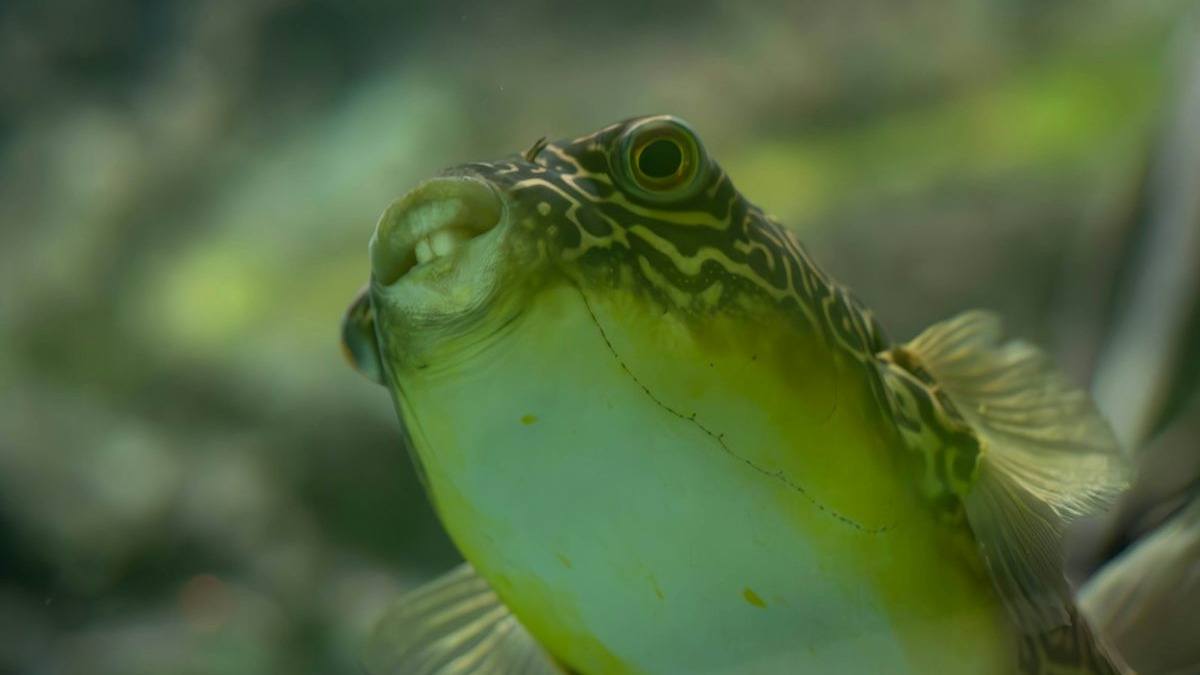 Fugu is the Japanese word for pufferfish - a fitting name for a model that inflates its capability by coordinating a school of smaller ones.
Source: unsplash.com
Fugu is the Japanese word for pufferfish - a fitting name for a model that inflates its capability by coordinating a school of smaller ones.
Source: unsplash.com
Allies Caught in the Crossfire
The export ban's geopolitical cost has been visible from day one. The order affected US allies with formal intelligence-sharing agreements with adversaries, a distinction the administration's letter to Anthropic didn't draw. French President Macron called the move a "wake-up call" while describing it as "strictly nationalist." Canadian Prime Minister Mark Carney warned that allies must "build out and diversify" rather than wait for restrictions to lift. European officials accelerated internal discussions about Mistral as a sovereign alternative.
Commerce Secretary Howard Lutnick partially walked back the blanket restriction on June 26, authorizing Mythos 5 access for roughly 100 vetted US companies and federal agencies. The letter doesn't extend to Fable 5, and it does not restore international access. The 200 institutions outside the US that lost access two weeks ago remain cut off.
Anthropic itself hit a $47 billion revenue run-rate by May 2026, built in large part on international enterprise contracts. Some of that revenue is now structurally at risk regardless of whether the restrictions eventually lift.
Counter-Argument: Are These Actually Frontier Models?
The benchmark claims from both Sakana and 360 deserve skepticism. Within 24 hours of Fugu Ultra's launch, independent testers reported a gap between the published benchmark numbers and real-world performance on complex tasks - a pattern familiar from prior model launches that led with curated eval suites. Sakana hasn't released raw results or reproducible evaluation harnesses.
360's Tulongfeng case is weaker still. Cybersecurity vulnerability detection is a narrow vertical, and the claim that proprietary threat data closes a 20-30% raw capability gap is unverified. The ISC.AI audience was a domestic one, and the timing of the announcement - two days after the US export ban - makes the competitive framing as much a political statement as a technical one.
Neither company is claiming to have trained a new frontier model. Sakana's architecture is explicitly an orchestration layer over existing models, including some from US providers. If the US government extends export controls to model API access itself, the Fugu architecture has a significant dependency problem.
What the Market Is Missing
The conventional framing treats the export ban as a temporary disruption - restrictions go up, negotiations happen, restrictions come down, and the market resets. The Sakana and 360 announcements suggest the more durable outcome. Governments and enterprises that lost access to Anthropic's models have now seen in concrete terms what concentrated dependency on a single vendor nation looks like. Some of them will sign new contracts with local alternatives before Anthropic gets cleared to sell to them again.
The original US export ban cited national security concerns around Mythos 5's cybersecurity capabilities. The effect is that it handed the cybersecurity AI market outside the US to China's largest security firm, and handed Japan's enterprise AI market to a company that now has explicit government backing as a sovereignty play. That's the trade the administration made.
Sources:
- Asian AI startups launch Mythos-like models as Anthropic's export ban drags on - TechCrunch
- Sakana AI's Fugu orchestrates multiple LLMs to match Anthropic's Fable and Mythos benchmarks - The Decoder
- Chinese cybersecurity company 360 unveils "China's version of Mythos" - TechRadar
- China's 360 Security unveils AI tools that match Anthropic's Mythos - Cryptopolitan
- US export ban on Anthropic's AI models further strains alliances - Al Jazeera
- US government gives Anthropic green light for limited re-release of Mythos 5 - NBC News
- Sakana AI launches Fugu - MarkTechPost
Last updated

