
Etched Doubles to $10.3B Before Shipping a Chip
Etched raised $300M at a $10.3B valuation, doubling its price tag in seven months, even though its transformer-only Sohu chip has yet to ship in volume.
 6 min read
Etched just closed a $300 million Series C at a $10.3 billion valuation. Seven months ago, the same company was worth $5 billion. In between, it has sold zero chips to a paying customer outside its own demo lab.
That's not a knock on the business. It is the plainest way to describe what just happened: a chip startup that hardwires transformer attention into silicon doubled its price tag on the strength of a manufacturing milestone, $1 billion in signed paper, and a roster of investors who are betting the inference bottleneck arrives before the doubts do.
TL;DR
- Etched raised $300M in a Series C led by Sequoia at a $10.3B post-money valuation, up from $5B in December
- Sequoia calls it the highest valuation it has ever backed at the Series C stage
- Total funding is now past $1.1B, with SK Hynix, Andreessen Horowitz, Jane Street, and Diffusion Capital joining alongside individual backers Peter Thiel, Andrej Karpathy, Dylan Field, and Amjad Masad
- The company still hasn't shipped its Sohu chip to a customer in volume; first racks are targeted for this summer
The Round, in Numbers
| Milestone | Date | Valuation | Round Size | Lead |
|---|---|---|---|---|
| Series B | December 2025 | $5B | $500M | Stripes |
| Series C | July 2026 | $10.3B | $300M | Sequoia |
| Valuation change | 7 months | +106% | - | - |
Sequoia's stake makes this, by the firm's own account, the priciest Series C it has ever led. That claim is doing a lot of work in the coverage this week, and it's worth separating from the underlying business. A record valuation from a single firm says more about how much capital wants exposure to AI inference infrastructure right now than it does about Sohu's readiness for production.
The new investor list also signals something more specific than "more money wants in." SK Hynix, the world's largest maker of the HBM memory that feeds AI accelerators, took a stake with the venture money. Etched's pitch depends on a custom interconnect it calls cluster-scale memory, which lets multiple Sohu chips share a pooled memory space at low latency. A memory maker writing a check into that architecture is a supplier hedging on which packaging approach wins the next few years, not just a financial investor.
Who Benefits
Sequoia gets a headline valuation at a moment when AI infrastructure deals are the fastest-moving part of its portfolio, and the record framing is useful marketing for the firm's next fund. SK Hynix gets a seat at the table of a company that could become a reference customer for its HBM roadmap if Sohu ships at scale. Etched's three co-founders, all Harvard dropouts who started the company in 2022, get the capital to keep expanding past their ~400-person San Jose headquarters into a new 80,000-square-foot, 10-megawatt facility in Milpitas without touching the $1 billion in customer contracts they have already booked.
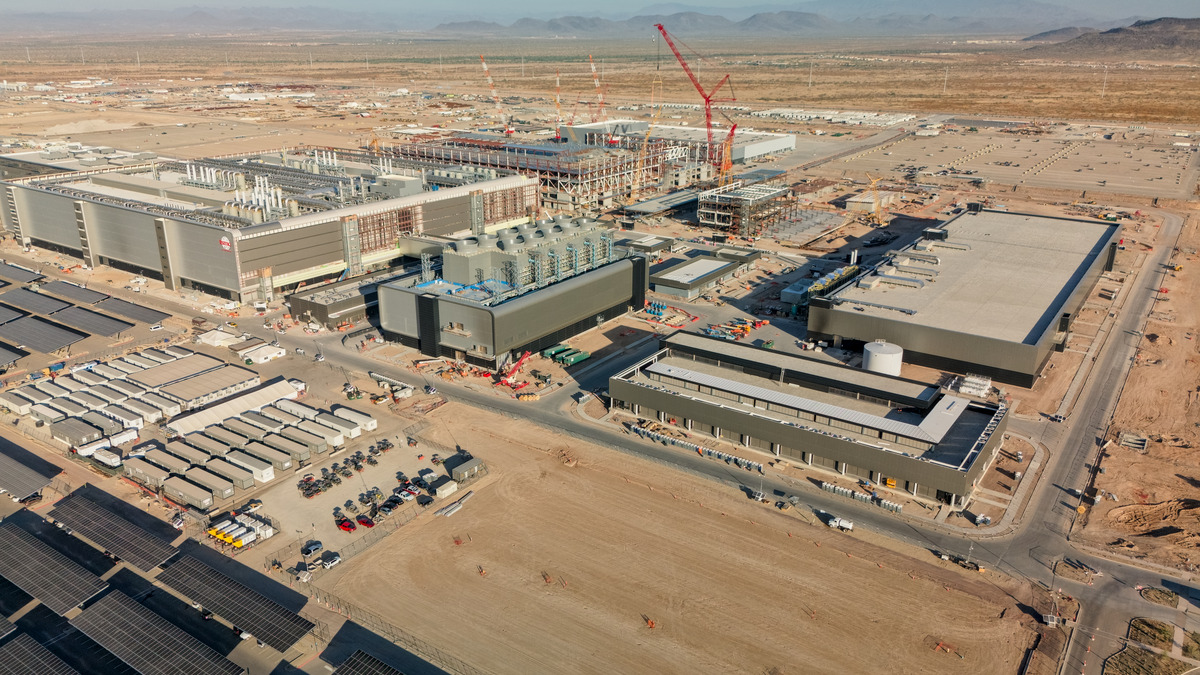 A TSMC fabrication facility under construction. Etched manufactures Sohu on TSMC's N4P node and reported first-pass silicon success earlier this summer.
Source: commons.wikimedia.org
A TSMC fabrication facility under construction. Etched manufactures Sohu on TSMC's N4P node and reported first-pass silicon success earlier this summer.
Source: commons.wikimedia.org
Who Pays
The people who pay are the limited partners behind Sequoia's fund and every other investor in this round, none of whom will see a return unless Sohu actually displaces GPU spend at the scale the $1 billion in contracts implies. They're also paying in opportunity cost: money that goes into a $10.3 billion bet on unshipped silicon is money that doesn't go into an inference startup with product already in customers' hands. And Nvidia pays in the sense that every dollar chasing a GPU alternative is a dollar of pressure on its margins, even if the near-term revenue impact is close to zero.
The Skepticism Sequoia Is Betting Against
Every outlet covering this round used some version of the phrase "defies skeptics." The skepticism isn't vague industry vibes - it's specific and well documented. Etched's founding bet, made in 2022, was that transformer architecture would stay dominant long enough to justify a chip that does nothing else. Since then, mixture-of-experts models like DeepSeek and hybrid state-space designs like Mamba have already pushed past the narrow definition of "transformer" that Sohu was originally designed around. Etched's president, Rob Wachen, has taken to describing the systems as "architecture-agnostic" - a description that would have sounded odd next to the company's original pitch deck.
"We had no idea how hard it was going to be. I think we still have to be humbled by what it will take to actually get to scale."
That admission from Wachen sits awkwardly next to CEO Gavin Uberti's public posture this week: "Now is the time to be aggressive. Our chips work, people want them, and it's time to ship." Both statements can be true. A chip that works in a demo and a chip that ships in volume to enterprise customers running production inference are different products, and the gap between them is where most hardware startups die.
The company's own numbers, detailed when it exited stealth in June, back this up: every throughput figure Etched has published is a vendor benchmark from Etched's own lab, measured at batch size 1. No independent organization has benchmarked Sohu at production scale, and no customer has been named publicly.
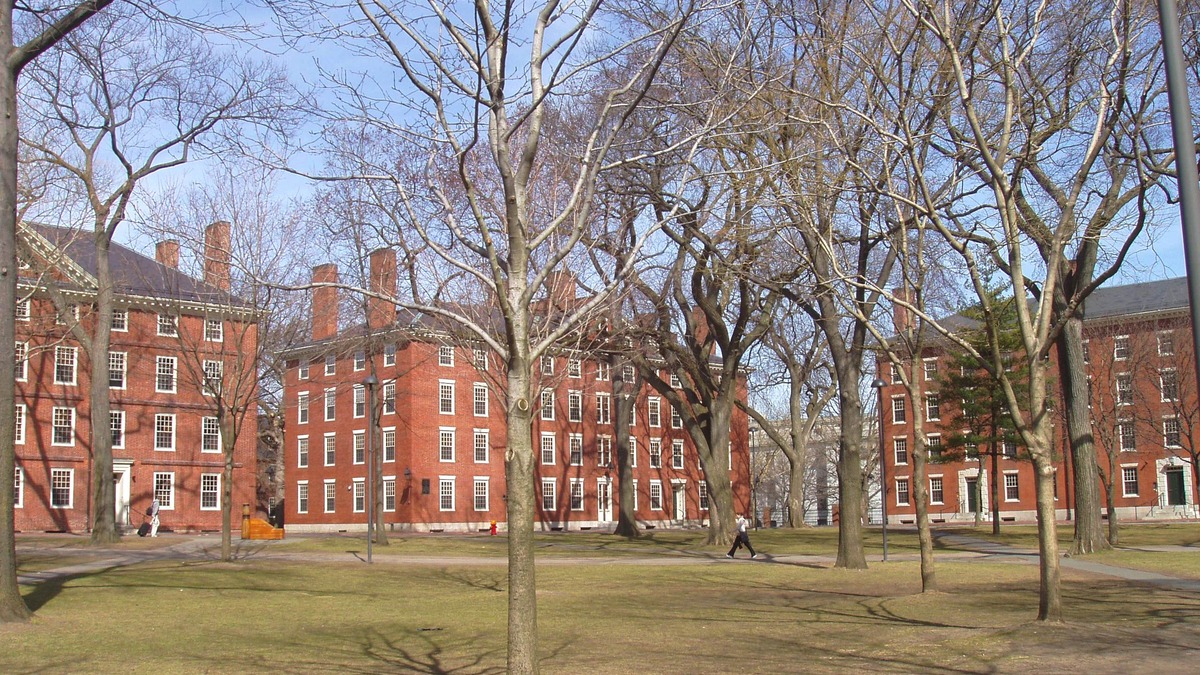 Harvard Yard. Etched's three co-founders left Harvard in 2022 to build a chip for a single architecture, a bet the company's own executives now describe with more caution than the original pitch.
Source: commons.wikimedia.org
Harvard Yard. Etched's three co-founders left Harvard in 2022 to build a chip for a single architecture, a bet the company's own executives now describe with more caution than the original pitch.
Source: commons.wikimedia.org
Etched Isn't Alone, and That's the Point
Etched isn't the only transformer-focused challenger raising money against Nvidia this year. Groq's LPU has been shipping commercially available inference hardware for longer than Etched has existed as a company, and Cerebras has taken a wafer-scale approach with actual enterprise and government deployments. Neither has dented Nvidia's share of the inference market in any way that shows up in Nvidia's earnings. The lesson from both is that "faster than an H100 on a narrow benchmark" and "displaces H100 purchase orders" are different claims, and closing the gap between them has taken both companies years, not one funding round.
What makes Etched's valuation notable is not that it's unprecedented - Groq and Cerebras both raised at multibillion-dollar valuations before proving out commercial traction at scale. It's the speed. Doubling from $5 billion to $10.3 billion in seven months, without a single named production customer, means the market for AI infrastructure capital is currently pricing execution risk lower than at almost any point in the last two years.
Etched's bet is that frontier inference demand is large enough, and urgent enough, that even a chip with real architectural tail risk will find buyers before a more flexible alternative catches up on the narrow workloads Sohu targets - and for now, Sequoia, SK Hynix, and a roomful of individual investors with a track record of picking winners are pricing that bet at $10.3 billion, chip or no chip.
Sources:
- AI chip startup Etched defies skeptics, hits $10.3B valuation from big-name investors - TechCrunch
- Etched Defies Skeptics With $10.3B Valuation As AI Chip Startup Closes $300M Series C - Bitcoin World
- Etched secures $300 million from Sequoia and a16z to challenge Nvidia in AI inference - Crypto Briefing
- Etched raises $300M at a $10.3B valuation, SK Hynix in - The Next Web

