
Elorian's $300M Joins AI's No-Product Funding Club
Ex-Google DeepMind researcher Andrew Dai raised $55M at a $300M valuation for Elorian, a visual AI lab with no product yet, joining a growing list of frontier labs priced on pedigree alone.
 5 min read
A blank cheque, photo by cottonbro studio. Source: pexels.com
Andrew Dai left Google DeepMind with no product, no revenue, and no published benchmark. He raised $55 million anyway, at a $300 million valuation, for a company called Elorian that has yet to ship anything a customer can buy.
TechCrunch ran the story as a founder-lessons podcast on July 16, treating the raise as a case study in how to price a company that doesn't exist yet. That framing undersells what's actually going on. Elorian isn't an outlier. It's the latest entry in a specific and growing category of AI labs that investors are pricing completely on the résumé of the people running them.
TL;DR
- Andrew Dai, a near-12-year Google Brain and DeepMind veteran, raised $55M at a $300M valuation for Elorian
- Co-founder Yinfei Yang left Apple's machine-learning team in late 2025 to join
- Investors include NVIDIA, Menlo Ventures, Altimeter Capital, Striker Ventures, and Jeff Dean personally
- Elorian has no shipped product; its bet is that visual reasoning is AI's biggest unsolved gap
- It joins Safe Superintelligence and (until recently) Thinking Machines Lab in a club of labs priced without a product
Who Is Behind the $300 Million
Dai's pitch rests almost entirely on his own history. He spent nearly 12 years across Google Brain and DeepMind, most recently co-leading the pre-training data effort for Gemini, a team that grew past 400 contributors. "After almost 12 years in Brain/DeepMind, I've finally decided to take the leap," he wrote when announcing the move. Before that, he co-authored an early sequence-learning paper with Quoc Le that predates both GPT and GLaM, plus a foundational paper on mixture-of-experts routing, the architecture pattern now standard in most frontier MoE models.
His co-founder, Yinfei Yang, spent several years as a principal research scientist on Apple's machine-learning team before leaving in late 2025. At Google before that, Yang led work on ALIGN and MURAL, two of the field's more cited image-text co-embedding systems. Together the pair are betting that visual reasoning, not language, is where the next real gap in frontier models sits.
 Elorian's bet is that visual reasoning, not language, is the frontier's biggest unsolved gap.
Source: unsplash.com
Elorian's bet is that visual reasoning, not language, is the frontier's biggest unsolved gap.
Source: unsplash.com
"You have models doing great at math, physics ideas, coding," Dai said of the current generation of frontier systems. "But progress in visual understanding and visual reasoning has been extremely uneven." Elorian's seed round was co-led by Striker Ventures, Menlo Ventures, and Altimeter Capital, with NVIDIA, Jeff Dean, and boutique fund 49 Palms Ventures also participating. No product launch date has been announced.
Pricing Pedigree, Not Product
Elorian's $300 million valuation looks almost modest next to the rest of the field it belongs to. Over the past two years, a specific pattern has repeated across frontier AI: a researcher with a marquee name leaves a major lab, raises at a valuation with no revenue attached, and only ships something months or years later, if at all.
| Lab | Founded | Amount raised | Valuation | Shipped product? |
|---|---|---|---|---|
| Elorian | 2025 | $55M | $300M | No |
| Ineffable Intelligence | 2026 | $1.1B | $5.1B | No |
| Safe Superintelligence | 2024 | ~$3B | $32B | No |
| Thinking Machines Lab | 2025 | $2B | $12B | Yes, after 15 months |
Safe Superintelligence, founded by OpenAI co-founder Ilya Sutskever, is the most extreme case: roughly $3 billion raised since June 2024 across two rounds, a $32 billion valuation as of April 2025, and by its own founder's account, zero intention of shipping anything short of the end goal.
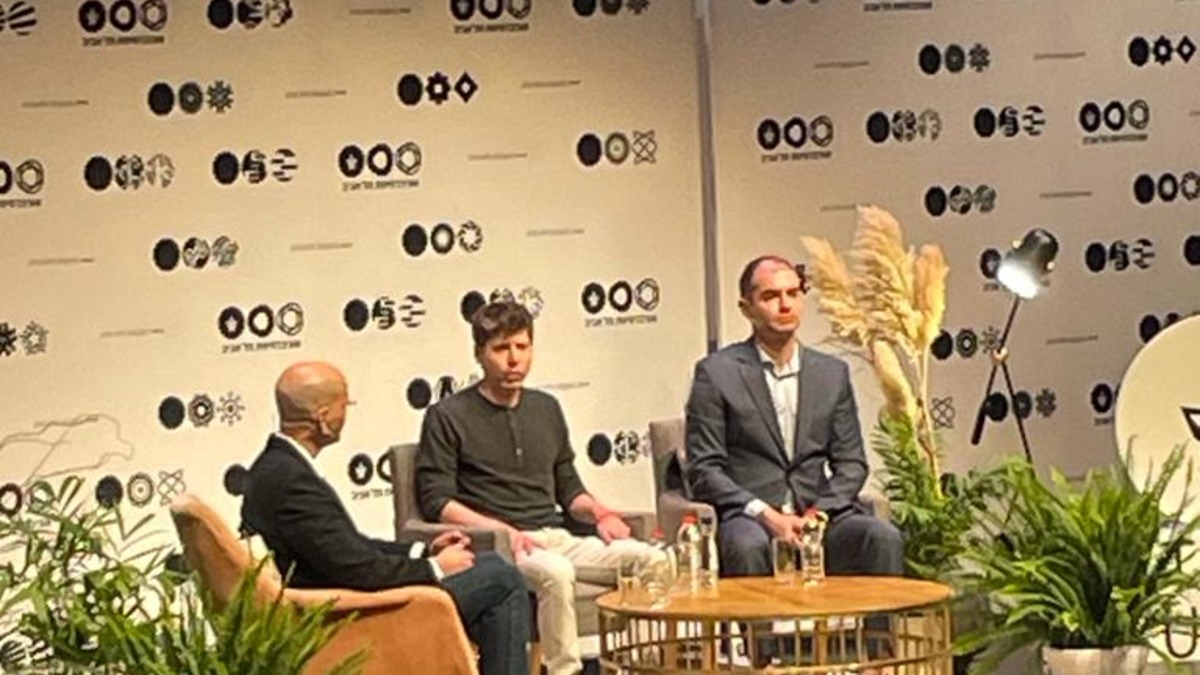 Ilya Sutskever, whose Safe Superintelligence has raised roughly $3B at a $32B valuation with no commercial product.
Source: commons.wikimedia.org
Ilya Sutskever, whose Safe Superintelligence has raised roughly $3B at a $32B valuation with no commercial product.
Source: commons.wikimedia.org
"Our first product will be the safe superintelligence, and it will not do anything else up until then." - Ilya Sutskever, on founding Safe Superintelligence
Thinking Machines Lab shows the other end of the same bet. Mira Murati's company raised $2 billion at a $12 billion valuation in July 2025 and shipped its first product, an API for fine-tuning open models called Tinker, three months later. It then went looking for $50 billion in fresh funding on the strength of that early traction. Those talks collapsed in January 2026 without a deal, and Thinking Machines has since stayed at its original $12 billion mark while releasing a second product, the open-weight model Inkling, this month.
The Counter-Argument
None of this is irrational on its face. Talent this specific is truly scarce, and the firms writing these checks aren't first-time investors guessing at technology they don't understand. NVIDIA and Jeff Dean didn't put money into Elorian because they read a pitch deck; they put money in because they worked alongside Dai and can judge his track record directly. The same logic applies to Sutskever, whose contributions to the current generation of large models aren't in dispute regardless of what Safe Superintelligence ships or doesn't.
There's also a scarcity argument on the capital side. A small number of researchers plausibly understand how to build a frontier-scale model from nothing, and every major lab wants a claim on the next one before a competitor gets there first. Paying a premium for the option to be inside that researcher's company, before there's a product to diligence, is a bet on optionality rather than on current revenue.
What the Market Is Missing
The gap between Elorian's $300 million and Safe Superintelligence's $32 billion is the part getting skipped over. Both are pre-product bets on pedigree, but one is priced at a hundredth of the other with a comparably uncertain path to revenue, which means the market isn't actually pricing "no product" consistently. It's pricing the size of the story a founder can tell about why the current generation of models is missing something, and how big that something might turn out to be.
Sources:
- How a former DeepMind researcher raised at a $300M pre-seed valuation before launching a product - TechCrunch
- Andrew Dai on X, announcing his departure from Google Brain/DeepMind
- Ilya Sutskever: "Our first product will be the safe superintelligence" - Calcalist
- OpenAI co-founder Ilya Sutskever's Safe Superintelligence reportedly valued at $32B - TechCrunch
- Thinking Machines Lab - Wikipedia
- Ex-OpenAI exec Mira Murati's Thinking Machines Lab nears $50B valuation - Tech Funding News

