
Nobel Laureates Warn AI Is Moving Faster Than We Can Adapt
Over 200 economists and 16 Nobel laureates signed a statement warning AI's economic transformation could outpace our ability to prepare - but the data behind the warning is messier than the headline.
 6 min read
"Steam, electricity, and computers each gave societies decades to adapt. AI may give us only a few years."
That line sits inside a four-sentence statement released on July 13 by more than 200 economists and AI researchers, including 16 Nobel laureates. It's short, deliberately vague on policy, and has been signed by people who rarely agree on anything else - Daron Acemoglu and Michael Spence among the Nobel names, Yoshua Bengio representing the AI safety camp. The statement is called "We Must Act Now," and it's already being covered as proof that the smartest people in the room are panicking about jobs.
The claim is real. Whether the panic is justified by the evidence behind it is a separate question, and the answer is more complicated than the headline suggests.
TL;DR
- Over 200 economists and AI researchers, including 16 Nobel laureates, signed "We Must Act Now," warning AI's economic transformation could unfold faster than societies can adapt
- The statement was organized by Erik Brynjolfsson, Ajay Agrawal, Anton Korinek, and Tom Cunningham through Stanford's Digital Economy Lab
- Real-usage data backs part of the concern: Brynjolfsson's own Canaries Dashboard shows employment for 22-to-25-year-olds in AI-exposed jobs shrinking more than 4% annually
- The statement proposes no concrete policy - and the underlying concept of "AI exposure" is measured five different ways, with wildly different results depending on which one you pick
The Claim
The statement, hosted at wemustactnow.ai and published through Stanford's Digital Economy Lab, argues that AI could trigger economic change "larger than the Industrial Revolution, but unfolding over a vastly shorter time frame." Steam power and electrification gave labor markets decades to reallocate workers; the signatories argue AI could compress that window to a handful of years.
It was organized by four economists - Erik Brynjolfsson (Stanford), Ajay Agrawal (University of Toronto), Anton Korinek (University of Virginia, also affiliated with Anthropic), and Tom Cunningham (METR) - and picked up 16 Nobel laureates in economics, including Daron Acemoglu and Michael Spence, alongside AI researchers like Yoshua Bengio.
Korinek framed the problem bluntly to reporters: "We are driving in the fog, and it is extraordinarily difficult to anticipate what will happen next." Brynjolfsson added that "AI capabilities are advancing far faster than our understanding of the economic implications." The statement's own ask is narrow: build the research and policy infrastructure needed to track AI's economic effects before the disruption lands, not after.
This isn't the first time this particular mix of people has signed something together. Back in March, Bengio and Acemoglu both signed the Pro-Human AI Declaration, a 34-point framework with the AFL-CIO and the Congress of Christian Leaders that made concrete demands - a ban on autonomous lethal weapons, criminal liability for executives, human oversight requirements. "We Must Act Now" is vaguer by design. It reads less like a manifesto and more like an admission that nobody signing it actually knows what happens next.
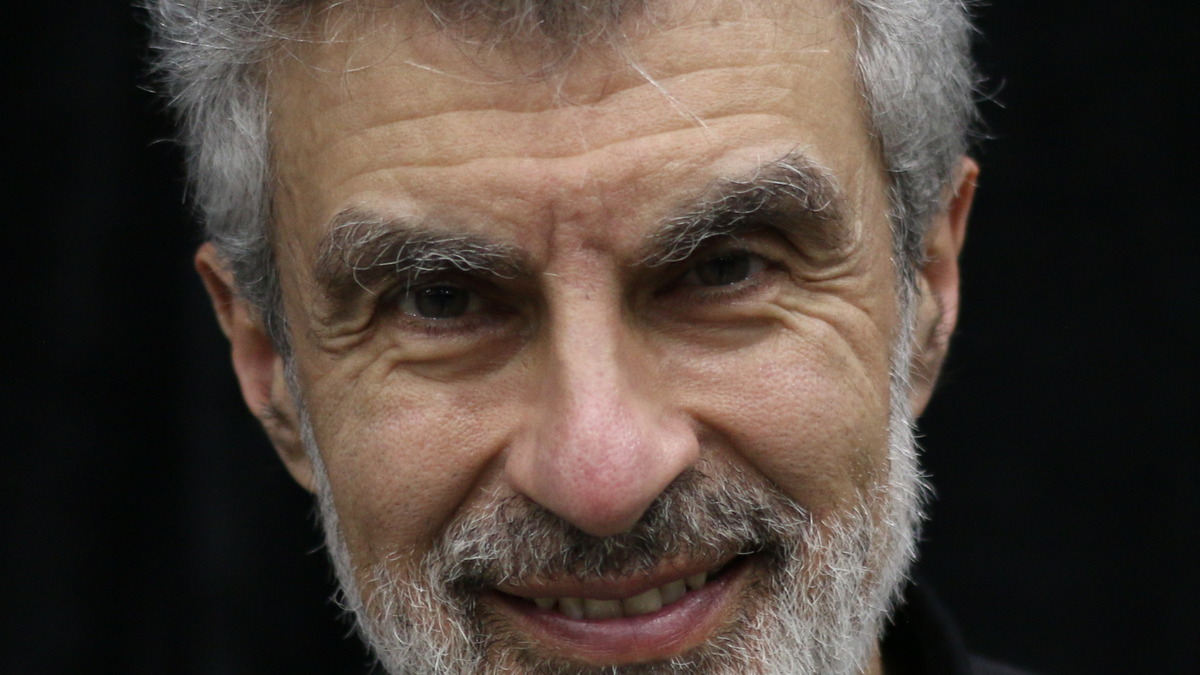 Yoshua Bengio, one of the signatories of "We Must Act Now," pictured at ICLR 2025. He also signed March's Pro-Human AI Declaration with co-signatory Daron Acemoglu.
Source: commons.wikimedia.org
Yoshua Bengio, one of the signatories of "We Must Act Now," pictured at ICLR 2025. He also signed March's Pro-Human AI Declaration with co-signatory Daron Acemoglu.
Source: commons.wikimedia.org
The Evidence
The Real-Time Data
The strongest part of the statement's case doesn't come from the statement itself - it comes from Brynjolfsson's own research group. His Canaries Dashboard tracks 4.6 million workers across more than 730 occupations, and it shows something specific: employment for workers aged 22 to 25 in AI-exposed occupations is shrinking more than 4% annually, even as the aggregate labor market stays stable. That detail matters more than the topline "Industrial Revolution" framing, because it's measured, not projected. It lines up with what Anthropic's own observed-exposure study found earlier this year - young workers entering exposed fields are finding fewer entry points, even as overall unemployment hasn't spiked, and with the concentrated hiring slowdowns already visible in this year's jobs data.
 The disruption the statement describes isn't showing up as mass layoffs - it's showing up as entry-level roles that simply stop opening.
Source: unsplash.com
The disruption the statement describes isn't showing up as mass layoffs - it's showing up as entry-level roles that simply stop opening.
Source: unsplash.com
The Measurement Problem
Here is where the claim gets shakier. Apollo economist Torsten Slok has pointed out that "AI exposure" - the term doing most of the work in this debate - is measured five different, incompatible ways: real usage data from Claude conversations, real usage data from Microsoft Copilot, expert judgment about which tasks AI could theoretically replace, AI self-assessment of its own usefulness, and job-posting analysis for AI-skill mentions.
The pattern across all five: usage-based measures consistently show lower, more concentrated displacement than the theoretical and expert-judgment frameworks, because the theoretical models assume adoption happens the moment a capability exists, regardless of cost or integration friction. Andrej Karpathy's widely-circulated job exposure study, which scored 42% of US jobs at 7-or-higher exposure on a 0-10 scale, sits closer to the theoretical end. Anthropic's observed-exposure metric, built from actual Claude usage logs, sits closer to the empirical end - and produces a narrower picture.
| What the statement implies | What the underlying data actually shows |
|---|---|
| AI's economic disruption could outpace the Industrial Revolution | True for the compressed timeline claim; unverified for scale - no comparable data exists yet |
| Job displacement is a broad, economy-wide risk | Concentrated: entry-level workers in exposed occupations, not the aggregate labor market |
| "AI exposure" is a settled, measurable concept | Five competing frameworks produce materially different displacement estimates |
| Institutions need to act now | The statement itself proposes no specific institution, law, or program |
What They Left Out
Four sentences isn't a lot of room, and the gap shows. The statement doesn't name a single concrete policy - no version of the "AI adjustment programme" modeled on trade adjustment assistance that Korinek himself has floated elsewhere, no funding commitment, no legislative target. It's a call for research infrastructure, not a plan.
It also doesn't mention that the term at the center of its own argument is contested among the economists who signed it. Slok's five-framework breakdown is the standard objection researchers in this space raise about each other's work, and none of it made it into the public statement. Reading it next to March's Pro-Human AI Declaration is instructive: that document, signed by some of the same people, made specific demands and named specific harms. This one asks for the room to figure out what the demands should be.
The underlying worry here is real, and the Canaries Dashboard is the closest thing anyone has to hard evidence that young workers in exposed fields are already losing ground. But the loudest part of the statement - the Industrial-Revolution-in-fast-forward framing - is a prediction dressed as a finding, built on a term that five different measurement approaches can't agree on. Sixteen Nobel laureates agreeing that nobody understands what's coming is itself useful data. It isn't, on its own, evidence that any particular outcome is coming.
Sources:

