
DuckDuckGo Traffic Triples After Google's AI Search Pivot
DuckDuckGo's no-AI search page saw a threefold traffic spike after Google's I/O 2026 overhaul made AI-generated summaries mandatory with no opt-out.
 Updated
6 min read
Updated
6 min read
At Google's I/O 2026 keynote on May 19, the company described its AI Overviews expansion as the biggest upgrade to Search in 25 years. Within nine days, traffic to DuckDuckGo's dedicated no-AI search page had tripled.
TL;DR
- Google's I/O 2026 overhaul made AI-created summaries mandatory across all Search results, with no opt-out for regular users
- Visits to DuckDuckGo's
noai.duckduckgo.compage tripled by May 28 and are still averaging 84% above baseline - DuckDuckGo shipped new Chrome and Firefox extensions to make AI-free search the default with one click; Edge and Opera updates are coming
What They Showed
Google didn't call it a forced migration, but that's effectively what happened. At I/O 2026, the company unveiled its "intelligent Search box" - a complete redesign of the search entry point that accepts text, images, files, video, and Chrome tabs. The box expands dynamically for longer queries and creates AI-powered suggestions well beyond traditional autocomplete.
More consequentially, AI Overviews now leads every results page by default, pushing traditional link results below the fold. The blue links are still there. They're just harder to find. Google added a hover-over pop-up on desktop to surface source URLs, but the primary experience is AI summaries from Gemini 3.5 Flash. There's no switch to turn it off.
The company backed this with scale: AI Overviews has 2.5 billion monthly active users, and AI Mode crossed 1 billion monthly active users within its first year. Those numbers describe reach. They don't describe whether the experience is better for the users who didn't choose to be there.
Publishers have felt this too. AI-generated answers increasingly replace outbound links to original reporting, which means less traffic for the sources being cited. Users who want to find an original article now need to know to hover, or scroll, or know it's there at all.
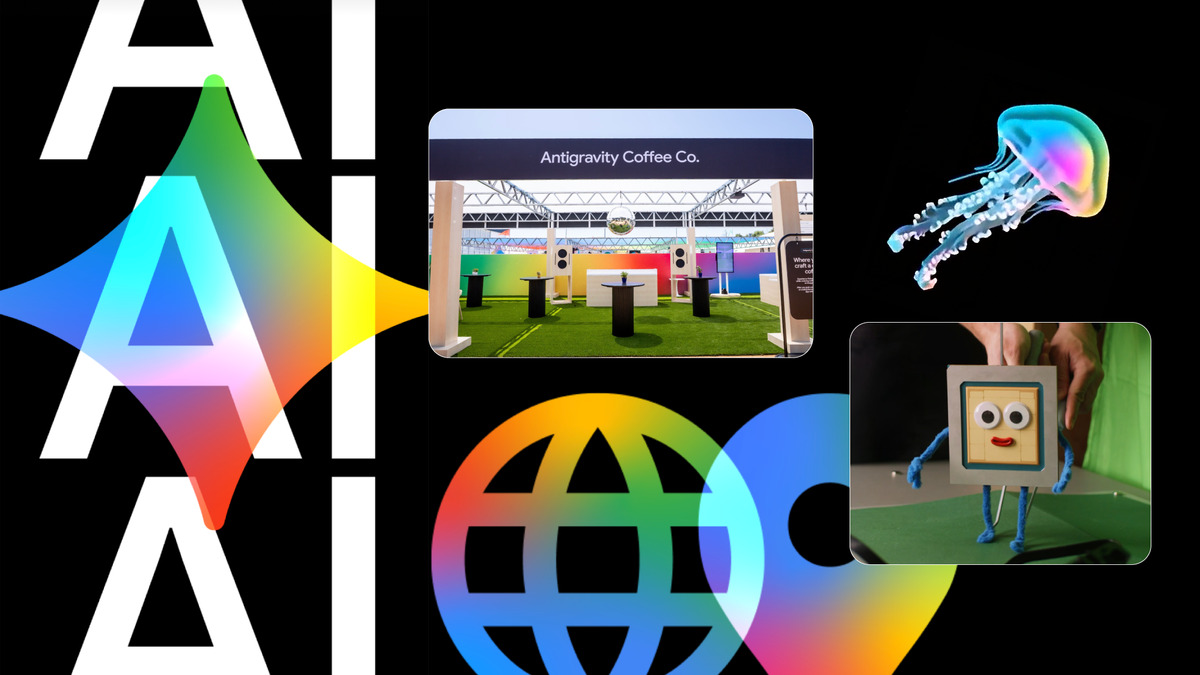 Google's I/O 2026 keynote positioned AI-generated overviews as the new default for all Search users, with no built-in way to revert to link-first results.
Source: storage.googleapis.com
Google's I/O 2026 keynote positioned AI-generated overviews as the new default for all Search users, with no built-in way to revert to link-first results.
Source: storage.googleapis.com
What We Tried
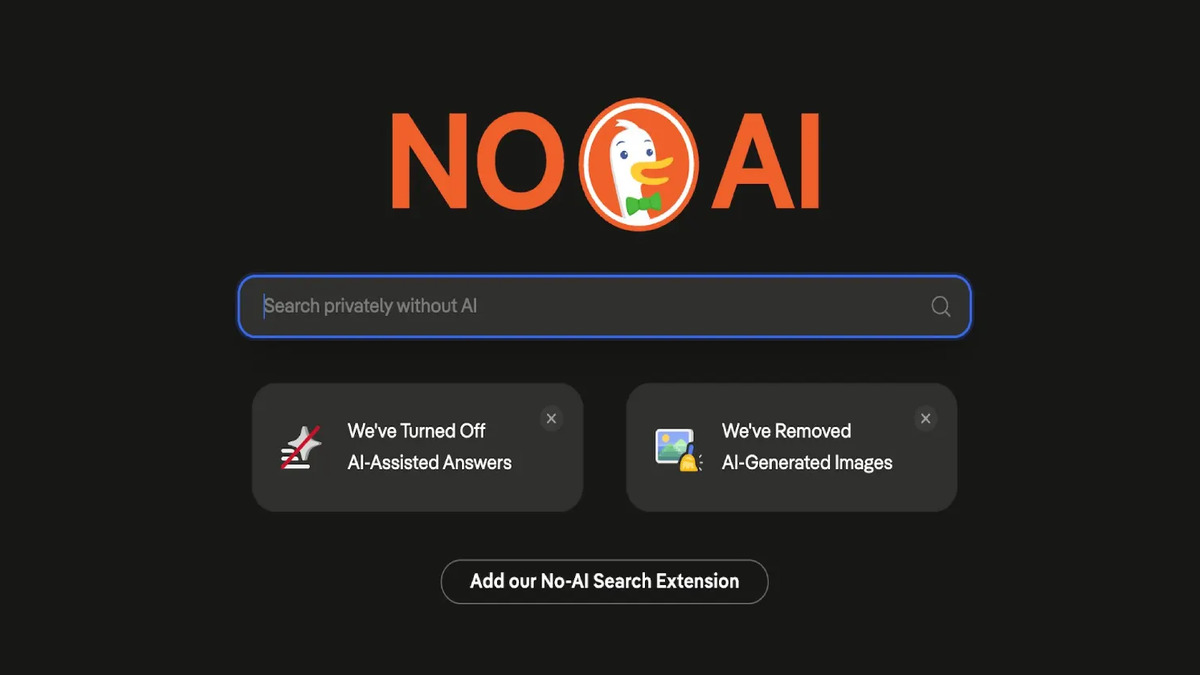
The no-AI search experience at noai.duckduckgo.com is functional and spare. Queries return a standard ranked list of links with no chat interface, no AI-generated summaries, and no AI images mixed into results. DuckDuckGo's privacy protections - tracker blocking, encrypted requests - still apply. Duck.ai, the company's own chatbot, is disabled by default on the no-AI page. You're getting search the way it worked in 2018.
The new browser extensions close the friction gap. Install the Chrome or Firefox extension, and noai.duckduckgo.com becomes your default search with one click. DuckDuckGo is also updating its existing Privacy Essentials extensions across Chrome, Firefox, Edge, and Opera to add AI search controls - meaning users who already have those extensions don't need to install anything new.
| Feature | Google Search (post-I/O 2026) | DuckDuckGo No-AI | DuckDuckGo Standard |
|---|---|---|---|
| AI summaries | Default, mandatory | Off | Optional |
| Traditional link results | Below AI overview | Full, primary | Full, primary |
| Opt-out available | No | N/A (always off) | User choice |
| Tracks search history | Yes | No | No |
| Extensions needed | None | Chrome/Firefox ext. | None |
| Search index | Microsoft Bing | Microsoft Bing |
That last row matters. DuckDuckGo's results pull from Bing's index, not Google's. For navigational searches and general queries, the quality difference is small enough to ignore. For highly specific technical lookups, product comparisons, or searches tied to Google properties - Maps, YouTube, Gmail autocomplete - users will notice gaps. DuckDuckGo isn't a complete replacement. It's a default you can set and forget until one of those edge cases surfaces.
 DuckDuckGo's
 noai.duckduckgo.com delivers ranked link results with no AI summaries, no chat prompts, and no AI-produced images.
Source: piunikaweb.com
The Gap
The traffic numbers are the clearest signal of what happened. Visits to DuckDuckGo's no-AI page tripled on May 28, nine days after Google's announcement. Daily visits have held at roughly 84% above baseline since May 19 - sustained, not a one-day protest. U.S. app installs jumped 18.1% week-over-week on average in the days following the keynote, peaking at 30.5% on May 25. iOS installs hit 69.9% week-over-week growth at their high point. Third-party data from analytics firm Apptopia showed average daily downloads up 29% in the U.S. and 12% globally.
"Google is force-feeding AI with no way to opt out. As a result, their results are getting worse, not better." - Gabriel Weinberg, DuckDuckGo CEO
DuckDuckGo CEO Gabriel Weinberg put it plainly: "Google is force-feeding AI with no way to opt out. As a result, their results are getting worse, not better." The framing is sharper when real-time traffic is backing it up. Weinberg also noted that unlike Google, "everything you do in DuckDuckGo is private" - a line that landed differently after I/O 2026 confirmed Google is using all of that search behavior to feed its AI models.
DuckDuckGo isn't alone in responding to the moment. Vivaldi Browser announced it is joining the anti-AI browsing push, offering users its own opt-out configuration. Kagi, a paid search engine built around AI-free results as a core promise, saw similar install spikes after the Google announcement.
What the traffic data doesn't settle is whether the new users stay. DuckDuckGo holds roughly 1.8% of the U.S. search market. Even a sustained doubling of its no-AI traffic leaves Google's dominance structurally intact. Users who switch often return - the pull of Google's autocomplete, account history, Maps integration, and personalized suggestions is difficult to copy. One analysis from PiunikaWeb noted the retention problem directly: a strong week of installs doesn't prove those users won't be back on Google by the following month.
The browser extensions address some of that. Making no-AI search the default reduces the number of active decisions a user has to make. That's a real product change, not just positioning.
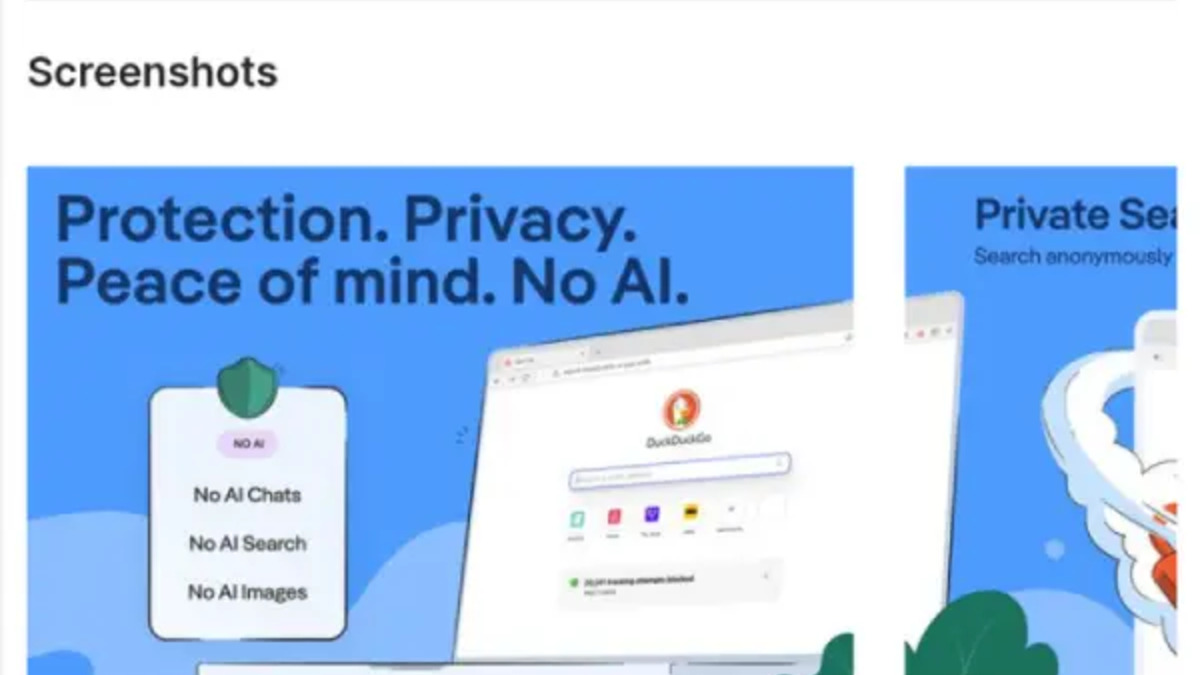 The new DuckDuckGo extension installs in one click and sets
 noai.duckduckgo.com as the default search engine across Chrome and Firefox.
Source: piunikaweb.com
Verdict
Google made a deliberate product call at I/O 2026 and removed the ability to reverse it at the user level. That's not an oversight - it's the strategy. The company believes AI Overviews deliver enough value to justify the forced default. A measurable portion of its user base disagrees, and for the first time in years, there's a credible alternative that's one browser extension away.
Whether DuckDuckGo holds these users depends on how it handles the Bing-index quality gap for technical and contextual queries, and whether it can build enough everyday product value to compete with Google's ecosystem pull. The 84% traffic lift above baseline is real data. So is the 1.8% market share number it's growing from.
Sources:
- DuckDuckGo makes its 'no-AI' search engine easier to access as its traffic booms - TechCrunch, Sarah Perez, June 1 2026
- DuckDuckGo installs are up 30% as users reject being 'force-fed' Google's AI Search - TechCrunch, May 26 2026
- DuckDuckGo's 'No AI' page visits triple as Google doubles down on AI - PiunikaWeb, June 1 2026
- DuckDuckGo has the internet's attention - now comes the hard 'retention' problem - PiunikaWeb, May 29 2026
- Google Search's I/O 2026 updates: AI agents and more - Google Blog, May 2026
- DuckDuckGo's 'No AI' Search Traffic Climbs as Users Reject Google's AI Overhaul - MacRumors, May 29 2026
Last updated

