
DeepSeek Trained Its Next Model on Banned Nvidia Blackwell Chips - Washington Wants Answers
A senior Trump administration official confirms DeepSeek trained its upcoming AI model on Nvidia's most advanced Blackwell chips at an Inner Mongolia data center, despite US export controls banning the hardware from reaching China.
 Updated
7 min read
Updated
7 min read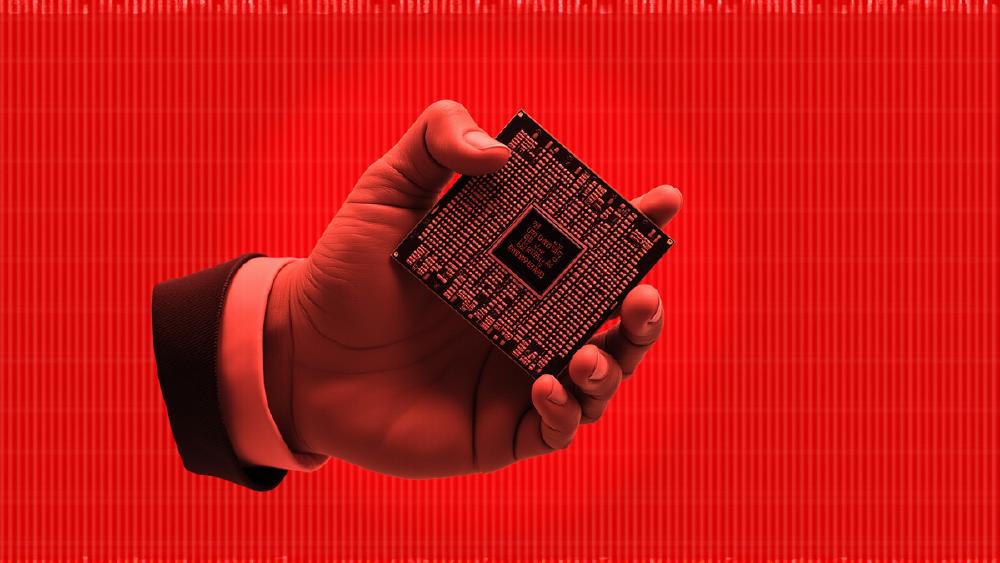
A senior Trump administration official has told Reuters that DeepSeek - the Chinese AI lab that rattled markets earlier this year - trained its latest model on Nvidia's most advanced Blackwell chips, despite US export controls that explicitly ban the hardware from reaching China.
"We're not shipping Blackwells to China."
- Senior Trump administration official, speaking to Reuters
The chips are reportedly clustered at a DeepSeek data center in Inner Mongolia, an autonomous region in northern China known for large-scale energy infrastructure and server farms. The official declined to say how the US government obtained the intelligence or how DeepSeek picked up the chips.
TL;DR
- A senior Trump official confirmed to Reuters that DeepSeek trained its upcoming AI model on banned Nvidia Blackwell chips at a facility in Inner Mongolia
- The model is set for release "as soon as next week" and the US expects DeepSeek will scrub technical indicators revealing American chip usage
- The chips likely arrived via "phantom data centers" in Southeast Asia - shell companies buy the hardware legally, pass inspection, then disassemble and smuggle it to China
- The disclosure lands the same weekend Anthropic accused DeepSeek of industrial-scale distillation attacks and on the eve of Nvidia's Q4 earnings report
The Phantom Data Center Pipeline
The Blackwell supply chain is not a mystery. The Information reported in December 2025, citing six sources, that smugglers have been running an elaborate operation through Southeast Asia.
The scheme works like this:
- Shell companies purchase data centers' worth of Nvidia servers in an approved country
- The hardware is installed and set up to specification
- Nvidia's OEM partners send contractors to inspect the installation, confirming compliance
- After inspection passes, smugglers disassemble the entire facility rack by rack
- The GPU servers are transported - reportedly in suitcases - across the border into mainland China
- The systems are reassembled at Chinese facilities
The operation relies on smaller eight-chip servers that are easier to move. Sources called these fronts "phantom data centers" - purpose-built to pass inspection and then vanish.
Nvidia's response to those December reports was dismissive. A spokesperson said the phantom data center claims were "far-fetched" but acknowledged the company "pursues any tip we receive." Today, Nvidia has declined to comment on the latest Reuters revelation.
What Blackwell means for DeepSeek
This isn't an academic distinction. Blackwell chips contain specialized hardware designed to accelerate sparse attention - the exact technique DeepSeek uses to reduce running costs by activating only parts of its model at a time. Previous reports suggest DeepSeek has experimented with Huawei's domestic chips but struggled with their performance. The company also possesses older Nvidia A100 and Hopper units, but the new Blackwell processors are reportedly essential for its upcoming model.
The case undermines the narrative that China can quickly transition its AI industry to domestic silicon. If one of China's most capable AI labs still needs smuggled American chips for its flagship model, the gap between US and Chinese chip manufacturing is wider than the export control optimists assumed.
Impact Assessment
| Stakeholder | Impact | Timeline |
|---|---|---|
| Nvidia | Earnings scrutiny tonight (Feb 25); potential tighter export enforcement; loses argument for relaxed China sales | Immediate |
| DeepSeek | Model credibility questioned; potential sanctions designation; must scrub hardware fingerprints before release | Days to weeks |
| US Commerce Department | Pressure to explain enforcement gaps; AI Overwatch Act gains momentum | Weeks to months |
| Chinese AI ecosystem | Dependence on smuggled hardware exposed; accelerates domestic chip investment | Months to years |
| Jensen Huang / David Sacks | Their argument for looser export rules collapses if banned chips are being smuggled at scale | Immediate |
Companies
The timing could not be worse for Nvidia. The company reports Q4 FY2026 earnings tonight, with analysts expecting roughly $65.7 billion in revenue. Jensen Huang will almost certainly face questions about how Blackwell chips ended up in an Inner Mongolia data center.
Huang and White House AI Czar David Sacks have been arguing that selling advanced chips to China actually discourages competitors like Huawei from building their own alternatives. That argument loses significant force when the chips China can't legally buy are being smuggled in through Southeast Asian shell companies anyway. JPMorgan analyst Harlan Sur has estimated that every 100,000 H200 GPUs shipped to China could produce roughly $3 billion in gradual Nvidia revenue - but that upside spark now looks politically toxic.
Nvidia is reportedly developing location-tracking technology for Blackwell chips and future models that could make operating smuggled hardware in China significantly harder. Whether that arrives before the damage is done is another question.
Users
For anyone building on DeepSeek models, the disclosure raises uncomfortable questions. The Trump official said the upcoming model also "likely relied on the distillation of models made by leading-edge US AI companies, including Anthropic, Google, OpenAI, and xAI." That claim arrived the same weekend Anthropic published evidence of 24,000 fraudulent accounts and 16 million queries used to extract Claude's capabilities.
If DeepSeek's next model is trained on banned hardware using stolen capabilities from American models, the downstream liability for companies and developers integrating it becomes a real concern - particularly for enterprises operating under US jurisdiction.
Competitors
China hawks in Congress have been waiting for exactly this kind of ammunition. The House Foreign Affairs Committee already voted 42-2 to advance the "AI Overwatch Act," introduced by Republican Chairman Brian Mast after Trump greenlit H200 shipments in December. The legislation would give Congressional committees 30 days to review and potentially block licenses for advanced AI chip exports to China, Russia, Iran, North Korea, Cuba, and Venezuela.
"This shows why exporting any AI chips to China is so dangerous. Given China's leading AI companies are brazenly violating US export controls, we obviously cannot expect that they will comply with US conditions."
- Chris McGuire, former NSC official under President Biden
Former NSC technology director Saif Khan put it more bluntly: "Chinese AI companies' reliance on smuggled Blackwells underscores their massive shortfall of domestically produced AI chips."
The big tech AI infrastructure spending race - now approaching $650 billion collectively - means Nvidia sits central to both the economic and geopolitical story. Every chip that reaches China through unofficial channels is both a revenue data point someone wants to count and an export control failure someone wants to prosecute.
The Credibility Question
Some skepticism is warranted. The claims rest on one unnamed official's word to Reuters. No independent technical verification has been published. The Trump official declined to explain how the US government obtained the intelligence. DeepSeek has not responded. The Commerce Department hasn't responded. Nvidia hasn't responded.
The Chinese Embassy in Washington pushed back, saying Beijing opposes "drawing ideological lines, overstretching the concept of national security, expansive use of export controls and politicizing economic, trade, and technological issues." Chinese Foreign Ministry spokesperson Mao Ning told reporters on February 24 that she was "not aware of the circumstances."
The timing is also worth noting. The Blackwell disclosure, Anthropic's distillation accusations, and OpenAI's memo to House lawmakers accusing DeepSeek of copying its products all landed during the same 48-hour window - while Congress is actively debating chip export legislation. Multiple parties have political and commercial incentives to make these claims right now.
The US official also said DeepSeek would "remove the technical indicators that might reveal its use of American AI chips" before release - which conveniently means proof could be removed before independent verification is possible.
What Happens Next
Three things to watch.
First, Nvidia's earnings call tonight. Huang will face questions about enforcement, smuggling routes, and whether Nvidia's compliance infrastructure is adequate. His answers will move the stock and shape the policy debate.
Second, the DeepSeek model release. The Trump official said it's coming "as soon as next week." If the model ships with scrubbed hardware signatures, the accusation becomes unfalsifiable. If it ships with Blackwell fingerprints intact, it becomes the most explosive export control violation in the AI era.
Third, the AI Overwatch Act. A bill that already had 42-2 committee support now has a front-page Reuters story verifying its premise. The question is no longer whether Congress will tighten chip export oversight, but how fast.
The export controls were supposed to keep America's most advanced AI chips out of Chinese hands. A data center in Inner Mongolia suggests they did not.
Sources:
- Exclusive: China's DeepSeek Trained AI Model on Nvidia's Best Chip Despite US Ban - Reuters via Taipei Times
- Exclusive: China's DeepSeek Trained AI Model on Nvidia's Best Chip - Reuters via Rappler
- US Claims China's DeepSeek Used Banned Nvidia Blackwell Chips - Benzinga
- DeepSeek Reportedly Using Thousands of Smuggled Nvidia Chips for AI Training - The Decoder
- Nvidia China Wildcard Could Supercharge $3 Billion at a Time - Benzinga / JPMorgan
- US House Panel Advances Bill on AI Chip Exports - Al Jazeera
Last updated

