
DeepSeek Nears $7.4B Close With Tencent and CATL
DeepSeek's maiden external funding round is nearing completion at up to $59B valuation, with Tencent and EV battery giant CATL as the biggest outside investors.
 5 min read
The deal that started as a modest staff equity plan is closing at a scale that would have seemed implausible six months ago. DeepSeek is finalizing what multiple sources describe as the largest maiden fundraise in Chinese AI history - roughly 50 billion yuan ($7.4 billion), at a post-money valuation between $52 billion and $59 billion. Bloomberg reports the round is close to sealed; 36kr says term sheets are being signed. Completion is expected within weeks.
When we covered this round in May, the story was China's state chip vehicle, the Big Fund, leading at $45 billion. The round is bigger now, and the investor list has changed considerably.
TL;DR
- Liang Wenfeng contributes $3B personally - more than Tencent or CATL combined
- Tencent commits $1.5B; EV battery maker CATL commits $740M
- Valuation has climbed from $45B (May) to $52-59B as the round closes
- CATL's interest isn't in models - it's in selling power infrastructure to AI data centers
- National AI Investment Fund, NetEase, and JD.com are in final talks
The Investor Breakdown
DeepSeek is raising from fewer than 10 investors. The three confirmed commitments account for the bulk of the round:
| Investor | Amount | Category |
|---|---|---|
| Liang Wenfeng (personal) | $3.0B | Founder |
| Tencent | $1.5B | Strategic |
| CATL | $740M | Strategic / industrial |
| National AI Investment Fund | TBC | State |
| NetEase + JD.com | TBC | Strategic |
The founder number is the one that stands out. Liang is personally committing more than twice what Tencent is putting in. In Chinese tech, that isn't modesty. It's how founders signal they won't let a deal fall apart.
Who Benefits
Tencent
WeChat has 1.3 billion users. Tencent's gaming portfolio is the largest in the world by revenue. Both need capable, deployable AI that doesn't depend on US-restricted suppliers. DeepSeek has already demonstrated it can match frontier-class performance at lower compute cost - that matters when you're running inference at Tencent's scale, across consumer products and enterprise services simultaneously.
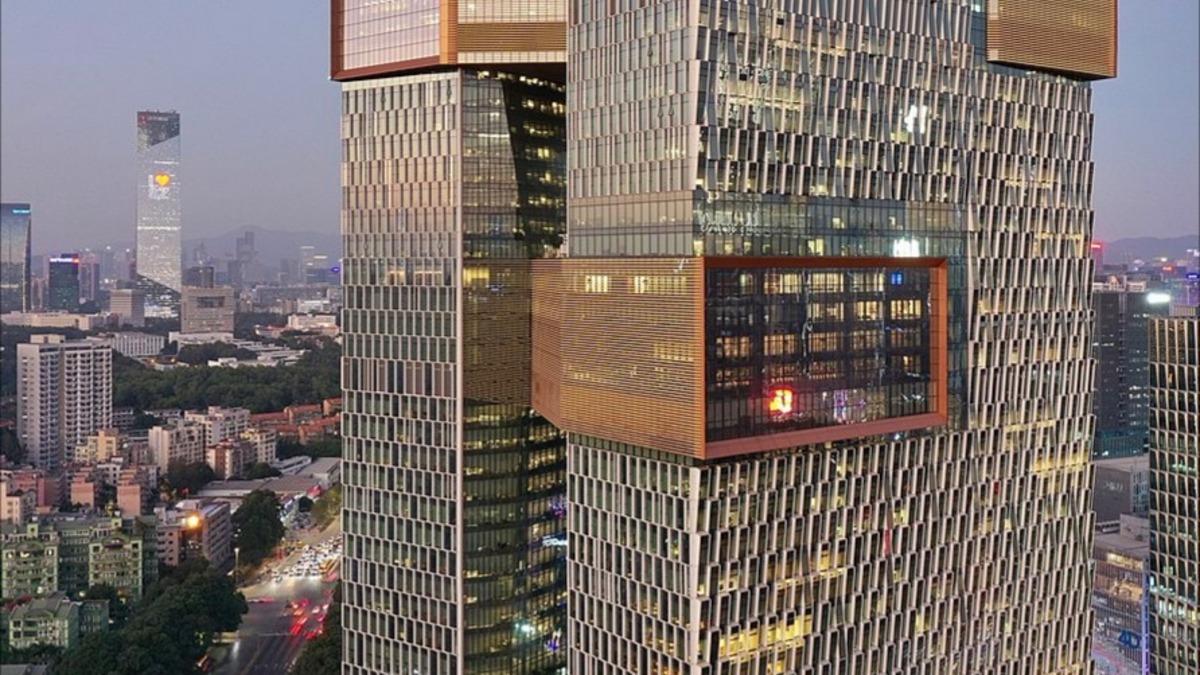 Tencent's Shenzhen headquarters. The company is committing $1.5B to DeepSeek's round as it accelerates its own AI product rollout.
Source: commons.wikimedia.org
Tencent's Shenzhen headquarters. The company is committing $1.5B to DeepSeek's round as it accelerates its own AI product rollout.
Source: commons.wikimedia.org
The stake also buys Tencent access to DeepSeek's model roadmap before competitors. China's talent travel restrictions have made it harder for the best researchers to circulate freely; a strategic position in the lab you want access to is cleaner than chasing individual hires.
CATL
This is the move worth watching closely.
Contemporary Amperex Technology - CATL - is the world's largest EV battery manufacturer. It has no obvious reason to invest in a language model lab. Yet it's committing $740 million, and the reason isn't about models at all.
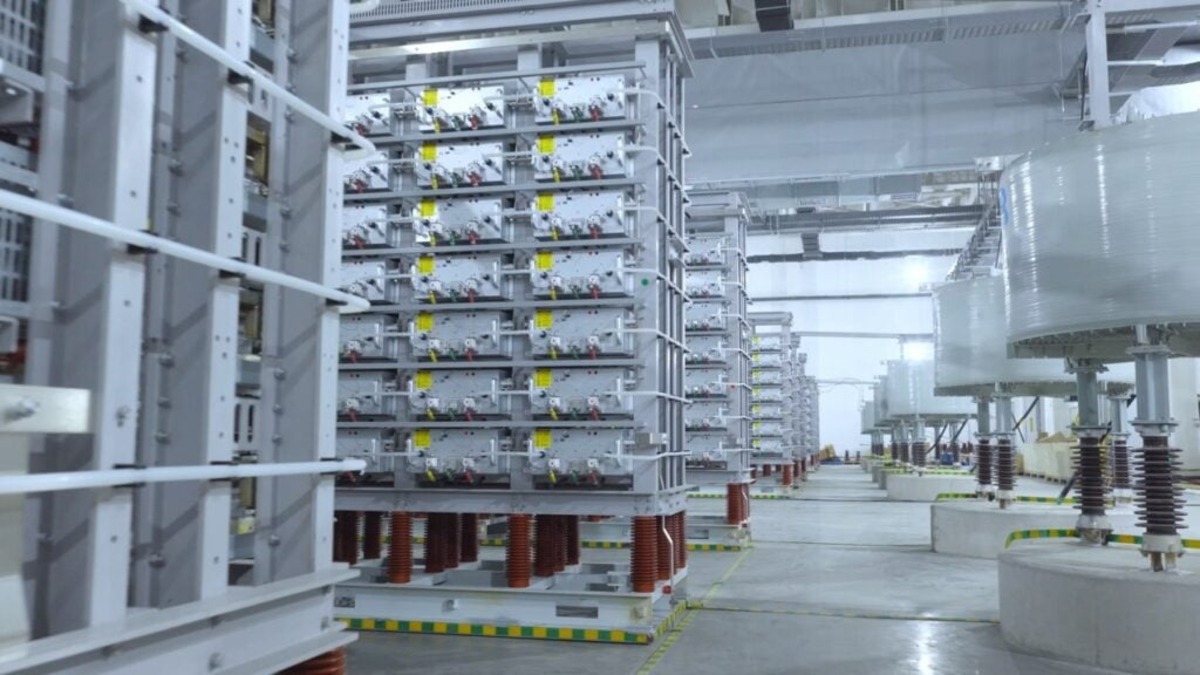 CATL's newly opened Xiamen Energy Storage Validation Research Institute spans 10 hectares and cost approximately $440M to build.
Source: energy-storage.news
CATL's newly opened Xiamen Energy Storage Validation Research Institute spans 10 hectares and cost approximately $440M to build.
Source: energy-storage.news
CATL has been quietly pivoting into AI data center infrastructure for months. In April, it paid $600 million for a 49% stake in Hangzhou Zhongheng Technology Investment, a supplier of high-voltage direct-current power systems used by major Chinese data center operators. In May, it opened the world's largest energy storage testing facility in Xiamen - a $440 million, 10-hectare complex designed exactly for the kind of battery backup systems that large compute clusters require.
The DeepSeek investment isn't about owning a share of a hot AI startup. It's about securing a customer relationship at a strategic moment. AI data centers consume enormous amounts of electricity. As DeepSeek scales its compute infrastructure - which it now has the capital to do - it'll need exactly what CATL is building: large-scale battery storage, grid-connected backup power, and dense power architecture. An equity stake in the lab is an unusually direct form of pipeline development.
Liang Wenfeng and DeepSeek
DeepSeek gets the resources it has previously said it didn't need. At $7.4 billion, this is serious compute capital. The V4-Pro model required training infrastructure that pushed the limits of what DeepSeek could self-fund; that constraint now lifts. Liang has publicly committed to prioritizing AGI research over short-term commercialization, and the investor mix - controlled by his own money - gives him the control to mean it.
Who Pays
The investors are paying a premium. The $52-59 billion valuation implies DeepSeek is worth more than most established US tech companies that actually disclose revenue. DeepSeek has never published revenue figures. The bet is entirely on future model dominance and the infrastructure position that comes with it.
Outside the round, the real cost is competitive. ByteDance just committed to $70 billion in AI capex in 2026, nearly triple the prior year. DeepSeek landing $7.4 billion in private capital means two of China's most technically serious AI operations now have serious financial firepower. The US export control regime has slowed China's access to leading-edge chips. It hasn't stopped the math - and with this capital raise, DeepSeek can buy a lot more of the restricted hardware it can legally access.
Western labs building toward AGI on US-centric infrastructure are now racing against better-funded Chinese counterparts than they were a month ago.
The $3 billion Liang Wenfeng committed personally is the clearest signal in this deal. He's not hedging.
Sources: American Bazaar - PYMNTS - TechNode - 36kr - Battery-Tech Network - CnEVPost - Energy-Storage.News

