
DeepSeek Nears $45B as China's Big Fund Leads Round
China's state semiconductor fund is leading DeepSeek's first-ever VC raise at a $45B valuation, signaling a strategic shift from chip investment to backing AI model labs directly.
 6 min read
DeepSeek has never taken a dollar of outside funding. That changes now. China's state chip investment vehicle - the China Integrated Circuit Industry Investment Fund, universally known as the "Big Fund" - is in advanced talks to lead the lab's first-ever venture round at a valuation that has climbed from $10 billion in mid-April to roughly $45 billion today. Tencent is also negotiating a stake. The Financial Times first reported the talks; Bloomberg and Reuters have since confirmed the outlines.
TL;DR
- China's Big Fund, which has deployed $50B+ into semiconductors since 2014, is leading DeepSeek's first VC round at ~$45B valuation
- The round targets $3-4 billion - a sharp climb from the modest raise Liang Wenfeng originally planned for employee equity
- Tencent is in parallel negotiations; founder Liang holds 89.5% of the company and may invest personally
- Big Fund's pivot into AI model labs marks its first direct investment outside the semiconductor supply chain
A Deal Three Months in the Making
Liang Wenfeng's original plan was quietly practical. Earlier this year he signaled the company might raise a small amount - enough to establish a valuation so staff could receive meaningful equity stakes and DeepSeek could stop losing researchers to better-compensated rivals at ByteDance and Alibaba. The number floating around in March was $300 million at a $10 billion valuation. Modest by any standard, especially for a lab that had briefly become the most-downloaded app in the world.
Then the bidding process did what bidding processes do. By April 22, with Tencent and Alibaba both in early talks, the valuation had crossed $20 billion. By May 6 it sits at $45 billion, and Alibaba has apparently dropped out of the lead position for the Big Fund. The company targeting the raise is still nominally the same self-funded AI lab, but the deal being closed is a different one entirely.
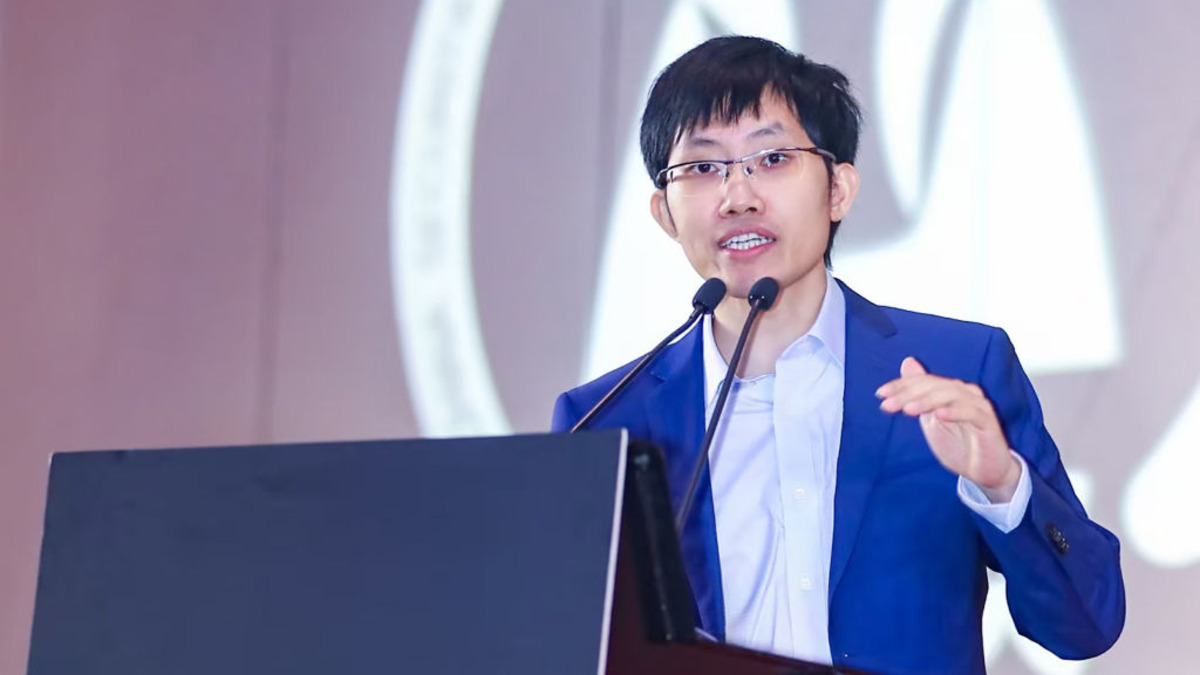 Liang Wenfeng, founder of DeepSeek, following the lab's R1 launch which brought international attention to the company.
Source: techcrunch.com (VCG/Getty Images)
Liang Wenfeng, founder of DeepSeek, following the lab's R1 launch which brought international attention to the company.
Source: techcrunch.com (VCG/Getty Images)
How DeepSeek Compares at $45 Billion
A $45B valuation places DeepSeek well behind the top US labs but ahead of every European and most Asian competitors. Most importantly, it's reached that number without product revenue disclosed publicly and without the multi-year VC histories its peers accumulated before getting anywhere close to this figure.
| Company | Valuation | Total External Funding | Key Models |
|---|---|---|---|
| OpenAI | ~$850B | $122B+ | GPT-5.x series |
| Anthropic | ~$380B | $30B+ | Claude 4.x series |
| xAI | ~$200B | $20B | Grok |
| DeepSeek | ~$45B | $3-4B (first round) | V4, R2 (pending) |
| Mistral | ~$14B | ~$1.1B | Mistral Large 3 |
The comparison that matters most isn't valuation itself - it's funding efficiency. DeepSeek built a globally competitive lab on a hedge fund balance sheet. Its first VC round is being priced at levels it took Anthropic years and multiple rounds to approach. Whether that efficiency holds under the obligations that come with state backing is the question the deal doesn't answer.
Who Benefits
Beijing gets a state stake in the only Chinese AI lab with genuine international mindshare. DeepSeek's V4 model and its predecessor R1 are used by developers globally. That matters for China's AI credibility in a way that domestic-only products don't. The five-year chip blueprint Beijing published last year was built around semiconductor self-sufficiency. The Big Fund's move into model labs shows the strategy is evolving: if you can't win on chips alone, back the labs showing you can build frontier models without them.
DeepSeek employees get what Liang originally wanted for them: real equity in a company with a clear valuation anchor. That matters for retention. ByteDance's Doubao team, Alibaba's Qwen group, and Moonshot are all competitive on compensation, and the last year saw DeepSeek lose several senior researchers. A credible equity package changes that calculation.
Tencent gets a minority stake in the AI brand that crossed borders most convincingly. Its own AI products - Hunyuan, mixed into WeChat's 1.4 billion users - are competent but not internationally visible. Association with DeepSeek is worth something separate from the financial return.
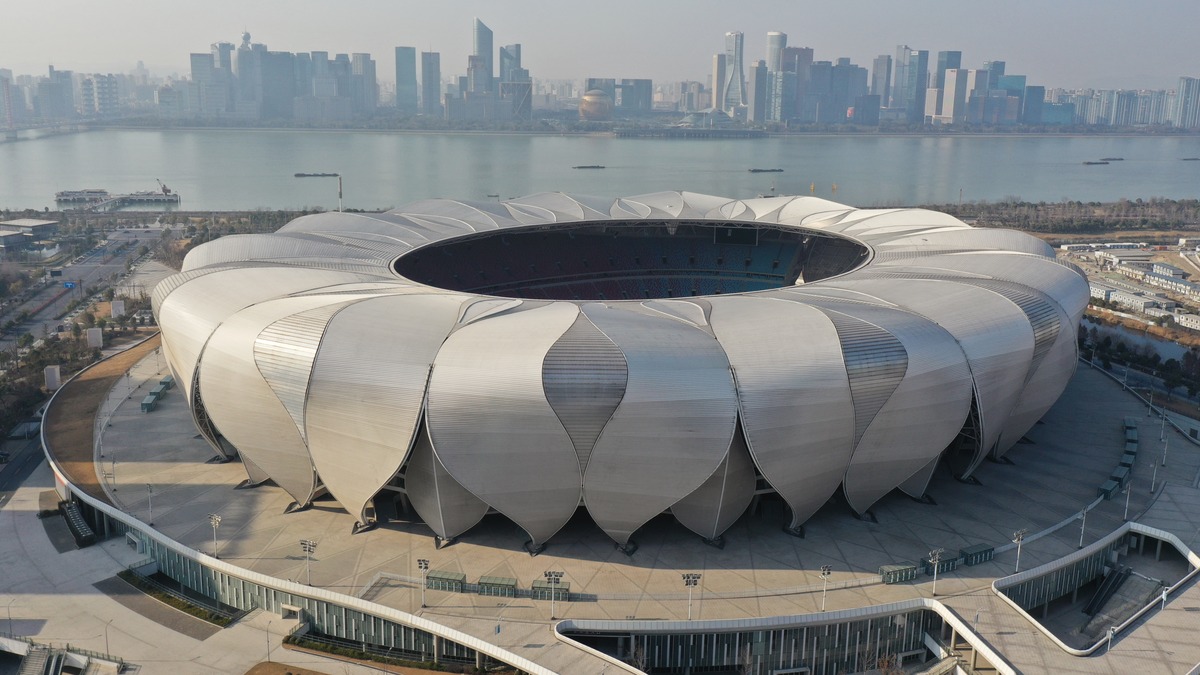 Hangzhou, where DeepSeek is headquartered, has become the centre of China's AI ecosystem alongside Alibaba's campus in the same district.
Source: commons.wikimedia.org
Hangzhou, where DeepSeek is headquartered, has become the centre of China's AI ecosystem alongside Alibaba's campus in the same district.
Source: commons.wikimedia.org
Who Pays
The cost of state backing isn't usually paid at signing. It builds up.
The Big Fund's portfolio companies - SMIC, Yangtze Memory, Hua Hong - operate under understood constraints: domestic priority in procurement, alignment with content and data localization requirements, limited ability to take strategic decisions that run counter to government interests. DeepSeek's open-weight model releases on Hugging Face, which drove its international adoption, may not survive contact with those norms unchanged.
There's a parallel competitive distortion inside China. Moonshot AI, MiniMax, and Zhipu are building capable models without state sponsorship. Once the Big Fund takes a lead position in DeepSeek, it's harder for those companies to compete for government contracts on neutral terms. State backing of one national champion tends to organize the market around that champion, not against it.
The other cost is credibility. DeepSeek's reputation abroad was built on the story that a small, self-funded team in Hangzhou out-engineered OpenAI on a fraction of the budget. The export controls on Nvidia hardware made that story even more compelling - a lab thriving under constraint. State investment changes the narrative. The company is now, formally, a strategic asset of the Chinese government's technology independence program. Developers and enterprises outside China who treated it as a neutral open-source project will need to reconsider that framing.
The Big Fund's Mandate Shift
For the Big Fund, this is a meaningful departure. Phases I and II went almost completely into semiconductor fabrication, design tools, and packaging - the infrastructure layer. Phase III, launched in 2024 with 344 billion yuan in registered capital, maintained that focus. Backing a frontier AI lab directly is a new category.
The logic isn't hard to follow. Washington's chip export controls have made it clear that China won't be buying its way to leading-edge GPU capacity in the near term. DeepSeek's demonstrated ability to train competitive models on restricted hardware - using Huawei's Ascend chips and its own distillation techniques - makes it the proof of concept Beijing needs for a chip-constrained AI strategy. The Big Fund is putting money behind that proof.
The deal isn't closed. Tencent's stake size isn't confirmed. The governance terms - board seats, veto rights, open-source obligations - aren't public. What's confirmed is that the valuation has tripled in six weeks and the largest state chip fund in China is leading it. Whether DeepSeek's next model arrives before the paperwork does is now an open question worth watching.
Sources:
- DeepSeek could hit $45B valuation from its first investment round - TechCrunch
- DeepSeek's $45bn valuation is also Beijing's strategic statement - The Next Web
- DeepSeek Nears $45 Billion Valuation - The Decoder
- DeepSeek nears $45 billion valuation - Reuters via TradingView
- DeepSeek nears $45 billion valuation - The Standard HK

