
What's Really Behind DeepMind's Leadership Shakeup
Fresh reporting reveals missed Gemini deadlines, 60-hour burnout weeks, and a Pentagon revolt behind Demis Hassabis's exit as DeepMind's CEO.
 Updated
6 min read
Updated
6 min read
An empty conference room, photo by Skills Media. Source: pexels.com
Demis Hassabis spent sixteen years building Google DeepMind into the lab behind AlphaFold and a Nobel Prize. On August 5, he stepped back from running it. Google's framing was succession planning: Hassabis moves to chairman, keeps his job as CEO of Isomorphic Labs, and hands day-to-day control of Gemini to CTO Koray Kavukcuoglu. An investigative piece Fortune published today tells a messier story, built on interviews with current and former DeepMind staff describing a lab that missed three deadlines on its flagship model in a row, burned through engineers on 60-hour weeks, and lost its chief scientist to a rival startup in the same news cycle.
TL;DR
- Hassabis becomes DeepMind chairman; Koray Kavukcuoglu takes over daily operations as SVP, reporting straight to Sundar Pichai
- Gemini 3.5 Pro missed three consecutive release targets (June, mid-July, and a further slip past August)
- Chief scientist Jeff Dean left after 27 years to co-found Discovery Loop, with Alphabet itself among the investors
- More than 580 employees signed a letter opposing a Pentagon contract, and London staff launched DeepMind's first unionization drive
- Alphabet shares fell about 5% after the August 5 announcement
The Reorg on Paper
The title change eliminates the standalone DeepMind CEO role. Kavukcuoglu, previously CTO and Alphabet's chief AI architect, now holds the title of senior vice president and answers directly to Pichai, taking over Gemini's development. Hassabis keeps his chairman seat at DeepMind and continues running Isomorphic Labs, Alphabet's AI drug discovery unit, without interruption.
Hassabis described the move as giving him room to focus on what comes next for the field. In his own account of the reorg, he pointed to the stakes of the moment ahead:
"AGI is close at hand and getting the next steps right is critical for humanity."
Investors read the move differently than Hassabis's statement suggested. Alphabet shares dropped roughly 5% in the hours after the announcement, before any of the internal detail Fortune later reported had surfaced publicly.
The Coding Gap
Fortune's report centers on timing. Gemini 3.5 Pro, DeepMind's flagship model, missed three release targets back to back: an original June date, a mid-July fallback, and a third slip that pushed it past August without a confirmed launch window. Engineers who spoke to Fortune blamed a failure to focus on coding ability early enough in training. One put it plainly: "They dropped the ball a little bit" on coding.
The gap shows up on independent leaderboards, not just internal timelines. Artificial Analysis CEO Micah Hill-Smith told Fortune that "for a brief moment, we actually did have [Google's] model on top as the smartest model in the world." That moment passed. Gemini 3.6 Flash now trails entries from Anthropic, OpenAI, xAI, Meta, and several Chinese labs on coding-agent benchmarks, according to the same reporting.
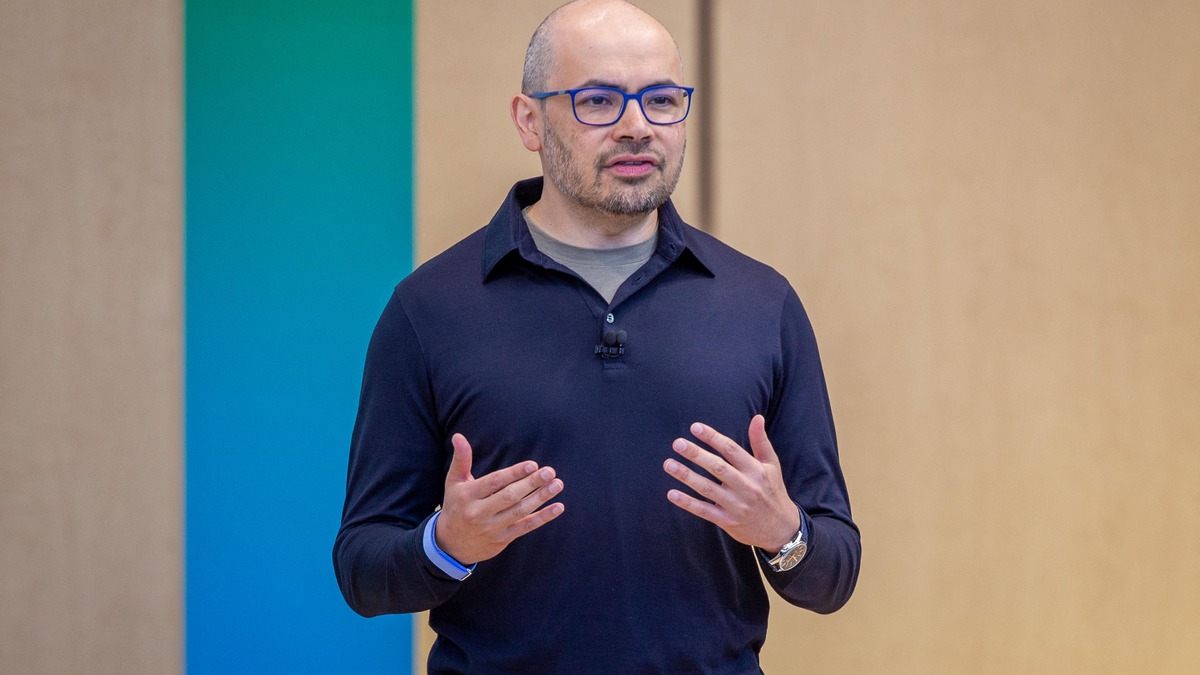 Demis Hassabis, then CEO of Google DeepMind, at the 2026 Google I/O developer conference in Mountain View.
Source: time.com
Demis Hassabis, then CEO of Google DeepMind, at the 2026 Google I/O developer conference in Mountain View.
Source: time.com
Twenty-Seven Years, Then the Door
Hours after the reorg was announced, Jeff Dean, Google's 30th employee and its chief scientist for 27 years, confirmed he was leaving to co-found Discovery Loop, a public-benefit corporation. He isn't the only researcher who has walked out this year.
| Name | Role at Google/DeepMind | Departed to | When |
|---|---|---|---|
| Jeff Dean | Chief Scientist, 27 years | Discovery Loop (co-founder) | Aug 2026 |
| Noam Shazeer | Gemini co-lead | OpenAI | June 2026 |
| John Jumper | AlphaFold co-inventor | Anthropic | June 2026 |
| Jonas Adler | Researcher | Anthropic | 2026 |
| Alexander Pritzel | Researcher | Anthropic | 2026 |
| Alex Turner | Researcher | Resigned over Pentagon deal | June 2026 |
Discovery Loop's other founders, Sanjay Ghemawat, Quoc Le, and Oriol Vinyals, are all Google veterans in their own right. The company's pitch is to automate the experimental side of scientific research, running large numbers of experiments in parallel rather than one at a time. Dean explained the reasoning to the New York Times: "You will get both a higher quantity and a higher quality of experiments, and that will lead to scientific breakthroughs and advances."
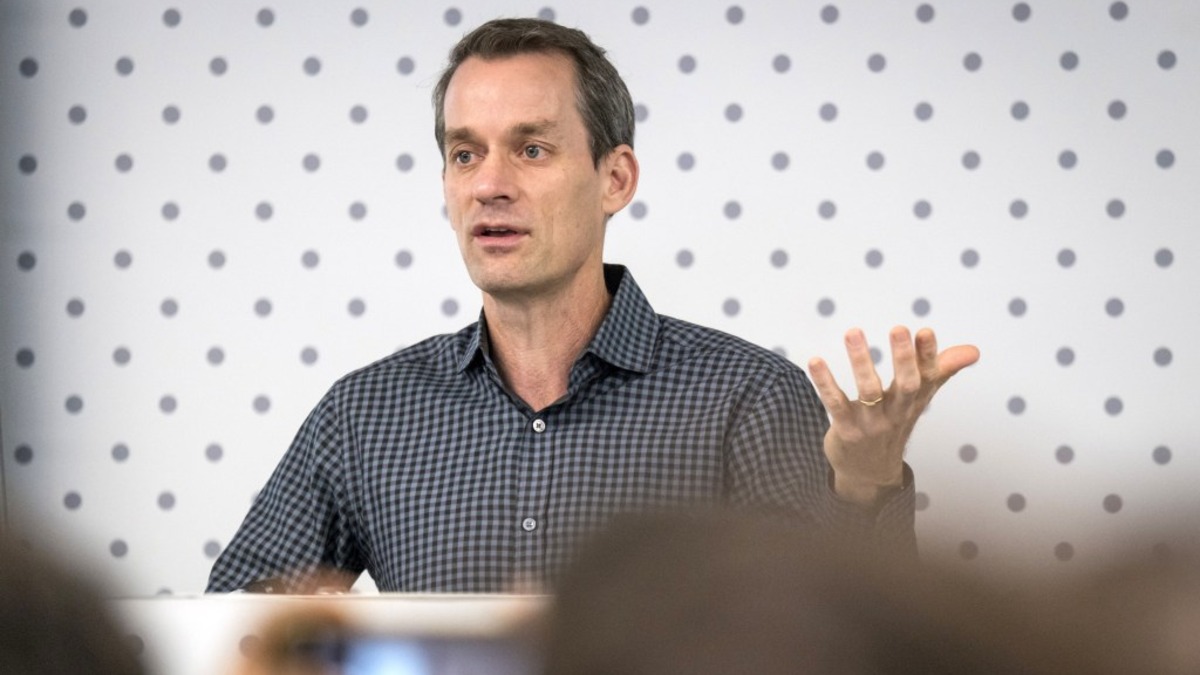 Google's senior AI research ranks have thinned out fast this year, with departures spanning DeepMind, Gemini, and now the chief scientist's office.
Source: techcrunch.com
Google's senior AI research ranks have thinned out fast this year, with departures spanning DeepMind, Gemini, and now the chief scientist's office.
Source: techcrunch.com
Alphabet's Own Money Follows Him Out
The funding round underlines how close this departure sits to home. Radical Ventures and Khosla Ventures are co-leading, with Kleiner Perkins, Lightspeed, and Doerr Capital also participating. Alphabet itself is listed among the investors, backing a startup built by the researcher who just left its payroll after nearly three decades. It's a familiar pattern in AI, where competing on compute and equity has made it hard for any single lab, including the one that trained Dean for 27 years, to hold on to founding-era talent once outside options multiply. DeepMind's own exodus last spring, when several AI safety leads exited across OpenAI, Anthropic, and xAI within a single week, was an early sign of how fluid the senior researcher market had become.
The Pentagon Letter Nobody Signed Lightly
In April, Google signed a contract permitting the Department of Defense to run Gemini on classified networks. More than 580 employees, including researchers inside DeepMind, signed an open letter opposing it. Alex Turner, who had spent months arguing against the contract internally, resigned in June over it, citing concerns about autonomous weapons and mass surveillance uses.
The following month, DeepMind's London researchers launched what Fortune describes as the first formal unionization attempt at a frontier AI lab, with the Pentagon contract as a direct trigger. Google declined to voluntarily recognize the union, and the dispute is now going through the UK's ACAS conciliation process, stuck on which staff qualify for the bargaining unit. AI safety researcher Andreas Kirsch dismissed the contract's stated safeguards as "meaningless weasel words," aimed more at public relations than at actually limiting how the Pentagon can use the model.
The contrast with Anthropic is pointed. Anthropic refused a comparable defense arrangement and was designated a military supply-chain risk for it, a designation a federal judge later blocked as unlawful retaliation. Google took the deal and is now managing the internal fallout instead.
None of these threads on its own explains a Nobel laureate stepping back from the lab he spent sixteen years building. Together, missed deadlines, a chief scientist's exit into a startup his own employer is funding, and a union drive born out of a defense contract read less like a tidy handover and more like a lab absorbing several compounding failures within the same news cycle it tried to frame as routine succession.
Sources:
- How stalled models, missed deadlines, and staff burnout lead to the unraveling of Google's DeepMind - Fortune
- Demis Hassabis steps down as Google DeepMind CEO in AI shakeup - Fortune
- Jeff Dean and other top AI researchers are leaving Google to launch their own startup - TechCrunch
- Demis Hassabis stepping down as Google DeepMind CEO - Dataconomy
- The next chapter of our AI momentum - Google
Last updated

