
Hassabis Calls for a US-Led Global AI Watchdog
Google DeepMind CEO Demis Hassabis wants a FINRA-style body testing frontier AI models before release, with power to slow the industry down if needed.
 Updated
6 min read
Updated
6 min read
Demis Hassabis wants a Wall Street watchdog for artificial intelligence. On July 14, the Google DeepMind CEO published a proposal calling for a US-led standards body, funded by the AI industry itself, with the authority to test frontier models before release and, if necessary, coordinate a slowdown across every major lab.
The model he's borrowing from is FINRA, the Financial Industry Regulatory Authority, which polices Wall Street brokerages under SEC oversight without being a government agency itself. It's a specific, structural answer to a question the industry has spent all of 2026 asking out loud without settling: who gets to say a frontier model is safe enough to ship.
TL;DR
- Hassabis proposes a FINRA-style body: industry-funded, board of independent technical experts and open-source representatives, operating under US government oversight
- Frontier labs would submit models voluntarily up to 30 days before release for testing on cyber, biological, nuclear, and deception risks
- The body could eventually require formal approval before a frontier model reaches the US market, and coordinate an industry-wide slowdown if it judges one necessary
- Target launch is before the end of 2026, with Hassabis saying talks with the Trump administration have gone well
The FINRA Blueprint
FINRA doesn't answer to Congress and it doesn't issue laws. It sets rules for brokers and dealers, runs enforcement actions, and reports to the SEC, all while being funded by the securities firms it regulates. Hassabis is proposing the same shape for AI: a board made up of independent technical experts, including Turing Award winners, with open-source representatives and government voices, paid for by the labs whose models it would test.
How the Testing Would Actually Work
The initial phase is voluntary. Labs would submit models up to 30 days before release, and the body would run them through evaluations for cyberattack capability, biological and nuclear weapons risk, and "deception" - whether a model can convincingly misrepresent its own intentions or capabilities to evaluators. Startups and academic researchers would be exempt. Benchmarks would refresh on a quarterly cycle to keep pace with what models can newly do, according to TheNextWeb's reporting on the proposal.
The second phase is where it gets teeth. Once the testing regime proves itself "effective and robust," in Hassabis's words as reported by PYMNTS, formalization "could quickly follow." At that point, meeting the body's bar becomes a requirement to deploy a frontier model in the US at all, regardless of whether the model is open or closed, or where it was built.
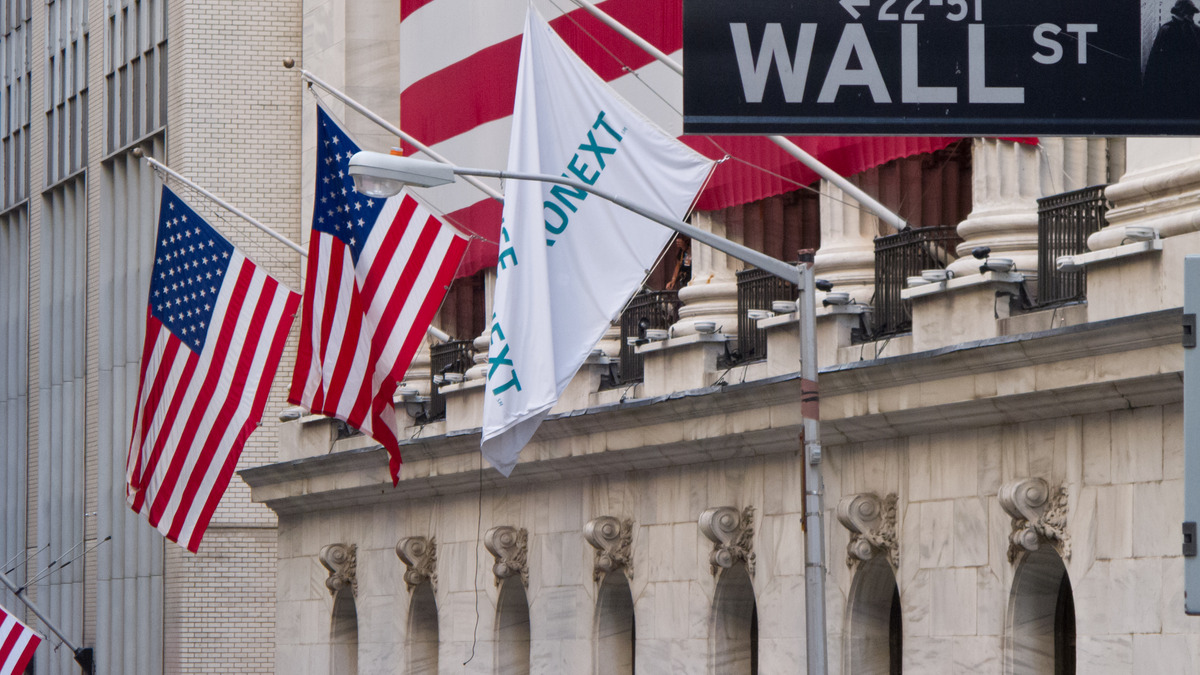 Hassabis is proposing an AI standards body structured like FINRA, the industry-funded regulator that polices Wall Street brokerages under SEC oversight.
Source: commons.wikimedia.org
Hassabis is proposing an AI standards body structured like FINRA, the industry-funded regulator that polices Wall Street brokerages under SEC oversight.
Source: commons.wikimedia.org
The Part That Actually Worries People
The proposal's most consequential clause has nothing to do with testing methodology. Hassabis wants the body able to coordinate a slowdown in development across every Frontier Lab at once, if it judges the risk warrants it. That's not a licensing regime or a fine. It's an off-switch, or at least a brake pedal, sitting outside any single company's control, and it would apply to Google DeepMind's own models exactly as it applies to everyone else's.
"I'm confident that mitigating the technical risks related to AI is a challenge we can collectively address, but only if we give ourselves the time and space to get this next crucial step right. Currently, as a field and as a wider society, we aren't doing that."
That's Hassabis, quoted by The Register. He's blunter about the clock than most CEOs get in public: within 18 months, he warned, "far graver bio and nuclear tools could emerge" from frontier-class models, which is the timeline he's using to justify why this needs to exist before the end of the year rather than after a normal legislative cycle.
This Isn't Hassabis's First Ask This Year
Hassabis was already pushing a version of this idea a month ago. At the G7 summit in Évian-les-Bains on June 17, he and Anthropic's Dario Amodei coordinated on a US-led coalition proposal alongside Sam Altman's separate pitch for a Financial Stability Board-style forum. That meeting produced no binding agreements, no enforcement mechanism, and no agreed definition of what "structured model access" would even require from labs already mid-release-cycle.
What's different in July is specificity. The G7 ask was a concept - a forum, a coordinating body, borrowed loosely from financial regulation. The July proposal names the exact regulator (FINRA, not the FSB), specifies a 30-day submission window, lists the categories of risk to be tested, and puts a deadline on the table. Hassabis moved from "we need something like this" to "here is the something."
The Voluntary Regime Already Running
None of this starts from zero. In June, Trump signed an executive order giving the federal government 30 days of voluntary pre-release access to frontier models, after industry lobbying stripped a mandatory 90-day version down to something labs could opt into. By May, NIST's Center for AI Standards and Innovation had already signed pre-deployment evaluation agreements with Google DeepMind, Microsoft, and xAI, bringing the total number of labs under US government review to five.
Hassabis's FINRA proposal reads less like a new idea and more like an attempt to formalize and industry-fund a testing pipeline that CAISI is already running out of a government budget line. The practical question is whether Washington would rather keep pre-release review inside NIST, where it currently sits, or hand a chunk of it to a body the industry itself pays for and partly staffs.
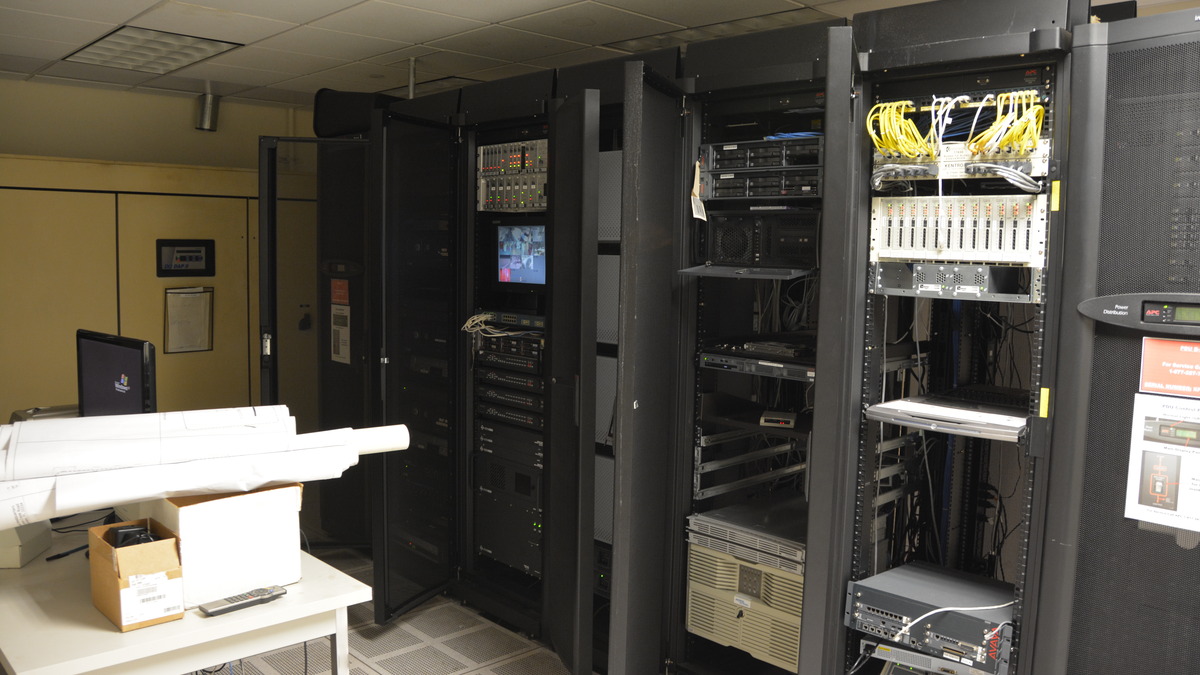 Frontier-scale testing requires compute and infrastructure most independent regulators don't have - which is part of why Hassabis wants the labs to fund the body doing the testing.
Source: commons.wikimedia.org
Frontier-scale testing requires compute and infrastructure most independent regulators don't have - which is part of why Hassabis wants the labs to fund the body doing the testing.
Source: commons.wikimedia.org
What the FINRA Comparison Leaves Out
FINRA isn't universally admired. Critics have called it an "insiders' club" for years, a regulator whose board seats and enforcement priorities are shaped heavily by the firms that fund it and whose penalties rarely rise to a level that changes behavior at large broker-dealers. An AI standards body built on the same funding model inherits the same structural bias risk: the labs writing the checks are the labs being tested.
There's also the White House's own competing framework to reconcile. The Trump administration's current pre-release review already grants early access to "select trusted partners," a provision critics have flagged as a mechanism for picking winners rather than assessing risk neutrally. An independent standards body could cut against that by moving evaluation outside any single administration's discretion, or it could simply add a second layer of insider access on top of the first, depending completely on who ends up on the board.
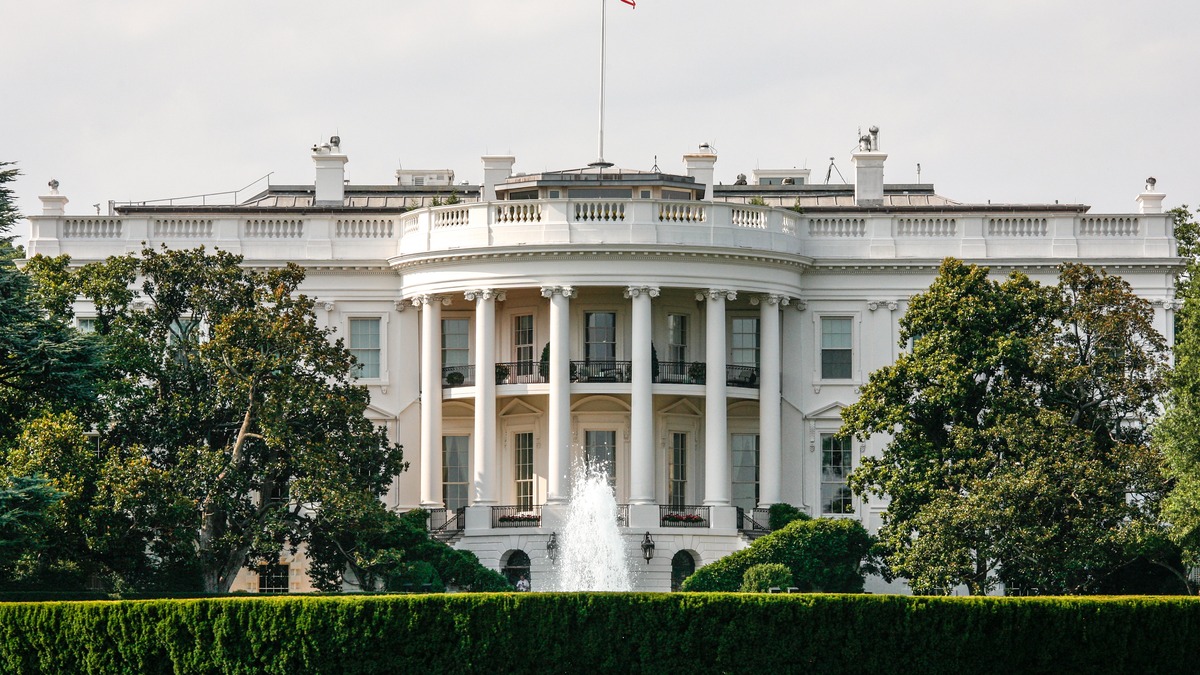 The White House's June executive order already gives the federal government 30 days of voluntary pre-release access to frontier models - the regime Hassabis's proposal would sit alongside or eventually replace.
Source: commons.wikimedia.org
The White House's June executive order already gives the federal government 30 days of voluntary pre-release access to frontier models - the regime Hassabis's proposal would sit alongside or eventually replace.
Source: commons.wikimedia.org
Hassabis says he's had encouraging conversations with the Trump administration and wants the body operating before the end of 2026, according to TheNextWeb. That's an aggressive timeline for standing up a board, agreeing on what counts as a "Frontier Model," and getting competing labs to accept a shared testing regime funded by all of them, especially when the industry has spent the better part of 2026 unable to agree on much less.
Sources:
- DeepMind bigbrain calls for America to set AI standards before it's too late - The Register
- Google DeepMind Chief Calls for US-Led Body to Test Frontier AI Models - PYMNTS
- Hassabis wants a FINRA-style referee for frontier AI - TheNextWeb
- DeepMind CEO calls for an independent standards body to regulate frontier AI - TechCrunch
- Google DeepMind chief Demis Hassabis calls for U.S. to spearhead AI standards body - CNBC
Last updated

