
Cursor's Composer 2 Is Kimi K2.5 With RL - And No Attribution
A developer leaked the model ID for Cursor's Composer 2: kimi-k2p5-rl-0317-s515-fast. Moonshot AI says Cursor violated the Kimi K2.5 license by not displaying attribution in a $2B ARR product.
 5 min read
"was messing with the OpenAI base URL in Cursor and caught this: accounts/anysphere/models/kimi-k2p5-rl-0317-s515-fast. so composer 2 is just Kimi K2.5 with RL. at least rename the model ID"
- @fynnso on X
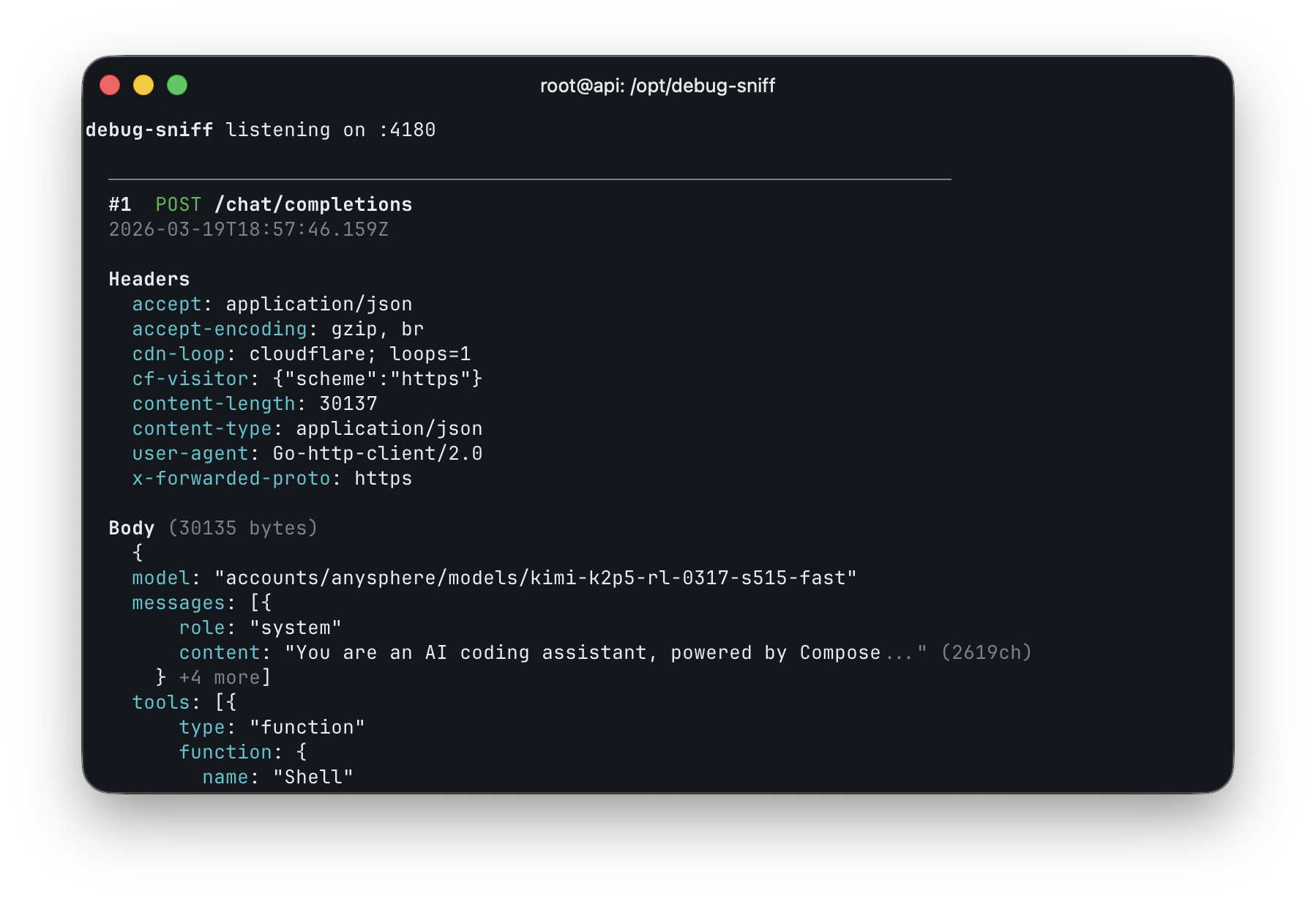 The leaked model ID from Cursor's API: accounts/anysphere/models/kimi-k2p5-rl-0317-s515-fast.
Source: x.com/@fynnso
The leaked model ID from Cursor's API: accounts/anysphere/models/kimi-k2p5-rl-0317-s515-fast.
Source: x.com/@fynnso
Cursor shipped Composer 2 on March 19 as its most capable proprietary coding model. Less than 24 hours later, a developer named Fynn discovered the model ID hidden in Cursor's API: kimi-k2p5-rl-0317-s515-fast. That isn't a Cursor model name. That's Kimi K2.5 with reinforcement learning.
Moonshot AI, the company behind Kimi, says Cursor violated its license.
Impact Assessment
| Stakeholder | Impact | Timeline |
|---|---|---|
| Cursor ($29.3B valuation) | License violation allegation, reputational damage | Immediate |
| Moonshot AI | IP rights dispute, potential enforcement action | March 2026 |
| Open-source community | Trust in "modified MIT" licenses tested | Ongoing |
| Cursor users | Model they're paying for is a fine-tuned Kimi K2.5 | Now |
How It Was Found
Fynn (@fynnso) was testing Cursor's OpenAI-compatible base URL when the internal model identifier leaked through the API response. The model ID - accounts/anysphere/models/kimi-k2p5-rl-0317-s515-fast - contains several revealing components:
- anysphere - Cursor's parent company
- kimi-k2p5 - Kimi K2.5, Moonshot AI's open-weight model
- rl - reinforcement learning (the post-training method)
- 0317 - March 17, 2026 (likely the training date)
- s515 - internal version/experiment identifier
- fast - the optimized serving variant
Cursor's Composer 2 announcement stressed "continued pretraining" and "scaled reinforcement learning" as innovations. It didn't mention Kimi K2.5 anywhere - not in the blog post, not in the release notes, not in the model card.
Moonshot's Response
Two Moonshot employees initially confirmed on social media that Cursor wasn't licensed for this use, then deleted their posts. Yulun Du, Moonshot AI's head of pretraining, publicly confirmed the tokenizer similarity and questioned Cursor's compliance with the licensing terms.
The Kimi K2.5 license is a Modified MIT License with one critical addition:
"if the Software (or any derivative works thereof) is used for any of your commercial products or services that have more than 100 million monthly active users, or more than 20 million US dollars (or equivalent in other currencies) in monthly revenue, you shall prominently display 'Kimi K2.5' on the user interface of such product or service."
Cursor's Numbers
| Metric | Value | Threshold Met? |
|---|---|---|
| Annualized revenue | $2 billion (as of Feb 2026) | $20M/month = yes |
| Monthly revenue (estimated) | ~$167 million | 8x over threshold |
| Valuation | $29.3 billion | N/A (not in license) |
| Daily active users | 1 million+ (2025) | MAU likely well over 100M threshold |
Cursor's revenue alone puts it at roughly 8x the $20 million monthly revenue threshold. The license requires "prominent display" of "Kimi K2.5" on the user interface. Cursor's UI displays "Composer 2" with no mention of Kimi.
Cursor's Response
As of publication, Cursor hasn't responded to the allegations.
What Happens Next
Legal Exposure
The Modified MIT License is enforceable as a contract. If Cursor used Kimi K2.5 weights as the base for Composer 2 and applied reinforcement learning on top, the resulting model is a "derivative work" under the license terms. The attribution requirement applies to derivative works explicitly.
Cursor has three options:
- Add "Kimi K2.5" attribution to the Composer 2 interface and comply going forward
- Dispute the license - argue that sufficient transformation (RL training) creates a new work not subject to the original license
- Replace the base model - retrain Composer 2 on a different foundation model without the attribution clause
Option 2 would set a precedent that could undermine every open-weight license in the AI industry. If RL fine-tuning removes attribution requirements, no open-weight license is enforceable.
The Broader Signal
This isn't the first time a company has been caught rebranding an open model. But it's the first time a $29 billion company has been caught doing it to a model whose license specifically expected and addressed this scenario.
Moonshot AI wrote the attribution clause precisely because it expected companies to fine-tune Kimi K2.5 and ship it under their own brand. The clause was designed to make sure even after modification, the origin model receives credit. Cursor appears to have ignored it.
The open-source AI community has been debating whether "modified MIT" and similar licenses are enforceable against well-funded companies. This case will test that question in practice. If Moonshot doesn't enforce the license against a company producing $2 billion in annual revenue from their model, the attribution clause becomes meaningless for every future open-weight release.
A developer poked at an API endpoint and found the model ID that Cursor forgot to rename. kimi-k2p5-rl-0317-s515-fast tells the entire story: Cursor took Moonshot's open-weight Kimi K2.5, ran reinforcement learning on coding tasks, and shipped it as "Composer 2" without attribution. The Kimi K2.5 license says that any commercial product making over $20 million a month must display "Kimi K2.5" prominently. Cursor makes roughly $167 million a month. The model ID is public. The license text is public. What happens next will determine whether open-weight model licenses mean anything at all.
Sources:
- Fynn on X - Model ID Discovery
- Cursor Composer 2 is just Kimi K2.5 with RL - Hacker News
- Moonshot AI Accuses Cursor of License Breach - Phemex News
- Mark Kretschmann on X - Base Model Confirmation
- Kimi K2.5 License - GitHub
- Cursor Surpasses $2B Annualized Revenue - TechCrunch
- Silicon Valley Learns Chinese - 36Kr

