
Cursor Hits $2B ARR in Record Time - at What Cost
Cursor doubled its annualized revenue to $2 billion in just three months, making it the fastest-growing SaaS company in history. But its dependence on model providers raises hard questions about margins and survival.
 6 min read
Cursor just doubled its annualized revenue to $2 billion. It took ninety days. No enterprise software company in history has grown this fast at this scale, and the four-year-old startup is now creating more recurring revenue than GitHub Copilot, Notion, and Figma combined.
The number is real. The question is whether the business underneath it is.
TL;DR
- Cursor's ARR hit $2 billion in February 2026, doubling from $1 billion in just three months
- The company went from $1M to $2B ARR in roughly 28 months - the fastest arc in SaaS history
- Enterprise customers now account for 60% of revenue, up from near zero 18 months ago
- Analysts estimate Cursor pays model providers (mainly Anthropic) more per year than it earns in subscription revenue
- Cursor is building its own Composer model to reduce dependency, but faces a classic platform trap: its suppliers are becoming its competitors
The Numbers
Bloomberg first reported the milestone on March 2, citing a source familiar with the company's finances. The growth arc looks less like a hockey stick and more like a rocket losing control of its own thrust.
| Milestone | Date | Time to Double |
|---|---|---|
| $100M ARR | Late 2024 | 12 months from $1M |
| $300M ARR | April 2025 | ~4 months |
| $500M ARR | June 2025 | ~2 months |
| $1B ARR | November 2025 | ~5 months |
| $2B ARR | February 2026 | ~3 months |
For context, Wiz - previously the fastest SaaS company to $100M - took 18 months. Deel took 20. Ramp took 24. Cursor did it in 12, then kept accelerating.
How It Got Here
Cursor's original growth engine was individual developers paying $20 a month out of their own pockets. At $100M ARR, the company had roughly 360,000 paying users at an average contract value of $276 - tiny by enterprise standards. Wiz reached the same milestone with just 260 customers paying an average of $384,000 each.
The shift came in 2025. Cursor landed enterprise contracts with Coinbase, OpenAI, eBay, Datadog, and Sentry. The $40-per-seat business tier started moving volume. By late 2025, as we noted when Cursor shipped cloud agents, the company had over 50,000 enterprise customers and a million daily active users. Enterprise revenue went from negligible to 60% of the total.
That enterprise pivot is what turned a popular developer tool into a $29.3 billion company.
 Cursor's trajectory from zero to $2 billion in recurring revenue has no precedent in enterprise software history.
What Made Cursor Different
The market is crowded. GitHub Copilot ships pre-installed in VS Code. Amazon has CodeWhisperer. OpenAI bundles coding capabilities into ChatGPT. Replit raised $250 million to build cloud-native AI development.
Cursor's edge was architectural. Instead of bolting AI onto an existing editor, the company forked VS Code and rebuilt it around AI assistance from the ground up. The IDE treats model suggestions as a first-class citizen - autocomplete, inline edits, multi-file refactoring, and natural language commands are woven into every interaction rather than living in a sidebar chat window.
That approach fueled what became known as vibe coding - a workflow where developers sketch intentions in natural language and let the AI iterate on the implementation. Cursor did not invent the concept, but it made it feel native.
The Cloud Agent Bet
In February 2026, Cursor doubled down by shipping autonomous agents that run inside isolated virtual machines. These cloud agents can write code, run tests, record video demos, and submit pull requests without human involvement. The company says over 30% of its own internal pull requests are now created by agents.
This is the growth engine for the next phase. Autonomous agents consume dramatically more compute per session than a developer using autocomplete, which means higher per-seat value but also dramatically higher costs.
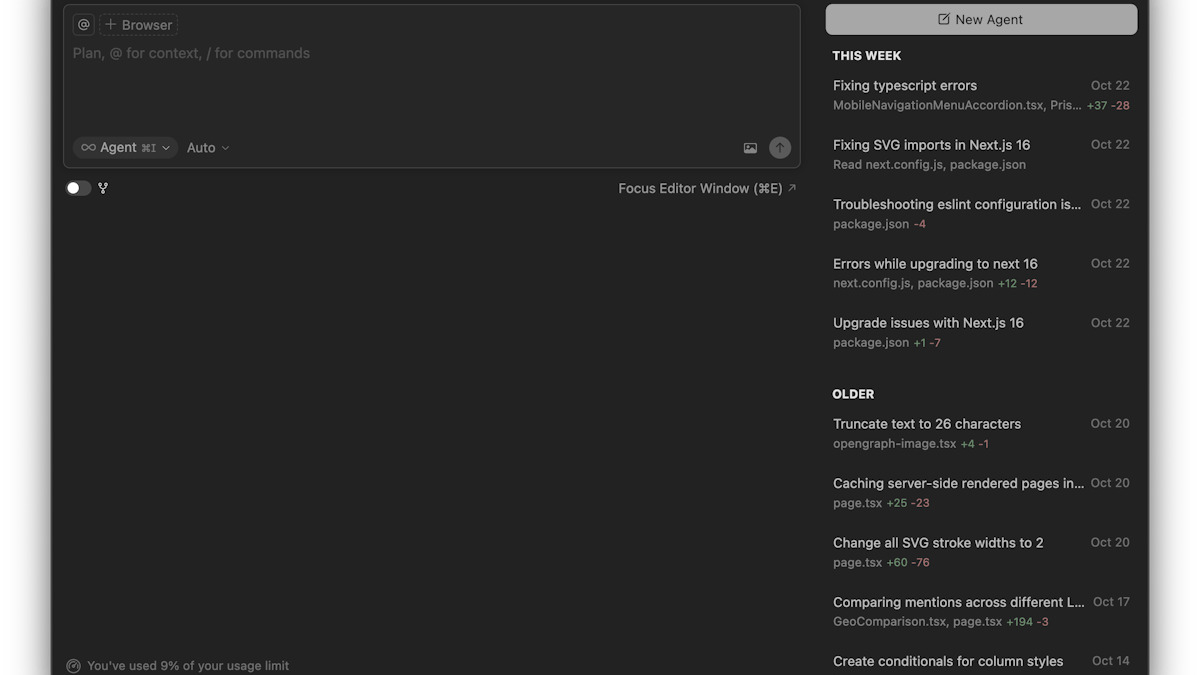 Cursor's autonomous agents run in isolated VMs, writing and testing code without human involvement - a capability that drives both growth and compute costs.
What It Does Not Tell You
The Margin Problem
The headline number - $2 billion in annual recurring revenue - doesn't say anything about profit. And there's good reason to believe Cursor's margins are, at best, thin.
Cursor doesn't build its own AI models. It pays OpenAI, Anthropic, and Google for inference, then wraps that capability in a better interface. Each coding session generates hundreds of model calls - autocomplete, explanations, refactors, inline chat, agent loops. At scale, the token bill is enormous.
Investment firm Foundamental estimated that when Cursor was at $500M ARR, it was paying roughly $650 million per year to Anthropic alone - implying a negative gross margin. Even with volume discounts and internal optimizations, the unit economics of reselling inference through a $20/month subscription are brutal. Every power user who runs agents all day is a loss center.
"A single session generates hundreds of model calls. Autocomplete, explanations, refactors, chat responses. Each call costs money."
The Platform Trap
The deeper problem is structural. Cursor's suppliers are becoming its competitors.
OpenAI ships coding features inside ChatGPT and has launched its own coding agent infrastructure. Anthropic built Claude Code as a standalone coding tool. GitHub Copilot has the distribution advantage of being pre-installed in the world's most popular editor. Any of these companies could optimize their own interfaces, adjust API pricing for heavy users, or bundle features that Cursor currently charges for.
Cursor CEO Michael Truell has called OpenAI and Anthropic "important partners," but the relationship is asymmetric. The model providers control the infrastructure Cursor depends on and can compete directly whenever they choose. As one analyst warned, pure application layers built on top of someone else's models are playing a game with the rules written by their opponents.
The Composer Gamble
Cursor's response is to build its own model. The proprietary Composer model, launched in late 2025, aims to handle the most common coding operations without routing every request to a third-party API. In theory, this reduces costs and creates a technical moat.
In practice, frontier model development costs billions annually. Cursor is now trying to compete with OpenAI and Anthropic on model quality while still paying them billions for everything Composer cannot handle. It is an extraordinarily expensive hedge.
| Factor | Strength | Risk |
|---|---|---|
| Revenue growth | Fastest in SaaS history | Burns cash at scale |
| Enterprise adoption | 60% of revenue, 50K+ customers | Long sales cycles, high churn risk |
| Product differentiation | IDE-native AI, cloud agents | Interface advantages erode fast |
| Own model (Composer) | Reduces provider dependency | Billions to compete on model quality |
| Valuation ($29.3B) | Reflects execution quality | Assumes moat that doesn't yet exist |
Cursor is real. The demand is real. The growth is historically unprecedented and it'd be foolish to dismiss a company that has created $29 billion in value in under four years.
But the fastest-growing SaaS company in history is also, possibly, the most exposed. Its core product depends on suppliers who are actively building competitive alternatives. Its margins may be negative at scale. Its moat is an interface advantage in a market where interfaces get commoditized fast. And its plan to escape the trap - building its own models - requires competing head-to-head with the best-funded AI labs on the planet.
The $2 billion number is a triumph. What comes after it is the real test.
Sources:
- Cursor has reportedly surpassed $2B in annualized revenue - TechCrunch
- Cursor Hits $2B ARR, Doubles Revenue in Just 3 Months - TechBuzz
- Cursor Revenue, Funding and News - Sacra
- Cursor Just Hit $29 Billion - The Math Behind AI's Hottest Wrapper - Implicator
- Cursor Hit $1B ARR in 24 Months: The Fastest Scaling SaaS Ever? - SaaStr
