
Cowboy Space Raises $275M to Build Its Own Rockets
Baiju Bhatt's orbital AI compute startup raises $275M at a $2B valuation and plans to build its own rockets to bypass SpaceX and Blue Origin bottlenecks.
 Updated
7 min read
Updated
7 min read
The bottleneck in orbital AI compute isn't the satellites. It's the rockets. There aren't enough of them, and the ones that exist are controlled by competitors. Baiju Bhatt thinks the only real fix is to build your own.
Bhatt, who co-founded Robinhood and helped drag retail stock trading into the smartphone era, announced this week that his orbital infrastructure startup Cowboy Space has closed a $275 million Series B at a $2 billion post-money valuation. Index Ventures led the round. Joining them: IVP, Blossom Capital, and SAIC, alongside existing backers Breakthrough Energy Ventures, Construct Capital, Andreessen Horowitz, and NEA. The company has now raised roughly $365 million in total.
TL;DR
- $275M Series B at a $2B valuation, led by Index Ventures; total raised is ~$365M
- Cowboy Space (formerly Aetherflux) pivoted from space solar power to orbital AI compute
- The rocket's second stage doubles as the data center - no separate payload required
- Each satellite creates 1 MW of compute powered by onboard solar panels, running NVIDIA Space-1 Vera Rubin Modules
- First demo satellite launches later in 2026; commercial 1 MW missions planned before end of 2028
From Robinhood to Rockets
The company was founded in 2024 as Aetherflux, initially targeting space-based solar power. That market is real but slow-moving - regulatory approvals stretch for years, and the economics are contested. Bhatt pivoted. The same orbital infrastructure needed to beam solar energy also positions satellites directly in the path of the AI compute shortage, and the urgency there's far higher.
Cowboy Space rebranded and sharpened its pitch: build orbital data centers powered by the sun, and launch them on rockets the company controls. The constellation of satellites will be called "Stampede." Bhatt announced the new name wearing a cowboy hat, telling employees it "gives me a reason to wear a cowboy hat and also grow this sick mustache." The tone is deliberate. This isn't a polite infrastructure play. It's a bid to own the supply chain from launch to compute.
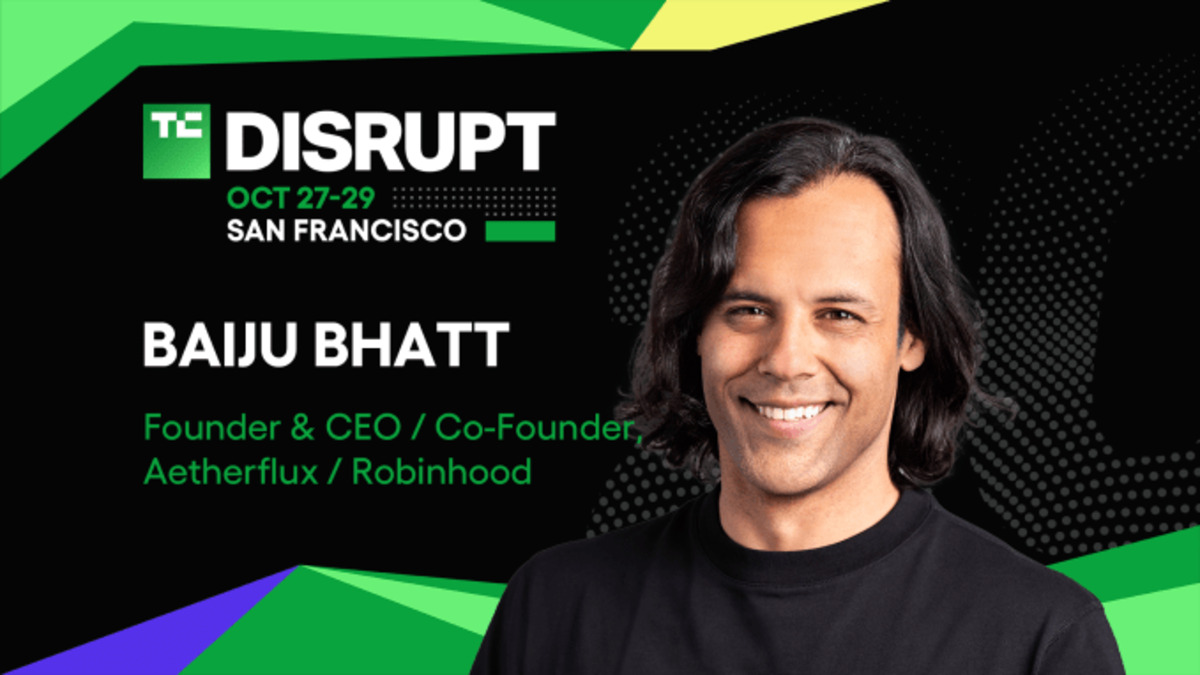 Baiju Bhatt, who previously co-founded Robinhood, is now betting on orbital AI compute as the next infrastructure play.
Source: techcrunch.com
Baiju Bhatt, who previously co-founded Robinhood, is now betting on orbital AI compute as the next infrastructure play.
Source: techcrunch.com
The Technical Bet
The core idea is tighter integration than anyone has attempted. Traditional orbital compute ventures treat the data center as a payload: build a satellite, put it on a rocket, hope the launch provider has capacity. Cowboy Space builds the data center directly into the rocket's second stage. The two components share structure, power, and thermal design from day one.
"The rocket and the data center are a single design from day one," Bhatt said. "It's a first-principles departure from the traditional constellation model."
Each satellite runs NVIDIA's Space-1 Vera Rubin Modules - a radiation-hardened variant of the Vera Rubin GPU architecture, produced in partnership with NVIDIA's accelerated computing division. One satellite produces roughly 1 megawatt of compute capacity, drawing power from onboard photovoltaic arrays. At 20,000 to 25,000 kilograms per vehicle, these are large satellites by current standards.
The comparison with Starcloud, which raised $170 million at a $1 billion valuation in March 2026, is instructive. Starcloud placed a H100 GPU in orbit and demonstrated the category was technically viable. Cowboy Space is arguing that viability at small scale doesn't solve the economic problem: if every satellite is dependent on a launch contract with SpaceX or Blue Origin, the launch providers capture the margin.
| Company | Total Raised | Valuation | Capacity Target | Launch Strategy |
|---|---|---|---|---|
| Cowboy Space | $365M | $2B | 1 MW per satellite | Own rocket (2028) |
| Starcloud | $170M | ~$1B | H100 per satellite | Third-party launch |
| SpaceX/Anthropic | - | $1.75T IPO target | Multi-GW orbital TBD | SpaceX fleet |
Who Benefits
The near-term winners are AI labs that can't get enough GPU capacity on the ground. Terrestrial data centers face permitting delays, power grid constraints, and cooling costs that compound as rack density rises. An orbital facility sidesteps all of them. Cooling in space is a solved problem; sunlight is free; there's no NIMBYism in low Earth orbit.
NVIDIA benefits twice over: it gets a new market for its most capable accelerators, and the Space-1 Vera Rubin collaboration gives it a presence in a compute segment that competitors haven't entered. The relationship also gives Cowboy Space an implicit endorsement that'll carry weight with prospective customers.
Index Ventures gets a clean narrative. The firm is writing a check into the only orbital AI compute startup that controls its own launch vehicle. If this category grows - and the $37 billion in AI infrastructure funding that poured into deals in April 2026 alone suggests the capital is there - Index is positioned at the production bottleneck.
Who Pays
The skeptical read isn't wrong, and Bhatt would be the first to acknowledge it. Building rockets is hard. Orbital Mechanics 101 dictates that rockets fail at higher rates than their backers project, and first-launch schedules routinely slip by 12 to 18 months. Cowboy Space is a <2-year-old company promising a first orbital demo by late 2026. The timeline is aggressive.
The unit economics also require scrutiny. Terrestrial GPU compute is already expensive. Orbit adds radiation hardening (the Space-1 modules are custom silicon), launch costs, and insurance against the event that a $300 million payload decays out of orbit. Latency compounds the issue: even in low Earth orbit, round-trip signal delay runs around 20 milliseconds. Cowboy Space's satellites aren't suited for real-time inference serving. They're positioned for batch training workloads that can tolerate variable latency - a narrower market than the headline "AI compute" pitch implies.
The SpaceX and Anthropic compute deal struck in May, in which Anthropic took full access to the 300-megawatt Colossus 1 cluster in Memphis, shows what the alternative looks like: ground-based compute partnerships between AI labs and infrastructure operators, with no launch risk. Cowboy Space is betting that terrestrial supply eventually constrains demand severely enough that the orbital premium is worth paying. That's possible. It's not guaranteed.
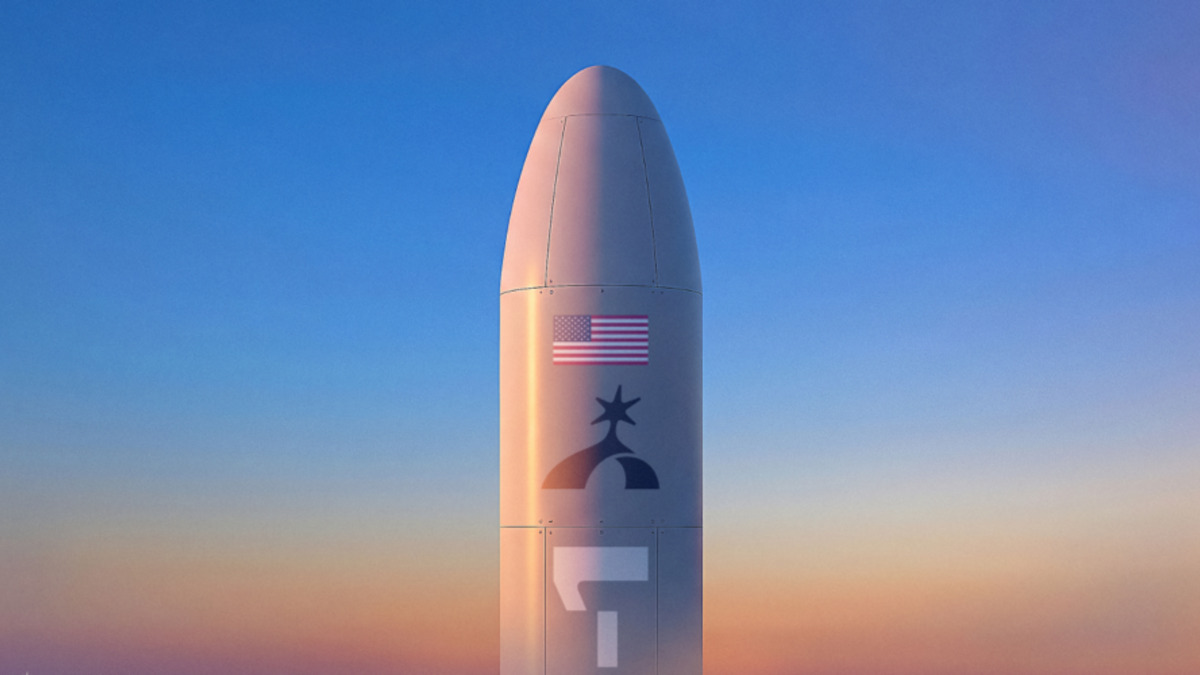 Cowboy Space integrates the data center directly into the rocket's second stage, eliminating the separation between launch vehicle and payload.
Source: payloadspace.com
Cowboy Space integrates the data center directly into the rocket's second stage, eliminating the separation between launch vehicle and payload.
Source: payloadspace.com
The Broader Picture
Bhatt framed the problem in blunt terms: the AI industry's compute needs are growing faster than terrestrial infrastructure can be permitted, built, and powered. Starcloud made the same argument at $1 billion valuation. Cowboy Space is making it at $2 billion, with a rocket program attached.
SAIC's participation is the detail worth lingering on. SAIC is one of the largest US defense and intelligence contractors. Defense agencies want compute that's sovereign, physically off US soil, and not on a shared cloud hyperscaler. Jurisdiction-free orbital data centers are a natural fit - and SAIC doesn't write Series B checks for diversification. The company hasn't disclosed any government contracts, but the check itself is a signal.
The SpaceX context matters too. The SpaceX-xAI merger created an entity with both the launch infrastructure and the AI compute ambitions to dominate orbital AI on its own terms. Cowboy Space is betting that customers won't want to depend on a single provider controlled by one of the most volatile figures in tech. Independence has a price. The question is whether enterprise AI buyers agree the price is worth it.
Cowboy Space is betting that customers won't want their orbital AI compute dependent on Elon Musk's launch manifest.
If US government agencies want a non-SpaceX route to orbital compute, they'll need a funded alternative. Cowboy Space, with $365 million in the bank and SAIC at the table, is currently the only credible one.
Bhatt took a decade to prove out Robinhood's premise that retail investors deserved the same tools as institutional ones. The orbital compute bet is faster-moving but harder: rockets have to leave the ground, satellites have to stay alive in radiation, and the customers have to believe the economics work before the first commercial mission flies. If all three align, this is a very large market. If even one doesn't, $365 million burns faster than a Merlin engine at max thrust.
Sources:
- Cowboy Space Corporation Raises $275M Series B - Yahoo Finance
- There aren't enough rockets for space data centers - TechCrunch
- Cowboy Space raises $275M to build rockets with orbital data center upper stages - SpaceNews
- Cowboy Space Raises $275 Million Series B at $2 Billion Valuation - Pulse2
- Aetherflux Rebrands as Cowboy Space - Via Satellite
- April 2026 Global Startup Funding - Crunchbase News
Last updated

