
Cohere Acquires Aleph Alpha in $20B Sovereign AI Deal
Cohere acquires Germany's Aleph Alpha at a $20B combined valuation, backed by a €500M Schwarz Group commitment, to build a transatlantic challenger for sovereign enterprise AI.
 Updated
6 min read
Updated
6 min read
Toronto-based Cohere and Heidelberg-based Aleph Alpha announced Friday they are merging to create a $20 billion transatlantic AI company targeting governments, defense agencies, and regulated industries that won't hand their data to US or Chinese providers.
TL;DR
- Cohere buys Aleph Alpha in a deal valuing the combined entity at $20B
- Schwarz Group (Lidl and Kaufland's parent) commits €500M ($600M) as lead investor in Cohere's Series E
- Cohere's Aidan Gomez leads the combined company; Toronto remains global HQ, Germany becomes European base
- Cohere's 2025 annual recurring revenue was $240M; Aleph Alpha contributed minimal revenue
- Deal requires German government and potentially EU regulatory approval before closing
The announcement came at a press conference in Berlin on April 24, attended by Canada's AI Minister Evan Solomon, Germany's Digital Minister Karsten Wildberger, Schwarz Digits chief Rolf Schumann, and Aleph Alpha co-founder Samuel Weinbach. Notably absent: Aleph Alpha's two co-CEOs.
What's in the Deal
Cohere is the acquirer in all but name. Cohere shareholders will hold roughly 90% of the combined entity; Aleph Alpha's shareholders receive around 10%. The Cohere name survives, Aidan Gomez stays CEO, and Toronto keeps the global headquarters with Germany serving as the European base, complementing Cohere's existing Paris office.
The financial anchor is Schwarz Group's €500 million commitment to Cohere's upcoming Series E round. Schwarz, the private holding company behind Lidl and Kaufland, was already an Aleph Alpha investor - this deal converts its German AI bet into a stake in a significantly larger transatlantic entity. The Series E is expected to close later in 2026.
| Metric | Cohere | Aleph Alpha |
|---|---|---|
| Valuation | $20B (post-deal) | Not disclosed |
| 2025 ARR | $240M | Minimal |
| Employees | Not disclosed | ~250 |
| Key product | Command models, Embed, Rerank | PhariaAI suite |
| HQ | Toronto, Canada | Heidelberg, Germany |
| Founded | 2019 | 2019 |
Aleph Alpha's PhariaAI platform - an enterprise-grade sovereign AI operating system with explainability and compliance built in - is a central logic for the deal. Gomez pointed specifically to Aleph Alpha's work on small language models, European-language tokenizers, and institutional relationships in the German public sector.
Who Benefits
Cohere gets the thing it most obviously lacked: a credible European footprint and government contracts it can't source from Toronto. The German military already uses Aleph Alpha's technology. The company has active contracts with Germany's Federal Ministry for Digital Affairs and State Modernisation and with the Baden-Württemberg regional government. That institutional access takes years to build from scratch.
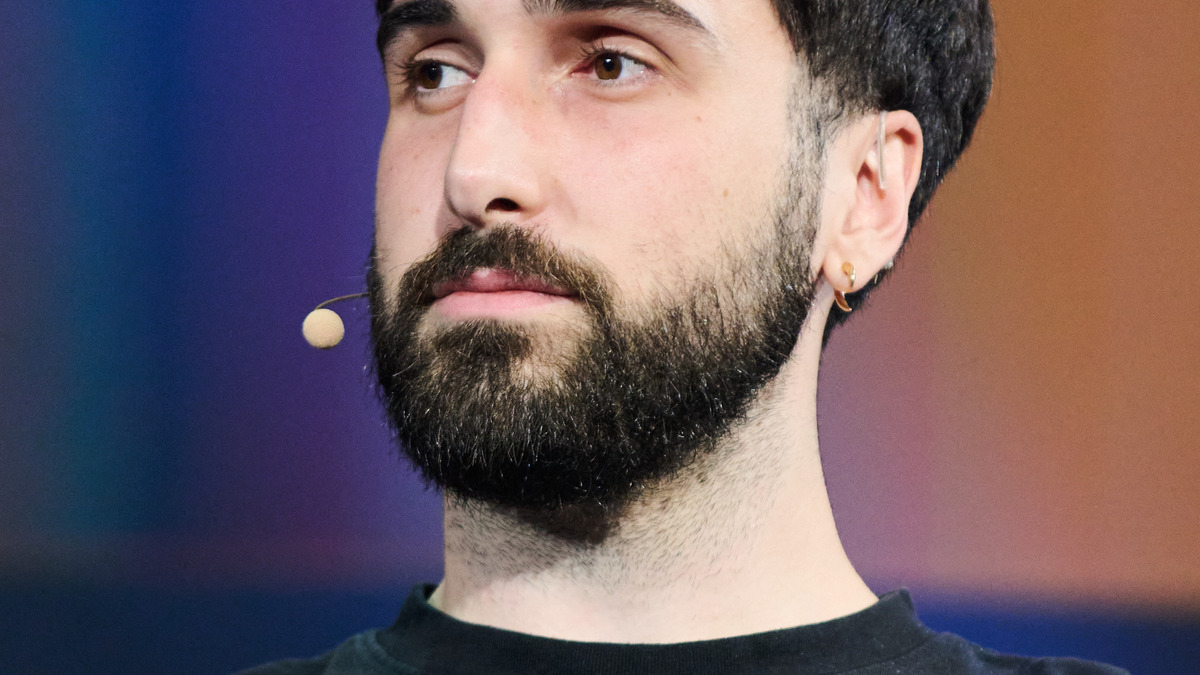 Cohere CEO Aidan Gomez, who'll lead the combined entity. Gomez co-authored "Attention Is All You Need," the 2017 paper that underpins modern LLMs.
Source: wikimedia.org
Cohere CEO Aidan Gomez, who'll lead the combined entity. Gomez co-authored "Attention Is All You Need," the 2017 paper that underpins modern LLMs.
Source: wikimedia.org
Gomez framed the move around shared values: "Their focus on small language models, European languages and tokenizers is a really complementary one to our own, which is more of a general focus on large language models." He described the partnership as "built on the bedrock of shared Canadian and German values" of privacy, security, and responsible innovation.
Schwarz Group converts a struggling standalone bet into a stake in a company with genuine scale. Aleph Alpha had produced minimal revenue alongside significant losses before this deal. Backing Cohere's Series E turns a write-down risk into a $20 billion position and keeps Schwarz central to European enterprise AI.
European governments get an option they didn't previously have: a frontier-capable AI provider that is neither American nor Chinese, and whose business model depends on data sovereignty staying a real constraint. McKinsey's March 2026 AI market analysis projected sovereign AI as a ~$600 billion segment of the broader $1 trillion-plus annual AI market. The combined Cohere is explicitly targeting that segment.
Who Pays
Aleph Alpha shareholders give up most of the upside. A 10% stake in a $20 billion company is $2 billion in paper value - but Aleph Alpha's last known valuation was reportedly around $500 million to $600 million, and the company was burning cash. The math works for investors who needed an exit. It's less obvious what Aleph Alpha employees, especially the absent co-CEOs, walk away with or toward.
Cohere takes on a company with 250 employees, minimal ARR, and a product suite that targets European public-sector buyers who move slowly. Integration risk is real. Aleph Alpha's PhariaAI products are built on Aleph Alpha's own model stack, not Cohere's Command family. Merging model architectures, go-to-market teams, and two sets of government relationships across three countries is not a clean engineering problem.
US AI labs lose ground in a market they haven't focused on. OpenAI, Anthropic, and Google have all talked about European data residency and compliance. None has a credible European institutional AI story. Cohere's deal doesn't win the sovereign AI market, but it takes a defined position in a segment the American labs are still treating as a product checkbox.
 European governments are increasingly demanding AI systems that keep data within their jurisdiction - the market Cohere and Aleph Alpha are betting on together.
Source: unsplash.com
European governments are increasingly demanding AI systems that keep data within their jurisdiction - the market Cohere and Aleph Alpha are betting on together.
Source: unsplash.com
The geopolitical backdrop matters. DeepSeek's V4 release earlier this week demonstrated that Chinese labs can now compete at frontier quality at a fraction of the price. European governments sitting on sensitive defense and civil service data have no good reason to hand it to either side of that competition. Cohere and Aleph Alpha are betting that the market for a third option is real and worth $20 billion.
The Numbers Under the Numbers
Cohere had raised roughly $1.6 billion through its Series D round in August 2025, which valued the company at $6.8 billion. A $20 billion combined valuation after this deal represents a nearly threefold increase - a multiple that requires the sovereign AI market thesis to actually take shape.
Cohere's $240 million ARR is real, but it's spread across the general enterprise market, not exclusively the high-compliance sectors the deal is supposed to accelerate. The company's Command A model - its most capable offering at the time of the deal - competes against much larger labs with more resources. The Schwarz Series E money helps, but Cohere still isn't in the same capital tier as a Google-Anthropic partnership.
The sovereign AI market is also not yet proven. Governments talk about AI sovereignty in every policy document, but procurement cycles in defense and public sector are long, politically dependent, and frequently canceled. The German government's endorsement at the Berlin press conference is meaningful. It isn't a signed contract.
What Happens Next
The deal closes subject to Aleph Alpha shareholder approval and regulatory clearance from German authorities, potentially including a review under German investment screening rules given the defense-related contracts involved. EU review is also possible.
If it clears, Cohere will have to show that two enterprise AI companies with different model stacks, different customer bases, and headquarters on different continents can operate as one. The Cohere Command A architecture and Aleph Alpha's PhariaAI will both need to keep advancing against OpenAI's Codex enterprise push and Mistral's own European positioning.
Gomez has the credibility to attempt this - he co-authored "Attention Is All You Need" before founding Cohere - but the deal's success will show in government contract signings and ARR growth, not press conferences.
The sovereign AI market will create real revenue. Whether Cohere and Aleph Alpha together are the ones who capture it is the question regulators, investors, and European procurement officials will spend the next 18 months answering.
Sources:
- Cohere acquires Aleph Alpha - TechCrunch
- Why Cohere is merging with Aleph Alpha - TechCrunch
- Cohere to acquire Aleph Alpha - BNN Bloomberg
- Cohere and Aleph Alpha merge at $20B - The Next Web
- Cohere acquires Aleph Alpha - BetaKit
- Cohere-Aleph Alpha deal sets stage for sovereign AI battle - The Logic
- Cohere and Aleph Alpha announce merger - Globe and Mail
Last updated

