
Cognition Buys Poke to Make Devin Feel Human
Cognition paid a low nine-figure sum for texting assistant Poke, its second acquisition in a year, betting that how an AI agent talks matters as much as what it can do.
 Updated
6 min read
Updated
6 min read
Cognition, the $26 billion coding startup behind Devin, announced on July 24 that it has bought Poke, the AI assistant people talk to over iMessage like a friend. TechCrunch puts the price in the low nine figures. Neither company disclosed the exact number, but the shape of the deal isn't subtle: Cognition is buying a personality, not a technology stack it couldn't build itself.
It's also the second time in a year Cognition has bought its way into a product category rather than engineer one from scratch.
TL;DR
- Cognition picked up The Interaction Company of California, maker of the Poke texting assistant, for a sum TechCrunch describes as "low nine figures"
- Poke had raised $25 million total and was last valued at $300 million in April 2026, up from a $100 million seed valuation the previous September
- The deal follows Cognition's July 2025 purchase of Windsurf's remains for roughly $250 million after Google's reverse-acquihire of its leadership
- Cognition wants Poke's conversational style folded into Devin, its enterprise coding agent, arguing that how an agent talks is becoming as important as what it can do
- Poke exchanged more than 100 million messages in three months but was, by its own team's account, expensive to run and not yet profitable
A Rollup, Not a Single Deal
Cognition raised more than $1 billion at a $26 billion valuation in May, up from $10.2 billion just eight months earlier. Revenue grew 13-fold over the same year to $492 million in annualized terms, with Devin now writing 89% of Cognition's own code and running in production at Citi, Goldman Sachs, Mercedes-Benz, and the US Army. That's the balance sheet of a company that can write a nine-figure check without blinking, and Poke is the second target it has pointed that checkbook at.
The first was Windsurf. When Google poached Windsurf's CEO and CTO in a $2.4 billion reverse-acquihire licensing deal in July 2025, Cognition moved in 72 hours to buy what remained: the product, the brand, and roughly $82 million in ARR from more than 350 enterprise customers, for a price estimated around $250 million. Combined enterprise revenue jumped more than 30% in the months after that deal closed.
The Money, Side by Side
| Cognition | Poke | |
|---|---|---|
| Founded / launched | Founded November 2023 | Public launch September 2025 |
| Latest valuation | $26 billion (May 2026) | $300 million (April 2026) |
| Total funding raised | $1B+ Series D round alone | $25 million total |
| Revenue signal | $492M ARR, up 13x in a year | Not profitable, per the founders |
| Flagship product | Devin, AI coding agent | Poke, iMessage/SMS/WhatsApp assistant |
| This deal | Acquirer | Acquired for "low nine figures" |
Poke's arc looks strong on paper. Founders Marvin von Hagen and Felix Schlegel, who previously built a tunnel-boring machine that won one of Elon Musk's engineering competitions, raised a $15 million seed at a $100 million valuation in September 2025, then $10 million more at $300 million valuation seven months later. In June, Poke became the first AI agent approved for Apple's Messages for Business platform. None of that changes the fact that a company valued at $300 million eight months ago just sold for what could be roughly the same number, or somewhat more, depending on where in the "low nine figures" range the real price sits.
Why Cognition Wanted a Chat App
Cognition's public logic is about tone, not technology. Devin is built for engineers who assign it a Slack message or a GitHub ticket and expect a plan back. Poke was built for the opposite: a text-first assistant that messages users first, follows up without being asked, and handles email, scheduling, and reminders through the same thread you'd use to talk to a person.
"Poke is a personal agent that lives in your texts. It messages you first, follows up with you, and feels less like software and more like a friend," Cognition wrote in its announcement.
Cognition co-founder Scott Wu framed the fit around how coding itself is starting to feel: "That's exactly how working with Devin should feel, and now we get to build it together." Von Hagen's team had made a similar case internally, arguing that when an AI colleague can make a joke, users treat the interaction as collegial rather than robotic. Wu and Cognition co-founder Walden Yan were, notably, already angel investors in Poke before this deal, giving them a financial stake in the outcome long before the acquisition talks started.
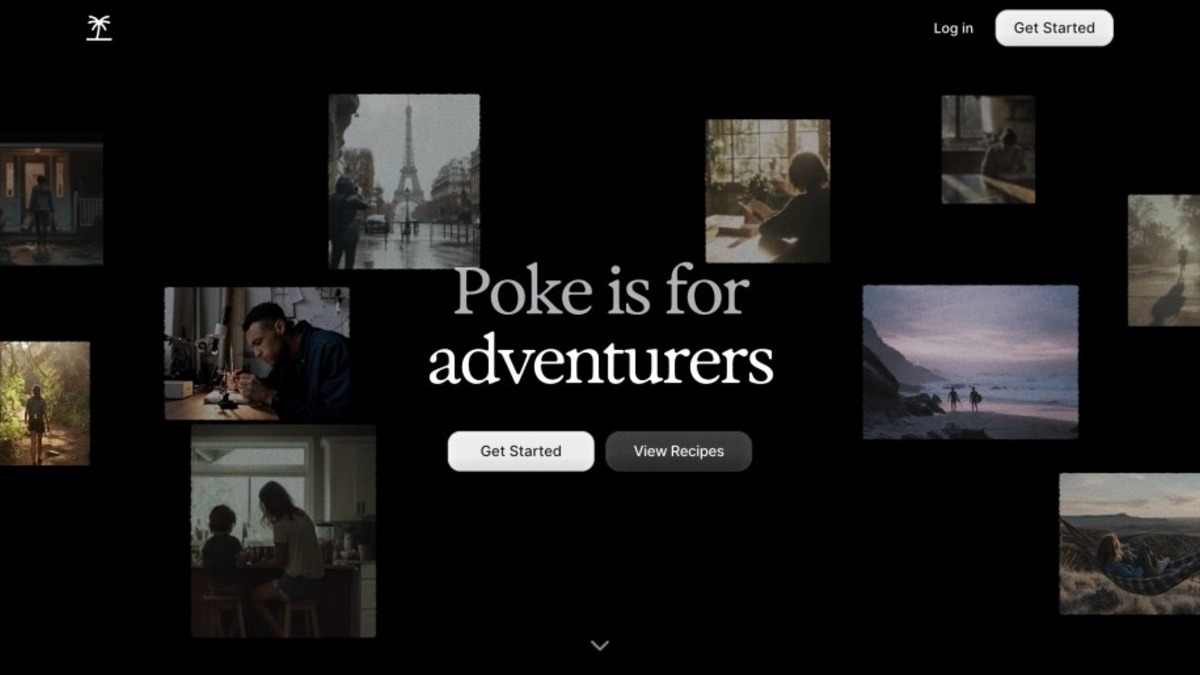 Poke's marketing leans into a consumer, lifestyle-first identity, a contrast Cognition wants to import into Devin's more corporate register.
Source: techcrunch.com
Poke's marketing leans into a consumer, lifestyle-first identity, a contrast Cognition wants to import into Devin's more corporate register.
Source: techcrunch.com
Who Benefits
Cognition gets a working conversational layer it didn't have to build, plus a validated design pattern: agents that message users unprompted rather than waiting for a task. That capability slots directly into Devin Desktop, the company's push to make agent orchestration, not code editing, the primary interface engineers work in. Poke's engineering team also gets Cognition's infrastructure and model access, which should lower the operating costs that made the standalone product hard to sustain.
Poke's investors come out ahead on paper. General Catalyst and Spark Capital backed a company that went from a $100 million seed valuation to an exit in under a year, a fast return by any measure even before accounting for whatever premium, if any, sits inside "low nine figures." Von Hagen and Schlegel, too, get to keep building the product inside a company with $492 million in revenue behind it instead of hunting for a Series B.
Who Pays
Poke's roughly 10-person team now answers to a coding company whose primary customers are enterprises like Citi and the US Army, a different audience than the consumers who made Poke a habit. Integration risk is real: plenty of acquired consumer apps have been quietly absorbed into a parent's roadmap and lost the specific quality that made them worth buying. Existing Poke users have no guarantee the standalone app survives in its current form once its conversational engine gets rebuilt into Devin's stack.
The startups Poke was competing against, in the AI-companion and personality-driven-agent space, now face one less independent path to scale. Character.AI, and the various persona projects Meta, OpenAI, and Google have each been building into their own consumer products, are the names Cognition itself cited as evidence this category matters. A market where the next-best consumer AI-personality startup gets folded into a coding company's enterprise roadmap is a market with fewer places for that idea to grow independently.
Cognition is placing the same bet twice in twelve months: that the fastest way to add a capability it doesn't have is to buy the team that already built it, rather than compete with them for users. The Windsurf deal proved that model can lift enterprise revenue. Whether Poke's personality-first design survives being folded into a $26 billion coding platform's roadmap, or gets quietly rewritten into something closer to Devin's corporate voice, is the open question this acquisition leaves for the next earnings update to answer.
Sources:
- Why Cognition bought Poke: AI personality is becoming a competitive advantage - TechCrunch
- Welcoming The Interaction Company - Cognition
- Poke makes using AI agents as easy as sending a text - TechCrunch
- Poke.com launches iMessage AI assistant with $15M seed funding at $100M valuation - Tech Startups
- Poke raises $10M, values company at $300M - Let's Data Science
- AI coding startup Cognition raises $1B at $25B pre-money valuation - TechCrunch
- Cognition to buy AI startup Windsurf days after Google poached CEO in $2.4 billion licensing deal - CNBC
Last updated

