
Cognition Raises $1B at $25B as Devin Hits $492M ARR
Cognition's $1B funding round at a $25B pre-money valuation puts Devin's $492M ARR and model-agnostic architecture under scrutiny as every major AI lab ships its own coding agent.
 7 min read
Devin is building itself. When Cognition closed a $1 billion funding round on May 27, the most striking data point wasn't the $25 billion pre-money valuation - it was operational: over 90% of the company's own codebase is now written by the AI agent it sells to enterprise customers.
That kind of claim sounds like product marketing. But when it comes from a company reporting $492 million in annualized revenue after starting 2025 at $37 million, the numbers are harder to dismiss.
TL;DR
- Cognition closes $1B round at $25B pre-money, $26B post-money valuation
- ARR surged from $37M (May 2025) to $492M - a 13x increase in about twelve months
- Devin now writes over 90% of Cognition's own code; 659 Devin PRs merged in a single week
- The company absorbed Windsurf in July 2025 after Google poached its CEO; combined ARR more than doubled within seven weeks
A Year That Changed the Math
The ARR Arc
The arc is hard to explain away. Devin's ARR was $1 million in September 2024. By June 2025 it had reached $73 million. The Windsurf acquisition that summer more than doubled that figure; the combined enterprise base then grew a further 30% in the seven weeks after the deal closed. Today Cognition is reporting $492 million in annualized revenue, with enterprise usage growing 50% month over month for the past six months. The company's public 2026 target is to cross $1 billion in ARR.
Total net burn across the company's history is reportedly under $20 million - a figure that, if accurate, makes the growth rate even harder to attribute to spending.
The Windsurf Play
The Windsurf acquisition deserves more attention than it has received. In July 2025, Google DeepMind hired Windsurf's CEO and key research leaders in a deal the company described as worth $2.4 billion in total compensation and licensing fees. Days later, Cognition bought what remained of Windsurf - the IDE product, IP, brand, and engineering team - for an amount reported at roughly $250 million.
Windsurf was already a real business: $82 million in ARR, enterprise ARR doubling quarter over quarter, more than 350 enterprise customers and hundreds of thousands of daily active users. And the customer overlap with Devin was under 5%. That means Cognition got a complementary distribution channel at a fire-sale price, while Google got the talent.
"We've been building Devin with Devin since the beginning."
- Cognition team, company blog
The result is two very different product lines under one roof: Devin as an asynchronous agent that delegates full tasks, and Windsurf as an IDE with embedded AI assistance for real-time developer decision-making.
What the Valuation Assumes
The Price Tag
A $25 billion pre-money valuation on $492 million in ARR works out to roughly a 51x revenue multiple. That's not unusual for the fastest-growing AI companies right now - but it does require sustained growth to justify.
Compare it to the nearest benchmark: Cursor, which hit a $50 billion valuation on around $2 billion in ARR, implying a 25x multiple. Cognition is pricing in a growth premium even against Cursor's extraordinary arc.
| Company | ARR | Valuation | Multiple |
|---|---|---|---|
| Cognition (Devin) | $492M | $25B (pre-money) | ~51x |
| Cursor (Anysphere) | ~$2B | ~$50B | ~25x |
| Lovable | ~$400M | undisclosed | - |
SpaceX's option to acquire Cursor for $60 billion added external validation to this market. When a rocket company is willing to pay $60 billion for an AI coding tool, venture investors building AI coding companies at $25 billion look prudent by comparison.
The Round's Architecture
The round was led by Lux Capital, General Catalyst, and 8VC. Founders Fund, Ribbit Capital, Atreides, Elad Gil, and a group of other returning investors also participated. This brings Cognition's total funding to $2.5 billion since founding in 2023.
The cap table reflects the current moment in AI investing: every major generalist firm is betting that the coding agent category produces at least one company worth hundreds of billions. Cognition is the most revenue-visible candidate right now.
 Devin 2.2 introduced a rebuilt interface that unifies planning, coding, and code review in a single workflow.
Source: cognition.ai
Devin 2.2 introduced a rebuilt interface that unifies planning, coding, and code review in a single workflow.
Source: cognition.ai
The Model-Agnostic Architecture
One detail in CEO Scott Wu's public commentary deserves scrutiny. Asked about reliance on any single underlying model, Wu stated:
"Working with the combination of models is actually much better than having to rely on any single model."
This is a strategic position, not just a technical one. Anthropic, OpenAI, and Google are all shipping competing coding agents built on top of their own models. Cognition is building an agent layer that runs across providers - which insulates it from model capability shifts, but also makes it more vulnerable if one provider decides to restrict API access to competing agents.
The company currently reports that Devin 2.2, launched in February 2026, starts up three times faster than prior versions and handles tasks across the full development lifecycle - from initial planning through PR review. According to Cognition's own engineering blog, 659 Devin pull requests were merged into Cognition's codebase in a single week during early 2026.
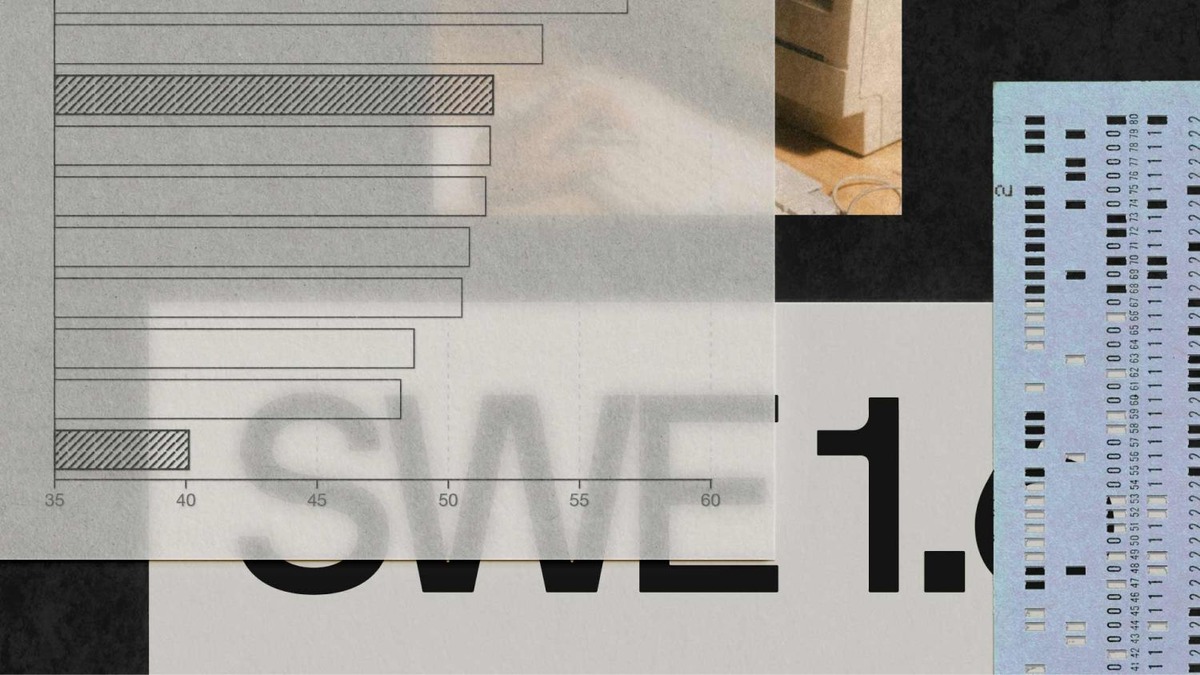 Cognition reports that enterprise usage has grown 50% month over month for six consecutive months.
Source: cognition.ai
Cognition reports that enterprise usage has grown 50% month over month for six consecutive months.
Source: cognition.ai
Who Is Buying
The customer list Cognition discloses is not made up of early-adopter startups. Goldman Sachs, Mercedes-Benz, NASA, Citi, Dell, Cisco, Ramp, Palantir, Nubank, and Mercado Libre are all named enterprise customers. These are organizations with real procurement cycles, compliance requirements, and large engineering teams.
What's remarkable about the mix is the range. Financial services (Goldman, Citi, Santander), defense-adjacent government (NASA), automotive (Mercedes-Benz), and fintech (Ramp, Nubank) are all very different buyers with very different security postures. A product that works across that range isn't winning on novelty alone.
The 50% month-over-month enterprise usage growth figure is what drives the valuation more than any other single number. At that rate, $492 million ARR becomes $1 billion within two to three quarters, assuming it doesn't slow.
What the Numbers Don't Tell You
The Comparison Problem
Cognition's "90% of our code is written by Devin" statistic requires context. Cognition was founded in 2023 and has a relatively small team. Writing 90% of the code for a 50-to-100-person company is different from writing 90% of the code for a 5,000-person engineering organization. The claim is meaningful as evidence of internal confidence in the product, but it doesn't directly predict performance at scale in a large enterprise.
For a direct comparison of Devin versus the tools competing for the same enterprise buyers, the Devin vs Cursor 2026 breakdown is worth reading. The two products have distinct strengths - asynchronous delegation versus real-time IDE assistance - and the market is probably large enough for both.
The Integration Risk
The Windsurf acquisition brought a different product architecture into Cognition's portfolio. Devin is an agent designed to work asynchronously on a delegated task; Windsurf is an IDE with inline AI assistance. These serve different use cases and different buyer personas. Integrating two products that attract developers in very different ways, while also competing against GitHub Copilot, Claude Code, and OpenAI's Codex, isn't a simple operational challenge.
Cognition has been clear that it sees both products as complementary rather than competing - Devin for long-running tasks, Windsurf for day-to-day development speed. That framing may be accurate. But it also doubles the surface area of what the company has to maintain and improve.
 Devin supports multiple parallel sessions, a key differentiator for teams running dozens of concurrent engineering tasks.
Source: cognition.ai
Devin supports multiple parallel sessions, a key differentiator for teams running dozens of concurrent engineering tasks.
Source: cognition.ai
The ARR trajectory here is not manufactured by financial engineering. Going from $37 million to $492 million in twelve months, with under $20 million in net burn since founding, means Cognition is generating real revenue from buyers with real budgets. The open question is whether a 51x revenue multiple at $25 billion is priced for the next few quarters or for the next few years - and whether the company can keep growing at 50% per month as it approaches the $1 billion ARR ceiling and encounters the enterprise deals that take longer to close.
Sources:
- TechCrunch: AI coding startup Cognition raises $1B at $25B pre-money valuation
- Cognition: Funding, growth, and the next frontier of AI coding agents
- Cognition: How Cognition uses Devin to build Devin
- SiliconAngle: Cognition in talks to raise at $25B valuation
- TechCrunch: Cognition, maker of Devin, acquires Windsurf
- The AI Insider: Cognition $1B round at $25B valuation

