
CNN Sues Perplexity in First TV Network Copyright Case
CNN filed a copyright and trademark lawsuit against Perplexity AI in federal court, becoming the first television network to take legal action against an AI search company over scraping 17,000+ stories.
 Updated
7 min read
Updated
7 min read
The first major television network to drag an AI company to federal court did not choose OpenAI, Microsoft, or Google. It chose Perplexity - the multi-billion-dollar search startup that has built its entire product around summarizing other people's journalism.
CNN filed suit on May 28 in the U.S. District Court for the Southern District of New York, accusing Perplexity of scraping more than 17,000 stories, photos, and videos without permission, then using that content to power AI-produced answers that funnel users away from CNN's website completely. The complaint adds a trademark twist: CNN also alleges that Perplexity falsely told potential subscribers that upgrading to its "Comet Plus" tier would unlock CNN's premium content - when no licensing deal between the two companies has ever existed.
TL;DR
- CNN filed suit in the Southern District of New York on May 28 - the first copyright action by any television network against an AI company
- Perplexity allegedly scraped 17,000+ CNN stories, photos, and videos without permission or payment
- CNN also claims Perplexity falsely advertised that its "Comet Plus" subscription included CNN's premium content - it does not
- Licensing talks between the companies collapsed last year; Perplexity's crawlers were subsequently blocked by CNN
- Perplexity's response: "You can't copyright facts." CNN's response: "There is no free option."
- At least five other publishers including the New York Times, Dow Jones, and Reddit have filed similar copyright suits against Perplexity
What CNN Is Claiming
The Scraping Allegation
CNN's complaint lays out three stages of alleged infringement. First, Perplexity's web crawlers harvested CNN journalism from CNN's own platforms and from third-party news aggregators. Second, that content was used in Perplexity's large language models during training and real-time inference. Third, when a user asks Perplexity about a news story, the system may return answers drawn directly from CNN's reporting - without sending any traffic back to CNN or compensating CNN for the access.
The 17,000-item figure covers articles, photographs, and video transcripts spanning multiple years of CNN's journalism. The complaint notes that CNN and Perplexity held licensing negotiations last year which failed to produce any deal. Once talks broke down, CNN blocked Perplexity's crawler. The scraping, CNN alleges, continued through third-party routes.
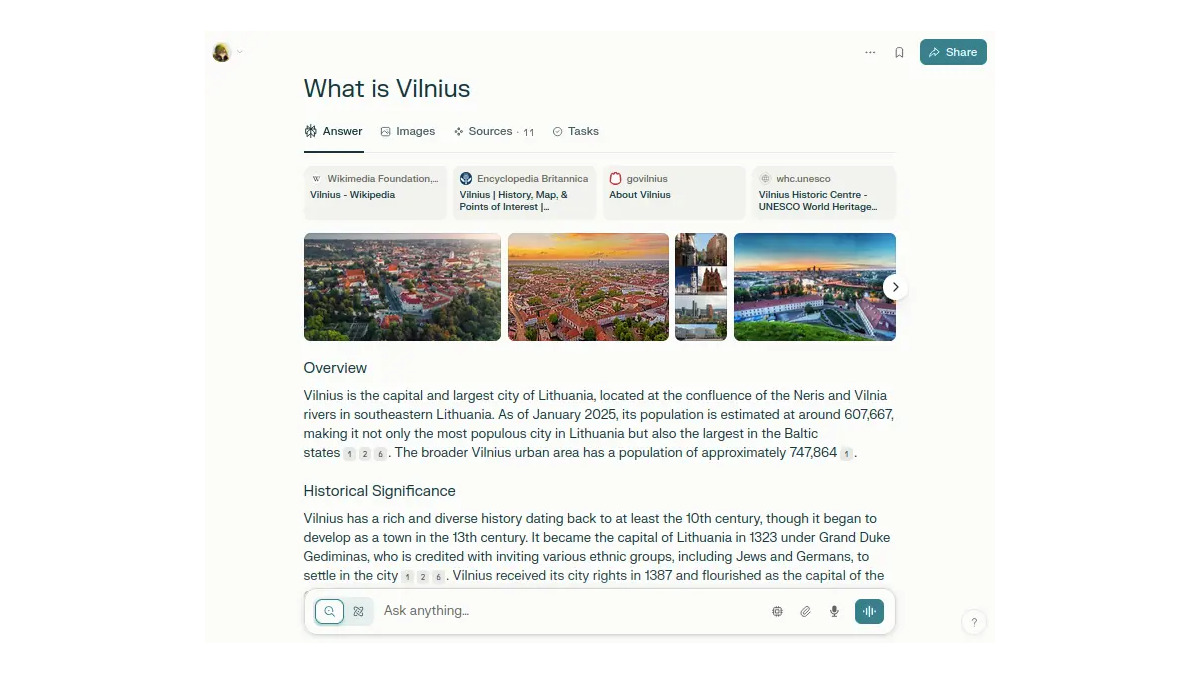 Perplexity's search interface generates answers that summarize source articles - the core behavior CNN argues crosses from fair use into wholesale reproduction.
Source: commons.wikimedia.org
Perplexity's search interface generates answers that summarize source articles - the core behavior CNN argues crosses from fair use into wholesale reproduction.
Source: commons.wikimedia.org
The Trademark Allegation
The second prong of the complaint is the more legally distinctive element. CNN alleges that Perplexity marketed its "Comet Plus" subscription tier to potential customers by implying that users would gain access to CNN's premium content. The implication of an official partnership, CNN argues, misled consumers and violated the Lanham Act on trademark grounds.
Perplexity's Comet browser has already attracted scrutiny for separate reasons - security researchers found it could be hijacked by a poisoned calendar invite to read files from a user's computer. The false-partnership marketing claim adds a commercial deception allegation to a platform already carrying significant legal exposure.
"CNN's lawsuit stands for the proposition that Perplexity, a company valued at tens of billions of dollars, should not be able to steal from entities that create original content."
- CNN statement
"Commercial operators can and must pay to make use of it. There is no free option."
- CNN spokesperson
The Legal Filing
Why SDNY
The choice of the Southern District of New York is deliberate. SDNY already hosts the New York Times' sprawling copyright litigation against OpenAI and Microsoft, which is working its way through what is becoming an AI copyright multidistrict proceeding. Filing in SDNY puts CNN's case in front of judges who have already developed a working understanding of AI training data arguments, fair use in the generative AI context, and the scale of publisher claims.
CNN is seeking statutory damages and a court injunction prohibiting Perplexity from using CNN content from now on. Unlike compensatory damages, statutory damages do not require CNN to prove the precise dollar value of its loss - a significant practical advantage in a case where the harm from traffic diversion is real but difficult to quantify down to the penny.
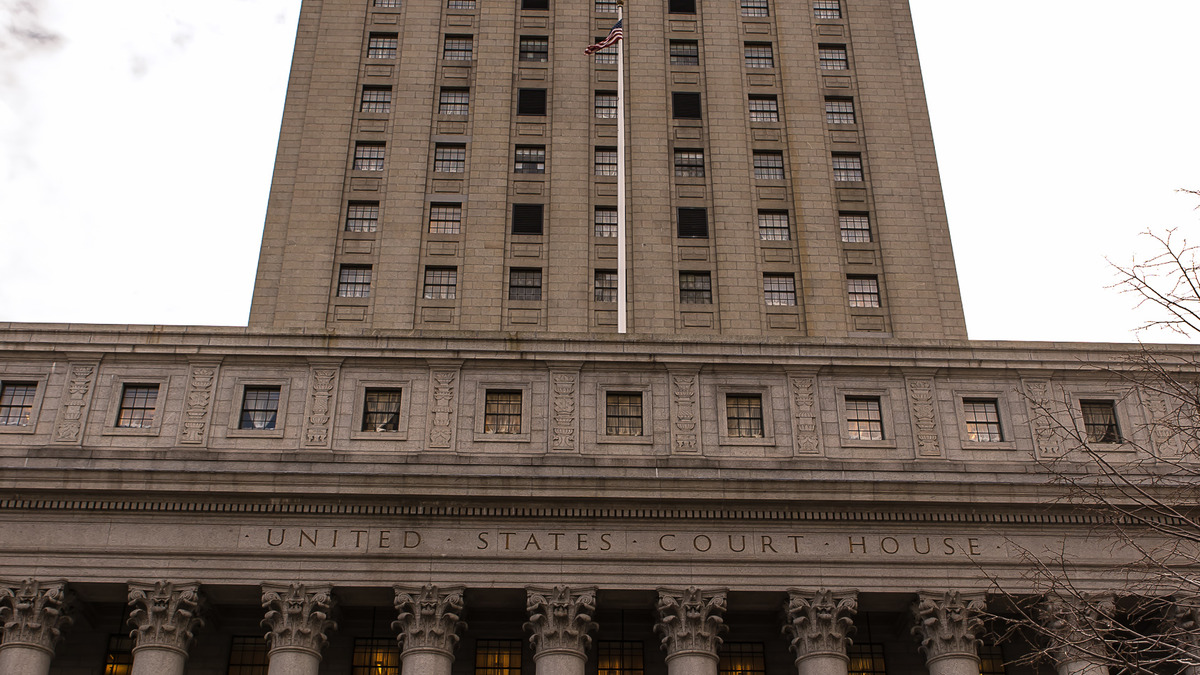 The U.S. District Court for the Southern District of New York, where CNN filed its complaint on May 28. The court is also handling the New York Times' copyright suit against OpenAI.
Source: commons.wikimedia.org
The U.S. District Court for the Southern District of New York, where CNN filed its complaint on May 28. The court is also handling the New York Times' copyright suit against OpenAI.
Source: commons.wikimedia.org
The Licensing Path Not Taken
CNN's complaint is careful to note that it has struck content licensing agreements with what it describes as "responsible industry players" - AI companies that negotiated rather than scraped. Time and USA Today both reached content deals with Perplexity. That framing is intentional. CNN's legal team is establishing for the court that there was a commercially viable path, that Perplexity was aware of it, and that Perplexity chose not to take it.
The Publisher Front
Who Else Is Suing Perplexity
CNN is not walking into court alone. The New York Times, Dow Jones, News Corp, the New York Post, the Chicago Tribune, and Reddit have each filed copyright claims against Perplexity. Reddit's case carries a particular edge: Perplexity allegedly continued scraping Reddit's content after Reddit blocked its crawler and separately licensed its data to Google for AI training purposes.
The cumulative pattern across these complaints is consistent. Publishers sent legal notice, blocked Perplexity's bot, and watched the scraping continue via third-party aggregators. What looks from the outside like aggressive legal coordination is really a series of independent publishers arriving at the same conclusion: negotiation had been exhausted.
How the Rest of the Industry Is Responding
Not every publisher has chosen litigation. Britannica and Merriam-Webster sued OpenAI for a similar pattern of alleged unauthorized training data usage, while other reference publishers took licensing deals. Anthropic settled a class-action lawsuit brought by authors for $1.5 billion in 2025, establishing a precedent that these claims can resolve at scale when defendants decide the cost of litigation beats the cost of settlement.
The AI industry's appetite for training data has been colliding with copyright holders across entertainment, publishing, and now broadcast media. Each new sector that joins the litigation adds evidence to the argument that this isn't a fringe dispute but a structural failure in how AI companies approached content licensing at scale.
Perplexity's Defense
Perplexity's response arrived in a single sentence from chief communications officer Jesse Dwyer: "You can't copyright facts."
The statement is not legally groundless. U.S. copyright law explicitly doesn't protect facts, and AI companies defending similar suits have all argued some version of the same position - that training on publicly accessible information is learning from facts rather than copying protected creative expression. The fair use argument, if it holds, would gut most of these publisher suits simultaneously.
What makes the argument more complicated in CNN's specific case is the trademark claim. Even if Perplexity's fair-use defense succeeds on the training-data copyright count, it still has to separately justify falsely advertising CNN access to its paying subscribers. Those are distinct legal fights that require distinct defenses.
The scale of the alleged copying also strains the "just facts" framing. Reproducing 17,000 specific articles - complete with structure, analysis, photographs, and video content - is a different kind of activity than extracting factual propositions from text. Legal scholars who have looked at the AI training data question have pointed to the verbatim reproduction and near-verbatim summary problem as the part of the fair-use argument AI defendants will find hardest to sustain.
The gap between "you can't copyright facts" and "you can't build a commercial product by systematically copying a news organization's entire archive" is where this case will actually be decided. Perplexity may be right that individual facts are unprotectable. The question the Southern District of New York will eventually answer is whether 17,000 of them, assembled into training datasets and real-time inference pipelines, adds up to something that copyright law does protect - and whether falsely marketing that access to subscribers constitutes a separate offense on top of it.
CNN is betting it does. The rest of the media industry is watching.
Sources:
- CNN sues Perplexity over alleged AI copyright theft - CNN Business
- CNN Sues AI Firm Perplexity, Alleging It Engaged in 'Massive Copyright Infringement' - Variety
- CNN sues Perplexity, alleging unlawful distribution of copyrighted content - Al Jazeera
- CNN Sues Perplexity for Unlawfully Distributing News Content - The Wrap
Last updated

