
Claude Max Users Say Opus 4.6 Burns Through $200/Month Plans in Under Two Hours
Developers on Anthropic's $100-$200/month Claude Max plans report that Opus 4.6's adaptive thinking and 1M token context window consume session quotas up to 9x faster than before, with some hitting limits in 15 minutes.
 Updated
12 min read
Updated
12 min read
Anthropic's release of Claude Opus 4.6 on February 5 was supposed to be a landmark moment - a 1 million token context window, adaptive thinking, and new agent teams. Instead, it triggered the third major wave of developer outrage over Claude's subscription limits in less than a year.
Within hours of the auto-upgrade rolling out to Claude Code users, Max plan subscribers paying $100-$200 per month began reporting that their usage quotas were being consumed at rates between 3x and 9x faster than with Opus 4.5. Some developers report burning through 60% of their session limit in 30 minutes of routine coding. Others say they cannot work for more than 15 minutes before hitting a wall.
The backlash has been swift, widespread, and deeply personal - these are developers whose livelihoods depend on the tool.
TL;DR
- Opus 4.6's adaptive thinking generates 2-5x more tokens per request than Opus 4.5, rapidly consuming subscription quotas
- Max 5x ($100/mo) users report session limits exhausted in 15-45 minutes vs. hours previously
- GitHub issue tracking the problem has over 533 upvotes and 1,189 comments across related threads
- Anthropic's official position: limits haven't changed, users are simply consuming more tokens with more capable models
- Root causes include adaptive thinking (always-on by default), 1M context windows with premium token pricing, and Claude Code background agents silently burning Opus tokens
- Anthropic offered a $50 free credit for extra usage, but developers call this a band-aid on a structural problem
The Numbers Don't Lie
The complaints aren't vague frustrations. Developers are reporting specific, reproducible consumption increases that paint a damning picture.
withinboredom, a Max subscriber, reported on GitHub that research tasks which previously consumed roughly 10% of a 5-hour session window suddenly ate 90% after the Opus 4.6 auto-upgrade - a 9x increase in token consumption for identical work:
"I didn't even know a new version came out until I hit 90% of my five hour session doing research that normally would have taken ~10% of my five hour limit."
milankubin documented a single request - analyzing unstaged git changes and compiling a commit message across 30-40 files - consuming 48% of a 5-hour usage window. The same operation previously cost roughly 15%, representing a 3.2x increase:
"One request, about 30-40 files to diff... Cost me 48% of 5h usage for the prompt to 'analyze unstaged work and compile a commit message.' This used to take maybe 15%? max?"
pevyhlas reported exhausting an entire Max 5x session limit in around 15 minutes:
"I have just exhausted session limit on Max 5x with Opus 4.6 in ~15 mins on what seemed like a simple task."
cperezabo, who had used Opus 4.5 for two months without ever hitting limits, now reaches them in under two hours:
"I have been working with Opus 4.5 the last two months without reaching the Max plan limit. With Opus 4.6 and similar workloads, I reach the limit in less than 2 hours."
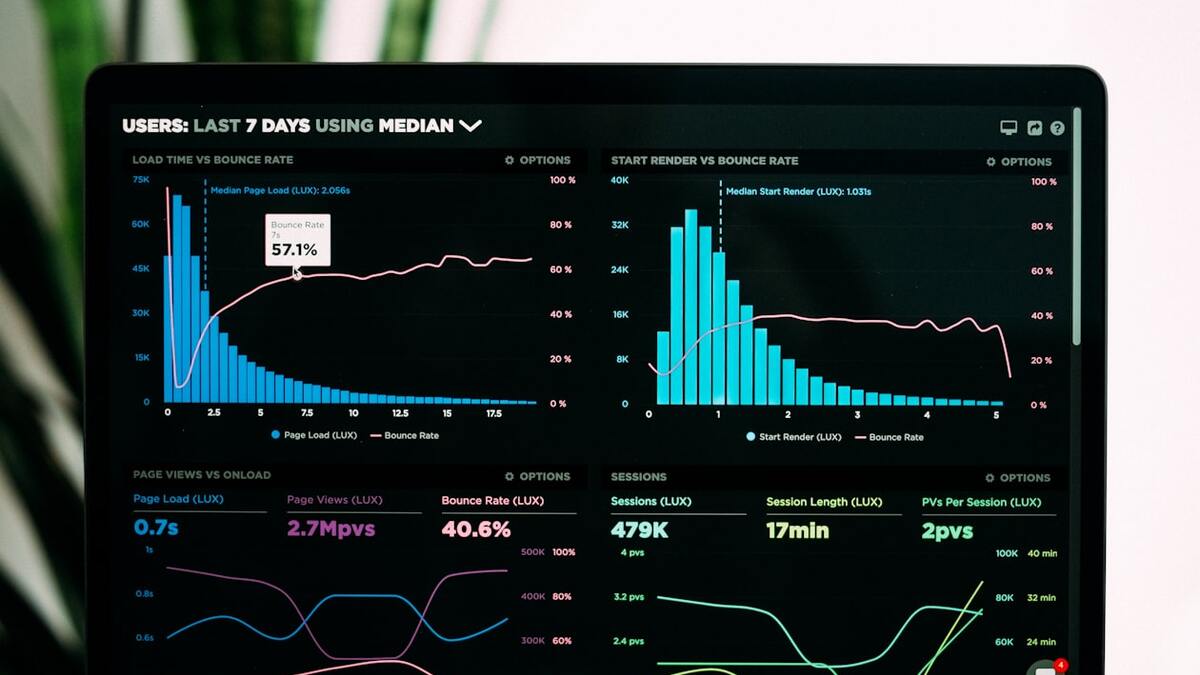 Developers report Opus 4.6 consumes session quotas 3-9x faster than Opus 4.5 for identical workloads.
Twitter Erupts
The frustration has been especially visible on X/Twitter, where developers who pay premium prices expect premium reliability.
@Dallenpyrah, a Max 20x subscriber paying $200/month, posted within 12 hours of the launch:
"Not even 12 hours and already at 20% weekly usage ON the $200 max plan [...] This model is token HUNGRY and may not be worth it if I run through limits like that."
@SeanDoesLife captured the ambivalence many developers feel - the model is good, but the economics don't work:
"After a full day of using Claude Code with Opus 4.6, the difference feels minimal [...] But man, 4.6 chugs tokens. My Claude Max account copped a beating."
@atla_ highlighted the auto-upgrade problem - developers didn't opt into this token consumption:
"Claude code just upgraded to 4.6 without me changing anything. And it freaking eating all the tokens!"
@lukekim noted the limits are even tighter than expected across platforms:
"Opus 4.6 already rate-limited across @GitHubCopilot and @claudeai. Seems to have much lower limits than Opus 4.5."
@VQuinones put a number on it:
"Opus 4.6 can use 20-30% more tokens. It is not as efficient as predecessor models."
And @Jungle_Fren summed up the before-and-after in five words: "I never hit the limit with Opus 4.5."
Why Opus 4.6 Is So Much Hungrier
The token consumption explosion isn't a bug - it is an architectural consequence of three design decisions in Opus 4.6.
Adaptive Thinking Is Always On
Opus 4.6 replaced the binary extended thinking toggle with adaptive thinking, where the model dynamically decides when and how much to reason through a problem. At the default "high" effort level, Claude will almost always engage its thinking process, creating substantially more output tokens.
The key detail: thinking tokens are billed as output tokens and count against subscription quotas. Output tokens are the expensive ones - $25 per million tokens on the API, compared to $5 per million for input tokens. Every time Claude "thinks," that internal reasoning burns through quota at output-token rates even though the user never sees those tokens.
Artificial Analysis benchmark data quantifies the impact:
| Configuration | Tokens Generated | vs. Average |
|---|---|---|
| Opus 4.6 (high effort, non-reasoning) | 11M tokens | 2.8x more than model average |
| Opus 4.6 (max effort, adaptive reasoning) | 58M tokens | 4.8x more than model average |
Back-to-back testing on Reddit's r/ClaudeCode showed each Opus 4.6 prompt consuming 6-8% of session quota, compared to roughly 4% for Opus 4.5 - a consistent 50-100% increase per interaction.
The 1 Million Token Context Window
Opus 4.6 introduced a 1 million token context window, five times larger than the previous 200K limit. Larger contexts mean more tokens processed per request. Most importantly, requests passing 200K input tokens trigger premium pricing at $10/$37.50 per million tokens (input/output) - double the standard rate.
For Claude Code sessions that accumulate large contexts through tool calls, file reads, and conversation history, this means token consumption accelerates as the session progresses.
Background Agents Silently Burning Opus Tokens
A community investigation by user gerrywastaken on GitHub issue #17084 uncovered that Claude Code v2.1.0 changed how background agents operate. The tool auto-spawns three background agents every time it opens. Previously, these used the lightweight Haiku model. Since v2.1.0, two out of three background agents switched to Opus - the most expensive model tier.
This happens even without any active conversation. Simply opening Claude Code begins consuming Opus quota invisibly. Related issue #16856 documented 4x faster token consumption since v2.1.1.
 GitHub issues tracking Claude Code quota complaints have accumulated over 1,700 combined comments across multiple threads.
A Recurring Pattern
The Opus 4.6 backlash isn't an isolated incident. It is the third major wave of developer anger over Claude usage limits in eight months.
July 2025: The Silent Tightening
Anthropic quietly reduced Claude Code limits without notifying users. $200/month Max subscribers suddenly hit walls mid-session. TechCrunch broke the story. VentureBeat ran the headline: "Anthropic throttles Claude rate limits, devs call foul."
Anthropic later announced formal weekly rate limits, claiming they would affect "less than 5% of subscribers."
January 2026: The Holiday Hangover
Over the Christmas holiday, Anthropic doubled all usage limits as a "gift" to subscribers. When the bonus expired on January 1, the return to normal limits felt like a reduction. The Register covered the fallout. GitHub issue #16157 became the primary complaint thread, amassing 533 upvotes and 1,189 comments.
The complaints were visceral. sparkwell-dev wrote:
"Please, for the love of god, fix this - in fact, do testing before implementing changes... This isn't the first time, or even the second recent time... I'm about ready to pull the plug on my Max plan. My patience is really thin, now. This is my livelihood - not a hobby or side project."
An anonymous user who contacted The Register claimed analysis of Claude Code logs showed a roughly 60% reduction in effective token limits, separate from the holiday bonus.
February 2026: Opus 4.6 Makes It Structural
The current wave is different because the problem isn't a temporary limit change or holiday promotion. It's baked into the model architecture itself. Opus 4.6 simply uses more tokens by design. Unless Anthropic restructures how subscription quotas account for adaptive thinking tokens, the problem will persist for every future model upgrade.
What You Actually Get For $200/Month
Anthropic's subscription tiers offer progressively larger usage multipliers, but the exact token budgets remain deliberately opaque:
 Claude Max subscribers pay $100-$200/month for usage limits that Anthropic intentionally keeps vague.
| Plan | Price | Usage Multiplier | Advertised Weekly Hours |
|---|---|---|---|
| Pro | $20/mo | Baseline | 40-80h Sonnet |
| Max 5x | $100/mo | 5x Pro | 140-280h Sonnet, 15-35h Opus |
| Max 20x | $200/mo | 20x Pro | 240-480h Sonnet, 24-40h Opus |
The weekly hours are marketing numbers based on "average" usage. In practice, with Opus 4.6's adaptive thinking consuming 3-5x more tokens per request, those 15-35 hours of Opus on the $100 plan can evaporate in a matter of days for active developers.
Usage is governed by a dual-layer system: a 5-hour rolling session window controlling burst activity, and a 7-day weekly ceiling capping total usage. The /cost command in Claude Code doesn't show token consumption for subscription users - you only get a vague percentage bar. Several users have complained that this opacity makes it impossible to budget their usage or understand what triggered a limit.
Anthropic's response to the Opus 4.6 launch included a $50 free credit for extra usage (valid 60 days), which allows subscribers to continue working at API rates after hitting their included limits. Developers have called this a band-aid solution.
Anthropic's Response: "We Haven't Changed Anything"
Anthropic has maintained a consistent position across all three waves of complaints: the limits haven't changed.
In a pinned response on GitHub issue #16157, Anthropic employee ThariqS wrote in January:
"I want to clarify and confirm that we have not at all changed our rate limits since Opus 4.5 launched, and we have looked extensively to see if there were bugs in how our usage was being calculated... We've now investigated quite a few accounts and we have also seen that people are using more tokens with Opus 4.5 as it runs longer and does more work for them than before."
When The Register asked for comment, Anthropic dismissed claims about usage reductions as "unfounded" and attributed complaints to the end of the holiday bonus.
On the Opus 4.6 GitHub issue (#23706), filed February 6, there has been no official Anthropic response as of February 22.
The company's position creates a fundamental tension: if the limits haven't changed but more capable models use more tokens by design, then every model upgrade effectively reduces the value of fixed-price subscription plans. The $100/month that bought comfortable all-day Opus 4.5 usage now buys a fraction of that with Opus 4.6 - not because the price changed, but because the product did.
User Reviews Tell the Full Story
Trustpilot reviews from February 2026 paint a picture of a service that paying customers increasingly see as adversarial:
Matteo Toscano (1 star, Feb 12): "It's a Scam... basically the same of a free subscription with the only difference that you can use Opus 4.6 which drains your messages in 20/30 minutes... Shameless company."
Teresa (1 star, Feb 10): "During a single work session... I hit my usage limit and was forced to purchase extra usage just to finish."
Louis Pieterse (1 star, Feb 11): "You pay for it and only get a handful of extra prompts, then they lock you out for hours anyway."
Sjoert Kershoefen (1 star, Feb 16): "Bought Claude for $20, sent 1 message request and it instantly hit my limit and had to wait 4 hours."
Workarounds Developers Are Using
While Anthropic stays silent on the Opus 4.6 issue, developers have been sharing workarounds:
Pin to Opus 4.5 to avoid the auto-upgrade by adding to your Claude Code settings:
{
  "model": "claude-opus-4-5",
  "env": {
    "ANTHROPIC_DEFAULT_OPUS_MODEL": "claude-opus-4-5-20251101"
  }
}
Reduce thinking effort using the /effort command in Claude Code to lower adaptive thinking from the default "high" to "medium" or "low," which markedly reduces output token generation.
Set a thinking token cap with MAX_THINKING_TOKENS=8000 in your environment to prevent runaway reasoning.
Use /clear between tasks to prevent context accumulation that inflates token counts over long sessions.
Switch to API billing instead of subscription to get transparent per-token pricing without hard cutoffs - though at an average of $6 per developer per day (and potentially much more with Opus 4.6), the economics are not necessarily better.
The Bigger Problem
The pattern across all three waves of complaints points to a structural issue in how AI subscriptions are priced. Fixed-price plans promise unlimited-feeling access, but the underlying cost of inference scales with model capability. Every time Anthropic releases a more capable model - one that thinks more deeply, processes longer contexts, or spawns more agent subtasks - the gap between what users expect and what their subscription actually buys gets wider.
OpenCraft AI and multiple Medium analyses have noted that power users - the ones most likely to pay $200/month - are also the ones most likely to trigger aggressive limit enforcement. The unlimited promise attracts exactly the users who can't be served at that price point.
Some developers are already looking elsewhere. Multiple users in the GitHub threads report switching to ChatGPT Plus, noting they "never had to worry about hitting a limit." VentureBeat ran a pointed comparison: "Claude Code costs up to $200 a month. Goose does the same thing for free."
Whether Anthropic addresses the Opus 4.6 token consumption issue directly, adjusts its subscription quotas to account for more token-hungry models, or simply waits for the backlash to cool, one thing is clear: the era of comfortable all-day AI coding for a flat monthly fee is over. The question is whether developers will accept that new reality or vote with their wallets.
Links:
- GitHub: Opus 4.6 token consumption issue #23706
- GitHub: Max subscription limits issue #16157 (533+ upvotes, 1,189+ comments)
- GitHub: Opus 4.5 limit reduction issue #17084
- The Register: Claude devs complain about surprise usage limits
- TechCrunch: Anthropic tightens usage limits without telling users
- VentureBeat: Anthropic throttles Claude rate limits
- Anthropic: Introducing Claude Opus 4.6
- Claude Pricing Plans
- Adaptive Thinking Documentation
- Artificial Analysis: Opus 4.6 Benchmarks
Last updated

