
Meta Restricts Claude Code Over Training Data Leakage
Meta has restricted engineers from using Claude Code and Codex, citing training data distillation risk. The policy change exposes a structural mismatch between how AI coding tools work and what enterprise AI labs can tolerate.
 6 min read
Meta has stopped its engineers from using Claude Code and OpenAI's Codex. Not because of a security breach. Not because the tools don't work. Because of what they do when they do work.
The restriction, confirmed by internal communications reviewed by multiple outlets and reported today, is in effect across Meta's engineering teams as of June 2026. The concern is specific: AI coding tools send chunks of your codebase to external servers, and for a company building its own frontier models, that creates a contamination risk Meta's security team decided it can no longer accept.
TL;DR
- Meta restricts Claude Code and Codex to block training data distillation risk
- AI coding tools send code context to Anthropic and OpenAI servers by design
- Anthropic's August 2025 ToS update allows opt-in training on API data
- Meta's internal memo warned outputs could trigger "serious escalations with partner companies"
- The restriction mirrors Microsoft's June pullback but for a completely different reason
How Claude Code Handles Your Code
Claude Code is a terminal-based coding agent that works by reading your local environment before sending it to the cloud. This is not a bug or an edge case - it's the architecture that makes it useful.
What Gets Collected
When you run a Claude Code command, the tool's context-gathering layer reads your filesystem. Open files, recent git diffs, directory structure, shell history, test output - anything the agent decides is relevant to the task gets serialized into a prompt. For a straightforward task like "fix this function," the payload might be a few hundred lines of code. For debugging a failing training run, it could be the entire pipeline configuration, the data loading scripts, and the model checkpoint logic.
# A simplified view of what Claude Code sends for a debugging session:
# - Current working directory tree (up to configured depth)
# - Contents of all open/referenced files
# - Recent git log entries
# - Shell environment variables (filtered by config)
# - stdout/stderr from the failing command
That entire payload leaves your machine and travels as an API request to Anthropic's servers.
The Enterprise Mismatch
For individual developers working on personal projects or open-source code, this flow is unproblematic. For a Meta engineer debugging a Llama model training script, it means proprietary model architecture details, internal dataset processing code, and training infrastructure configurations are sitting in an API request at a direct competitor's infrastructure.
Claude Code's enterprise tier includes zero-data-retention agreements - Anthropic commits not to use API inputs for training under those contracts. OpenAI offers equivalent provisions for enterprise Codex users. On paper, the data exposure risk should be manageable.
Meta's security review concluded it wasn't.
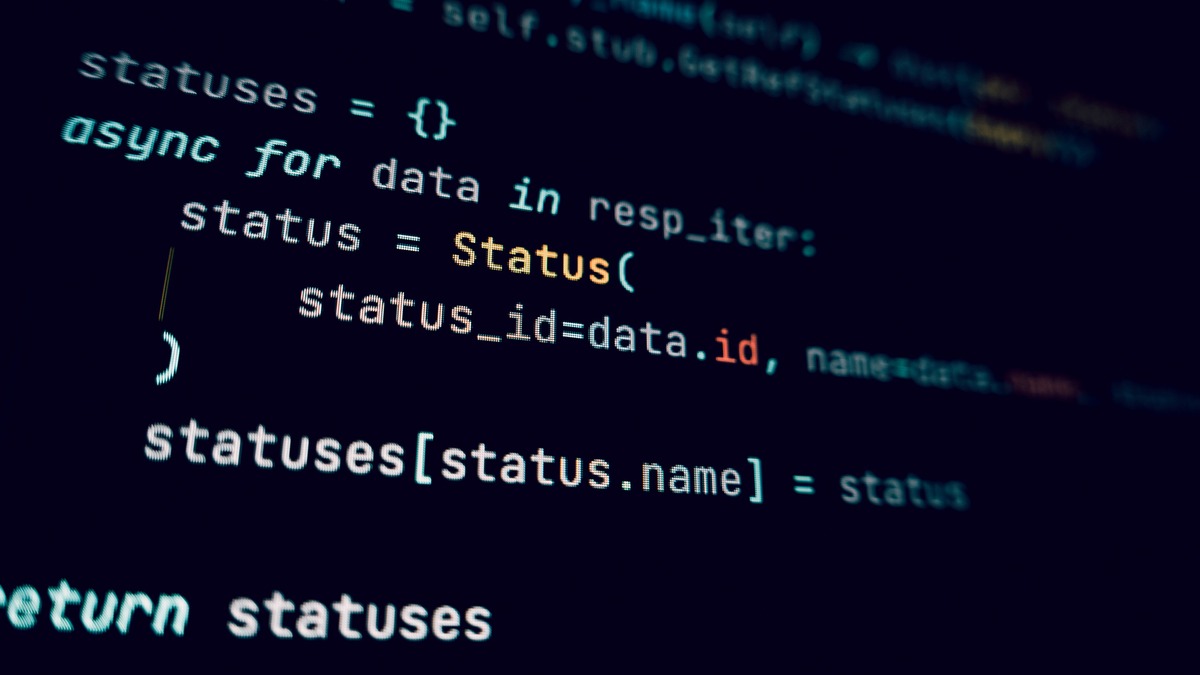 AI coding tools like Claude Code gather full filesystem context before sending it to cloud APIs - a design that creates data exposure risk for companies building their own models.
Source: pexels.com
AI coding tools like Claude Code gather full filesystem context before sending it to cloud APIs - a design that creates data exposure risk for companies building their own models.
Source: pexels.com
Meta's Two Problems
Meta's security concern isn't really about Anthropic reading Meta's code. The company's model training team identified something structurally harder to contain.
The Distillation Problem
Meta builds and ships AI models. Its engineers use those models internally, and model outputs circulate through internal tooling, notebooks, code reviews, and documentation. If an engineer uses Claude Code to write a function, and that function ends up committed to a training data pipeline, then Claude's reasoning has entered Meta's training data.
This is model distillation at the organizational level - not the formal academic kind, but an informal version that's harder to detect and harder to audit. Meta's internal memo was direct about the risk: using Claude Code or Codex outputs in ways that "seep into our training data could trigger serious escalations with partner companies." That's not legal boilerplate. It's an acknowledgment that the outputs of a competing model could influence Meta's own model weights.
The Terms-of-Service Timeline
Anthropic updated its terms of service in August-September 2025 to allow opt-in training on API data. The update was framed as a product improvement mechanism, letting Anthropic use API interactions to refine Claude with user consent. For consumer users, the framing is reasonable. For Meta - which operates enterprise API contracts with zero-retention provisions - the opt-in framing still creates ambiguity.
Codex operates under equivalent OpenAI terms, which have their own provisions around API data use. The common thread across both tools: the legal protections are strong in principle, but the data still travels to a competitor's infrastructure, and the audit trail back to "did any of our code influence a competitor's model" is effectively nonexistent.
| Data Type | Sent to API | Covered by Zero-Retention | Distillation Risk |
|---|---|---|---|
| Open-source code references | Yes | Yes | Low |
| Internal model training scripts | Yes | Yes (enterprise tier) | High |
| Proprietary architecture configs | Yes | Yes (enterprise tier) | High |
| Claude-created code committed internally | Indirect | No | Critical |
| Codex outputs in internal notebooks | Indirect | No | Critical |
The bottom row is what Meta can't protect against with a contract. A zero-retention clause prevents Anthropic from training on your API input. It does nothing to prevent a Claude Code output from entering Meta's own training pipeline through normal engineering workflows.
Where It Falls Short
Claude Code's design makes the tradeoff explicit: the tool is most useful when it has the most context, and gathering that context requires sending your code off-premise. There's no version of the current architecture that delivers Claude's agentic quality without the data exposure.
Local model alternatives exist - open-source coding agents can run entirely on-device - but the capability gap between locally-deployable models and Claude's performance on complex debugging and refactoring tasks remains real. Meta's engineers didn't stop using AI coding tools because they want to code without AI assistance. They're being asked to use tools with a narrower context window and lower task completion rates.
 AI coding tools' cloud-dependent architecture creates an inherent tension with enterprise IP containment requirements.
Source: pexels.com
AI coding tools' cloud-dependent architecture creates an inherent tension with enterprise IP containment requirements.
Source: pexels.com
The cost story got there first. Microsoft pulled Claude Code licences from its Experiences and Devices division in mid-June, driven by token costs that Uber's engineering team had already demonstrated blow through enterprise budgets in months - as we reported two weeks ago.
Meta's restriction is a different problem with the same symptom: the enterprise deployment model for cloud-native AI coding tools doesn't work cleanly for companies that build AI models themselves. The cost issue is a pricing problem that token caps can manage. The distillation concern is a structural one that contractual protections can't fully address.
On-premise Claude deployment would resolve the data exposure issue completely. Anthropic doesn't offer that. Until it does - or until local models close the capability gap - organizations with their own model training pipelines will keep writing their own restrictions.
Sources:
- Meta restricts engineers' use of Claude Code and Codex to protect AI training data - CryptoBriefing, June 29, 2026
- Microsoft's quiet Claude Code retreat and the real cost of enterprise AI - The Next Web, May 25, 2026
- Uber burned through its entire 2026 AI budget in four months - Startup Fortune, May 26, 2026
- GitHub Copilot is moving to usage-based billing - GitHub Blog, June 2026

