
Cisco Bets $9B on AI Networking, Cuts 4,000 Jobs
Cisco reported record quarterly revenue of $15.8B and immediately announced 4,000 layoffs, raising its FY2026 AI infrastructure order target from $5B to $9B.
 6 min read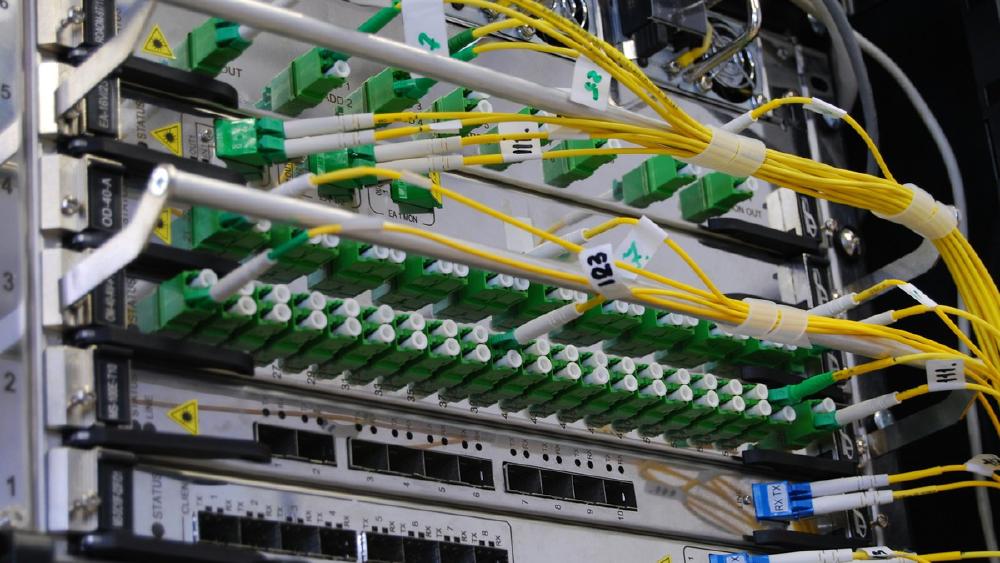
Cisco reported its highest quarterly revenue ever - $15.8 billion, up 12% year over year - and announced 4,000 layoffs on the same day. The company raised its FY2026 AI infrastructure order target from $5 billion to $9 billion, with $5.3 billion already booked. Stock jumped roughly 20% on the news.
TL;DR
- Record Q3 FY2026 revenue of $15.8B, up 12% year over year
- 4,000 jobs cut - the fourth major restructuring since early 2024
- AI infrastructure orders raised from a $5B target to $9B for FY2026
- Data center switching orders up 40%+; networking product orders up 50%+ year over year
- Hyperscaler customers include Microsoft, Google, Amazon, and Meta
What Cisco Is Claiming
The pitch is that Cisco has found its AI moment. Networking is the unglamorous layer that sits under every AI cluster - high-speed switching fabrics, optics, silicon - and hyperscalers are buying it in volume. CEO Chuck Robbins summarized the stance: "Companies that will win in the AI era will be those with focus, urgency, and discipline."
| Cisco's Claim | The Number | The Catch |
|---|---|---|
| Record revenue driven by AI | $15.8B (+12% YoY) | Fourth restructuring in 18 months |
| AI infrastructure orders booming | $5.3B booked so far in FY2026 | Target revised upward 80% from original $5B estimate |
| Data center switching surging | 40%+ YoY order growth | Orders, not revenue - booking timing differs |
| Networking products in demand | 50%+ YoY order growth | Orders lag deliveries and revenue recognition |
| Reallocating to "silicon, optics, security, AI" | $9B FY2026 target | 4,000 jobs cut to fund it |
The scale of the hyperscaler demand is real. Microsoft, Google, Amazon, and Meta are building AI training and inference clusters that need low-latency, high-bandwidth interconnects. Cisco makes the switches and optics that move data between GPUs inside those clusters. It's plumbing, but it's plumbing with pricing power right now.
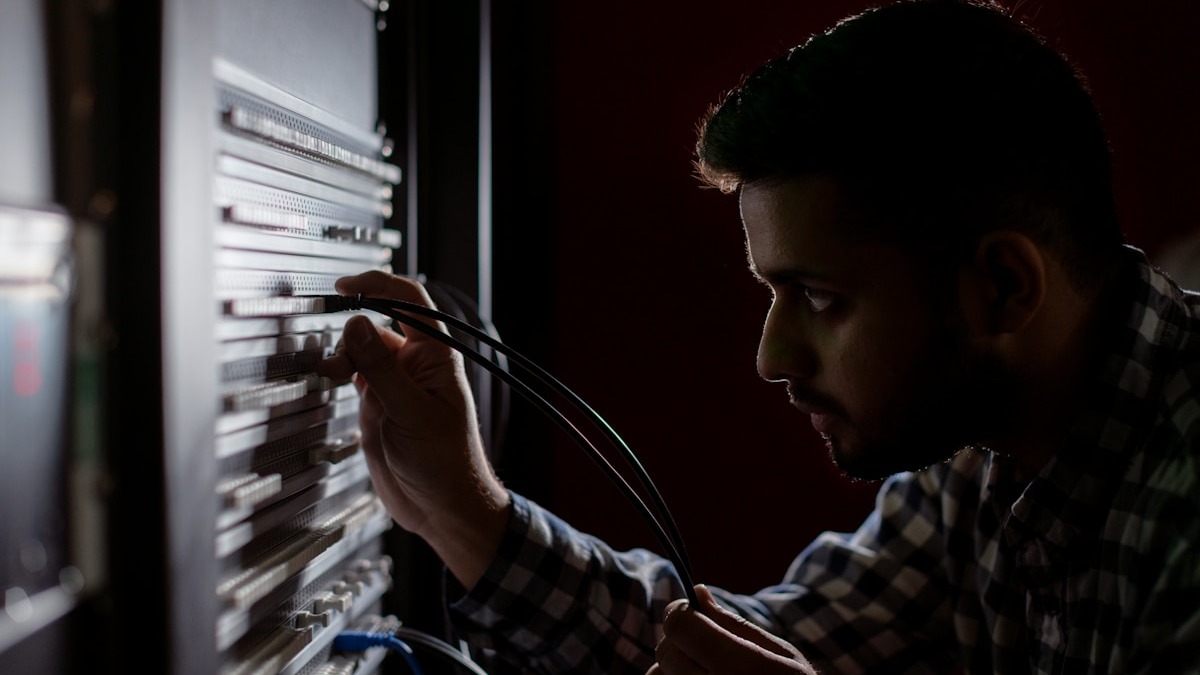 Cisco's high-bandwidth switching products are now the core of its AI infrastructure pitch to hyperscalers.
Source: unsplash.com
Cisco's high-bandwidth switching products are now the core of its AI infrastructure pitch to hyperscalers.
Source: unsplash.com
What the Numbers Actually Show
What They Measured
The two standout metrics Cisco is leaning on are order growth rates rather than delivered revenue. Data center switching orders are up 40%+ year over year. Networking product orders are up 50%+. These are leading indicators, and they're genuinely strong - it means customers are committing to Cisco hardware for builds that'll be deployed over the next several quarters.
The $5.3 billion already booked in FY2026 AI infrastructure orders is a harder number. It's mostly hyperscaler deals. Cisco revised its full-year estimate from $5 billion to $9 billion mid-year, which means actual demand came in well above what they modeled at the start of the fiscal year.
Revenue is also real: $15.8 billion in a single quarter, with double-digit growth for the first time in years. Cisco's networking hardware became boring during the cloud-consolidation era. The AI buildout is making it interesting again.
What They Didn't Measure
Cisco has now cut roughly 9,750 jobs since early 2024: about 5,600 in two rounds in 2024, 150+ in 2025, and now 4,000 more. The company is profitable and growing. The restructuring isn't a rescue operation - it's a choice to shed lower-priority headcount and redirect the cost to capital equipment, R&D on silicon and optics, and sales capacity for hyperscaler accounts.
That framing gets awkward when you look at executive compensation. Robbins was on track to earn $52 million in fiscal 2025 compensation. "Focus, urgency, and discipline" lands differently for different pay grades.
The other thing missing from the order data is customer concentration risk. Microsoft, Google, Amazon, and Meta are driving most of the demand. If any of them slows their AI capex - as all four have signaled capacity to do - Cisco's order book looks very different. The company is in a position it hasn't been in before: its growth rate now depends heavily on four customers.
"Companies that will win in the AI era will be those with focus, urgency, and discipline." - Chuck Robbins, Cisco CEO
Cisco isn't the only infrastructure company running this playbook. Meta reported record revenue of $56B in Q1 2026 and cut 8,000 jobs to fund its $145B AI capex plan. Cloudflare cut 1,100 jobs while its AI traffic surged 600%. The pattern - profitable company, record numbers, layoffs announced the same day - has become a feature of the AI investment era, not a crisis signal.
 CEO Chuck Robbins has led Cisco through four restructurings since early 2024 while growing revenue to record levels.
Source: commons.wikimedia.org
CEO Chuck Robbins has led Cisco through four restructurings since early 2024 while growing revenue to record levels.
Source: commons.wikimedia.org
The Infrastructure Context
Cisco's bet isn't just on switching hardware. The "silicon, optics, security, AI" framing points to a broader vertical play. On the silicon side, Cisco builds its own ASICs for networking - a departure from merchant silicon - which gives it margin and differentiation. On optics, high-speed transceivers are a bottleneck in dense AI cluster builds. On security, the company recently acquired Astrix for $400 million to handle AI agent identity, which is a separate but complementary AI story.
The optics and silicon investments are the less visible parts of the bet. Switching hardware gets the headlines because the order numbers are large. But the margin profile on proprietary ASICs and optical components is substantially better than commodity switching.
Industry-wide context is worth noting. Tech companies cut 85,411 jobs in the first four months of 2026. AI is cited as the reason for 26% of April layoffs specifically, according to data from Challenger, Gray & Christmas. Cisco fits that pattern exactly: it's reorganizing human capital allocation around a conviction that AI infrastructure spending will remain high for at least several more years.
Should You Care?
If you're in infrastructure, yes. Cisco's networking gear sits under a material share of the hyperscaler AI buildout. The 40% and 50% order growth numbers aren't marketing - they reflect real procurement decisions by the largest compute buyers in the world. That's a genuine structural shift for a company that spent the last few years getting disrupted by white-box networking and merchant silicon alternatives.
If you're in operations or engineering at a company that uses hyperscaler infrastructure, the indirect effect is that this spending is helping keep AI inference capacity online. Every major cloud provider is expanding its AI-optimized regions, and Cisco is selling a lot of the networking that makes those regions possible.
The layoff angle is worth watching for a different reason. Cisco is a bellwether for enterprise IT spending. When it cuts headcount in traditional areas - professional services, sales for non-AI products, legacy infrastructure support - it's telling you where enterprise demand is not going. Those 4,000 roles won't all be replaced. The budget is moving to silicon and optics and won't come back to general IT headcount.
What Cisco hasn't answered is whether its current hyperscaler concentration will hold through the next AI capex cycle. The $9 billion FY2026 target is a real number, but it's built on four customers who can slow spending faster than Cisco can diversify its order book.
Sources:

