
China's WAICO and America's Pax Silica Split AI World
Beijing's new World AI Cooperation Organization signed up 29 nations in Shanghai, weeks after Washington's rival Pax Silica bloc grew to roughly two dozen. Kazakhstan joined both.
 5 min read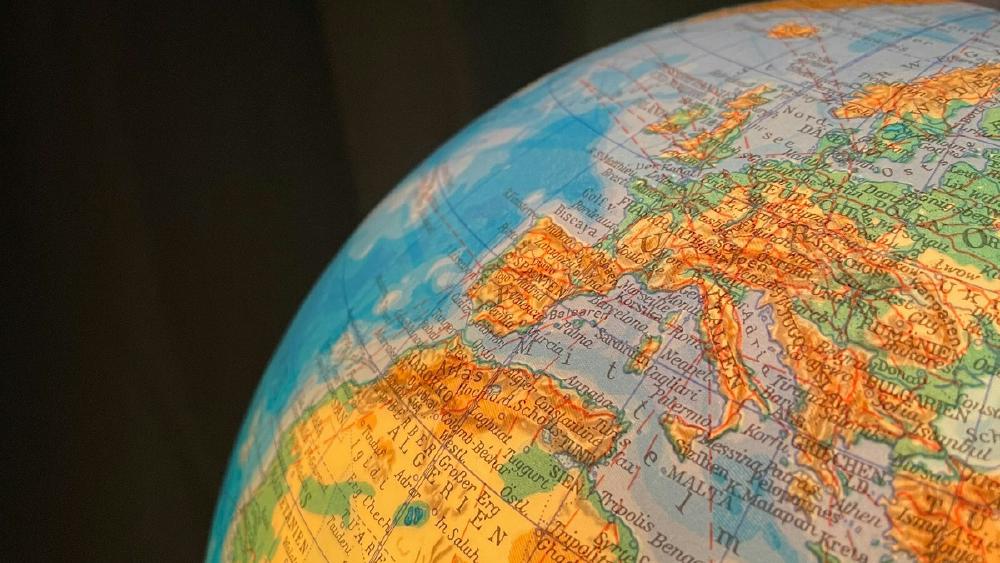
Twenty-nine countries signed an agreement in Shanghai on July 16 establishing the World AI Cooperation Organization, a new intergovernmental body that will govern AI standards and development from its headquarters in China. Not one G7 economy is on the signatory list. The following morning, Xi Jinping gave his first-ever keynote at the World AI Conference, pledging training slots, application centers and a shared weather-forecasting system to developing nations who, in his words, are being locked out of the AI economy by someone else's rules.
He didn't name the United States. He didn't have to.
- 29 nations signed the WAICO charter in Shanghai on July 16, headquartered in China, with UN Secretary-General Antonio Guterres attending
- Xi Jinping pledged 5,000 AI training slots for developing countries, new application centers with ASEAN, the African Union, BRICS and the Arab League, and a 30-country weather AI system called MAZU
- Washington runs a rival bloc, Pax Silica, which grew to roughly two dozen members after its second summit on June 25-26, just three weeks before WAICO's signing
- Kazakhstan is a member of both organizations, having joined Pax Silica in June and WAICO in July
- No G7 country appears on WAICO's roster; no China-aligned state appears on Pax Silica's
Two Rosters, Three Weeks Apart
The timing is difficult to read as coincidence. Washington's Pax Silica initiative, the State Department's semiconductor and AI supply-chain security project, held its second summit on June 25-26 and added new signatories including Argentina, Chile, Costa Rica, Panama and Kazakhstan. That brought its total membership into the low-to-mid twenties, up from the seven founding members, Australia, Japan, South Korea, the UK, Singapore, Israel and the US itself, who signed the original declaration in Washington on December 12, 2025.
Three weeks later, China's countermove landed in Shanghai. Twenty-nine governments, including Russia, Brazil, Pakistan, Indonesia, Belarus, Serbia, Cuba, Venezuela, Kazakhstan and Laos, signed the charter establishing WAICO as an "independent intergovernmental international organization" committed to the UN Charter and what the text calls a "people-centered approach." Chinese Foreign Minister Wang Yi signed for Beijing.
"AI development should not be a solo performance by any single country, but a symphony of international cooperation."
That line, from Xi's keynote the next morning, doubles as WAICO's pitch to the roughly 150 UN member states that belong to neither bloc.
| Organization | Led by | Members | Founded | Focus |
|---|---|---|---|---|
| Pax Silica | United States (State Dept.) | ~23-24 | Dec 12, 2025 | Semiconductor and AI supply-chain security |
| WAICO | China (Foreign Ministry) | 29 | Jul 16, 2026 | AI governance, standards, capacity-building |
The two clubs aren't mirror images. Pax Silica is built around hard supply-chain commitments, chips, critical minerals, compute, refining capacity. WAICO is pitched as a standards and governance forum, closer in spirit to a UN body than a trade bloc. What they share is a target list: the same mid-size, non-aligned economies that neither Washington nor Beijing can simply order into line.
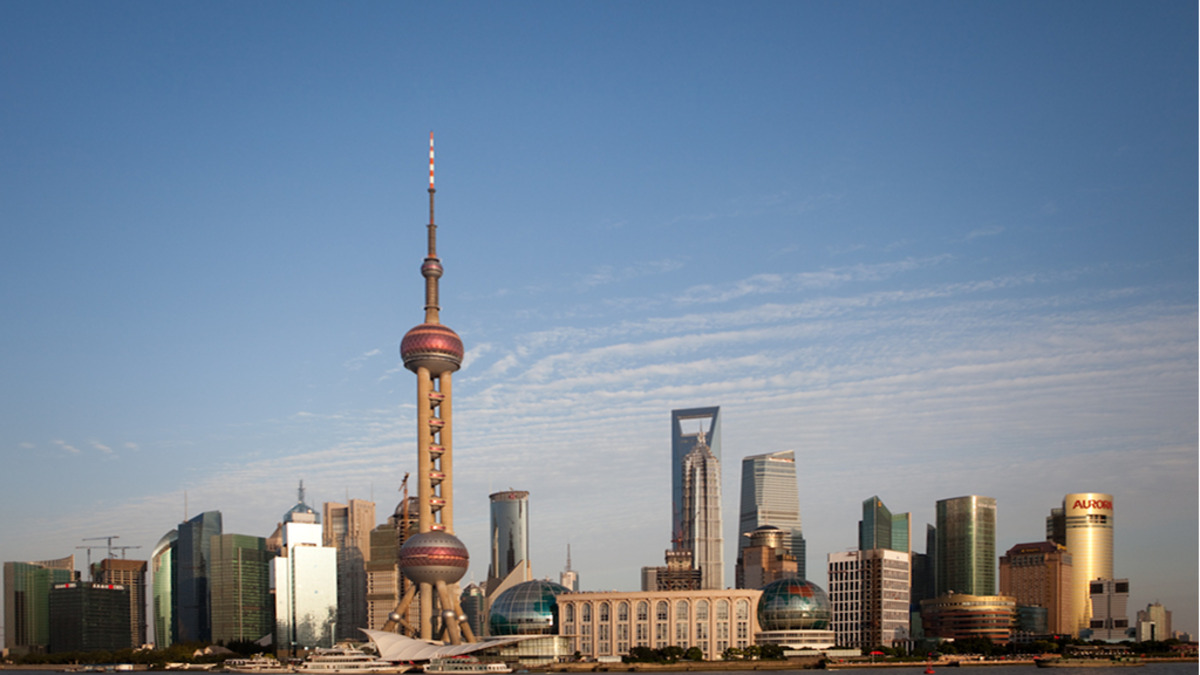 Shanghai hosted both the WAICO signing ceremony on July 16 and Xi Jinping's keynote at the World AI Conference the following day.
Source: wikimedia.org
Shanghai hosted both the WAICO signing ceremony on July 16 and Xi Jinping's keynote at the World AI Conference the following day.
Source: wikimedia.org
Who Signed Where
The Non-Aligned Middle
Most of WAICO's 29 signatories are states with limited domestic AI compute and no existing seat at the table Washington built. Indonesia, Laos and Pakistan get named access to Chinese training programs and application centers instead of years of waiting on a G7-led process. For a government with no frontier lab and no chip fab, joining costs little and buys a hedge against being frozen out of whichever standard eventually wins.
The Hedger
Kazakhstan didn't pick a side. It joined Pax Silica on June 25, with Washington reportedly planning a dedicated US-Kazakhstan economic security zone as a follow-up, and then signed the WAICO charter in Shanghai three weeks later. Astana's calculation looks less like indecision than arbitrage: sit between the chip supply chain the US controls and the governance forum China is building, and collect whatever each side offers to keep it out of the other's column.
The Absent
No G7 country appears on WAICO's list, and no state aligned with Beijing shows up on Pax Silica's roster. That split matters more than the raw membership counts. Demis Hassabis has separately called for a US-led body to test frontier models before release, a proposal that assumes Washington sets the rules. WAICO is Beijing's answer to that assumption: a competing forum where the rules get written without American input at all.
 The State Department's Pax Silica effort added new members in June, three weeks before China's WAICO signing.
Source: wikimedia.org
The State Department's Pax Silica effort added new members in June, three weeks before China's WAICO signing.
Source: wikimedia.org
What Happens Next
Xi's conference runs through July 20, and Chinese state media has signaled more application centers and bilateral compute deals will be announced before it closes. Whether WAICO picks up actual regulatory teeth, binding model-testing standards, an enforcement mechanism, anything beyond a charter and a Shanghai address, is still unresolved. The document commits members to "consultation" and shared benefit, language vague enough to mean almost anything in practice.
Pax Silica faces its own test. A wave of new members in a single summit stretches a coalition built on hard commitments, chip allocations, mineral refining capacity, compute access, further than the original seven ever had to reach. Nvidia's H200 shipments to China already show how unevenly those commitments hold up once export licenses meet customs paperwork.
Neither organization has published a full membership list. Xinhua and the Chinese Foreign Ministry have named 11 of WAICO's 29 signatories in official statements; the other 18 remain unconfirmed in public reporting now.
Sources:
- 29 countries sign agreement to establish World AI Cooperation Organization (Anadolu Agency)
- Xi calls for global AI cooperation as US restrictions squeeze China's tech access (Euronews)
- China to provide 5,000 AI training opportunities for developing countries: Xi (Xinhua)
- 29 countries sign agreement on establishing World AI Cooperation Organization (Global Times)
- State Department Expands Pax Silica Initiative at 2026 Summit (Brownstein Hyatt Farber Schreck)
- Pax Silica (Wikipedia, sourced from State Department releases)

