
China Locks Down AI Talent at Alibaba and DeepSeek
China's government has extended travel restrictions to AI researchers at Alibaba, DeepSeek, and other private firms, requiring official approval before they can leave the country.
 7 min read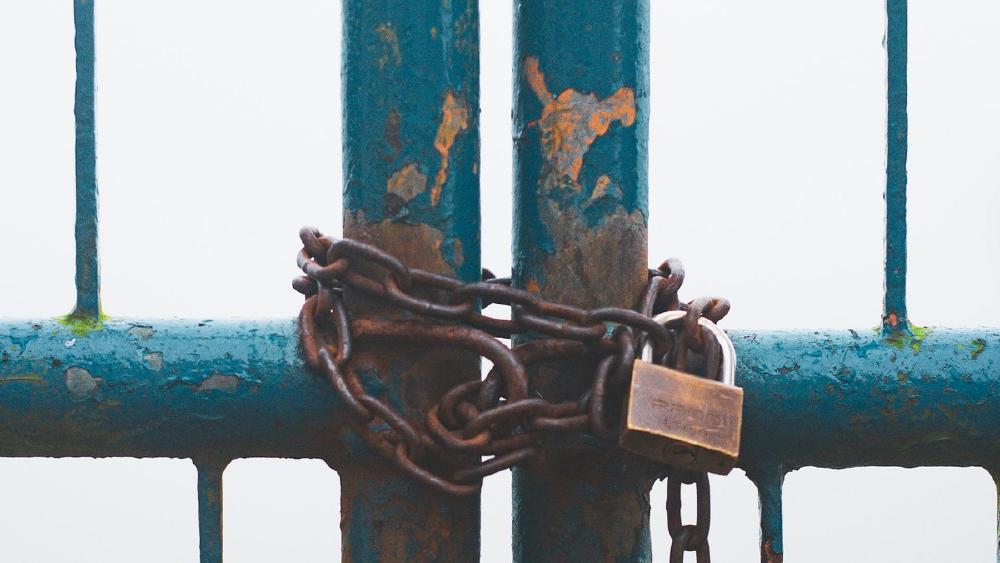
Bloomberg reported today that China has expanded its travel restrictions on AI researchers to include employees at Alibaba, DeepSeek, and other private-sector AI companies. Senior researchers and executives at frontier AI firms now need government approval before they can leave the country - a requirement that until recently applied mainly to state institutions and a handful of high-profile cases.
TL;DR
- China has extended overseas travel curbs from state entities to private AI labs including Alibaba and DeepSeek
- Researchers must obtain official approval before departure; some have already surrendered passports to employers
- The policy has escalated through four distinct phases since December 2025, sweeping up ByteDance, Moonshot AI, and StepFun along the way
- Beijing frames it as IP protection - but the mechanism blurs the line between employer policy and state mandate
What the Restrictions Actually Require
Passport Surrender
The mechanics of the policy are less formal than a written law, which makes them harder to challenge. At companies directly in the government's sights, researchers have been asked to hand their passports to employers for safekeeping. The stated logic is that these individuals handle information that qualifies as "classified state or commercial secrets."
That framing matters. It lets the government treat travel approval as a routine security procedure rather than a movement ban - and it places the administrative burden on the employer, not a ministry. The line between corporate HR policy and government mandate is deliberately blurred.
Who Is Targeted
The restrictions focus on startup founders, senior researchers, and executives working on what Beijing considers frontier AI. That's a slippery category. "Advanced artificial intelligence" has no fixed legal definition in China's current regulations, which means the scope of who qualifies is effectively whatever officials decide it to be.
Neither Alibaba nor DeepSeek has commented publicly. ByteDance, Moonshot AI, and StepFun - all confirmed to be under similar controls since late April - have also stayed quiet.
 Chinese AI researchers have historically relied on international conferences for collaboration and publication. That access is now conditional.
Source: pexels.com
Chinese AI researchers have historically relied on international conferences for collaboration and publication. That access is now conditional.
Source: pexels.com
A Policy That Escalated in Four Waves
December 2025 - The DeepSeek Precedent
The restrictions began quietly. Bloomberg reported in December 2025 that some DeepSeek executives faced overseas travel limits following the global success of DeepSeek R1. At that point the measures looked targeted - a response to a specific company that had become geopolitically sensitive almost overnight.
March 2026 - Manus and the Acquisition Block
The pattern widened in March. After Meta announced a $2 billion acquisition of Manus - a Chinese AI startup that had been operating out of Singapore - Chinese regulators launched a review and ultimately blocked the deal. As part of that intervention, co-founders Xiao Hong and Ji Yichao were barred from overseas travel while the review proceeded.
The Manus case established something new: the government was willing to ground founders of private-sector companies, not just executives at state-linked firms. It also introduced the phrase that has since circulated widely in Chinese tech circles - "Singapore washing" - the practice of reincorporating a Chinese company abroad to escape regulatory scrutiny. Beijing signalled it wouldn't tolerate that.
Simultaneously, DeepSeek staff began surrendering passports to their employer. The March timing is notable: R1 had been out for weeks and was already reshaping the global AI conversation. The government's read was clear. DeepSeek's research was too strategically important to risk losing to a competitor.
Late April 2026 - The Sweep Expands
By late April, China's National Development and Reform Commission had extended travel controls to Moonshot AI, StepFun, and ByteDance. The common thread isn't company size or state ownership - it's whether the organization is doing work Beijing considers relevant to its position in the global AI race.
That expansion confirmed this wasn't a series of case-by-case interventions. It was policy.
May 2026 - Alibaba and the Private Sector at Large
Today's Bloomberg report on Alibaba marks the broadest extension yet. Alibaba's AI operation is substantial: its Qwen model series has been one of the more competitive open-weight families globally, and its cloud infrastructure underpins much of China's AI deployment. Bringing Alibaba's researchers under travel controls signals that no private firm in frontier AI is outside the scope of these measures.
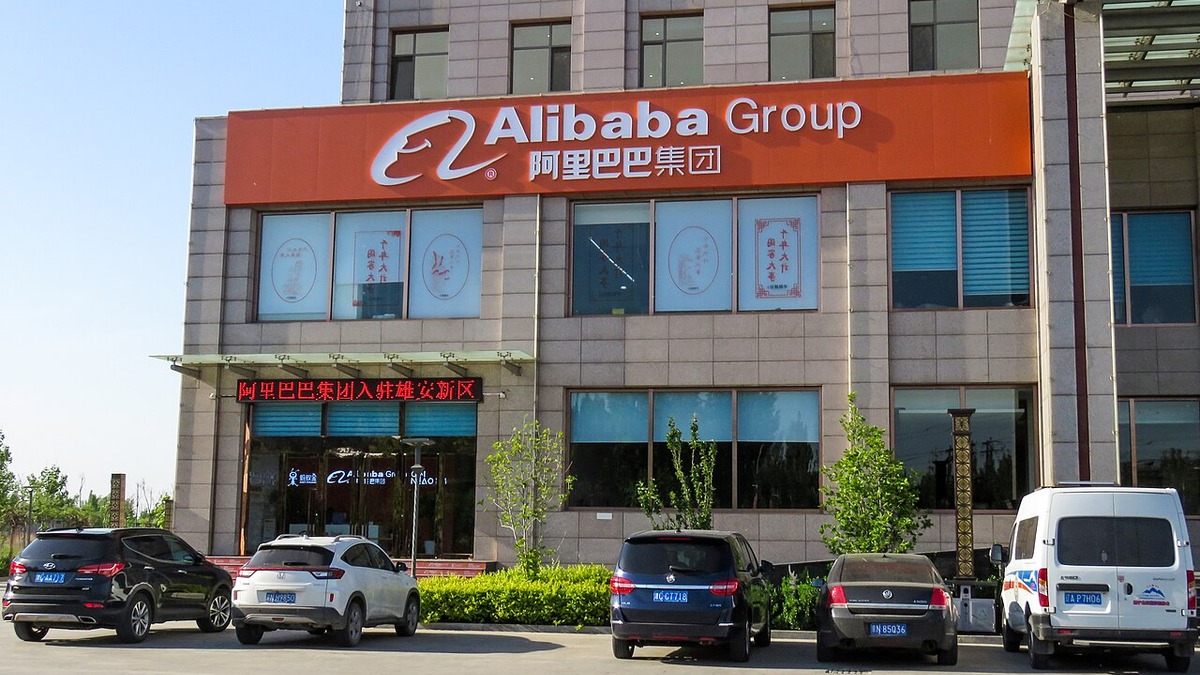 Alibaba's Hangzhou campus houses thousands of AI researchers, some of whom are now subject to travel approval requirements.
Source: wikimedia.org
Alibaba's Hangzhou campus houses thousands of AI researchers, some of whom are now subject to travel approval requirements.
Source: wikimedia.org
Beijing's Strategic Calculus
China's stated reason covers two objectives: stop sensitive technology from leaking abroad, and maintain the pace of domestic AI development relative to the United States.
Both concerns are real. Stanford's 2026 AI Index found that the performance gap between the best American and Chinese models has collapsed to 2.7%, down from more than 17 percentage points in 2023, despite the US spending 23 times more on private AI investment. That convergence is partly the result of open-source contributions from Chinese researchers who had access to international academic networks - exactly the access these travel restrictions will complicate.
The China five-year AI plan published earlier this year emphasised self-sufficiency across the AI stack. Travel restrictions are, in that framing, an extension of the same logic applied to human capital. You don't want your chips designed abroad. You don't want your researchers building relationships abroad either.
There's also a defensive element. Several Chinese AI executives had been warned privately in March that travel to the US carried the risk of being detained or interrogated - a concern tied to the US government's growing scrutiny of Chinese tech ties. Whether that risk is real, it gave Beijing an additional justification for restricting travel that it could present as protective rather than punitive.
The Costs Beijing Isn't Acknowledging
Controlling talent isn't the same as retaining it, and the restrictions carry real costs that aren't visible in official statements.
Chinese academic AI work has historically depended on international collaboration. Researchers published at NeurIPS, ICML, and ICLR. They collaborated on open-source projects. They went to workshops, built networks, brought ideas back. The NeurIPS 2026 situation already showed how quickly international scientific exchange can fracture under geopolitical pressure.
Enforcement also gets harder as the affected population grows. Restricting a dozen named executives is manageable. Extending controls to the researcher population across Alibaba's AI division - which runs into the thousands - requires a bureaucratic apparatus that doesn't yet exist at that scale.
The line between corporate HR policy and government mandate is deliberately blurred - and that's the point.
Talented researchers who see their career options narrowing don't always stay. They leave before restrictions tighten further, or they choose not to return from conferences they attended before the rules changed. AI talent migration to the United States has dropped 89% since 2017, per the Stanford 2026 AI Index - a figure Beijing might cite as proof that talent flows can shift without explicit state measures. But that same report attributes most of the decline to US immigration policy, not Chinese control. The current travel restrictions may accelerate quiet departures rather than prevent them.
Beijing is betting that it can hold its most capable AI researchers inside its borders long enough to win the race it's running. Whether restricting movement for thousands of researchers across the private sector is the right tool for that goal is a question the National Development and Reform Commission doesn't appear to be asking.
Sources:
- Bloomberg - China Expands Travel Curbs to Top AI Talent at Private Firms
- The Next Web - China Extends AI Travel Curbs from DeepSeek to Other Private Firms
- Cryptobriefing - China Restricts Overseas Travel for Top AI Talent at Alibaba and DeepSeek
- Asia Times - China's Manus AI Case Sets Red Lines to Bar Singapore Washing
- TradingView / Reuters - China Restricts Overseas Travel for Top AI Talent
- The Next Web / Stanford 2026 AI Index - China Narrows US Lead to 2.7%

