
ChatGPT Falls Below 50% Market Share for First Time
Sensor Tower's State of AI 2026 report shows ChatGPT's True Audience share fell to 46.4% in May as Gemini and Claude eat into OpenAI's lead.
 Updated
6 min read
Updated
6 min read
For the first time since its launch three-and-a-half years ago, ChatGPT doesn't hold a majority of the AI assistant market. Sensor Tower's State of AI 2026 report, released today, puts OpenAI's flagship at 46.4% True Audience share in May - a threshold it crossed below in March and hasn't recovered since.
TL;DR
- ChatGPT's True Audience share fell to 46.4% in May 2026, first dipping below 50% in March
- Gemini holds 27.7% and Claude 10.3% - together they account for nearly half the market
- Claude earns $2.76 average revenue per US mobile user vs ChatGPT's $1.74
- Global time spent on AI apps is on track to hit 36 billion hours in H1 2026 - more than double last year
- OpenAI's DoD contract in February triggered a measurable spike in ChatGPT uninstalls
The Numbers
ChatGPT built the category, but as viable alternatives have scaled, users are naturally diversifying their toolkit.
That observation from Tom Grant, VP of research at Apptopia, captures what the Sensor Tower data now makes impossible to dispute. The current state of the AI assistant market by True Audience share and monthly active users:
| Platform | True Audience Share | Monthly Active Users |
|---|---|---|
| ChatGPT | 46.4% | 1.1 billion |
| Google Gemini | 27.7% | 662 million |
| Anthropic Claude | 10.3% | 245 million |
| Others (Grok, Perplexity, Meta AI, etc.) | ~15.6% | - |
Together, the top three assistants still command around 84% of time spent on AI apps. The market is concentrated but no longer led by a single player.
True Audience vs. Raw Users
Sensor Tower's "True Audience" methodology deduplicates users across devices and shared accounts, making it a more reliable measure of real individuals than raw monthly active user counts. ChatGPT's 1.1 billion figure is the raw MAU number reported in May 2026. The True Audience share is a smaller, cleaner slice - and that slice is now below half.
Apptopia's separate mobile tracking puts ChatGPT at 45.3% and Grok - which barely registered a year ago at 1.6% - at 15.2%, its fastest rise of any major assistant. The exact percentages differ between firms, but the direction is unanimous.
Revenue per User
The share story is complicated by a harder question: who is making money from this? Sensor Tower's revenue data offers a clear answer.
| Platform | Avg. Revenue per US Mobile User (May 2026) |
|---|---|
| Claude | $2.76 |
| ChatGPT | $1.74 |
Claude's ARPU jumped from under $0.50 in September 2025 to $2.76 in eight months - a rise that reflects both its pricing model (no meaningful free tier; plans start at $20/month) and genuine demand. Claude also converts 13% of its users to paid subscriptions, the highest rate across any major assistant.
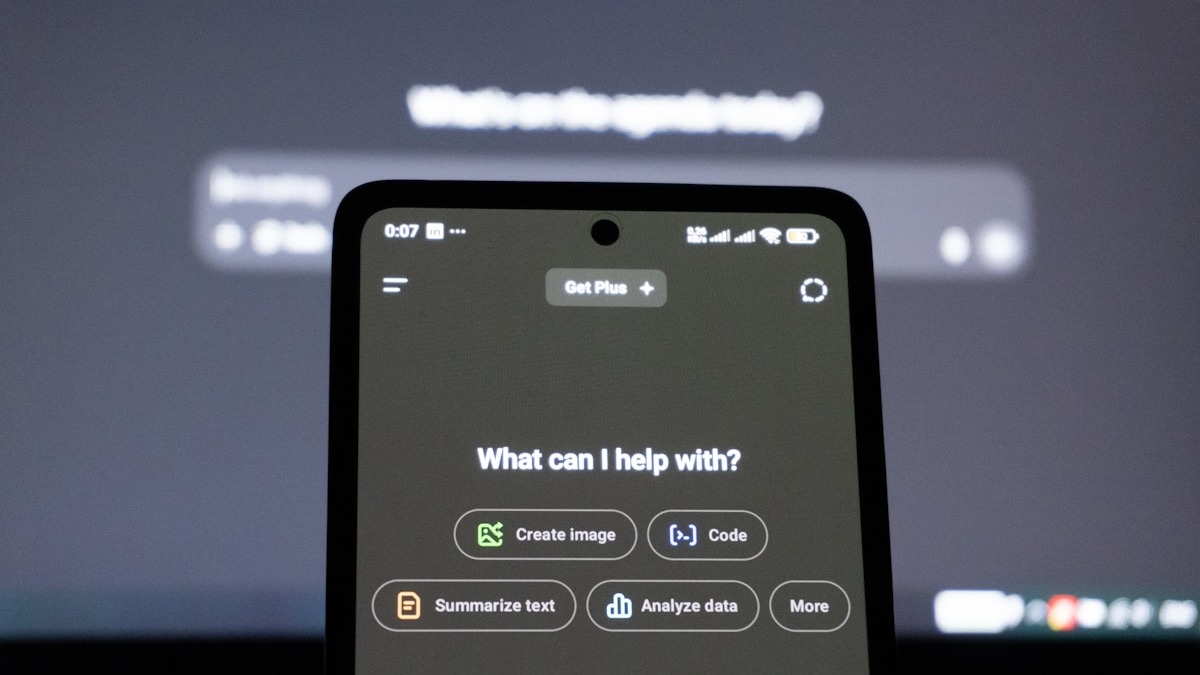 The AI assistant landscape has fragmented from a near-monopoly to a three-way race in under a year.
Source: unsplash.com
The AI assistant landscape has fragmented from a near-monopoly to a three-way race in under a year.
Source: unsplash.com
How the Gap Closed
Gemini's Ecosystem Play
Google's rise to 27.7% isn't mostly about Gemini being a better chatbot. It is about distribution. Gemini is now the default AI in Android 17, folded into Google Search, Gmail, and Docs. Users who already live in Google's ecosystem encounter it constantly without choosing to install anything. Web visits to Gemini's domain surpassed 2 billion monthly in January 2026; the growth trend since then has been consistent.
Claude's Subscription Machine
Anthropic's path is different. Claude grew 306% in web visits in a single quarter and has more than tripled its US True Audience share. The revenue-per-user advantage suggests its users aren't casual - they're professionals who pay for the productivity edge and stick with it. Claude's no-advertising, subscription-first model contrasts with where OpenAI is heading.
The Pentagon Effect
The Sensor Tower report identifies a specific inflection point: OpenAI's $200 million Department of Defense contract announced in February 2026 triggered a measurable spike in ChatGPT uninstalls. The fallout from that deal caused Sam Altman to publicly walk back aspects of the contract within days - but the users who left did not walk back. Sensor Tower tracks this as a real, quantifiable shift, not just social media noise.
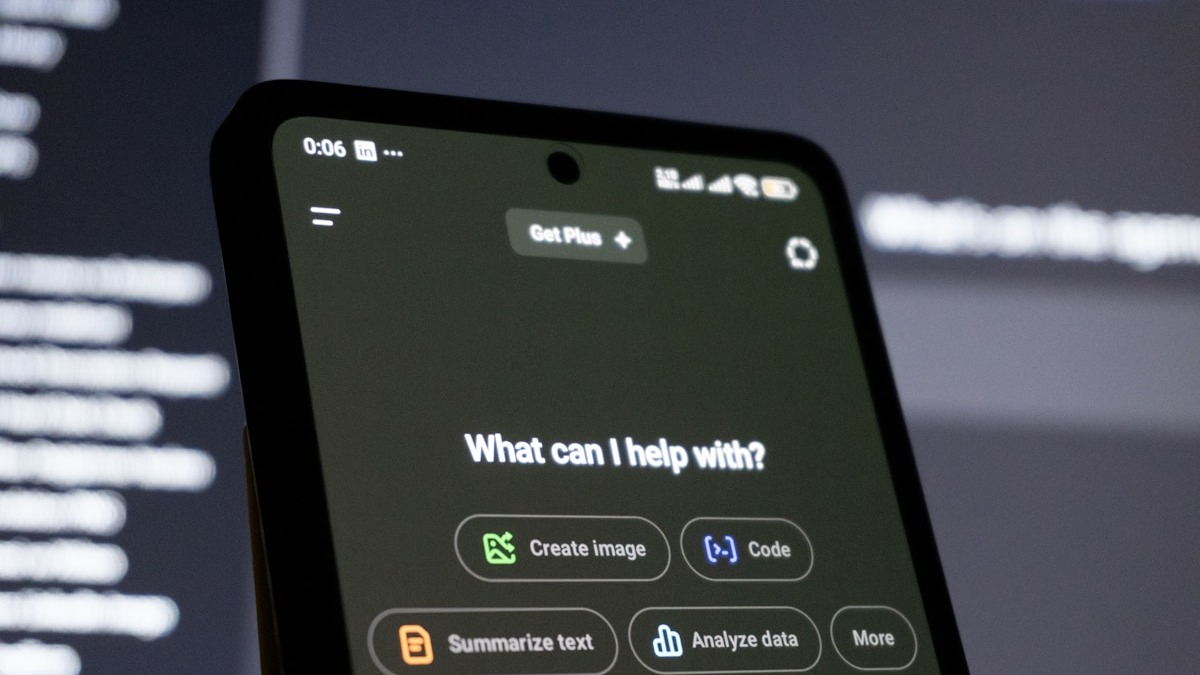 OpenAI's advertising rollout, now reaching 17% of daily ChatGPT users, risks further eroding user trust.
Source: unsplash.com
OpenAI's advertising rollout, now reaching 17% of daily ChatGPT users, risks further eroding user trust.
Source: unsplash.com
The Broader Market
Spending and Time
The competitive redistribution is happening against a backdrop of explosive overall growth. In H1 2026, users are on track to spend $4.2 billion on AI apps - up from $1.83 billion in H1 2025 and representing 36% growth over H2 2025 alone. Global time on AI apps will hit 36 billion hours, versus 17.2 billion a year ago. The pie is expanding fast; ChatGPT is just winning a smaller slice of it.
The growth deceleration signal in Asia is the one exception. Q1 2026 saw AI app downloads in the Asia-Pacific region fall 3.3% - the first such decline. Whether that reflects market saturation or a short-term anomaly is unclear, but it's the first crack in what had been uniformly upward curves.
The Grok Wildcard
Apptopia's data puts Grok's market share at 15.2%, up from 1.6% a year ago. Sensor Tower doesn't break Grok out separately in its True Audience figures, grouping it in the "others" category. The gap between the two firms' methodologies makes Grok's actual share hard to pin down, but neither source disputes it's growing faster than any other assistant in the market right now.
What It Does Not Tell You
Mobile Apps Are Not the Whole Story
The Sensor Tower and Apptopia reports measure mobile app users and web traffic, respectively. Neither captures enterprise API contracts, Azure OpenAI Service usage, or the proprietary deals that make up the bulk of revenue for both OpenAI and Anthropic. By Menlo Ventures' estimate, Anthropic holds around one-third of the enterprise market, OpenAI around 25%. That ranking differs sharply from the consumer numbers - and enterprise is where both companies make most of their money.
Methodology Limits
Sensor Tower's "True Audience" figures and Apptopia's mobile tracking produce different absolute numbers for the same platforms. The ChatGPT estimates range from 45.3% to 46.4% depending on source; Grok ranges from barely visible in one dataset to 15.2% in another. Web-visit share from Similarweb shows ChatGPT at 54.7% globally - higher than either app-based measure. These are three different lenses on the same market, and none of them is final.
ChatGPT still has more users than any other AI product in history. Oliver Yeh, Sensor Tower's CEO, called it "the fastest mobile app ever to reach one billion monthly active users." But one billion users at 46.4% market share - and $1.74 average revenue per user - is a different competitive position than one billion users at 70%. OpenAI now runs ads, competes with better-monetizing rivals, and faces a user base that has shown it'll leave over values questions. The 50% marker is a number. What sits under it's a structural shift.
Sources:
- Sensor Tower State of AI 2026 Report (PR Newswire)
- ChatGPT's market share slips below 50% for first time - TechCrunch
- Claude earns more revenue per user than ChatGPT - The Next Web
- ChatGPT's market share goes below 50% for the first time - American Bazaar
- ChatGPT market share falls below 50% as Gemini and Claude gain - Digital Today
Last updated

