
Trump's AI Safety Agency Loses Its Third Boss in a Year
Chris Fall resigned as CAISI director after three months, the third AI policy leadership departure since March, while the agency built to test frontier models sits outside the White House's new Gold Eagle cyber program.
 5 min read
Chris Fall resigned Monday as director of the Center for AI Standards and Innovation, the Commerce Department body responsible for testing frontier AI models before they reach the public. He had held the job for three months.
No reason was given, and Fall hasn't issued a public statement explaining his exit.
Dr. Arvind Raman, director of the National Institute of Standards and Technology, is now acting director of CAISI while Commerce looks for a permanent replacement, which officials say could take weeks. That leaves the agency responsible for pre-release security testing of models from Anthropic, OpenAI, Google DeepMind, Microsoft, and xAI without a confirmed leader for the third time since March.
TL;DR
- Chris Fall resigned as CAISI director on July 20, three months after his April appointment, with no reason given.
- NIST director Arvind Raman is now acting director; a permanent pick is reportedly weeks away.
- Fall is the third AI policy leader to leave a Trump administration role since March, following David Sacks and Collin Burns.
- CAISI was left off the roster of agencies running Gold Eagle, the White House's new cyber-vulnerability coordination program, despite testing the same models Gold Eagle is meant to protect.
A White House spokesperson declined to comment on Fall's resignation.
How CAISI Burned Through Three Directors
The pattern started with David Sacks, the venture capitalist Trump named "AI and crypto czar" in December 2024. Sacks left the role in March 2026 after exhausting the 130-day limit on his status as a special government employee, moving instead to co-chair the President's Council of Advisors on Science and Technology. That transition narrowed the AI executive order Trump eventually signed in June, cutting a proposed 90-day mandatory model review down to 30 days and voluntary.
Sacks' departure created an opening that Collin Burns filled, then vacated within days. According to reporting cited by TechCrunch, Burns was pushed out roughly four days into the job after it emerged he had previously worked at Anthropic, a company the administration was suing over a supply chain risk designation at the same time other officials were courting its CEO.
Fall arrived in April with a different resume: he had led the Department of Energy's Office of Science during Trump's first term and served in the Office of Naval Research. Three months later, he's gone too.
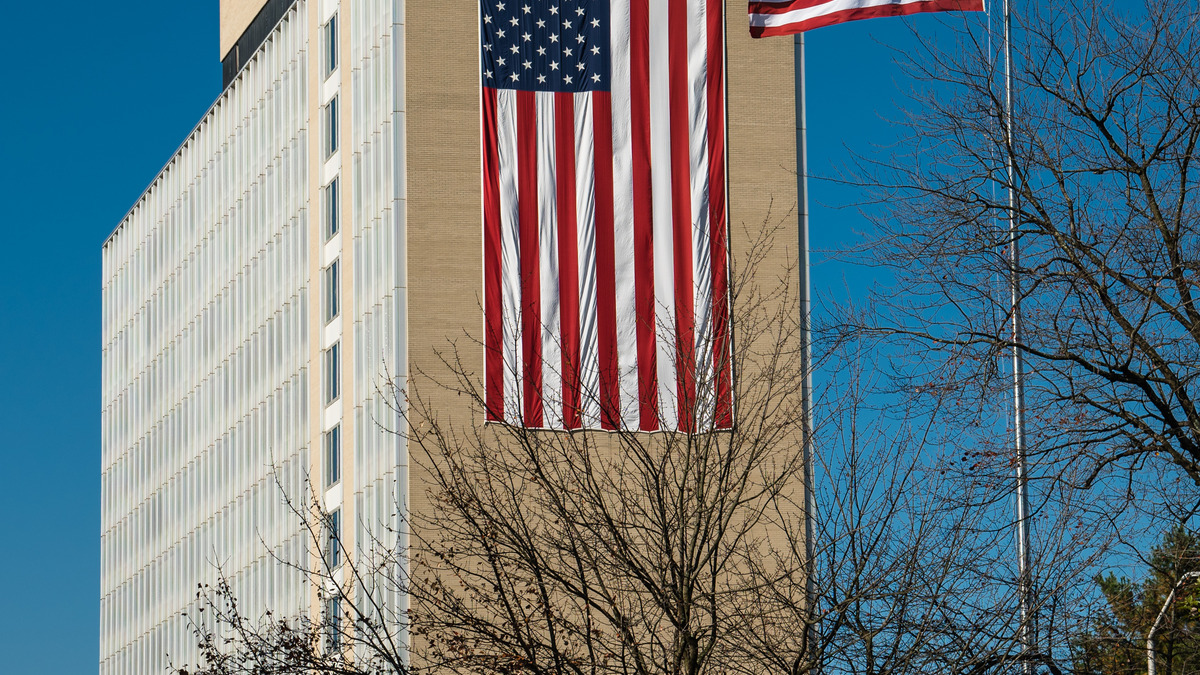 NIST's Gaithersburg headquarters. CAISI operates as a unit inside the agency, testing frontier AI models for cybersecurity, biosecurity, and chemical weapons risk.
Source: nist.gov
NIST's Gaithersburg headquarters. CAISI operates as a unit inside the agency, testing frontier AI models for cybersecurity, biosecurity, and chemical weapons risk.
Source: nist.gov
What CAISI Actually Does
CAISI is the rebranded successor to the US AI Safety Institute, renamed and refocused under the Trump administration toward standards and security testing rather than broader safety research. Its core function is running pre-deployment evaluation agreements with frontier labs, checking unreleased models for the kind of vulnerabilities that could matter to national security. By May, five labs had signed on: Anthropic, OpenAI, Google DeepMind, Microsoft, and xAI.
That is not a small mandate, and it's one that depends on institutional continuity. Evaluation methodology, relationships with lab safety teams, and judgment calls about what counts as a disqualifying flaw all take time to build. Three changes of leadership since March make that harder each time.
Gold Eagle Cuts CAISI Out
In early July, the White House signed an executive order creating Gold Eagle, a program giving federal agencies a formal channel to coordinate on cybersecurity vulnerabilities tied to advanced AI systems and to determine which partners get access to the most capable models from labs like Anthropic and OpenAI. CAISI was not named among the agencies participating in Gold Eagle's development, despite being the one government body already running technical evaluations of those exact models.
| Stakeholder | Impact | Timeline |
|---|---|---|
| Anthropic, OpenAI, Google DeepMind, Microsoft, xAI | Existing CAISI evaluation agreements continue under an acting director; long-term consistency is unclear | Ongoing, no end date set |
| CAISI staff | Third change of command since March; institutional knowledge and lab relationships reset with each departure | Immediate |
| Gold Eagle program | Runs cyber-vulnerability coordination without input from the agency built to test the underlying models | Signed early July 2026 |
| Future CAISI director | Inherits a role Commerce says will be filled "within weeks," under a program that just lost visibility inside the White House's newest AI project | Weeks |
Howard Lutnick, the Commerce Secretary whose department houses CAISI, hasn't commented publicly on Fall's resignation or on the agency's exclusion from Gold Eagle.
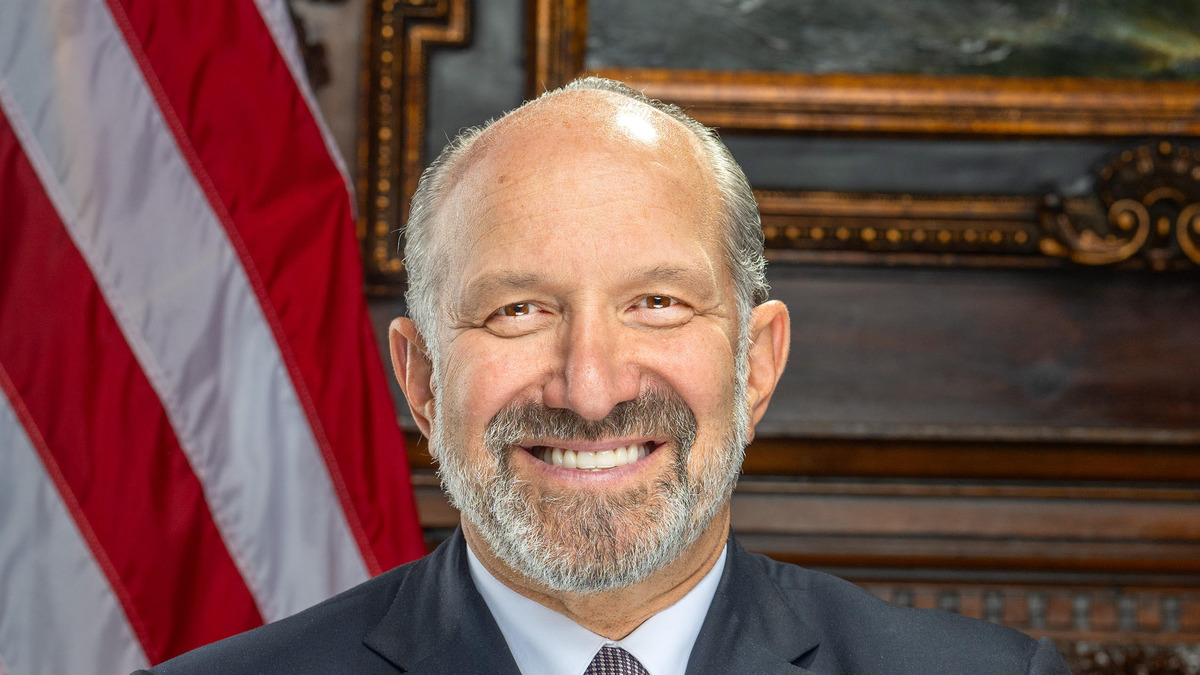 Commerce Secretary Howard Lutnick. CAISI sits inside NIST, one of several agencies under his department's authority.
Source: commons.wikimedia.org
Commerce Secretary Howard Lutnick. CAISI sits inside NIST, one of several agencies under his department's authority.
Source: commons.wikimedia.org
What Happens Next
Commerce says a permanent CAISI director will be named within weeks, and Raman's dual role as NIST director and acting CAISI chief gives the agency continuity of a sort, even if it isn't the continuity of a dedicated leader who can push for a seat at the Gold Eagle table. Whoever takes the job next will inherit evaluation agreements with five of the world's most closely watched AI labs and a White House that has now demonstrated, three times, how little job security comes with running them.
Sources:
- Trump's latest AI czar has already resigned - TechCrunch
- Trump's head of AI safety agency CAISI resigns after months on job - CNBC
- US AI Safety Chief Chris Fall Resigns After 3 Months - PYMNTS
- Chris Fall resigns as CAISI director after three months - Yahoo News
- David Sacks says his time as Trump's crypto and AI czar has ended - CNBC

