
ByteDance Plans $70B AI Capex, Tripling Last Year
ByteDance is weighing up to $70 billion in AI capital expenditure for 2026, nearly tripling its 2025 spend, while locking in offshore compute and a Qualcomm chip deal to sidestep US export controls as Doubao hits 345 million users.
 6 min read
TL;DR
- Bloomberg reported May 27 that ByteDance is weighing AI capex of "as much as $70 billion" for 2026, a range of 400-500 billion yuan
- SCMP separately confirmed ByteDance raised its 2026 target to 200 billion yuan (~$30B) - at minimum 25% above the preliminary $23B plan
- Doubao has 345 million monthly users - China's most popular AI chatbot - and is testing paid tiers up to 500 yuan/month
- Qualcomm struck a deal May 27 to supply millions of ASICs to ByteDance data centers, a third compute path beyond Nvidia and Huawei
- Thailand approved a $25 billion ByteDance data center project in May - part of an offshore compute strategy that sidesteps US chip restrictions
ByteDance's AI infrastructure bet is approaching US hyperscaler scale. Bloomberg reported on May 27 that the TikTok parent is weighing capital expenditure of "as much as $70 billion" for 2026 - nearly three times its roughly $25 billion spend in 2025. The South China Morning Post separately confirmed a raised target of 200 billion yuan (~$30 billion), at minimum a 25% increase from the $23 billion preliminary plan discussed in late 2025.
The upper-bound $70 billion figure, if realized, would make ByteDance's AI infrastructure push comparable to Meta's 2026 capex guidance and larger than any single Chinese rival.
Who's Spending What
The headline number needs context. US hyperscalers aren't slowing down.
| Company | 2026 Capex Guidance | Region |
|---|---|---|
| Amazon | ~$200B | US |
| Microsoft | ~$190B | US |
| Alphabet/Google | ~$175-185B | US |
| Meta | $125-145B | US |
| ByteDance (upper bound) | ~$70B | China |
| Alibaba | China | |
| Tencent | ~$11B (AI share of broader capex) | China |
ByteDance at the upper bound would represent roughly 39% of what the average US hyperscaler is spending - and about four times what any other Chinese company is committing. That's the competitive gap it's trying to close.
SoftBank committed €75 billion to French AI data centers the same week. The two announcements, taken together, mark the first time non-US entities have publicly matched the spending language of the American hyperscaler tier.
What the Money Buys
Nearly half the budget goes to AI chip procurement. ByteDance has earmarked around $14 billion specifically for Nvidia H200 GPUs in 2026, contingent on Beijing approving Chinese companies to import the hardware. Nvidia's Blackwell architecture remains restricted, but H200 exports resumed after export control changes earlier this year. The company has expanded its custom chip design team to 1,000 people across four design lines.
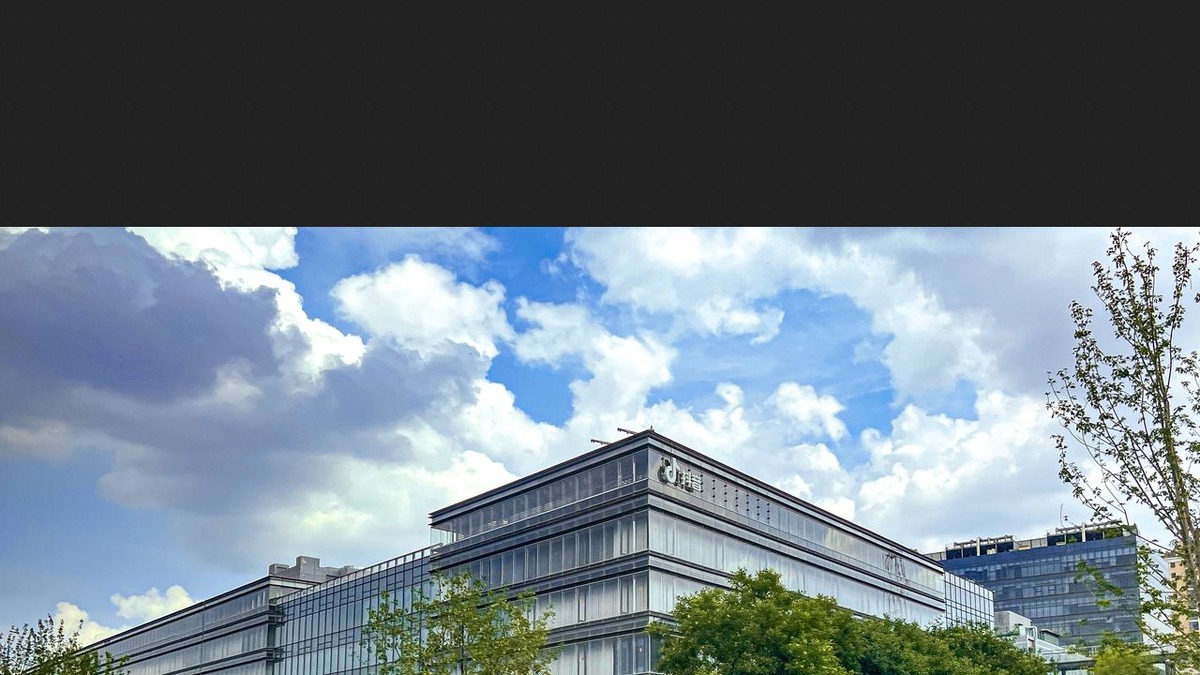 ByteDance's 1733 Commercial Space office in Beijing's Haidian district, photographed July 2024.
Source: wikimedia.org
ByteDance's 1733 Commercial Space office in Beijing's Haidian district, photographed July 2024.
Source: wikimedia.org
Data center construction is the other major cost. Thailand's Board of Investment approved a ByteDance project worth $25 billion in May 2026, covering server installation and data storage across Bangkok, Samut Prakan, and Chachoengsao. A facility in Kouvola, Finland broke ground with Phase 1 targeted for end of 2026.
On the same day Bloomberg broke the capex story, Qualcomm announced a deal to supply millions of ASICs to ByteDance for AI data center use. Qualcomm shares rose roughly 6.8%, hitting an all-time high. Neither company commented on the details. The agreement gives ByteDance a compute path that sits inside current US export control boundaries - domestically manufactured chips that don't trigger Hopper or Blackwell restrictions.
Doubao's 345 Million Reasons
ByteDance isn't spending this way on a research project. It has a product to monetize.
Doubao - ByteDance's AI chatbot - had 345 million monthly active users as of March 2026, according to QuestMobile data. Alibaba's Qwen sits at 166 million, DeepSeek at 127 million. Doubao runs at ChatGPT-comparable scale inside the world's largest market, yet the company only recently started testing paid subscriptions.
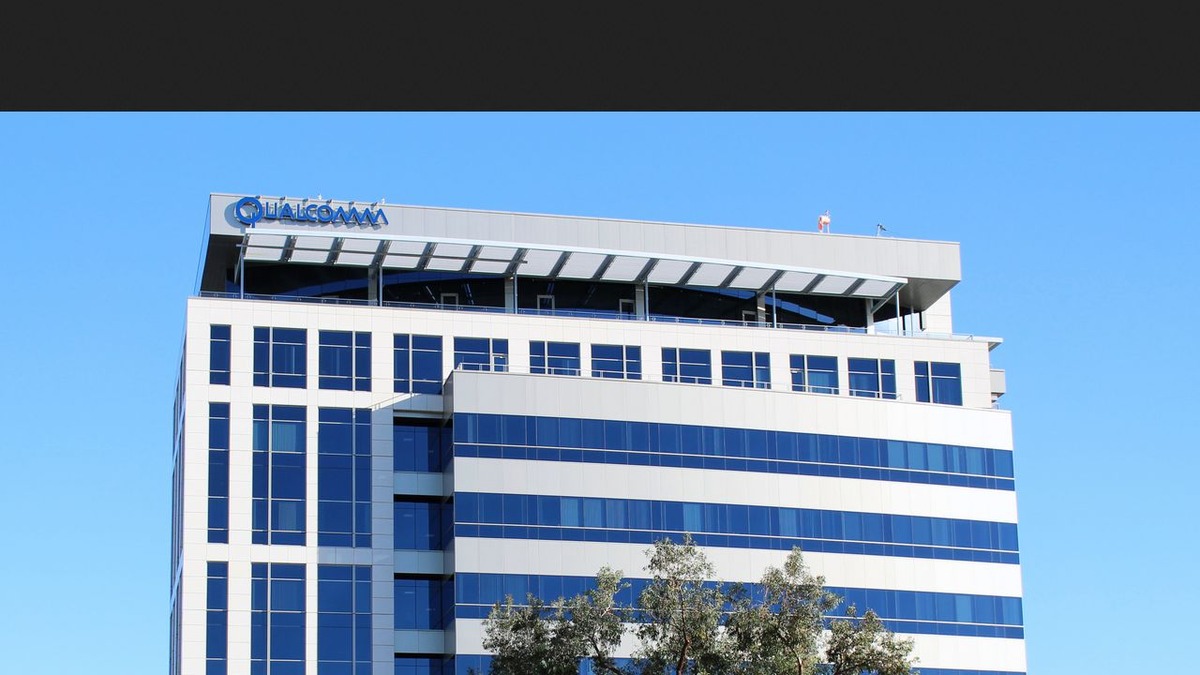 Qualcomm's La Jolla, California campus. The company announced a chip supply deal with ByteDance on May 27.
Source: wikimedia.org
Qualcomm's La Jolla, California campus. The company announced a chip supply deal with ByteDance on May 27.
Source: wikimedia.org
The pricing: 68 yuan/month for standard, 200 yuan for enhanced, 500 yuan for professional - roughly $10, $28, and $70. The basic version stays free; paid tiers unlock compute-intensive features like automated data analysis and video production. If Doubao converts even 5% of its monthly users to the standard tier, that's around $2 billion in annualized subscription revenue from a product that costs nothing today.
"ByteDance, Tencent, and Alibaba are all converging on the view that AI infrastructure is now a strategic asset rather than a discretionary line item."
- Ke Yan, analyst, DZT Research, Singapore
Counter-Argument: The Numbers Are Messier Than They Look
Two figures ByteDance hasn't led with: the company's 2025 net profit fell over 70% year-over-year under IFRS accounting, according to CaixinGlobal reporting from April 2026. ByteDance VP Li Liang attributed the drop to accounting adjustments tied to prior AI investment acceleration and equity costs, saying operational profitability remains stable. The earlier Bloomberg estimate of ~$50 billion in annual profit predates those IFRS revisions.
The $70 billion figure is also preliminary. ByteDance revises its capex budget quarterly based on hardware availability, grid access, and business conditions. SCMP's confirmed $30 billion is the more defensible baseline - the $70 billion is an upper-bound scenario that several analysts have noted may not be a committed plan. Actual spend could land anywhere in the $30-70 billion range depending on whether Beijing clears H200 imports and whether new facilities come online on schedule.
Export controls add execution risk at every layer. China's domestic chip push won't close the gap with Nvidia's advanced architectures for years. ByteDance's plan depends on continued H200 access that a single Washington policy shift could remove.
What the Market Is Missing
The capex headline misses the more significant story underneath: ByteDance is building a parallel compute supply chain designed to survive export restrictions.
 NVIDIA H100 GPU - the predecessor to the H200 that ByteDance is betting $14 billion on importing in 2026.
Source: wikimedia.org
NVIDIA H100 GPU - the predecessor to the H200 that ByteDance is betting $14 billion on importing in 2026.
Source: wikimedia.org
The Thailand and Finland data centers aren't purely about growth - they're about compute sovereignty. ByteDance trains AI models using offshore Nvidia GPUs in Southeast Asian facilities operated by compliant third parties, a legal route that expanded after the May 2025 withdrawal of Biden-era AI diffusion restrictions. That offshore training access is part of what let Doubao reach competitive capability despite domestic chip restrictions. The China talent travel ban applied to Alibaba and DeepSeek researchers in May signals Beijing already views these companies' AI capabilities as national infrastructure.
Qualcomm's ASIC deal follows the same logic applied to inference: lock in a chip supply path that bypasses Nvidia and doesn't trigger US export rules. ByteDance's 1,000-person chip design team is the long game - a multi-year effort to remove single-supplier dependence before restrictions tighten further.
At the $30 billion confirmed floor, ByteDance becomes the largest AI infrastructure spender outside the US hyperscaler tier. At the $70 billion ceiling, it's competing directly with Meta in raw capacity terms. The company is self-funding the entire thing - no IPO timeline, no foreign capital raise on record.
The open question isn't financing. It's whether the workaround compute chain ByteDance is assembling can hold together long enough for its own silicon to arrive.
Sources:
- ByteDance Weighs Capex of as Much as $70 Billion in AI Push - Bloomberg
- ByteDance Raises 2026 Capex by at Least 25% - South China Morning Post
- ByteDance's Profit Plunges 70% on Aggressive AI Spending - CaixinGlobal
- TikTok Wins Approval for $25 Billion Thailand Data Center Expansion - TechNode
- Big Tech's AI Spending Plans Reach $725 Billion - Tom's Hardware
- ByteDance to Purchase $14 Billion in Nvidia H200 GPUs in 2026 - Tom's Hardware
- Qualcomm-ByteDance Deal Expands AI Chip Push - Winbuzzer
- ByteDance Hikes AI Spending to $70 Billion - Asia Tech Review
- China's Top AI Firms Shift Model Training Overseas to Access Nvidia GPUs - Tom's Hardware

