
Burger King Is Putting an AI in Employee Headsets to Score How Polite They Are
Burger King's new AI assistant Patty monitors drive-thru workers for phrases like please and thank you, generating friendliness scores for managers. It's already in 500 stores and heading for every US location by year-end.
 Updated
6 min read
Updated
6 min read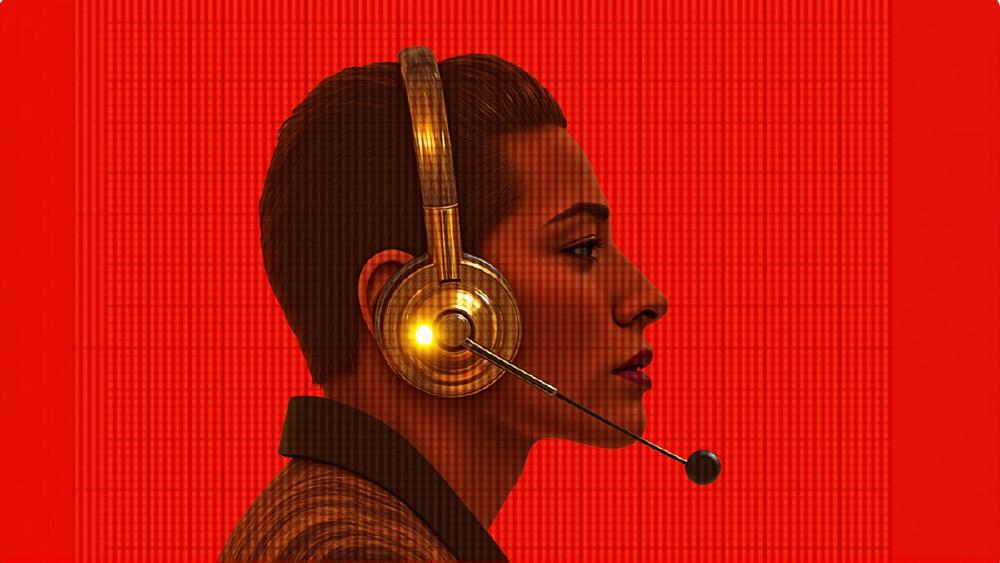
Burger King has launched an AI assistant called Patty inside employee headsets at 500 locations across the United States. The system listens to every drive-thru interaction, checks whether workers say "welcome to Burger King," "please," and "thank you," and converts those phrases into friendliness scores that managers can pull up on demand. The plan is to roll this out to every Burger King in America by the end of 2026.
| Feature | Detail |
|---|---|
| Name | Patty |
| Platform | BK Assistant |
| AI backend | OpenAI |
| What it monitors | "Welcome to Burger King," "please," "thank you" |
| Output | Friendliness scores for managers |
| Current deployment | 500 US locations |
| Planned rollout | All US Burger King stores by end of 2026 |
| Separate AI drive-thru | Testing in fewer than 100 locations (distinct from Patty) |
"This is all meant to be a coaching tool," said Thibault Roux, Burger King's Chief Digital Officer.
TL;DR
- Burger King's AI assistant "Patty" lives in employee headsets and monitors drive-thru speech for politeness keywords
- The system generates friendliness scores that managers can review as performance data
- Already deployed at 500 US locations, targeting all US stores by end of 2026
- Built on OpenAI technology; the company is also "iterating" on capturing employee tone
- Public reaction has been overwhelmingly negative, with widespread Black Mirror comparisons
What Patty Actually Does
Patty is the voice layer of a broader platform called BK Assistant, which connects drive-thru audio, kitchen equipment, inventory systems, and point-of-sale data. The AI has two functions.
The Helpful Part
Workers can ask Patty operational questions in real time - "how many strips of bacon go on a Maple Bourbon BBQ Whopper?" or "how do I clean the shake machine?" - and get instant answers through their headsets. When equipment malfunctions or items run out, the system alerts managers and automatically updates menus across all touchpoints - kiosks, drive-thrus, and digital menu boards - within 15 minutes.
This is a genuinely useful operational tool. Standardized answers to common questions, instant equipment alerts, and menu synchronization solve real problems in fast-food operations.
The Surveillance Part
The system also performs real-time speech recognition on every drive-thru interaction, parsing natural language to detect three specific phrases. Those detections feed into quantifiable friendliness metrics that managers can query at will. Burger King says the scores are built from data gathered "from franchisees and guests on how to measure friendliness."
The company is currently "iterating" on ways to capture tone in conversations - meaning future versions may analyze not just what employees say, but how they say it.
Employees can't opt out. The headsets are required work equipment.
How Fast Food Is Deploying AI
| Chain | System | What It Does | Status |
|---|---|---|---|
| Burger King | Patty (BK Assistant) | Monitors employee speech for politeness keywords | 500 stores, all US by end 2026 |
| Burger King | AI drive-thru ordering | Automates customer-facing order taking | <100 test locations |
| McDonald's | Automated Order Taker | AI drive-thru ordering (IBM/Apprente) | Ended June 2024 after viral misorder incidents |
| McDonald's | New AI drive-thru trial | Improved speech recognition (92% accent accuracy) | 120 test locations in 2026 |
| Wendy's | FreshAI | Digital menu board + voice AI ordering | 500+ restaurants; 60 full automation in 2026 |
| Taco Bell | AI voice ordering | Automated drive-thru order taking | 85 high-traffic sites in 2026 pilot |
The critical distinction: every other chain is using AI to automate the customer-facing ordering process. Burger King is using AI to surveil its own employees. Patty stands alone in the industry as a tool that monitors worker behavior rather than replacing or automating customer interactions.
McDonald's tried AI drive-thru ordering, watched it go viral for botching orders, and shut it down. That system now lives in the Museum of Failure. Wendy's and Taco Bell are iterating more cautiously. But none of them rolled out AI to score their workers' friendliness.
Counter-Argument
Burger King frames Patty as a coaching tool, not a punitive system. There's something to this. Fast-food operations run on consistency, and providing instant answers to operational questions through a headset beats leafing through a manual. The menu synchronization feature alone - automatically removing unavailable items across all touchpoints in 15 minutes - removes a category of customer frustration.
The friendliness monitoring also addresses a real business problem. Drive-thru customer satisfaction scores directly correlate with repeat visits and revenue. If a location's scores are dropping, a manager currently has no systematic way to diagnose whether the issue is food quality, speed, or staff attitude. Patty provides data where there was previously only anecdote.
And the keyword approach is fairly crude. Checking for "please" and "thank you" is a low bar. It isn't sentiment analysis of every sentence. It's closer to a checklist than a surveillance dragnet.
But the trajectory matters. The company is already "iterating" on tone analysis. Today it is three keywords. Tomorrow it's voice sentiment scoring. The ratchet only turns one direction.
What the Market Is Missing
The public reaction has been immediate and nearly unanimous. Tom Warren, senior editor at The Verge, called it "like an episode of Black Mirror." Kotaku's headline was "Burger King Is Planning To Use AI Headsets To Spy On Its Staff" and predicted the system "will be withdrawn by June 2026." Online communities responded with variations of "maybe you could pay us slightly more?"
The criticism isn't wrong. Embedding AI monitoring into required communication equipment that minimum-wage workers can't remove is a particularly intimate form of workplace surveillance. The system transforms every shift into a continuous evaluation. And the fact that Burger King is investing in friendliness-scoring AI rather than the wages that might actually produce genuine friendliness is a choice that says more about corporate priorities than any press release.
But here is what the outrage cycle will miss: Patty isn't going to be the exception. It is going to be the template. The economics of monitoring labor through AI are too compelling for restaurant chains operating on thin margins. The operational features - instant answers, equipment alerts, menu sync - provide legitimate cover for the surveillance features. And once one major chain normalizes AI-scored employee behavior, the competitive pressure on every other chain to follow becomes enormous.
McDonald's AI ordering failed because customers rejected it. Patty targets employees who have no market power to reject anything. That asymmetry is the whole story.
Five hundred stores already have an AI scoring their workers' manners. By year-end, every Burger King in America will. The company says it's a coaching tool. The workers wearing the headsets don't get to decide whether that's true. As we've explored in our guide on AI agents, the question was never whether AI would enter the workplace - it was whether it'd arrive as a tool for workers or a tool aimed at them. Burger King just answered that question for 35,000 drive-thru employees.
Sources:
- Burger King's AI assistant is listening to see if employees say 'please' and 'thank you' - The Verge
- Burger King Is Planning To Use AI Headsets To Spy On Its Staff - Kotaku
- Burger King pilots AI chatbot Patty to monitor drive-thru friendliness - Dexerto
- 'Patty' at Center of Burger King's New BK Assistant AI Solution - PR Newswire
Last updated

