
Anthropic Revenue Triples to $30B on Enterprise Push
Anthropic's run-rate revenue has surpassed $30 billion in 2026, tripling from $9 billion at end of 2025, as the company secures 3.5 gigawatts of next-gen TPU compute from Broadcom starting in 2027.
 5 min read
The headline number is hard to argue with. Anthropic's revenue run rate has surpassed $30 billion in 2026, up from roughly $9 billion at the end of 2025 - a threefold jump in one quarter. The figure was disclosed on April 6 with a long-term chip supply agreement involving Broadcom and Google, confirming what the company's recent subscription growth had already suggested: Anthropic is no longer mostly a research lab that sells API access. It's a large enterprise software company that also happens to do research.
TL;DR
- Run-rate revenue surpassed $30B in 2026, up from ~$9B at end of 2025
- Broadcom will supply 3.5 gigawatts of TPU compute capacity beginning 2027
- Over 1,000 enterprise customers now spend $1M+ annually - doubled since February
- No dollar value disclosed; compute delivery depends on Anthropic's commercial success
- Amazon remains primary cloud and training partner; Google and Microsoft also carry Claude
The deal itself was announced via a Broadcom 8-K filing on April 6. Two separate agreements were disclosed simultaneously. The first ties Broadcom to Google through 2031 for custom TPU design, networking components, and AI rack infrastructure for Google's next data center generation. The second extends that infrastructure to Anthropic, giving the company access to roughly 3.5 gigawatts of next-generation TPU compute starting in 2027.
Broadcom's stock closed regular trading down 0.38 percent, then rose 2.57 percent to $322.50 in after-hours trading once the deals were public. The same 8-K also disclosed a separate $970 million Department of Defense contract and a new CFO appointment for Broadcom - a dense single-day filing by any standard.
The Numbers
| Metric | End of 2025 | April 2026 |
|---|---|---|
| Run-rate revenue | ~$9 billion | $30 billion+ |
| Enterprise customers spending $1M+/yr | ~500 | 1,000+ |
| Time to double $1M+ customer count | - | Under 2 months |
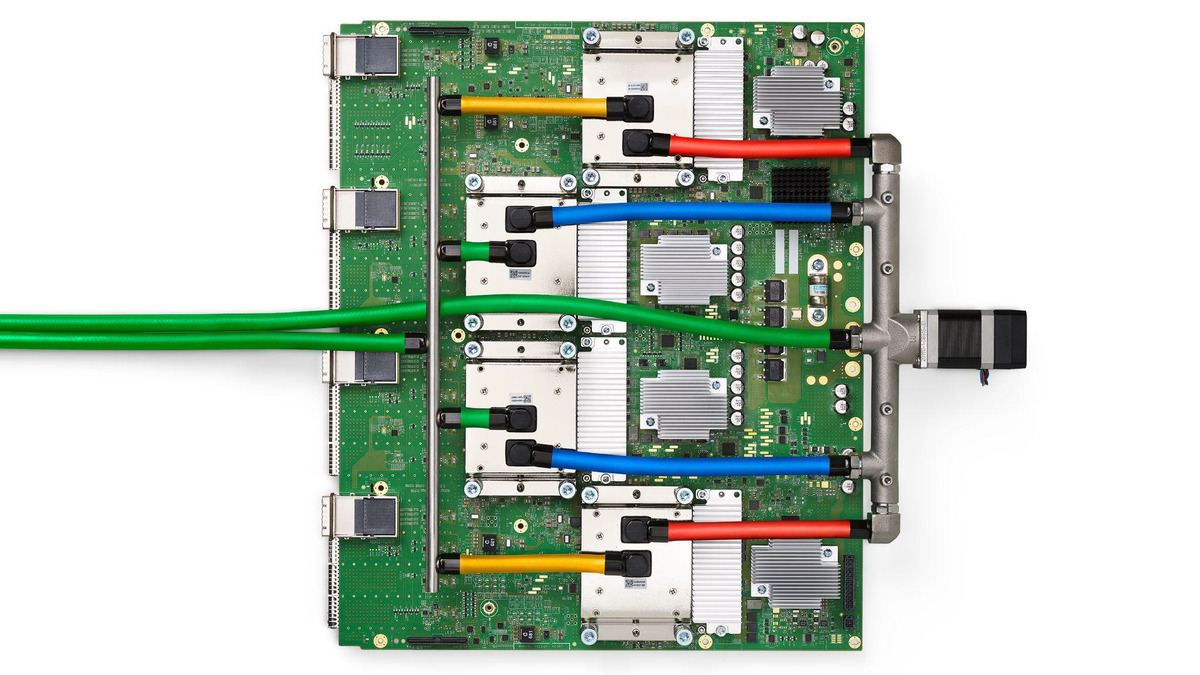 Google's TPU v4 chip - the same ASIC architecture central to the Broadcom supply agreement. Broadcom designs and manufactures the silicon; Google architects the compute specifications.
Source: commons.wikimedia.org
Google's TPU v4 chip - the same ASIC architecture central to the Broadcom supply agreement. Broadcom designs and manufactures the silicon; Google architects the compute specifications.
Source: commons.wikimedia.org
The revenue figure is consistent across Anthropic's own press release, Reuters, and Bloomberg reporting. The enterprise customer doubling - from roughly 500 to over 1,000 accounts spending seven figures annually since February - is perhaps more operationally significant than the top-line number. Enterprise contracts at that spend level involve procurement cycles, security reviews, and executive sign-off. Doubling them in under two months suggests Anthropic has a sales motion that is working at scale, not just a viral product.
Who Benefits
Anthropic Gets the Compute It Needs
Anthropic's constraint has never been demand. It has been supply - specifically, access to enough compute to train future models and serve customers without throttling or queuing. The 3.5 gigawatt commitment addresses that directly. To put the scale in context: Amazon's $50 billion OpenAI partnership came with a 2 gigawatt Trainium commitment. Anthropic is securing 75 percent more capacity than that, sourced through a different supply chain completely.
Amazon remains Anthropic's primary cloud and training partner - that relationship is unchanged. But this deal diversifies Anthropic's infrastructure dependency and gives the company negotiating leverage it didn't have before.
Broadcom Locks In a Generational Customer
Broadcom has spent the past two years repositioning from a diversified semiconductor company into a concentrated AI infrastructure play. Custom ASIC design for hyperscalers - Google's TPUs are the flagship case - is the business. Adding Anthropic as a named beneficiary of that supply chain is a customer validation that does real work in Broadcom earnings calls and analyst conversations.
The fact that the 8-K disclosed the deal at all, rather than embedding it in a quarterly filing, signals that Broadcom's investor relations team judged it material to the stock. The after-hours move supports that read.
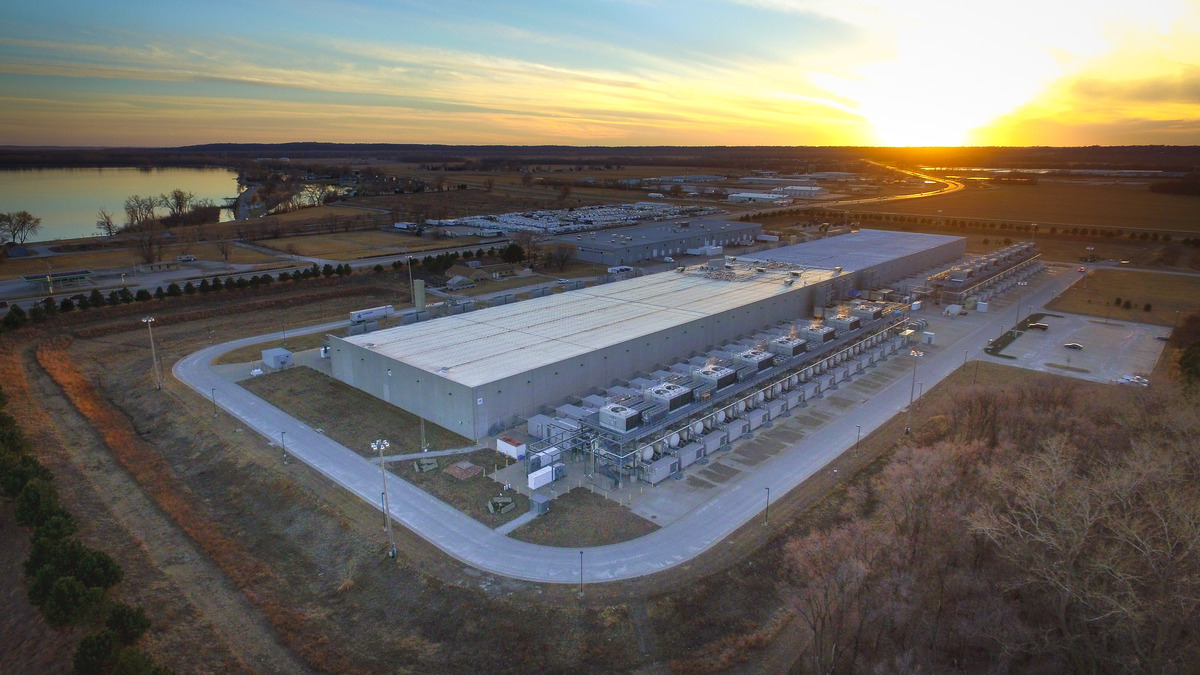 Google's data center campus in Council Bluffs, Iowa. The Broadcom deal runs through 2031 and will supply TPU silicon and networking components for Google's next generation of AI infrastructure at facilities like this.
Source: commons.wikimedia.org
Google's data center campus in Council Bluffs, Iowa. The Broadcom deal runs through 2031 and will supply TPU silicon and networking components for Google's next generation of AI infrastructure at facilities like this.
Source: commons.wikimedia.org
Google Secures an Anchor Tenant
Google Cloud hosts Claude with AWS and Azure, but the infrastructure relationship runs deeper than a standard marketplace listing. By sitting central to Broadcom's TPU supply chain and routing compute capacity to Anthropic, Google positions itself as essential infrastructure for Anthropic's future - not just one of three cloud options.
The Amazon Trainium arrangement for Anthropic gives AWS similar strategic leverage. Google's move through Broadcom is an attempt to match it on a different axis: chip design and long-term capacity planning rather than direct cloud spend.
Who Pays
The Contingency Clause
Broadcom's 8-K includes language that should temper enthusiasm: "The consumption of such expanded AI compute capacity by Anthropic is dependent on Anthropic's continued commercial success." That's a standard protective clause, but it's also an honest description of the deal's actual structure. The 3.5 gigawatt commitment is a ceiling, not a floor. If Anthropic's revenue growth stalls, so does the capacity drawdown.
Given where Anthropic's revenue was six months ago, "continued commercial success" is not a certainty worth dismissing. The company raised a $30 billion Series G and is valued at $350 billion - figures that create return expectations that revenue growth must justify. Tripling revenue in a quarter is impressive. Tripling it again is the harder problem.
The Infrastructure Bill
No total contract value was disclosed. For context, Anthropic's earlier TPU v7p orders during 2025 reportedly totaled around $21 billion across two tranches - those were for existing chip generations, with delivery through late 2026. The new Broadcom commitment covers next-generation TPUs beginning 2027, but without a dollar figure attached in any public filing.
Anthropic's press release frames the deal as an extension of its November 2025 pledge to invest $50 billion in American AI infrastructure. That framing neatly repositions a capital expenditure commitment as a patriotic investment thesis - useful optics in a regulatory environment where AI labs are under pressure to show domestic economic contribution.
The revenue numbers are real, the compute commitment is real, and the enterprise growth rate is real. What remains to be seen is whether Anthropic can convert a hot enterprise sales cycle into the durable recurring revenue that justifies a $350 billion valuation - and whether 3.5 gigawatts of compute is enough to train the models that'll keep that cycle running.
Sources: Anthropic press release | Broadcom 8-K via StockTitan | Benzinga

