
Baseten Closes $1.5B Round as Open-Source AI Matures
Baseten's $1.5B raise at a $13B valuation signals a structural shift as open-source models displace closed APIs in enterprise AI.
 7 min read
Baseten has closed a $1.5 billion funding round at a valuation of up to $13 billion, less than six months after raising $300 million at a $5 billion valuation. The company's annualized revenue run-rate reportedly went from $200 million in December to $600 million by March - a tripling in one quarter that explains why five firms, including Altimeter Capital, Conviction, Spark Capital, Sands Capital, and Wellington Management, were willing to pay the new price.
The raise isn't just a venture story. It's a bet on a specific structural thesis: that open-source AI models have matured to the point where enterprises can route most of their workloads away from OpenAI and Anthropic, saving more than 50 percent in the process, and that Baseten is the infrastructure layer that makes this practical.
TL;DR
- $1.5B closed at $11B-$13B valuation, split across investor tiers - five months after a $300M round at $5B
- ARR reportedly tripled from $200M to $600M between December 2025 and March 2026, up ~1,900% year-over-year
- Core thesis: open-source models are good enough to replace closed APIs for most enterprise tasks
- Customers including Cursor and Notion report costs more than 50% lower than OpenAI-comparable rates
The Round That Wasn't Supposed to Happen Yet
Baseten raised a $300 million Series E just five months ago, backed by Nvidia Corp. and CapitalG, Alphabet's growth investment arm. The fact that it returned with a 5x larger ask this quickly isn't a sign of distress. It's a signal that revenue growth has outrun the previous runway model.
Split Pricing as a Signal
This isn't a clean single-valuation round. Some investors are paying at a $13 billion valuation; others came in at $11 billion. Split-priced rounds are a common tool to inflate headline numbers while letting early closers buy at a discount. Baseten hasn't disclosed the allocation between the two tiers, so the actual weighted-average valuation sits somewhere in between.
What isn't ambiguous is the revenue trajectory. Research firm Sacra tracked the company's annualized revenue run-rate rising from roughly $200 million in December 2025 to about $600 million by March 2026 - a 200 percent jump in a single quarter, with year-over-year growth around 1,900 percent. At $13 billion on $600 million ARR, investors are paying roughly 21x forward revenue. Rich, but not unusual for a company compounding this quickly.
Open Source as Business Model
Baseten's pitch is that inference - what the model does after a user submits a prompt - has become its own infrastructure layer, and that open-source models are ready to power it at enterprise scale.
CEO Tuhin Srivastava was direct about the thesis in recent comments: "Open-source models are getting very, very good." Customers increasingly combine open and proprietary models depending on task complexity, he said, routing demanding reasoning to frontier closed models while pushing high-volume or simpler workloads to cheaper open-source alternatives.
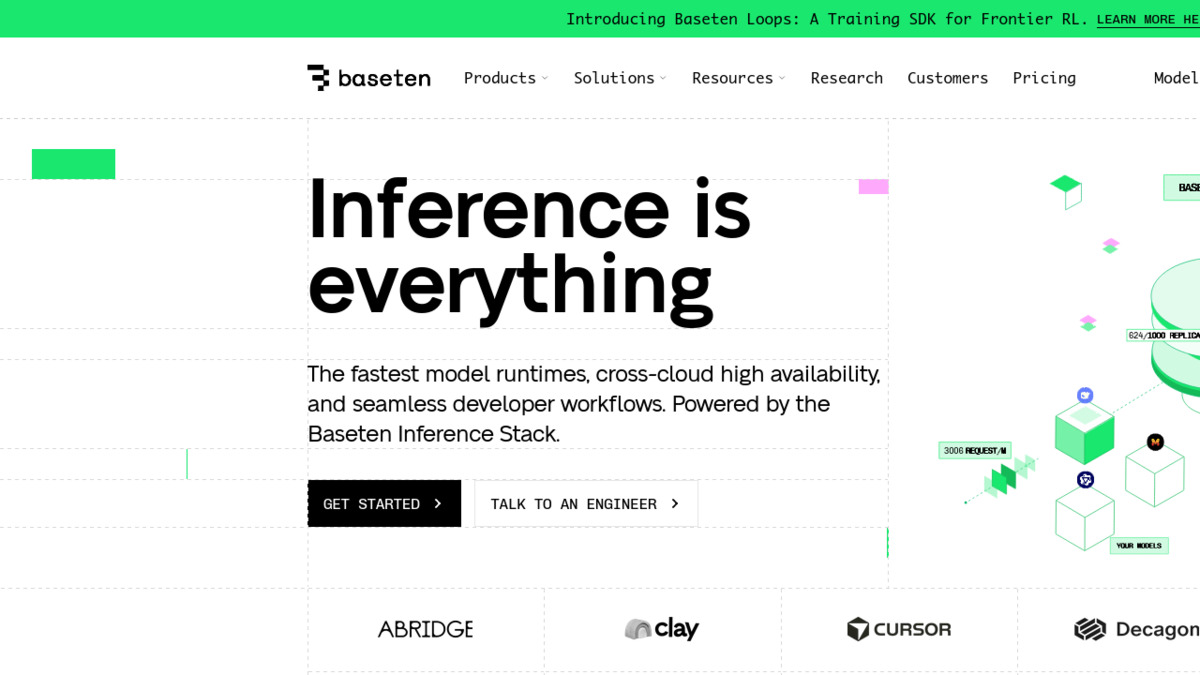 Baseten's platform converts open-source models into production APIs across 15+ cloud providers.
Source: baseten.co
Baseten's platform converts open-source models into production APIs across 15+ cloud providers.
Source: baseten.co
The Cost Math for Enterprise
The numbers are concrete. Baseten prices model access at more than 50 percent below OpenAI-comparable rates, according to Sacra. One unnamed customer reportedly runs a specific task at roughly 30 percent of what the proprietary alternative costs - a 70 percent reduction.
That isn't a marginal efficiency gain. It's the kind of pricing delta that changes how CTOs think about their AI spend. The customers who've answered that question publicly include Cursor, Notion, Abridge, Clay, Mercor, and OpenEvidence - workloads spanning coding assistants, document management, clinical decision support, and recruiting automation.
Who Has Already Switched
These aren't proof-of-concept deployments. Cursor routes inference through Baseten for parts of its AI coding assistant, which crossed $2 billion in ARR earlier this year. Abridge handles clinical notes in production healthcare settings. The fact that HIPAA-sensitive, latency-critical workloads are running on a platform built primarily around open-source models says something about where the quality floor now sits.
Baseten's infrastructure spans 15 cloud providers, with automatic failover between them. Its MCM module distributes requests across that pool to handle GPU scarcity without dropping queries. Inference volume on the platform grew 100x over 2025.
The Competition Won't Stand Still
Baseten isn't running this race alone, and its competitors aren't standing still.
Fireworks AI at $800M ARR
Fireworks AI takes an essentially identical open-source inference approach and, by Sacra estimates, hit $800 million in annualized revenue in May 2026 - ahead of Baseten's reported $600 million. Fireworks raised at a $552 million valuation in late 2024, which makes it faster on revenue and cheaper by valuation. Whether Baseten's $13 billion reflects a genuine platform lead or a more aggressive fundraising narrative is a question the next few quarters will clarify.
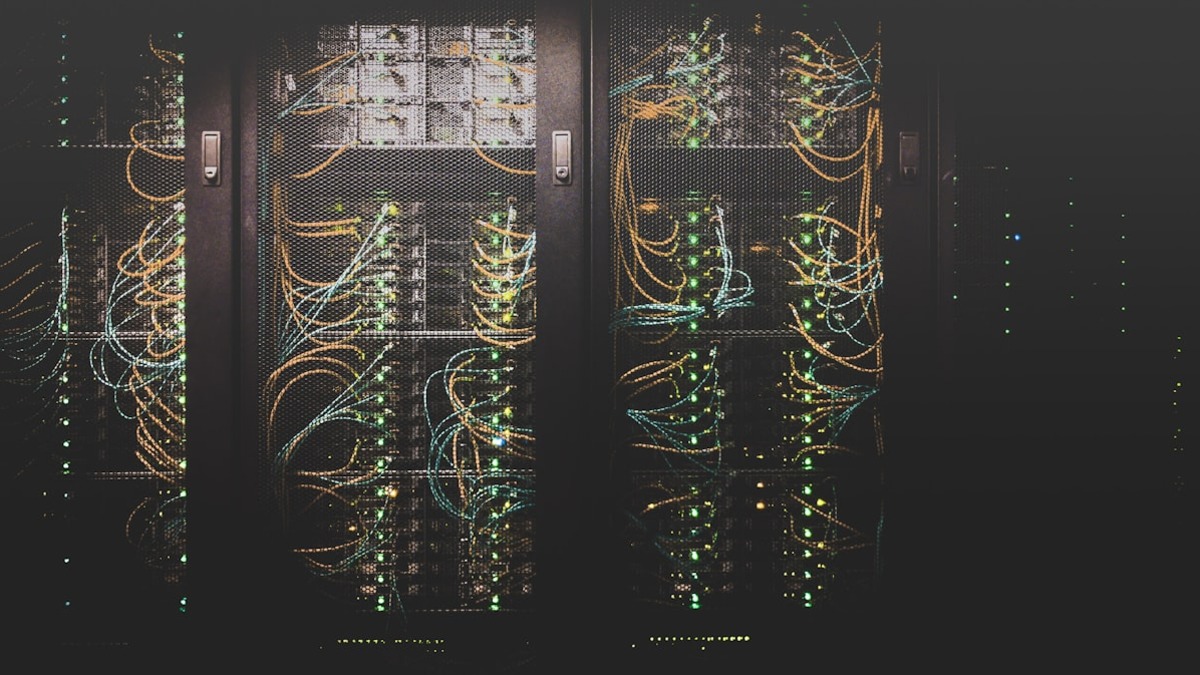 Baseten rents GPU capacity from 15+ cloud providers rather than owning hardware, giving it flexibility but also exposure to supply constraints.
Source: unsplash.com
Baseten rents GPU capacity from 15+ cloud providers rather than owning hardware, giving it flexibility but also exposure to supply constraints.
Source: unsplash.com
Cerebras and the Hardware Bet
Cerebras plays a different game completely. Rather than optimizing software on commodity GPUs, Cerebras built its own wafer-scale silicon and offers generation speeds up to 18x faster than GPU alternatives for certain workloads. Meta chose Cerebras to power its Llama API. OpenAI uses Cerebras for GPT-5.3-Codex-Spark.
Cerebras isn't a direct rival in Baseten's core market - it targets latency-critical deployments where speed matters more than cost per token. But its partnerships with both Meta and OpenAI complicate any narrative that positions open-source inference as a clean alternative to closed systems.
DeepSeek's V4 and other Chinese open-source models are a tailwind for the entire sector. When a model competitive with GPT-4 class systems ships under a permissive license, it expands the base of workloads that can plausibly shift off closed APIs. Baseten benefits from every improvement in the open-source model layer.
What the Raise Doesn't Settle
The Hyperscaler Problem
The structural risk to Baseten isn't Fireworks or Cerebras. It's AWS, Google Cloud, and Azure. All three offer open-source model inference natively, have existing enterprise relationships, and can bundle inference pricing with compute credits in ways independent vendors can't match. Amazon has been signaling intent to sell Trainium chips externally, which would let enterprise customers build inference capacity inside existing cloud contracts without engaging a third-party platform.
Baseten's multi-cloud footprint and vendor-neutral position are genuine advantages. Enterprise procurement moves slowly, and hyperscalers have shown they can price defensively to retain accounts. The question isn't whether Baseten can win deals today - it clearly can. The question is whether independent inference infrastructure becomes a durable category or gets absorbed as a feature of the major cloud platforms over the next three to five years.
Pricing Durability
Baseten's cost advantage depends on two things holding. First, open-source model quality must keep pace with closed models. That assumption looks solid today, with DeepSeek and Llama continuing to close the gap. Second, GPU capacity must stay accessible enough that independent platforms can buy it at competitive rates. That assumption is shakier. Nvidia retains pricing power over the hardware layer that the entire inference stack depends on.
The $1.5 billion round is the kind of number that forces the industry to take a position. At $600 million ARR and tripling in a quarter, Baseten is running one of the fastest revenue ramps in infrastructure software. Investors have now committed $2.1 billion on the thesis that open-source inference becomes structural - and that an independent platform, not a hyperscaler, captures the margin. The split-priced round is a small caveat. The revenue isn't.
Sources:
- AI inference startup Baseten reportedly raising $1.5B - TechCrunch
- Baseten raises $1.5bn at up to $13bn valuation - The Next Web
- AI inference provider Baseten reportedly raising $1.5B - SiliconANGLE
- Baseten revenue, valuation and funding - Sacra
- Fireworks AI revenue profile - Sacra
- Baseten closes $1.5B round at $13B valuation - Startup Fortune

