
US Confronts ASML Over Suspected EUV Exports to China
US Commerce Secretary Howard Lutnick told ASML executives that the Trump administration believes EUV-related chipmaking gear may have reached China in violation of export controls. ASML denies any such transfer and says it has never shipped EUV equipment to China.
 6 min read
The US government has confronted ASML - the Dutch company with a complete monopoly on the world's most advanced chipmaking machines - over a concern that touches every AI accelerator currently in production: that EUV-related equipment may have reached China in violation of years of export controls.
Commerce Secretary Howard Lutnick raised the concern directly with ASML's senior leadership in meetings earlier this year. ASML says it hasn't been shown any evidence and denies the claim outright.
Key Facts
| What | Detail |
|---|---|
| US concern | EUV-related components and transport equipment may have shipped to China |
| ASML's position | Denies ever shipping an EUV machine, component, or purpose-built module to China |
| Evidence status | US officials say they have evidence; haven't shared it with ASML or press |
| Machine cost | Up to 350 million euros per unit |
| China revenue at stake | ~19% of ASML's Q1 2026 revenue from legal DUV sales to China |
The Machine at the Center of the Dispute
A monopoly with no substitute
ASML makes the only EUV lithography systems in the world. No other company is close to building one. TSMC uses them to manufacture the chips inside Nvidia's AI accelerators, Apple's M-series processors, and virtually every other advanced semiconductor in mass production today.
Each EUV system is comparable in size to a school bus and ships in 250 crates requiring more than three transport aircraft for delivery. A single unit costs up to 350 million euros. The machines require continuous maintenance from ASML-trained technicians, which means the company retains ongoing visibility into exactly where each system operates.
ASML had planned to produce at least 60 EUV systems in 2026 - more than in any prior year - to meet accelerating demand for AI chips.
Why AI chip supply depends on this
EUV lithography fires lasers at droplets of molten tin to generate plasma that emits extreme ultraviolet light at 13.5 nm. That light etches microscopic circuit patterns onto silicon wafers at resolutions impossible with older deep ultraviolet (DUV) tools.
Without EUV, TSMC can't manufacture the chips that power AI training at scale. The technology is the single physical bottleneck for all frontier AI hardware. That's exactly why the first Trump administration banned its export to China - and why the question of whether China has obtained any EUV equipment isn't a minor diplomatic matter.
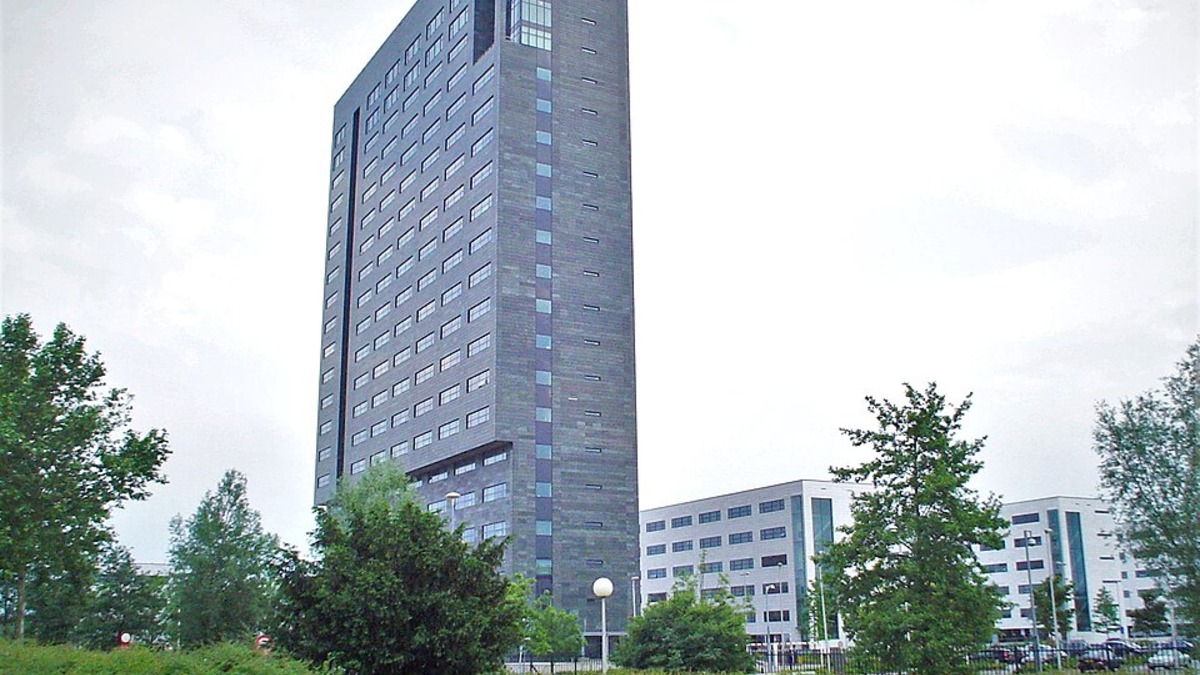 ASML's global headquarters in Veldhoven, Netherlands. The company is the sole supplier of EUV lithography systems, making it one of the most strategically critical technology companies in the world.
Source: commons.wikimedia.org
ASML's global headquarters in Veldhoven, Netherlands. The company is the sole supplier of EUV lithography systems, making it one of the most strategically critical technology companies in the world.
Source: commons.wikimedia.org
What the US Government is Alleging
Meetings with ASML leadership
Lutnick raised the concern with ASML executives in meetings this spring. The specific allegation, according to reporting by Bloomberg, isn't that a complete assembled EUV machine was shipped - but that EUV-related components and transport equipment may have made their way to China. The distinction matters technically but is still a significant export control violation if true.
Senior administration officials told Bloomberg they have evidence supporting this assessment. They have declined, repeatedly, to share that evidence with reporters or, according to ASML, with the company itself.
A claim ASML can't respond to without seeing the evidence
The evidence gap puts ASML in a difficult spot. The company is being asked to account for a violation it says it can't verify because it hasn't seen the proof. ASML circulated a formal document in Washington titled "No indication of any ASML EUV system in China," pushing back directly on the allegations.
The MATCH Act, introduced by US lawmakers in April 2026, would go further: it would ban exports of DUV immersion machines - which ASML currently sells to China legally - and prohibit ASML from servicing equipment already operating inside the country.
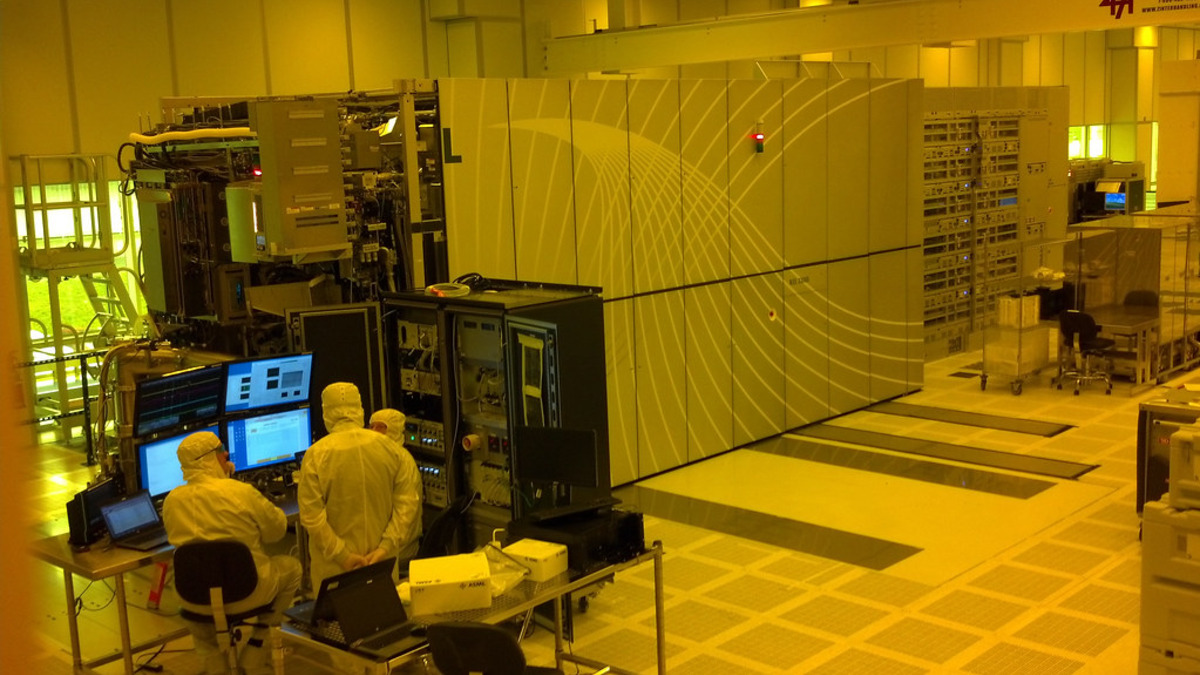 EUV lithography in semiconductor research. The process enables the sub-5nm chip geometries that power current-generation AI accelerators.
Source: flickr.com/ibm_research_zurich
EUV lithography in semiconductor research. The process enables the sub-5nm chip geometries that power current-generation AI accelerators.
Source: flickr.com/ibm_research_zurich
ASML's Defense
Every machine tracked
ASML CEO Christophe Fouquet has maintained that the company tracks every EUV system it has ever sold. They're either in active use under monitored customer agreements or have been dismantled and returned to ASML. The company also says it maintains internal firewalls separating employees who work on EUV systems from those involved in China operations.
An ASML spokesperson was direct: "ASML has never shipped an EUV machine to China nor have we shipped to China any component, module or equipment specially designed to be used in an EUV machine."
The business case for compliance
ASML currently sells older DUV systems to China under existing permissions. That business represented 36% of ASML's system sales at its peak and around 19% of revenue in Q1 2026 after tighter controls reduced the eligible product set. The company's market value tops $700 billion.
Risking that revenue - plus the export licensing arrangements that let ASML ship any equipment anywhere - over a covert EUV sale would be difficult to explain as a rational business decision. Violating US export controls would expose ASML to sanctions that could cut it off from the US financial system and US-made components across its supply chain.
| Claim | US Government | ASML |
|---|---|---|
| EUV machine shipped to China | Alleges possible | Denies categorically |
| EUV-related components exported | Claims evidence of this | Denies any EUV-designed parts shipped |
| Evidence shared with ASML | Has not | Not received |
| Every machine accounted for | Disputes this | Yes, tracked continuously by service teams |
| Business motive to violate | Implied | None - legal China revenue would be forfeit |
What To Watch
The evidence question is what determines how this escalates. If the US produces and proves its claims - showing actual documentation of specific components reaching specific Chinese facilities - ASML faces regulatory consequences that could reshape how the global AI chip supply chain operates. If the allegations rest on misidentified components or misread intelligence, the episode becomes a case study in export control enforcement straining relations with one of America's most critical allied suppliers.
The MATCH Act bears watching separately from this specific dispute. Even without the EUV allegation, the bill would remove ASML's remaining legal China business if passed - removing the revenue cushion that currently gives both sides an incentive to resolve disagreements rather than escalate them.
For anyone tracking AI hardware: the chips inside today's AI clusters depend on EUV machines, and the US-China contest over who can access those machines is the central hardware chokepoint in the industry. China's multi-billion-dollar push for domestic chip self-sufficiency is a direct response to exactly this kind of vulnerability. But no Chinese company is close to producing an EUV alternative - which is what makes the allegations, true or not, so consequential.
Sources:
- The US says ASML's top chip tool may be in China. ASML says it isn't - TechCrunch
- US government warns ASML over suspected EUV machine transfer to China - CryptoBriefing
- ASML denies US government report that EUV tool was shipped to China - Tom's Hardware
- U.S. concerned about possible ASML EUV leak to China - Techzine

